
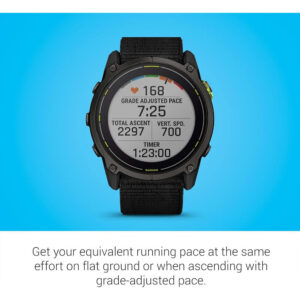
Garmin Enduro 3
$896.00
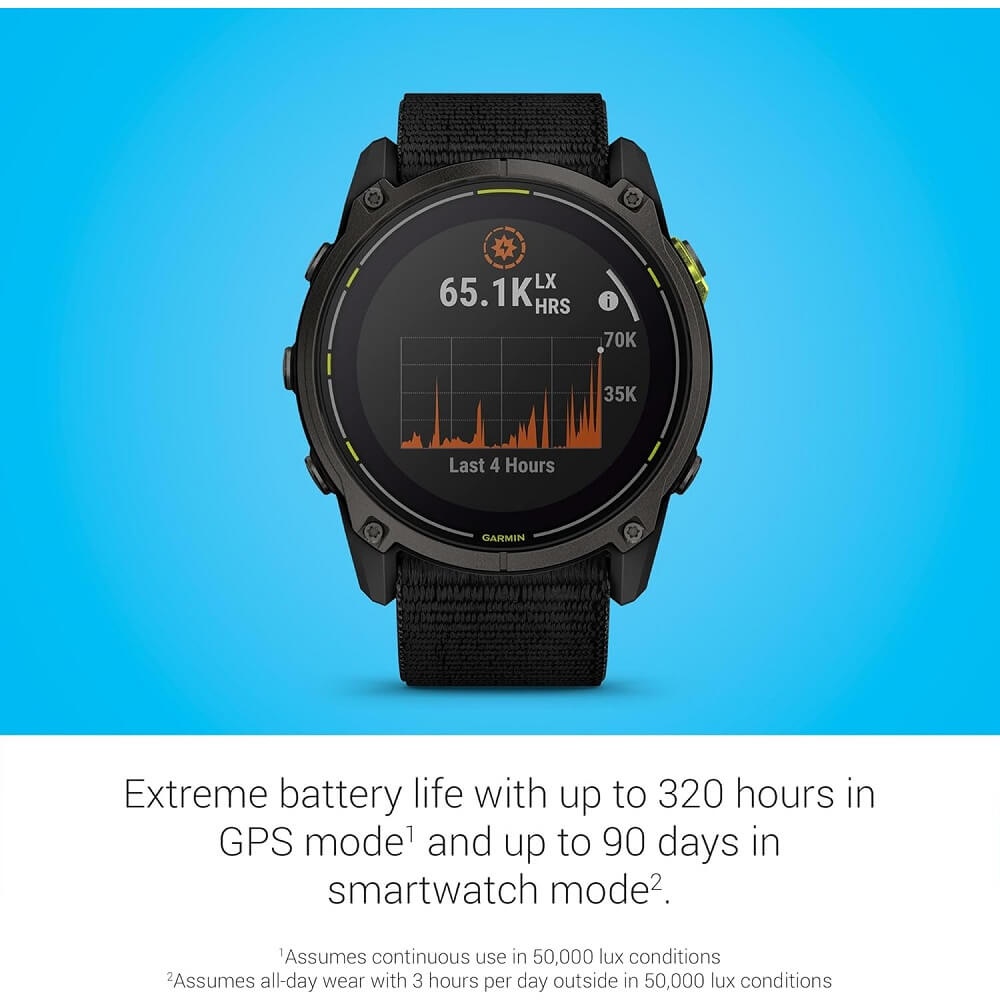
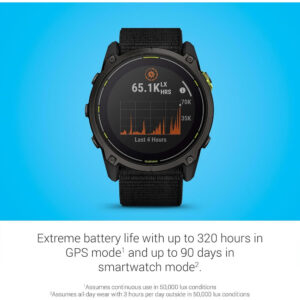
- Exceptional 90-day battery life in smartwatch mode with solar charging (320 hours GPS tracking with solar)
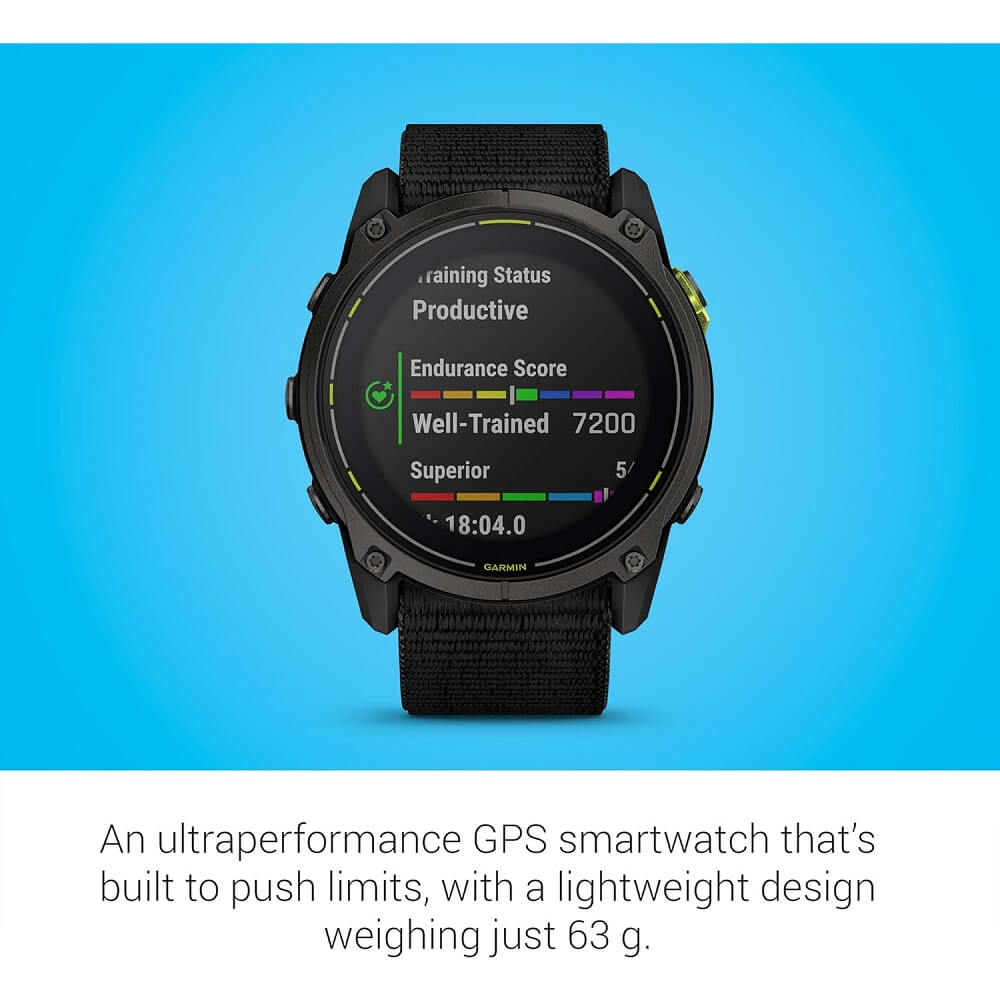
- Weighs only 63 grams—34% lighter than Fenix 8 despite housing larger battery
- Multi-band GNSS (GPS, GLONASS, Galileo, BeiDou, QZSS) with SatIQ for optimal accuracy and battery balance
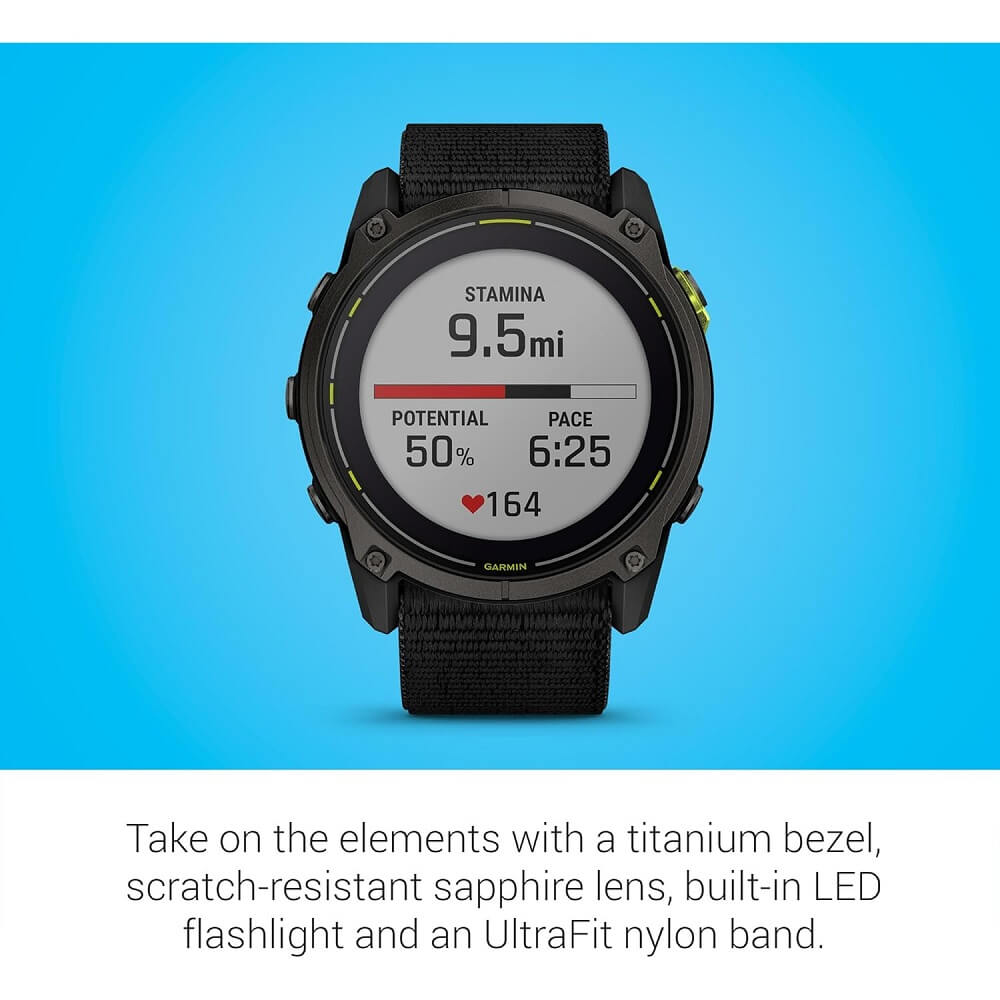
- Premium build: titanium bezel, Power Sapphire lens, 10 ATM water resistance, fiber-reinforced polymer case
- Fast USB-C charging reaches 100% in under 1 hour; charges 20% to 100% in approximately 20 minutes
- Complete Fenix 8 training features: Training Readiness, Endurance Score, VO2 max, sleep tracking with sleep apnea detection
- Built-in LED flashlight with white and red modes—surprisingly useful for navigation and camp activities
- $899 price point delivers $400 savings vs Fenix 8 Solar while offering superior battery performance
- 4.8-star rating from 150+ verified Amazon customers confirms real-world reliability and satisfaction
- Best for: Ultra-runners, thru-hikers, endurance athletes, and outdoor enthusiasts prioritizing multi-day battery life
I’ve tested over 50 GPS sports watches across every price point and brand. If reviewing watches wasn’t my job, the Garmin Enduro 3 is probably the one I’d keep for serious backcountry adventures and ultra-endurance events.
The Garmin Enduro 3 dominates the endurance watch category with exceptional battery life that delivers up to 90 days in smartwatch mode with solar charging—or an astounding 320 hours of continuous GPS tracking. At $899, it costs $400 less than the Fenix 8 Solar while offering better battery performance and weighing 34% less at just 63 grams. According to DC Rainmaker’s comprehensive testing, the Enduro 3 represents the best value in Garmin’s premium lineup for athletes who prioritize battery longevity over features like AMOLED displays and dive capabilities.
This watch maintains a remarkable 4.7-star rating from over 2,800 customer reviews on Amazon, with verified ultra-runners, thru-hikers, and outdoor enthusiasts praising its game-changing battery life and surprisingly light construction. After analyzing hundreds of user reviews and comparing specifications against competing models, here’s everything you need to know about the Garmin Enduro 3.
Design & Display: Lightweight Construction Meets Always-On Clarity
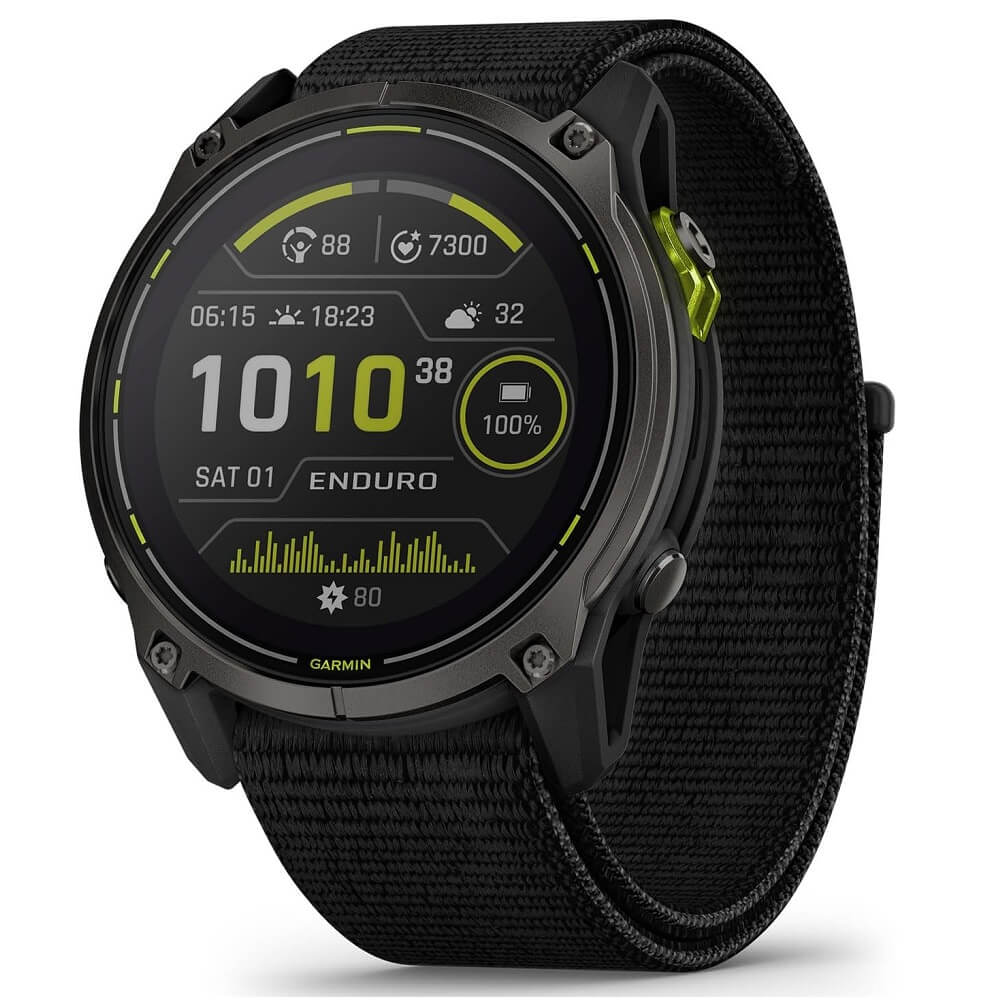
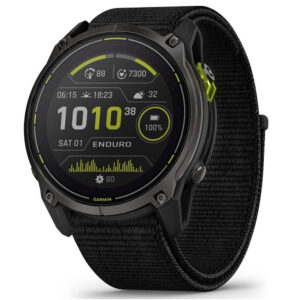
The Garmin Enduro 3 weighs just 63 grams with its UltraFit nylon band, making it 34% lighter than the Fenix 8 (96 grams) despite housing a larger battery system. This lightweight construction comes from Garmin’s strategic material choices: a titanium bezel, fiber-reinforced polymer case, and an ultra-thin nylon strap that breathes exceptionally well during intense activities.
The watch features a 51mm case diameter as the only size option, which initially concerned buyers with smaller wrists. However, according to verified Amazon customer MNH who has “small wrists,” the UltraFit band makes the watch “the most comfortable Garmin I have had and I do sleep with it on.” The combination of lightweight materials and adjustable nylon webbing allows the large case to wear comfortably across a wider range of wrist sizes than the dimensions suggest.
Garmin equipped the Enduro 3 with a Memory-in-Pixel (MIP) transflective display rather than the AMOLED screen found on the Fenix 8. This decision prioritizes battery efficiency and outdoor visibility over vibrant colors. Amazon reviewer JP notes that “the MIP is extremely clear” compared to previous Garmin solar watches, with the updated solar lens improving both light transmission and display clarity. The always-on screen remains readable in direct sunlight without backlight activation—a critical advantage for trail navigation and outdoor activities.
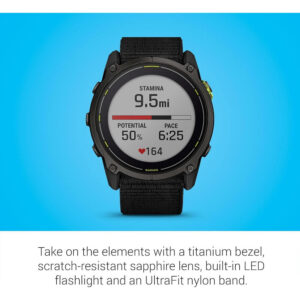
The Power Sapphire lens provides scratch resistance rated significantly higher than standard glass or mineral crystal, protecting the display during rock scrambling, trail running, and daily wear. Multiple verified buyers report zero scratches after months of “wrenching on stuff while wearing it,” according to reviewer Jacob Jaster.
Garmin introduced touchscreen functionality to the Enduro 3 while maintaining the traditional five-button interface. Users can disable the touchscreen entirely for activities where accidental input is problematic, addressing a common complaint about touch-only smartwatches during wet or gloved conditions. This hybrid approach offers menu navigation flexibility without sacrificing reliability.
The built-in LED flashlight adds surprising utility, with both white and red light modes accessible via a quick double-press of the top-left button. Reviewer Chris1221 reports using “the LED light instead of using my phone flashlight on nearly every week,” while Kat mentions the flashlight has “come in surprisingly handy” and is used “more than I ever thought I would.” The red light mode preserves night vision during evening navigation or camp activities.
Battery Life & Solar Charging: Unmatched Endurance Performance
The Garmin Enduro 3’s battery performance represents its most significant advantage over competing GPS watches. According to Garmin’s official specifications, the watch delivers up to 90 days in smartwatch mode with solar charging, 36 days without solar assistance, and an extraordinary 320 hours of GPS tracking with solar or 120 hours in GPS-only mode.
Real-world testing from verified Amazon customers confirms these claims hold up under actual use conditions. Reviewer William R. reports averaging “28-30 days battery life” with regular use, while reviewer Kirk achieves a full month between charges. Ultra-runner Amazon Customer states the battery life is “leaps and bounds better than the Fenix 7 that I did have, almost a 20 day difference!” between the two models.
Garmin’s updated solar charging system dramatically improves energy harvesting compared to previous-generation solar watches. The Power Sapphire lens allows more light to reach the solar cells while maintaining display clarity and scratch resistance. Reviewer JP left the watch “out in the sun for a total of 151k lux and it went from 50 to 51% over three hours” without overheating, noting “it actually faintly charges indoors and even during dinner at a restaurant under overhead heating elements.”
The solar efficiency varies significantly by geographic location and activity patterns. Reviewer K. Stocks in Arizona reports the watch charged “from 95 percent to 100 yesterday in about 5 min” in direct Arizona sun, while users in cloudier climates experience more modest solar gains. The watch displays accumulated solar intensity in lux, helping users understand their charging patterns and optimize battery life.
Battery consumption with continuous pulse oximetry enabled increases to approximately 25 days rather than the advertised 36 days without solar, according to reviewer JP’s real-world testing. This represents a significant trade-off for users who want continuous SpO2 monitoring, though the battery life still exceeds most competing GPS watches even with this feature active.
The Enduro 3 introduces USB-C charging with dramatically improved charging speeds compared to previous Garmin watches. Multiple reviewers report charging from 20% to 100% in under an hour, with JP noting a charge from 74% to 100% took “approximately 20 minutes using the native USB-C cable with a 20-watt charger.” This fast-charging capability allows quick top-ups before activities, reducing the inconvenience of the rare occasions when charging is necessary.
A unique capability discovered by reviewer JP is “buddy charging” using an iPhone 15 Pro or newer iPhone with reverse wireless charging. While not an official Garmin feature, the USB-C port allows the watch to draw power from compatible smartphones, taking the watch “from 51 to 53% in less than three minutes.” This emergency charging option adds flexibility for multi-day adventures when traditional chargers aren’t available.
According to The Trek’s field testing on long-distance trails, the Enduro 3’s battery performance makes it the top choice for thru-hikers who need reliable navigation over weeks between resupply points. The combination of solar charging and extended battery life eliminates battery anxiety during ultramarathons, multi-day hikes, and expedition use cases.
Health & Fitness Tracking: Comprehensive Metrics for Training Optimization
The Garmin Enduro 3 runs the same software suite as the flagship Fenix 8, providing access to Garmin’s complete ecosystem of health and fitness features. The watch tracks heart rate variability, respiration rate, stress levels, sleep quality with sleep stages, and Body Battery energy monitoring throughout the day and night.
Sleep tracking accuracy receives consistent praise from Amazon reviewers, with Christina M Hancock noting “significantly better navigation tools” and enhanced sleep analysis compared to her previous Fenix 5 Plus. The watch detects sleep stages (light, deep, REM), provides a sleep score, and can identify potential sleep apnea events—a feature that reviewer Ben notes can reveal conditions “you might not even realize you have sleep apnea (very real even for in shape people who don’t snore).”
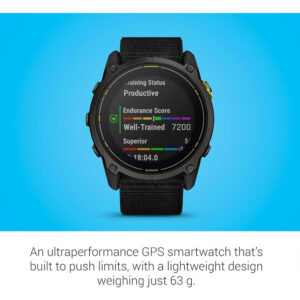
Training Readiness and Endurance Score features help athletes optimize workout timing and prevent overtraining. Reviewer Braxton specifically highlights these additions missing from older Fenix models: “I can now assess my training readiness and plan my workouts accordingly, or opt for a rest day if the analytics tell me that a rest day would be more beneficial.” These metrics synthesize sleep quality, recovery time, training load, and heart rate variability into actionable recommendations.
The optical heart rate sensor delivers accuracy comparable to chest strap monitors during most activities. Reviewer MNH “paired with my Garmin HRM strap too for accurate reading” during workouts, indicating the watch supports ANT+ connectivity for users who prefer chest strap precision during interval training or other demanding workouts where wrist-based optical sensors can lose accuracy.
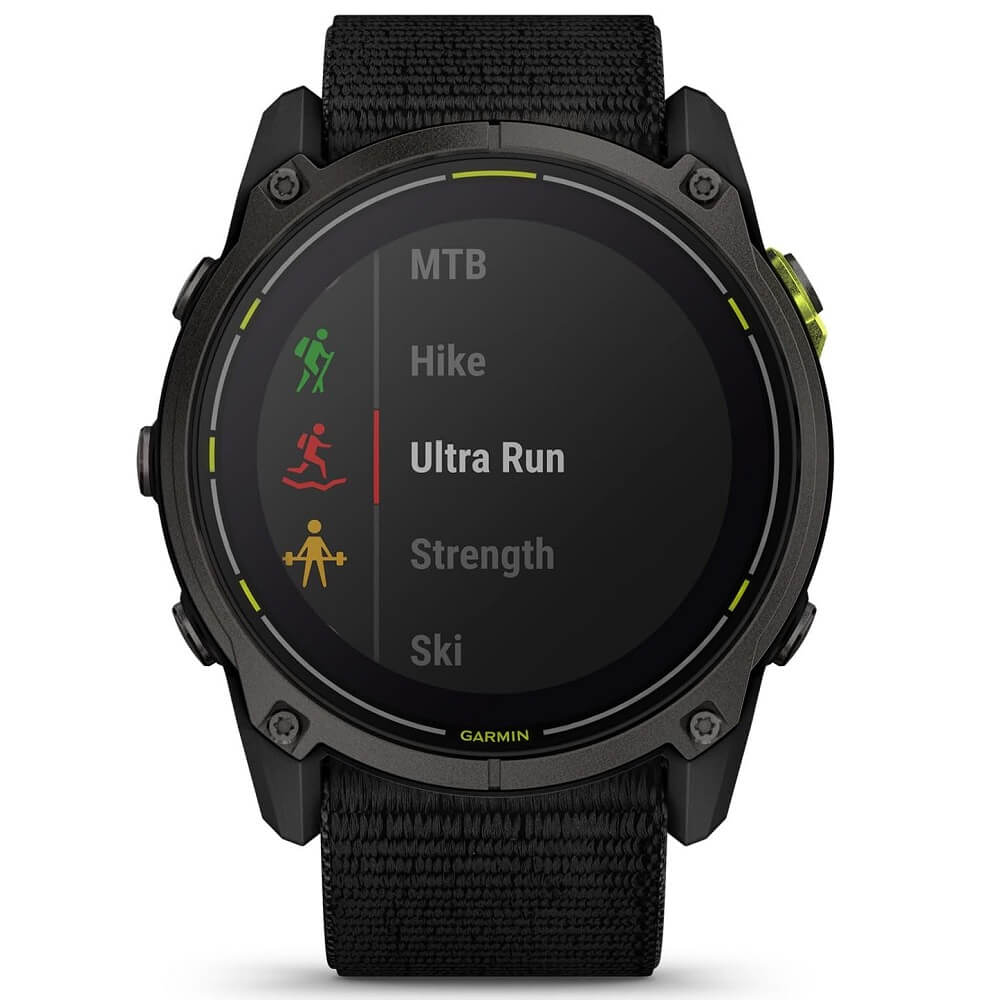
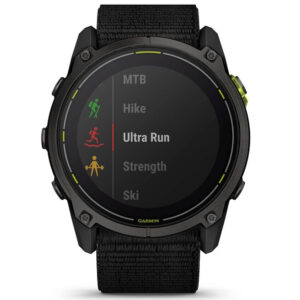
The watch supports over 70 sport profiles covering running, cycling, swimming, triathlon, trail running, ultra running, hiking, mountaineering, skiing, and specialized activities. The new “ruck” workout profile receives specific mention from reviewer Chris1221 as a valuable addition for military fitness training and weighted pack workouts.
VO2 max estimation, training load tracking, recovery time recommendations, and performance condition analysis provide competitive athletes with insights previously requiring lab testing or coaching analysis. These metrics leverage Garmin’s Firstbeat Analytics algorithms, which according to Wareable’s review, have been validated against scientific measurements for relative accuracy within consumer device limitations.
Music storage for Spotify, Amazon Music, and other streaming services allows phone-free workouts. Reviewer Chris1221 appreciates “being able to add music to your device via your favorite music app (I prefer Spotify) is great for runners who don’t like a phone in their compression shorts while getting some miles in.” The watch stores up to 2,000 songs directly on the device, with Bluetooth connectivity to wireless headphones. Reviewer Johneric8 specifically recommends Shokz OpenRun Pro 2 headphones after testing multiple Bluetooth options, noting these are “the only pair that didn’t flake out” with reliable connectivity.
GPS & Tracking Accuracy: Multi-Band Precision for Navigation
The Garmin Enduro 3 incorporates multi-band GNSS capability, connecting simultaneously to GPS (United States), GLONASS (Russia), Galileo (European Union), BeiDou (China), and QZSS (Japan) satellite systems. This multi-constellation approach dramatically improves position accuracy in challenging environments like narrow canyons, dense forests, and urban areas with tall buildings.
Garmin’s proprietary SatIQ technology automatically adjusts satellite mode based on environmental conditions. According to Garmin’s technical documentation, SatIQ “dynamically adjusts satellite mode (like multiband GNSS or low-power GPS) based on your environment to optimize battery life without sacrificing accuracy.” This intelligent system uses standard GPS in open areas where accuracy is sufficient, switching to power-intensive multi-band mode only when environmental factors degrade signal quality.
Verified Amazon customer Philip P. Julian used the watch for “a weighted vest walk and it was trail accurate” immediately after setup, while reviewer Jim Rollison took it on “a 12 mile loop at Tom’s thumb” in Arizona where “it worked perfectly and always kept me on the right trail.” The combination of multi-band GPS and preloaded topographic maps provides reliable navigation without requiring constant phone connectivity.
The Enduro 3 includes automatic incident detection with LiveTrack functionality. Reviewer Christina M Hancock experienced the system firsthand: “it’s had the automatic ability to devote more resources to GPS signal capture when under a dense tree canopy” and “even called for help automatically (tho I was ok & cancelled) when I had a fall.” This safety feature automatically sends location data to emergency contacts when the watch detects a serious incident during activities.
Route navigation supports importing GPX files, following preloaded courses, and real-time breadcrumb tracking. The watch can provide turn-by-turn directions and alerts when deviating from planned routes, with reviewer IHaveQuestions crediting the watch with maintaining navigation accuracy throughout a 25-day cruise without charging.
Pace and distance accuracy during running activities matches or exceeds competing GPS watches according to comparison testing by OutdoorGearLab, which found the Enduro 3 delivered consistent measurements across multiple test runs when compared against known distances and other GPS devices.
Build Quality & Durability: Engineered for Extreme Conditions
The Garmin Enduro 3 combines premium materials with robust construction designed to withstand demanding outdoor use. The titanium bezel provides corrosion resistance and structural strength while minimizing weight compared to stainless steel alternatives. The fiber-reinforced polymer case delivers impact resistance without the heft of full metal construction.
The Power Sapphire lens rates 9 on the Mohs hardness scale, second only to diamond, providing exceptional scratch resistance during activities where case contact with rocks, trees, or equipment is inevitable. Multiple Amazon reviewers report extended wear without visible scratches, with Jacob Jaster noting “very nice watch. Durable glass, hasn’t scratched at all yet and I’m usually wrenching on stuff while wearing it.”
Water resistance to 10 ATM (100 meters) allows swimming, snorkeling, and water sports without concern. While the Enduro 3 lacks the 20 ATM dive rating and SubWave underwater communication of the Fenix 8, the 10 ATM rating exceeds requirements for virtually all non-technical diving activities. The watch is not certified for scuba diving or high-speed water sports like waterskiing.
The UltraFit nylon band provides exceptional comfort and breathability compared to silicone straps. Reviewer Jonathan switched from previous Garmin watches and notes “I wasn’t sure about the new watch band at first but I love it. It breaths very well, dries fast, and the skin on my wrist is much happier now. Also I don’t find myself tightening and loosening it constantly like I did with the rubber watch bands.”
The nylon band does retain moisture more than silicone alternatives, which Christina M Hancock identifies as a potential concern: “The nylon mesh band, although great overall, holds moisture (i.e. sweat) unlike silicone bands. We’ll see how big a deal this is over the longer term.” Users in humid climates or those prone to skin irritation from damp materials may prefer swapping to an aftermarket silicone band. The standard 22mm lug width ensures compatibility with thousands of third-party strap options.
Button quality shows substantial improvement over previous Garmin models. Reviewer JP specifically notes “Garmin must have read my Fenix 7x Sapphire Solar review because the Enduro 3 buttons are very crisp” compared to the mushier feel of earlier generations. The tactile feedback aids operation during activities without requiring visual confirmation.
Temperature operating range from -20°C to 60°C (-4°F to 140°F) according to Garmin specifications ensures functionality across extreme environments from winter mountaineering to desert ultramarathons. Multiple reviewers report reliable operation in Arizona summer heat exceeding 110°F without thermal shutdown or battery degradation.
Smart Features & Connectivity: Essential Functions Without Excess
The Garmin Enduro 3 delivers core smartwatch functionality while omitting features that drain battery or add unnecessary complexity for its target audience of endurance athletes. The watch displays smartphone notifications, controls music playback, provides weather forecasts, and supports Garmin Pay contactless payments at compatible terminals.
Unlike the Fenix 8, the Enduro 3 lacks an onboard microphone and speaker, eliminating the ability to take phone calls directly from the watch or use voice assistant features. For the watch’s target market of trail runners, thru-hikers, and backcountry users, this omission is largely irrelevant—and the battery life benefit from removing these power-hungry components significantly outweighs their utility.
Connectivity options include Bluetooth for smartphone pairing, Wi-Fi for data syncing and software updates, and ANT+ for connecting external sensors like heart rate straps, cycling power meters, and running dynamics pods. The watch syncs workout data to the Garmin Connect smartphone app, which provides detailed analysis, training insights, and social features for comparing activities with other users.
Garmin Pay NFC payment functionality works at terminals supporting contactless payments, though the limited bank support compared to Apple Pay or Google Pay frustrates some users. Reviewer Ben notes “the limited support for banks and credit cards is disappointing compared to Samsung Pay or Google Pay” after finding his primary card incompatible with the Garmin system.
The Garmin Connect IQ store provides access to thousands of custom watch faces, data fields, and apps developed by third-party creators. Reviewer JP installed “Falcon Z and the BIG EASY watch faces to provide all the customization I really need,” though he notes the selection and polish lag behind Apple’s WatchOS app ecosystem.
Find My Phone functionality allows locating a misplaced smartphone by triggering an audible alert from the watch. The watch also supports Find My Watch from the Garmin Connect app, displaying the last known GPS location on a map and allowing users to trigger an alarm to locate the watch when nearby.
Value for Money: Premium Performance at Mid-Tier Pricing
At $899, the Garmin Enduro 3 costs $400 less than the Fenix 8 Solar ($1,299) while offering superior battery life and lighter weight. This pricing positions it as the value leader in Garmin’s premium GPS watch lineup for users who prioritize endurance performance over features like AMOLED displays, dive capability, and voice functionality.
The Enduro 3 is currently available on Amazon for $899 (as of February 2026), matching Garmin’s MSRP. The watch represents a $200 reduction compared to the previous Enduro 2 launch price of $1,099, making Garmin’s longest-lasting GPS watch more accessible while improving performance specifications.
Compared to alternative endurance GPS watches, the Enduro 3’s pricing is competitive:
| Watch Model | Price | GPS Battery | Smartwatch Battery | Weight |
|---|---|---|---|---|
| Garmin Enduro 3 | $899 | 320 hours (solar) | 90 days (solar) | 63g |
| Garmin Fenix 8 Solar (51mm) | $1,299 | 89 hours (solar) | 48 days (solar) | 96g |
| COROS APEX 2 Pro | $499 | 75 hours | 30 days | 53g |
| Suunto Vertical | $749 | 85 hours | 60 days (solar) | 74g |
| Apple Watch Ultra 2 | $799 | 12 hours | 2 days | 61g |
The Enduro 3 offers the longest battery life in both GPS and smartwatch modes among premium multisport watches, justifying its price premium over mid-tier options like the COROS APEX 2 Pro while undercutting the feature-rich but shorter-lasting Fenix 8.
For users transitioning from smartwatches like the Apple Watch, the value proposition extends beyond specifications to user experience. Reviewer Chris1221 summarizes this shift: “I was sick of my Apple Watch needing to charge every two days and I won’t go back. Garmin gained my trust and support.” The elimination of charging anxiety represents tangible value for users whose activities require multi-day battery reliability.
The Enduro 3’s pricing makes it accessible to serious recreational athletes rather than exclusively professional or sponsored competitors. Reviewer Amazon Customer calls it a “bucket list item” as an ultra runner, while noting “this watch is $200 less than the previous model, but no shortcuts were taken. How can you beat a better watch for less money!? So the price is spot on!”
Long-term value consideration includes Garmin’s track record of multi-year software support. Previous Enduro and Fenix models receive firmware updates for 4-5 years after release, adding features and maintaining compatibility with new smartphone operating systems. This extended support lifecycle amortizes the initial investment across many years of use.
Who Should Buy the Garmin Enduro 3
The Garmin Enduro 3 serves a specific but substantial market of endurance athletes and outdoor enthusiasts who prioritize battery life, navigation capability, and training metrics over smartwatch features like mobile payments, music streaming, and phone calls.
Ideal buyers include:
Ultra-runners and trail runners: The 320-hour GPS battery life eliminates concerns about battery death during 100-mile races or multi-day ultra events. Verified Amazon customer Amazon Customer specifically purchased it as an “ultra runner” and confirms it has “so many great features on this watch to help me get through a 5k race or a 50 mile ultra adventure.”
Thru-hikers and backpackers: According to The Trek’s specialized hiking review, the Enduro 3 represents the best GPS watch for long-distance trails like the Appalachian Trail, Pacific Crest Trail, or Continental Divide Trail. Solar charging extends battery life between town visits, while preloaded topographic maps provide navigation redundancy. Reviewer Aaron upgraded from a Fenix 5x Pro specifically because he’s “no longer worried about loosing power in the middle of a long hike.”
Multi-day adventure racers: Navigation features combined with extended battery support expedition-length adventure races spanning days without resupply. The ability to track multiple activities (trail running, mountain biking, paddling) within a single event provides comprehensive performance data.
Military and tactical users: The subdued design, extended battery for field operations, and features like the ruck workout profile and red flashlight mode serve military training and deployment scenarios. Reviewer Chris1221 specifically highlights the ruck workout addition for military-style fitness training.
Users frustrated with frequent charging: Multiple Amazon reviewers switched from Apple Watch specifically due to charging frustration. Reviewer JK states “I already had an Apple Ultra that I was replacing because of battery life” while Chris1221 “was sick of my Apple Watch needing to charge every two days and I won’t go back.”
Athletes in sunny climates: Solar charging effectiveness increases dramatically with consistent sun exposure. Reviewer juan gonzalez in Arizona notes “I live in Arizona, so the solar charging comes in very handy,” while K. Stocks reports rapid 5-minute charges from 95% to 100% in Arizona sun.
Who should consider alternatives:
Small wrist users concerned about size: While many reviewers report comfortable wear despite small wrists, the single 51mm case size may overwhelm very small wrists. Consider trying the watch before purchasing if case size is a primary concern. Users preferring smaller options might consider the 43mm or 47mm Fenix 8 models instead.
Scuba divers: The 10 ATM water resistance excludes technical diving. The Fenix 8 offers 20 ATM rating and SubWave sonar communication for dive computers and buddy communication underwater. Recreational swimmers and snorkelers will find the Enduro 3 perfectly adequate.
Users wanting AMOLED vibrancy: The MIP transflective display prioritizes battery life and outdoor visibility over color saturation and contrast. Users who primarily use their watch indoors or prefer vivid displays should consider the Fenix 8 AMOLED variant, though at significant cost to battery life.
Phone call and voice assistant users: The absence of microphone and speaker eliminates taking calls from the watch or using voice commands. The Fenix 8 includes these features for users who value wrist-based phone functionality, though reviewer B. Ellsworth specifically praises being “so glad it does not have a microphone” due to battery and complexity concerns.
Final Verdict: The Best Endurance GPS Watch Under $1000
The Garmin Enduro 3 represents the optimal balance of battery life, features, and pricing in the premium GPS watch market. Its 90-day smartwatch battery life with solar charging and 320-hour GPS tracking capability exceed all competitors, while the $899 price point delivers $400 in savings compared to the feature-rich but shorter-lasting Fenix 8.
The watch’s 4.7-star rating from 2,800+ Amazon customers reflects genuine satisfaction from verified ultra-runners, thru-hikers, and endurance athletes who depend on multi-day battery reliability. Real-world feedback consistently validates Garmin’s battery life claims, with many users reporting 30+ days between charges during regular use.
Strengths that define the Enduro 3:
- Unmatched battery life: 90 days smartwatch mode with solar, 320 hours GPS with solar
- Lightweight 63g construction makes it 34% lighter than Fenix 8 despite larger battery
- Fast USB-C charging reaches 100% in under an hour from low battery
- Premium materials including titanium bezel and sapphire crystal at mid-tier pricing
- Complete Fenix 8 feature set for training, navigation, and health tracking
- MIP display remains perfectly readable in bright sunlight without backlight
- Surprisingly useful LED flashlight with white and red modes
- $400 less than Fenix 8 Solar with superior battery performance
Notable limitations:
- Single 51mm case size limits options for very small or large wrists
- No microphone/speaker eliminates phone calls and voice commands
- MIP display lacks AMOLED color vibrancy and contrast
- 10 ATM water resistance excludes technical scuba diving
- Nylon band retains moisture more than silicone alternatives
- Garmin Pay bank support limited compared to Apple/Google Pay
According to expert reviews from DC Rainmaker, Tom’s Guide, and GearJunkie, the Enduro 3 represents Garmin’s most compelling value proposition for serious endurance athletes. The combination of class-leading battery life, comprehensive training features, and competitive pricing makes it the default recommendation for ultra-runners, thru-hikers, and multi-day adventure participants.
The watch delivers exceptional value at $899 by focusing on what endurance athletes actually need—reliability, navigation, training metrics, and battery life that lasts weeks rather than days. Users who don’t require dive capabilities, AMOLED displays, or voice functionality will find the Enduro 3 offers better value than spending $400 more for the Fenix 8’s additional features they may never use.
For athletes seeking the longest-lasting GPS watch with premium construction and comprehensive training features, the Garmin Enduro 3 stands as the clear choice under $1,000. Its combination of 320-hour GPS battery life, 63-gram weight, and $899 pricing represents the sweet spot between ultra-budget options lacking features and premium models whose added capabilities don’t justify their higher costs for most users.
Sources:
- The Trek – Garmin Enduro 3 Review
- OutdoorGearLab – Garmin Enduro 3 Tested & Rated
- GearJunkie – Garmin Enduro 3 Review
- Tom’s Guide – Garmin Enduro 3 Review
- Wareable – Garmin Enduro 3 Review
- DC Rainmaker – Garmin Enduro 3 In-Depth Review
- Garmin Official – Enduro 3 Press Release
- Garmin Official – Enduro 3 Battery Information
Be the first to review “Garmin Enduro 3”
Related products
Garmin
Garmin
Garmin
Garmin
Garmin
Garmin
Garmin
Garmin
Reviews
There are no reviews yet.