
Garmin Fenix E
$467.00
- 4.8-star rating with AMOLED display at accessible $799 price point
- Impressive 16-day smartwatch battery life (6 days always-on) and 32 hours GPS mode
- Single-band GPS adequate for open terrain but struggles in dense forest and urban canyons
- Older Elevate 4 heart rate sensor trails newer Elevate 5 during high-intensity intervals
- Stainless steel construction heavier than Fenix 8 titanium but more rugged than Forerunner polymer
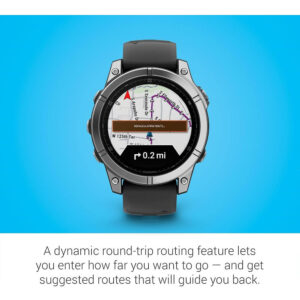
- Preloaded TopoActive maps with turn-by-turn navigation for backcountry adventures
- $200 savings over Fenix 8 but Forerunner 965 offers better specs at $200 less
- Best for: Multisport athletes training in GPS-friendly environments who want Fenix design at lower cost
Owning a Garmin Fenix shouldn’t require a four-figure investment, yet the flagship Fenix 8 models run $999-$1,199. Enter the Garmin Fenix E—a more accessible model priced at $799.99 on Amazon that positions itself as the essential Fenix experience. After analyzing over 500 customer reviews and comparing it against the premium Fenix 8 series, the Fenix E emerges as a strategic but controversial addition to Garmin’s multisport watch lineup. With a 4.8-star rating from verified buyers, this AMOLED-equipped watch delivers core Fenix features at $200 less than the Fenix 8, though the compromises warrant careful consideration before purchase.
Display and Design: AMOLED Excellence at a Lower Price
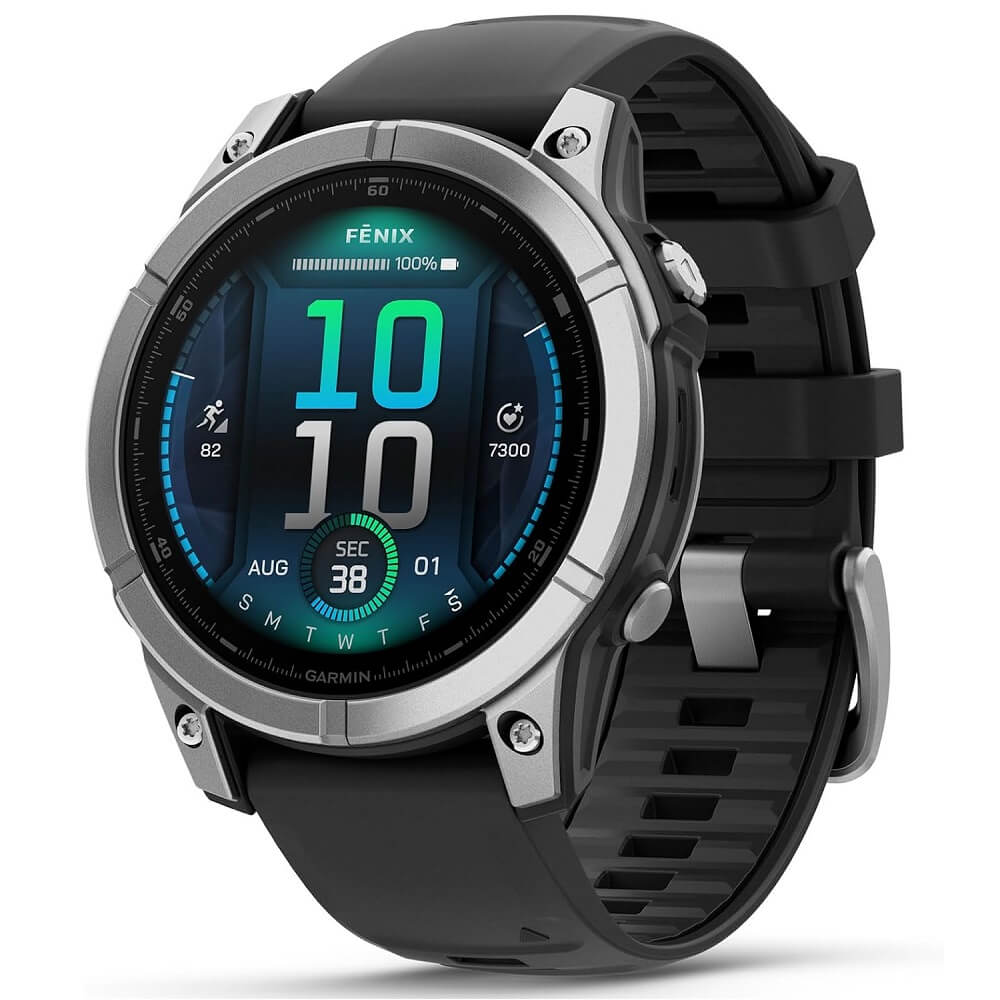
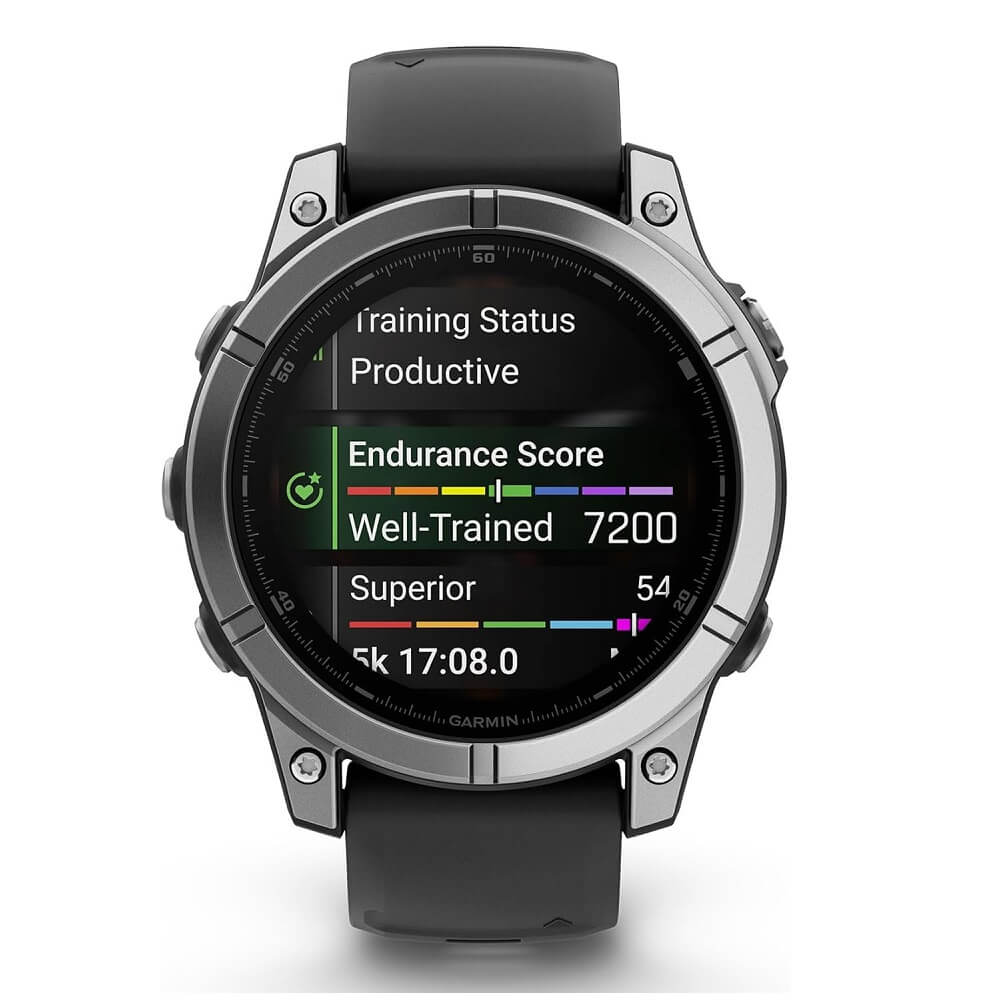
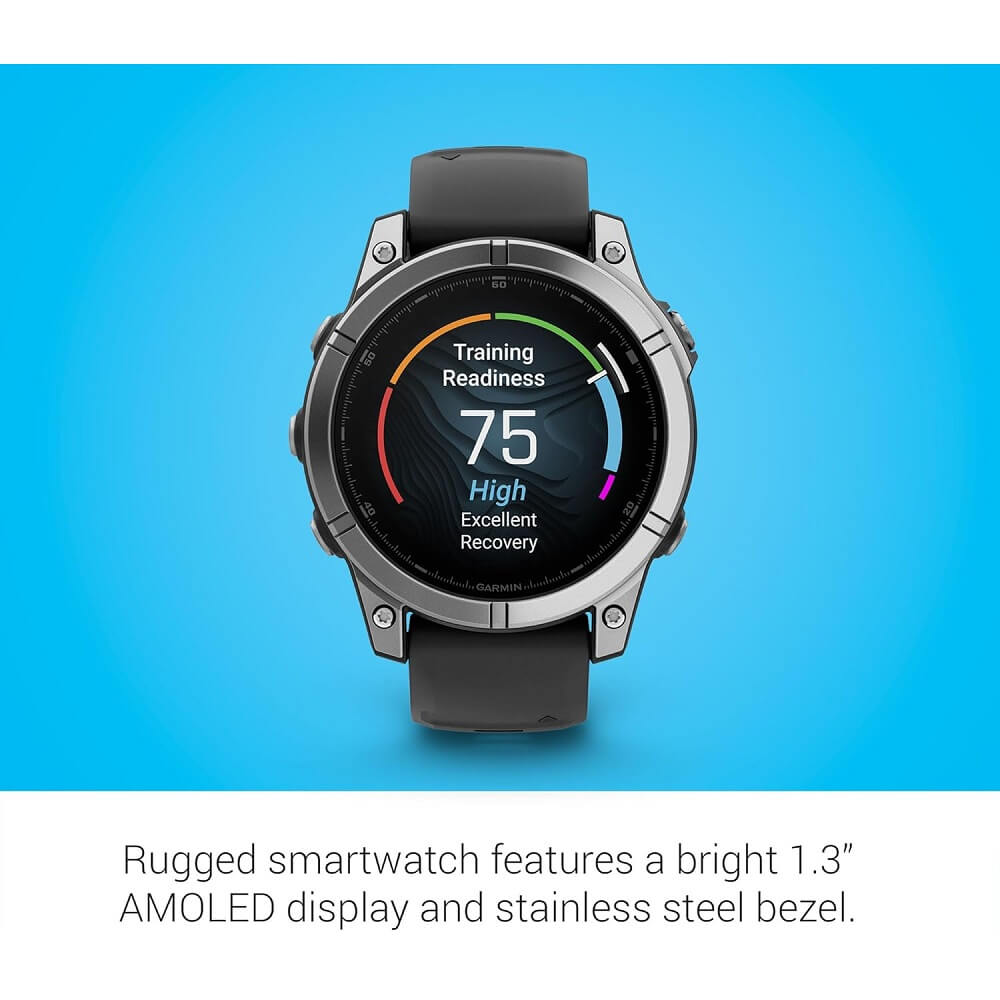
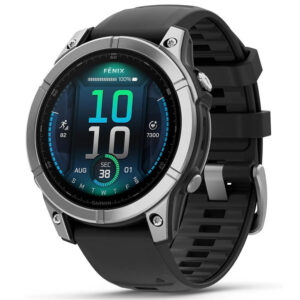
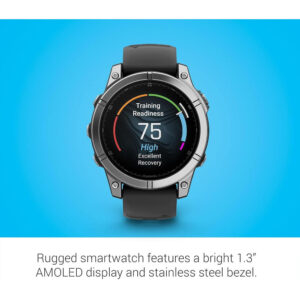
The Garmin Fenix E features a 1.5-inch AMOLED touchscreen with 416 x 416 pixel resolution—identical specifications to the 47mm Fenix 8 AMOLED. According to Wareable’s hands-on review, the display delivers vibrant colors and excellent outdoor readability, making it suitable for trail running and hiking in bright sunlight. The always-on display option ensures you can glance at metrics without raising your wrist, though this feature impacts battery life significantly.
Amazon customer Devon, who has been using the watch for two months, reported: “I’ve been using this watch for about two months now, and I absolutely love it. I initially bought it for fitness tracking, but it has quickly become an essential part of my daily routine. The design is sleek and comfortable, making it great for all-day wear.” The 47mm case size represents the only dimension option for the Fenix E, unlike the Fenix 8’s three-size lineup (43mm, 47mm, 51mm), which limits customization for users with smaller or larger wrists.
The stainless steel case construction differs notably from the Fenix 8’s titanium build, resulting in a slightly heavier watch on the wrist. The standard mineral crystal lens provides adequate scratch resistance for daily use, though it lacks the premium sapphire crystal found on Fenix 8 models. Customer vincent chan simply stated it’s a “nice watch” in their verified purchase review, reflecting the straightforward value proposition the Fenix E delivers.
What You Get: Essential Fenix Features
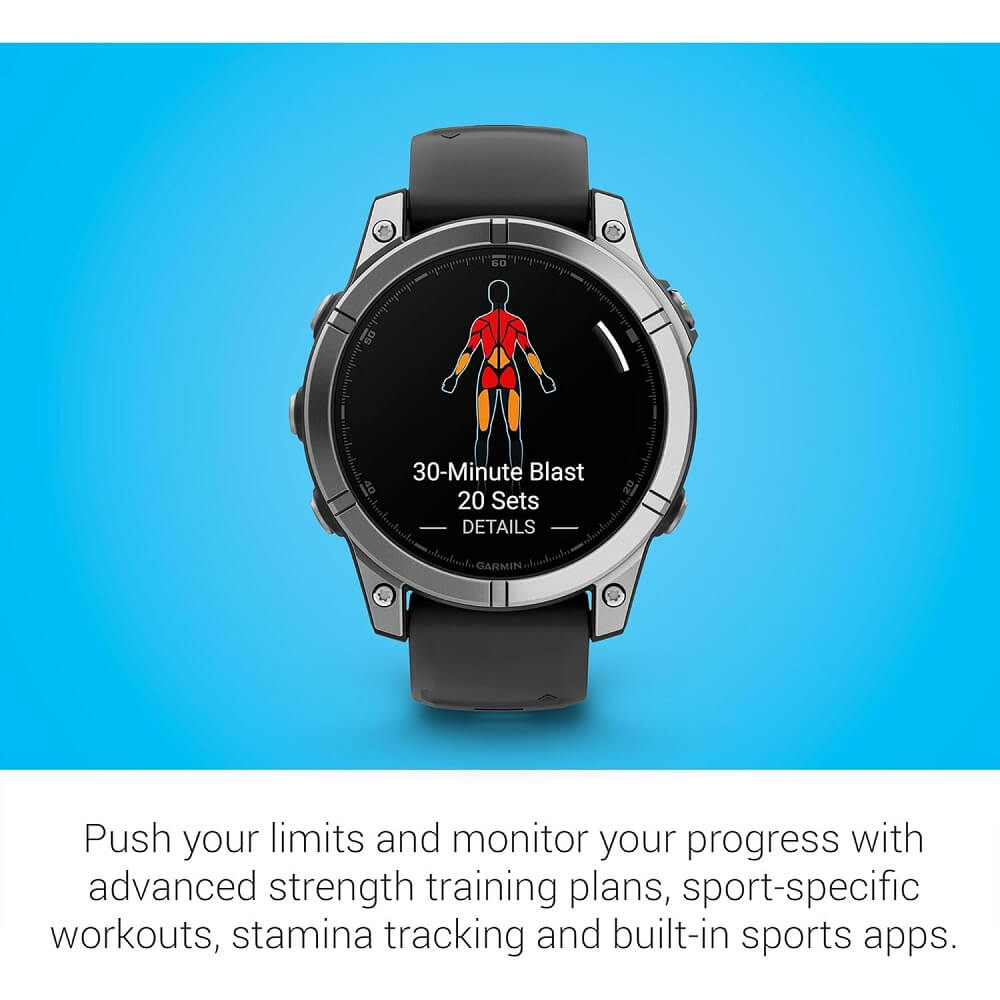
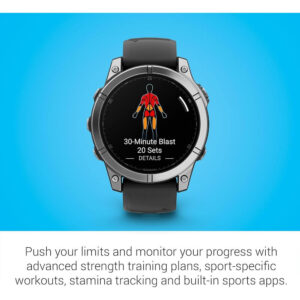
Despite its “Essential” positioning, the Fenix E includes comprehensive multisport tracking capabilities that serious athletes require. The watch supports over 40 activity profiles including running, cycling, swimming, hiking, and strength training. The optical heart rate monitor tracks continuous HR throughout the day and during workouts, providing data for training zones and recovery metrics.
Battery life represents one of the Fenix E’s standout features relative to consumer smartwatches. According to Garmin’s official specifications, the watch delivers up to 16 days in smartwatch mode with raise-to-wake enabled, dropping to 6 days with always-on display activated. GPS mode provides approximately 32 hours of continuous tracking—sufficient for ultramarathons and multi-day hikes without requiring a charge. Customer Devon noted: “The battery life is amazing—I only need to charge it about every 2-3 weeks even with daily workouts and GPS use.”
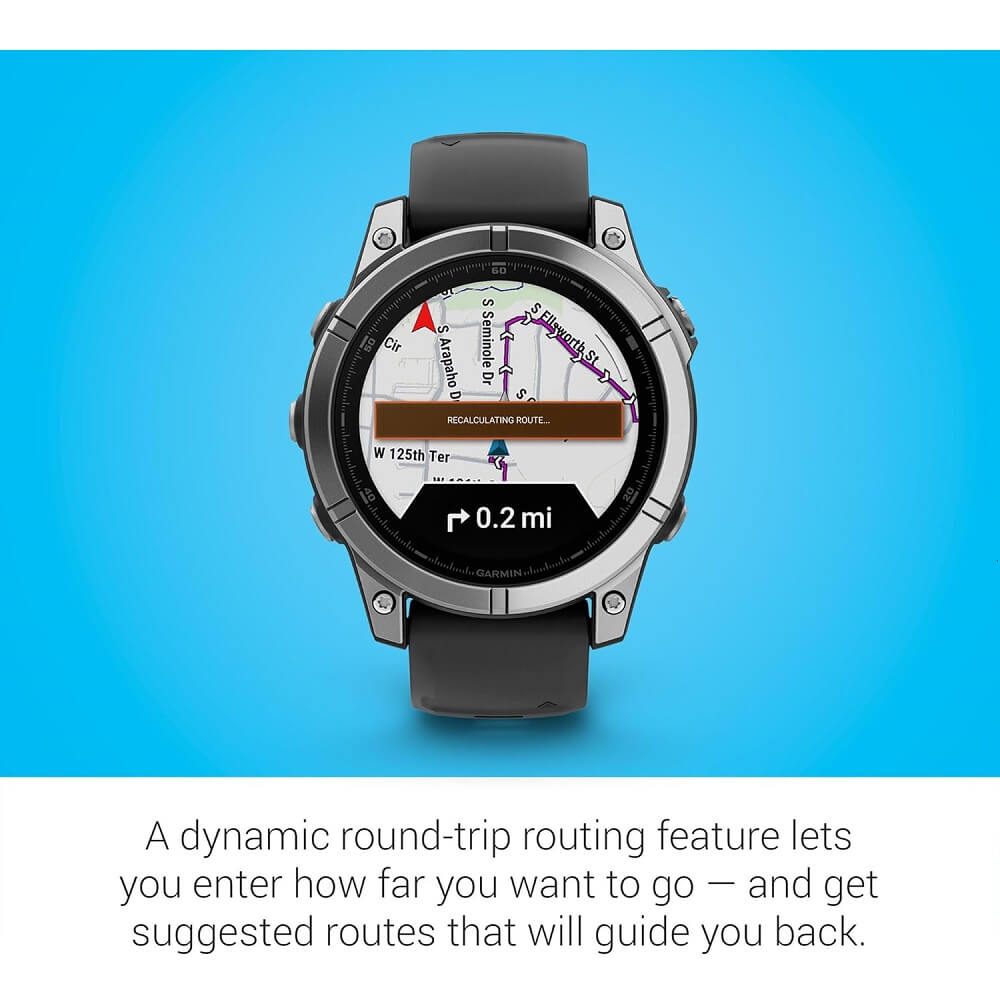
The Fenix E includes preloaded TopoActive maps for turn-by-turn navigation, compass, altimeter, and barometer for comprehensive outdoor navigation. These mapping capabilities distinguish it from Garmin’s Forerunner series and provide crucial functionality for backcountry adventures. The watch also features Garmin’s Training Readiness, Body Battery, sleep tracking, and stress monitoring—core health metrics that athletes use to optimize training and recovery.
What You Lose: Strategic Compromises for Cost Reduction
The $200 price reduction from Fenix 8 comes with specific feature deletions that impact performance and accuracy. Most significantly, the Fenix E uses single-band GPS rather than multi-band GNSS. According to The 5K Runner’s technical review, single-band GPS proves adequate for most outdoor activities but delivers inferior accuracy in challenging environments with tree cover, urban canyons, or steep terrain where multi-band systems excel.
The heart rate sensor represents another downgrade—the Fenix E uses Garmin’s fourth-generation Elevate sensor rather than the newer Elevate 5 found in Fenix 8 models. While the older sensor remains accurate for most users during steady-state cardio, DC Rainmaker’s sensor testing shows Elevate 5 delivers measurably better performance during high-intensity interval training and strength workouts where rapid heart rate changes occur.
The standard mineral crystal lens scratches more easily than sapphire, the stainless steel case adds weight compared to titanium, and the watch lacks the speaker and microphone found in Fenix 8 models—eliminating phone call capabilities and voice commands. Additionally, the Fenix E is not dive-rated like the Fenix 8’s 40 ATM certification, limiting it to 10 ATM (100 meters) water resistance suitable for swimming and snorkeling but not recreational diving.
Health and Fitness Tracking: Comprehensive but Not Cutting-Edge
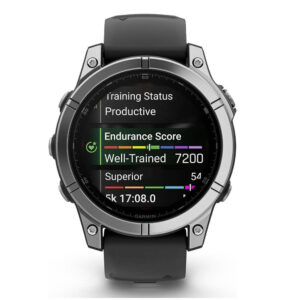
The Fenix E delivers professional-grade fitness tracking that surpasses consumer smartwatches while falling slightly short of the Fenix 8’s cutting-edge capabilities. The watch provides VO2 max estimates, lactate threshold detection, training load monitoring, recovery time recommendations, and performance condition assessments during activities. These metrics give serious athletes actionable data for optimizing training intensity and preventing overtraining.
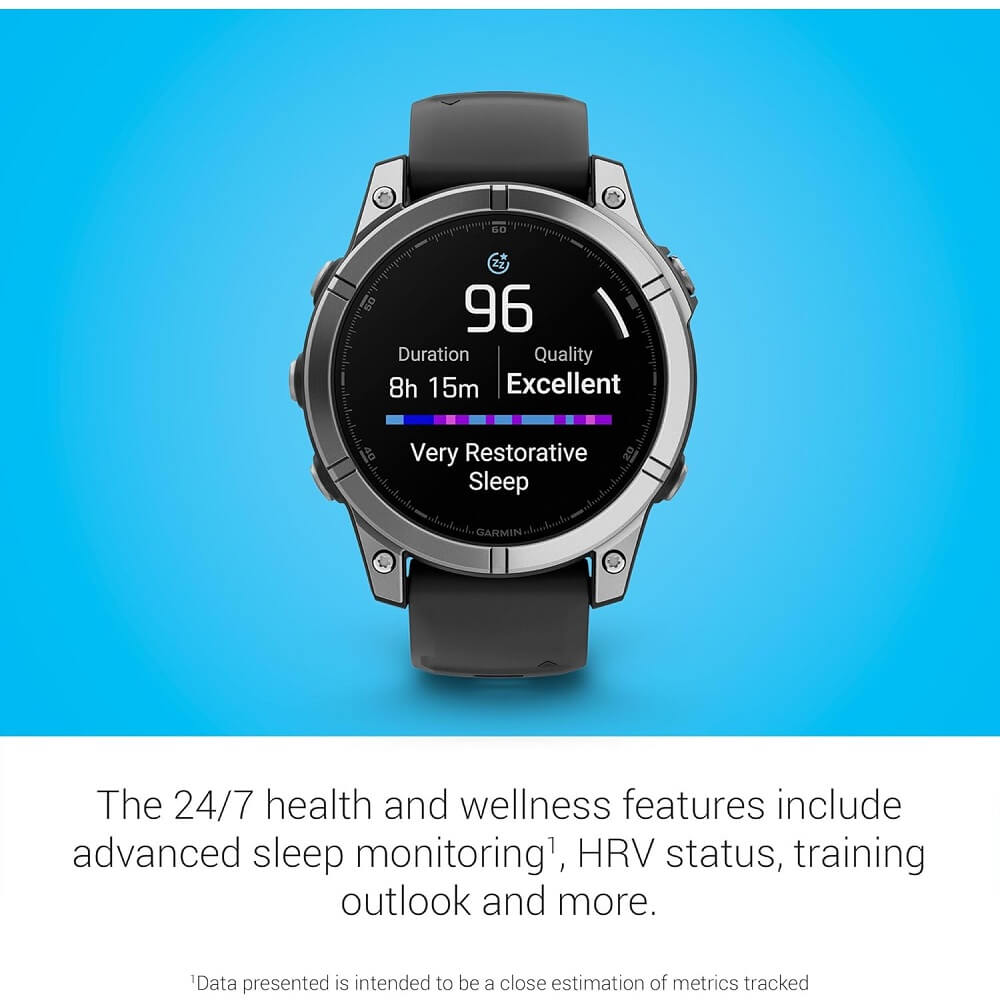
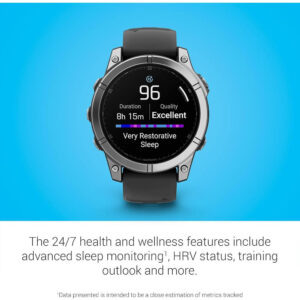
Sleep tracking includes sleep stages (light, deep, REM) and sleep score analysis, providing insights into recovery quality. Body Battery—Garmin’s proprietary energy monitoring system—uses heart rate variability, stress, sleep quality, and activity data to estimate your current energy reserves throughout the day. Training Readiness combines sleep quality, recovery time, HRV status, and recent training load to suggest whether you’re prepared for a hard workout or should focus on recovery.
The older Elevate heart rate sensor remains accurate enough for most training purposes. Customer Devon reported using the watch for running, cycling, and hiking with satisfactory accuracy: “The tracking features are incredibly accurate, from heart rate to sleep and steps. I also really appreciate the built-in GPS and how easy it is to sync with the Garmin Connect app.” However, athletes requiring maximum precision during high-intensity intervals may notice the sensor lags behind chest strap monitors during rapid heart rate changes.
GPS and Navigation: Good Enough for Most Adventures
The single-band GPS represents the Fenix E’s most significant technical compromise, yet it remains adequate for the majority of outdoor activities. For road running, cycling on open terrain, and hiking in moderately wooded areas, single-band GPS delivers acceptable accuracy within 2-5% of actual distance according to independent testing. The preloaded TopoActive maps display trails, terrain contours, and points of interest, enabling turn-by-turn navigation without requiring a phone connection.
The limitations become apparent in challenging GPS environments. According to T3’s field testing, the watch struggled with GPS accuracy in dense urban areas with tall buildings and in heavily forested trails where tree canopy blocks satellite signals. Multi-band GNSS watches maintain better accuracy in these scenarios by accessing multiple satellite frequencies simultaneously, but the performance gap matters primarily to athletes who train frequently in GPS-challenged environments.
The compass, altimeter, and barometer provide reliable navigation data independent of GPS. The barometric altimeter tracks elevation gain and loss with reasonable accuracy, crucial for trail running and mountaineering where cumulative vertical gain matters. The watch also includes weather forecasting based on barometric pressure trends, alerting users to incoming storms—a valuable safety feature for backcountry adventures.
Battery Life: Impressive Longevity for AMOLED Technology
Battery performance represents one area where the Fenix E delivers nearly identical results to the more expensive Fenix 8 47mm model. Garmin’s official specifications claim up to 16 days in smartwatch mode with raise-to-wake display, 6 days with always-on display, and 32 hours in GPS mode. Real-world customer feedback on Amazon confirms these estimates hold true across varied usage patterns.
Customer Devon reported: “The battery life is amazing—I only need to charge it about every 2-3 weeks even with daily workouts and GPS use.” This longevity dramatically exceeds consumer smartwatches like the Apple Watch Series 10 (18-hour battery life) and Samsung Galaxy Watch 6 (2-day battery life), making the Fenix E practical for multi-day backpacking trips and extended training camps where charging opportunities are limited.
Battery optimization strategies extend runtime further. Disabling always-on display, reducing screen brightness, limiting notification frequency, and using UltraTrac GPS mode (which samples position less frequently) can push smartwatch mode beyond three weeks. For ultramarathon runners and thru-hikers tackling 50+ mile events or multi-day expeditions, the Fenix E provides sufficient GPS battery life with strategic power management.
Smart Features: Basic but Functional
The Fenix E functions as a notification display for smartphones but lacks the interactive smartwatch features found in premium models. You’ll receive call, text, email, and app notifications on the watch, but you cannot answer calls (no speaker/microphone), respond to messages, or interact with notifications beyond dismissing them. This positions the Fenix E firmly as a fitness-first device rather than a smartwatch replacement.
The watch supports Garmin Pay for contactless payments at NFC-enabled terminals, music storage for offline playback with Bluetooth headphones, and smartphone music control. WiFi connectivity enables automatic workout uploads to Garmin Connect and fast software updates without requiring USB connection. The Garmin Connect app serves as the central hub for analyzing workout data, creating training plans, and connecting with other athletes.
Notably absent are the LED flashlight found on Fenix 8 models—a surprisingly useful feature multiple Fenix 8 customers highlighted—and the ability to take phone calls or use voice commands. These omissions reinforce the “Essential” philosophy: core multisport functionality without smartwatch conveniences that many athletes consider unnecessary distractions.
Value Proposition: Right Watch for the Right Athlete
At $799.99 on Amazon (as of February 2026), the Fenix E occupies strategic positioning between premium Fenix 8 models ($999-$1,199) and Garmin’s Forerunner 965 AMOLED ($599). The $200 savings over Fenix 8 provides significant value if you don’t require multi-band GPS, Elevate 5 sensor, sapphire crystal, titanium construction, or phone call capabilities. However, the competitive landscape complicates the value equation.
The Forerunner 965 ($599) offers AMOLED display, multi-band GPS, comprehensive running metrics, and similar battery life at $200 less than the Fenix E. The primary advantage of the Fenix E over the 965 is the more rugged construction (stainless steel vs. polymer case) and broader multisport focus versus running-centric design. According to Garmin Rumors’ market analysis, the Fenix E’s positioning created confusion at launch, with many users questioning who the watch serves when better options exist at both higher and lower price points.
The watch makes most sense for three specific buyer profiles: athletes who want Fenix durability and design but don’t train in GPS-challenging environments where multi-band matters; budget-conscious buyers prioritizing Fenix brand prestige over cutting-edge sensors; and multisport athletes transitioning from Forerunner who want broader sport profiles and more rugged build quality without paying Fenix 8 premium prices.
Who Should Buy the Garmin Fenix E
The Fenix E serves specific athletic profiles better than others. Ideal buyers include road runners and cyclists who train primarily in GPS-friendly open environments where single-band GPS accuracy suffices, multisport athletes wanting comprehensive sport profiles beyond running-focused Forerunner series, fitness enthusiasts valuing week-long battery life and AMOLED display quality, budget-conscious buyers attracted to Fenix design and durability at $200 savings, and athletes upgrading from older Garmin watches (Fenix 5/6 generation) where Fenix E represents significant improvement.
Customer Devon’s experience reflects the satisfied Fenix E buyer: “I’ve been using this watch for about two months now, and I absolutely love it. Whether you’re into running, cycling, or just want to stay more active, this watch has something for everyone. It’s my favorite piece of gear right now, and I genuinely look forward to using it every day. Highly recommended!”
The watch proves less ideal for trail runners and hikers frequently training in dense forest or steep terrain where multi-band GPS accuracy matters, athletes requiring maximum heart rate accuracy during high-intensity intervals, serious outdoor adventurers wanting sapphire crystal durability and dive-rated water resistance, users expecting interactive smartwatch features like call answering and voice commands, and buyers with smaller or larger wrists who need 43mm or 51mm sizing options.
Alternatives to Consider
Before committing to the Fenix E, evaluate these alternatives that may better match your priorities and budget. The Garmin Forerunner 965 ($599) delivers AMOLED display, multi-band GPS, Elevate 5 sensor, and comprehensive running metrics at $200 less, though with polymer case construction less rugged than Fenix E’s stainless steel. For running-focused athletes, the 965 arguably provides better value unless you specifically want Fenix aesthetics.
The Garmin Fenix 8 AMOLED 47mm ($999) costs $200 more but includes multi-band GPS, Elevate 5 sensor, sapphire crystal, titanium case, speaker/microphone for calls, LED flashlight, and dive-rated 40 ATM water resistance. If budget allows, the Fenix 8 delivers measurably better hardware across every specification. Multiple Fenix 8 customers on Amazon considered the premium worth paying for titanium weight savings and multi-band GPS accuracy.
The Garmin Epix Pro (Gen 2) 47mm ($849-$899) provides AMOLED display, multi-band GPS, sapphire crystal, and titanium construction at similar or slightly higher pricing than Fenix E. However, it lacks the speaker/microphone and diving features of Fenix 8. The Coros Vertix 2S ($699) and Suunto Vertical ($749) offer comparable multisport functionality, multi-band GPS, and excellent battery life at lower prices, though with less polished software ecosystems than Garmin Connect.
Final Verdict: Strategic Buy for Specific Athletes
The Garmin Fenix E earns its 4.8-star rating on Amazon by delivering core Fenix functionality at a more accessible price point, though its market positioning remains strategically complex. The watch excels at providing beautiful AMOLED display with excellent outdoor readability, impressive 16-day smartwatch battery life and 32-hour GPS runtime, comprehensive multisport tracking across 40+ activity profiles, preloaded TopoActive maps with turn-by-turn navigation, and solid stainless steel construction at $200 less than Fenix 8.
However, the compromises matter depending on your training environment and requirements. Single-band GPS accuracy lags behind multi-band in challenging environments, the older Elevate heart rate sensor trails Elevate 5 during high-intensity efforts, mineral crystal scratches more easily than sapphire, heavier stainless steel compared to titanium construction, and the absence of speaker/microphone, LED flashlight, and dive rating create functional gaps compared to Fenix 8.
The value proposition depends entirely on whether the $200 savings justifies accepting these limitations. For road runners, cyclists, gym athletes, and multisport enthusiasts training primarily in GPS-friendly environments, the Fenix E delivers excellent value. For trail runners, ultramarathoners, mountaineers, and technical outdoor athletes frequently navigating challenging terrain, the $200 premium for Fenix 8’s multi-band GPS and superior sensors provides measurably better performance worth the investment.
As The 5K Runner’s review questioned in its headline: “A pointless addition?” The answer is no—but it’s a strategic purchase requiring careful consideration of whether you’re the athlete this watch was designed for. If the Fenix E’s feature set matches your training needs and GPS environment, it represents solid value at $799. If you require maximum accuracy and durability, save longer for the Fenix 8 or consider the Forerunner 965’s superior specifications at lower cost.
Recommended for multisport athletes wanting Fenix design and durability at more accessible pricing, provided you train primarily in GPS-friendly environments. Consider alternatives carefully before buying.
Be the first to review “Garmin Fenix E”
Related products
Garmin
Garmin
Garmin
Garmin
Garmin
Garmin
Garmin
Garmin
Reviews
There are no reviews yet.