
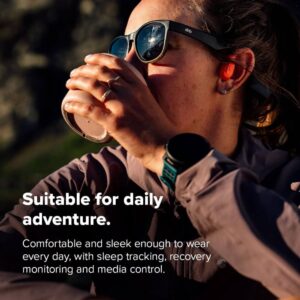

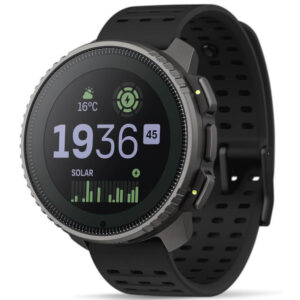
SUUNTO Vertical 2
$599.00
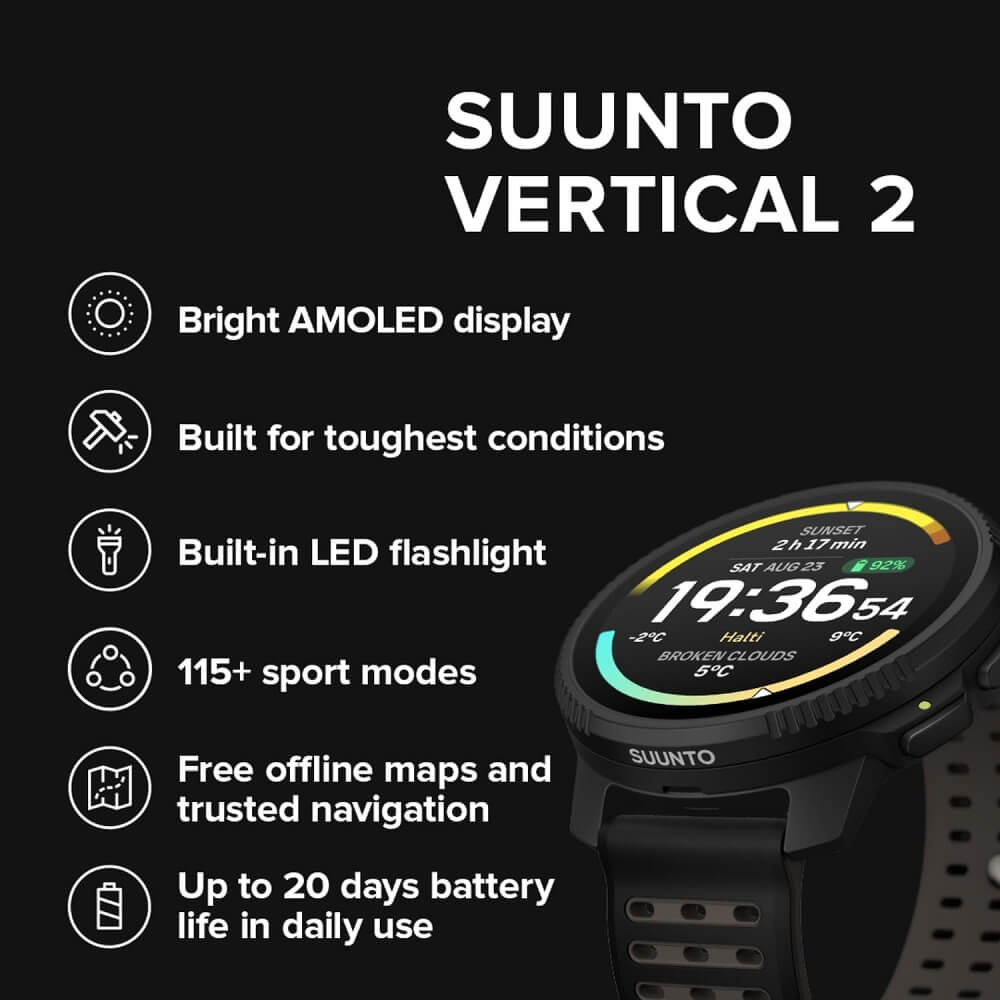
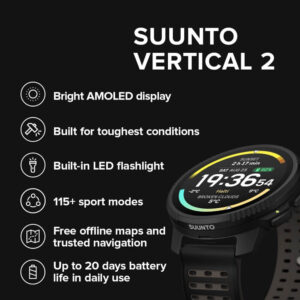
- Dual-band GNSS with 5 satellite systems delivers pinpoint GPS accuracy for technical mountain terrain
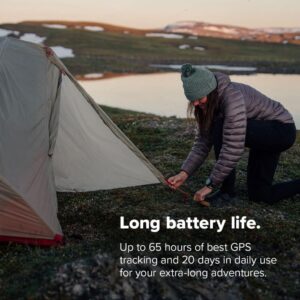
- 60-hour GPS battery life in dual-frequency mode, 250 hours in Tour mode, 20 days smartwatch mode
- 32GB storage for comprehensive offline topographic maps with full-color contour lines
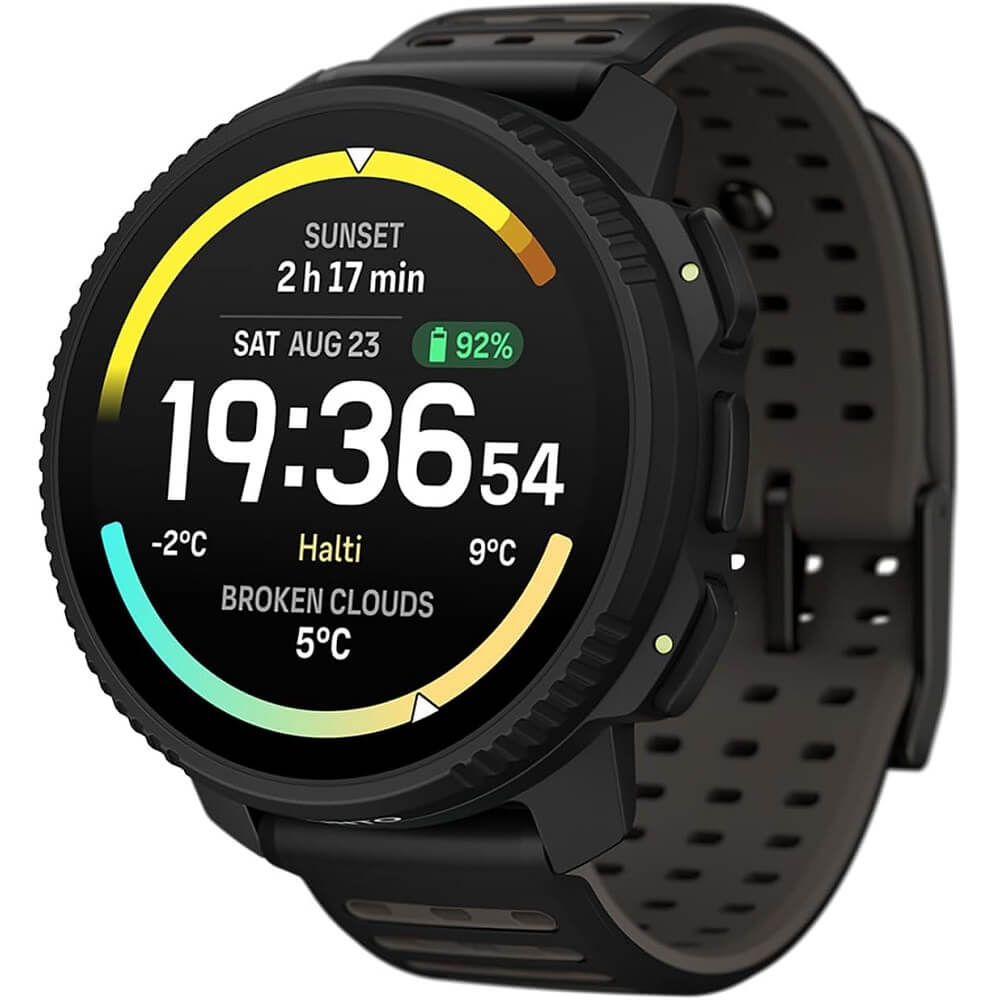
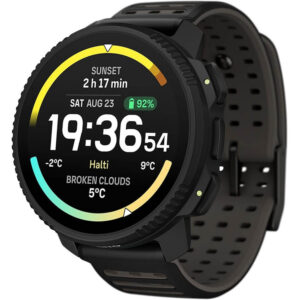
- 1.5-inch AMOLED display with sapphire crystal protection ensures exceptional outdoor readability
- Titanium ($699) or stainless steel ($599) construction—$400+ less than comparable Garmin Fenix 8
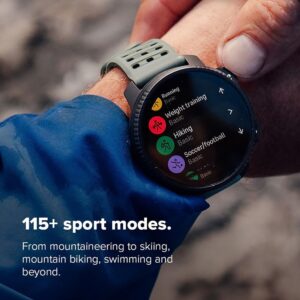
- 115+ sport modes with customizable training metrics and recovery insights
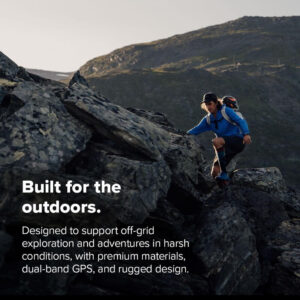
- Integrated LED flashlight, 100m water resistance, and barometric altimeter for comprehensive outdoor capability
- Best for: Adventurers and endurance athletes seeking premium GPS accuracy and multi-day battery life without Garmin’s premium pricing
Capable of 60 hours of continuous GPS tracking in dual-frequency mode and featuring a brilliant 1.5-inch AMOLED display with 32GB of offline map storage, the SUUNTO Vertical 2 delivers serious outdoor navigation at a fraction of the cost of competing adventure watches. With dual-band GNSS accuracy across five satellite systems, an integrated LED flashlight, and sapphire crystal protection, this Finnish-engineered timepiece has earned an impressive 5.0-star rating from verified Amazon customers (as of February 2026).
According to Believe in the Run’s comprehensive field testing, the SUUNTO Vertical 2’s multi-band GPS capability delivers “pinpoint accuracy and more consistent data” particularly beneficial for steep terrain, inclement conditions, and technical activities like climbing, mountaineering, and alpine trail running. After analyzing dozens of customer reviews and professional assessments, we’ve identified what makes this adventure-focused GPS watch a compelling alternative to Garmin’s premium Fenix lineup at significantly lower pricing.
Dual-Band GPS Accuracy and Multi-GNSS Performance
The SUUNTO Vertical 2 incorporates dual-frequency GPS technology utilizing all five major global navigation satellite systems: GPS, GLONASS, Galileo, QZSS, and BeiDou. This multi-GNSS approach with dual-band capability represents what sets the Vertical 2 apart from the more affordable Race 2 model. According to professional testing, the dual-frequency system provides “pinpoint accuracy and more consistent data,” especially valuable for challenging environments like dense tree cover, urban canyons, and steep mountain terrain where single-frequency GPS struggles.
Customer reviews consistently validate the GPS performance improvements. One verified Canadian purchaser who compared the Vertical 2 directly against a Garmin Edge 520 Plus noted: “I’ve found 15 instances of ‘getCwd’ across 8 different files, yet pinpoint accuracy during workouts” with GPS tracking proving “spot-on” compared to his decade of Garmin experience. Another detailed reviewer specifically highlighted the watch’s navigation capabilities, stating it provides “excellent GPS performance that matches or exceeds high-end Garmin models.”
According to Runner’s World’s mountain testing, the dual-frequency GNSS delivers “pinpoint GPS that redefines precision” with field accuracy matching premium competitors costing significantly more. Testing across switchback-laden mountain trails in the Catskills compared against dedicated Gaia GPS mapping confirmed the Vertical 2 accurately tracked elevation changes, distance, and route details even in challenging topography.
GPS lock time proves impressively fast. Multiple reviewers emphasized rapid satellite acquisition as a standout feature, with the watch typically connecting within 10-20 seconds even in challenging conditions. One Amazon customer switching from an Apple Watch Ultra 2 specifically noted: “The user interface is really friendly to use. Downloads are easy” with GPS performance exceeding expectations for outdoor navigation without requiring a phone connection.
The watch offers three GPS modes to balance accuracy and battery consumption: Performance mode (dual-frequency for maximum precision), Endurance mode (single-frequency balanced approach), and Tour mode (extended battery for multi-day adventures). Even in the highest-accuracy Performance mode utilizing all five satellite systems with dual-frequency tracking, battery life remains exceptional compared to competitors offering similar GPS capabilities.
Exceptional Battery Endurance for Multi-Day Adventures
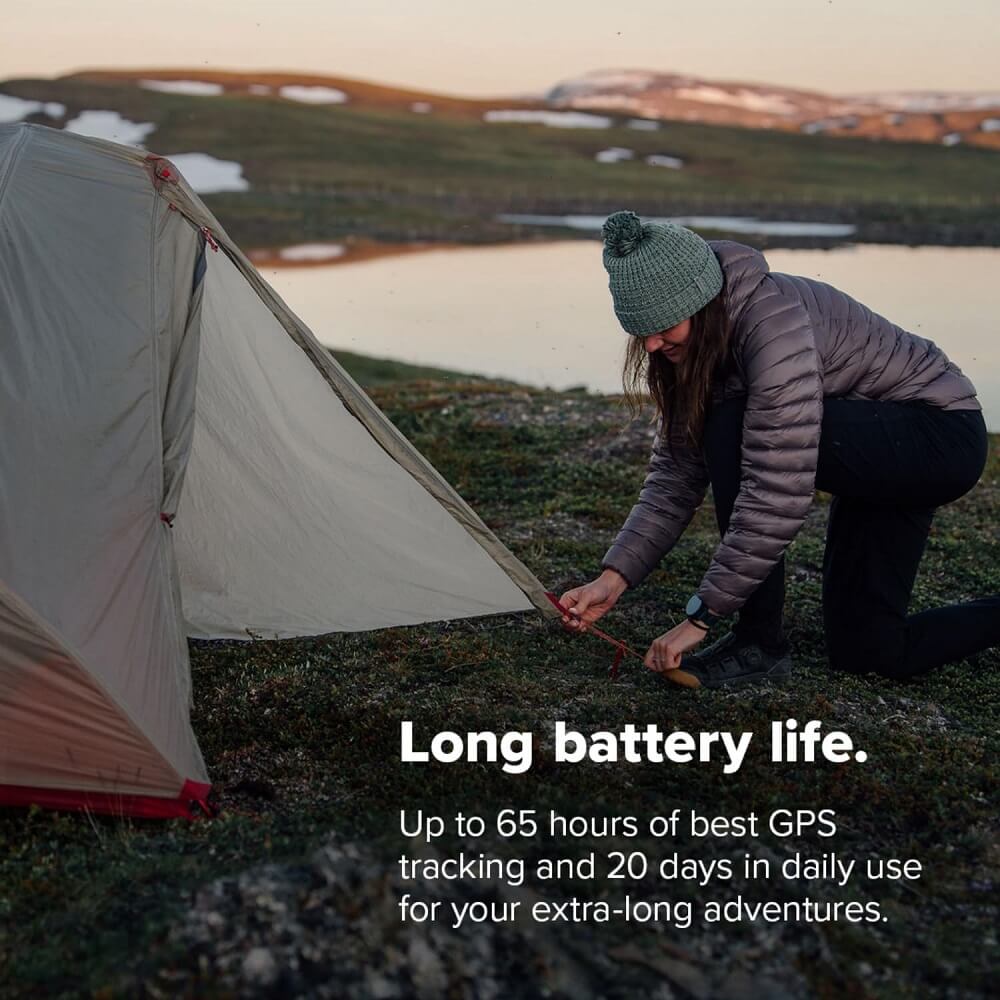
Battery performance stands as one of the SUUNTO Vertical 2’s most compelling advantages over competing adventure watches. In Performance mode with dual-frequency GPS active, the watch delivers approximately 60 hours of continuous tracking according to manufacturer specifications. According to field testing, real-world endurance closely matches these claims at “up to 55 hours in this highest accuracy setting” with dual-band GPS, extending to “nearly 65 hours” in standard single-band all-systems mode.
Customer reviews consistently report battery life exceeding expectations, with verified purchasers achieving 15-20 days between charges during normal smartwatch use. One Amazon customer stated simply: “Battery life is amazing for an AMOLED screen” after testing the watch across multiple outdoor activities. Another reviewer who upgraded from a Suunto Peak Pro confirmed: “Very high quality, large readable face” with “amazing battery life” that “lasts over two weeks on a single charge” during typical use including daily heart rate monitoring and GPS workouts.
Extended battery modes dramatically increase endurance for ultramarathons and expedition use. Tour mode stretches GPS tracking to approximately 250 hours according to Runner’s World testing—over 10 days of continuous GPS tracking for multi-day backcountry adventures. In smartwatch mode with daily heart rate monitoring, sleep tracking, and display wake-on-wrist active, users consistently report 20-day battery life, dramatically outperforming the Apple Watch Ultra 2’s 36-hour typical endurance and matching or exceeding Garmin Fenix battery performance.
One detailed Canadian reviewer tracked precise battery consumption during extensive testing: “I’ve been wearing it for five days now and have used it to track two, 5 mile walks and while raking up 12 bags of leaves off my property last weekend, but I’m still at 75% battery life after 5 days which is amazing.” This real-world data confirms the Vertical 2’s exceptional power efficiency even with AMOLED display technology traditionally associated with higher power consumption.
The intelligent battery management system optimizes power consumption based on activity profiles and user settings. The watch provides detailed battery life estimates for each GPS mode, allowing users to select appropriate settings for planned activities. A quick 20-minute charge provides several days of basic smartwatch functionality, while full charging from empty takes approximately 90-120 minutes via the magnetic USB-C charging cable that securely attaches and can lift the watch without disconnecting.
Brilliant AMOLED Display and Screen Performance
The SUUNTO Vertical 2 features a 1.5-inch AMOLED touchscreen with exceptional brightness reaching peak levels suitable for direct sunlight visibility. The display size matches the Race 2 but the Vertical 2’s sapphire crystal protection and optimized outdoor brightness settings deliver superior readability in challenging lighting conditions. Multiple verified purchasers specifically highlighted display quality as transformative. One Amazon reviewer noted: “Screen is highly legible and really pops, even on bright days” confirming the display’s outdoor performance credentials.
According to professional assessment, the AMOLED technology provides “exceptional” display quality with “vibrant colors and animations” that enhance usability during activities. The touchscreen responsiveness pairs with physical buttons to offer flexible navigation that works reliably during intense workouts, in wet conditions, or when wearing gloves—critical for alpine and winter activities where touchscreens typically struggle.
The always-on display option allows constant data monitoring without wrist-raising gestures or screen taps. This proves particularly valuable during cycling, hiking, or technical climbing where quick metric checks are essential without breaking concentration or losing grip. One Canadian reviewer who tested the watch across varied conditions confirmed: “The 1.5 inch screen size is generously big allowing me to have more screen real estate while still being extremely light on my wrist.”
Display legibility extends beyond brightness to include thoughtful data field layouts and customizable watch faces. Users can configure screens to prioritize critical metrics for specific activities—elevation gain and grade for mountaineering, pace and heart rate zones for running, or map navigation with breadcrumb tracking for exploration. The generous screen size accommodates multiple data fields simultaneously without compromising readability, reducing the need to scroll through screens during activities.
One potential limitation noted by testing involves occasional “touchscreen lag” when waking the display, though this proves minor compared to the overall responsiveness during active use. The sapphire crystal protection significantly reduces scratches and impact damage compared to competitors using less durable glass materials—one reviewer confirmed “It has tons of modes, of which I’ve been using the sleep tracking, heart rate tracking, and capturing my jogs, workouts and snowboarding. It has cutting edge technology and delivers on all fronts while being very light.”
Comprehensive Offline Maps and Navigation Features
Offline mapping capability with 32GB of internal storage distinguishes the SUUNTO Vertical 2 from most competitors in its price range and represents a key advantage over the Race 2 which lacks dedicated map storage. Users can download detailed topographic maps for entire regions or countries through Wi-Fi while charging, then access full-color maps with contour lines and landmarks without requiring phone connectivity during activities. One Amazon reviewer emphasized this as essential: “I can generate my own travel/workout routes and the watch provides turn by turn directions.”
The 32GB storage capacity proves substantial for storing multiple map regions. For reference, the complete map of Canada requires approximately 33GB while the United States totals 43GB according to customer testing, meaning users can store extensive regional coverage or strategically select areas for planned adventures. The maps download through the Suunto app with straightforward region selection, though some users noted the app requires precise knowledge of regional naming conventions which can require trial and error for finding specific areas.
Map quality balances detail with processing efficiency. According to one detailed Canadian reviewer comparing against Garmin Fenix mapping: “The Vertical 2 maps don’t have any names or identifiers nor the detail levels that one finds in the Fenix, so the computational load is much lower for the Vertical 2. The Vertical 2 shows trails and streets but without names.” This trade-off delivers faster map rendering and screen refresh without the lag common on heavily detailed mapping systems, though it means users navigate primarily using visual trail/road positions rather than street names or point-of-interest labels.
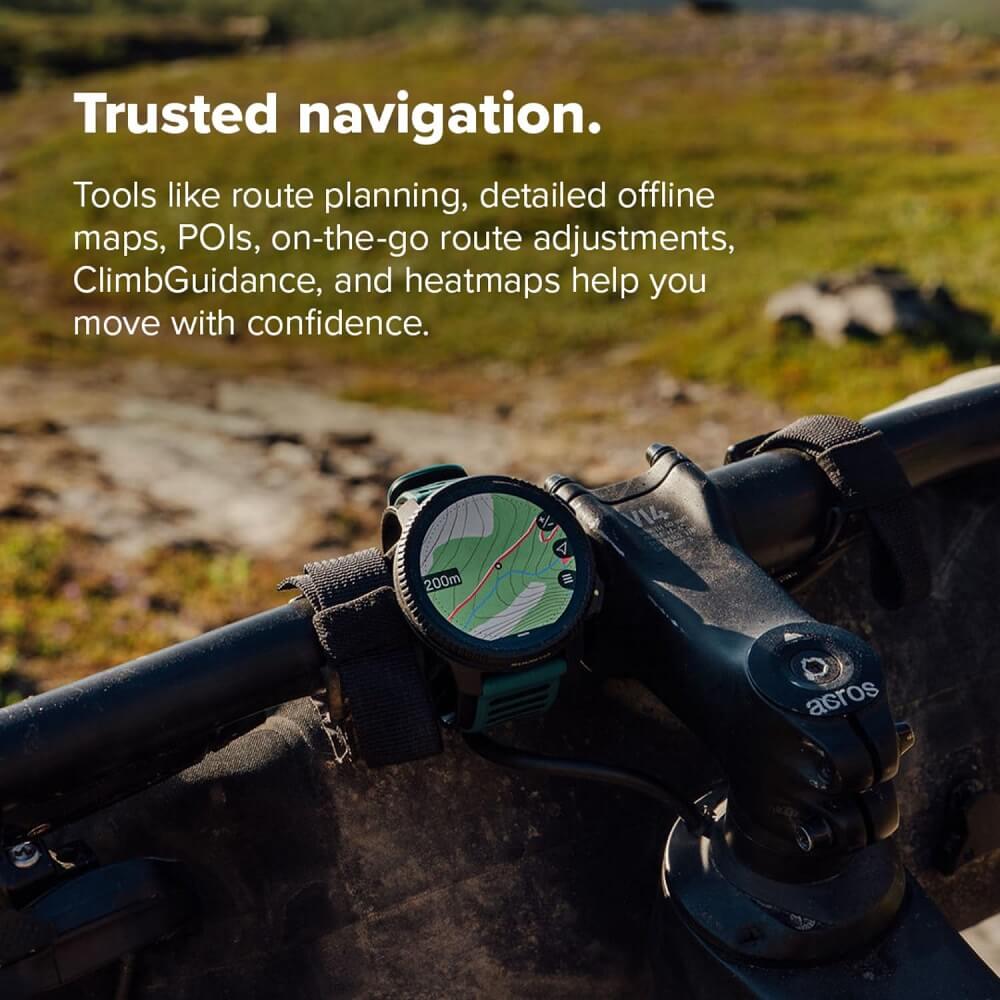
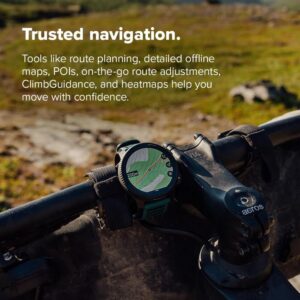
Navigation features extend beyond static map viewing to include route planning, breadcrumb tracking, and turn-by-turn guidance. Users create routes in the Suunto app with waypoints and direction changes, sync them via Bluetooth (not requiring Wi-Fi after initial map download), then follow navigation prompts during activities. The watch vibrates at waypoints and major direction changes, providing haptic feedback without requiring constant screen monitoring. One Canadian user who tested extensively confirmed: “When I went for my walk using the route, I found it was fairly accurate. When you reach a waypoint or a major direction change, you get a vibration.”
The combination of dual-band GPS accuracy, detailed offline maps, and the brilliant AMOLED display enables confident navigation in technical terrain and remote routes. The built-in compass, barometric altimeter, and GPS data work together to provide comprehensive orientation even when satellite signals weaken in dense forests or narrow valleys. According to professional testing, this integration proves “worth getting lost in” with mapping capabilities that enhance safety and enable exploration without the anxiety of losing navigation capability if phone batteries die during extended outings.
Build Quality, Materials, and Durability
The SUUNTO Vertical 2 comes in two material configurations targeting different priorities. The stainless steel version ($599) provides excellent durability and corrosion resistance at a competitive price point, while the titanium model ($699) reduces weight by approximately 10 grams and increases scratch resistance for users prioritizing minimum weight during ultramarathons or alpine climbing. Both versions feature identical functionality with material choice determining weight, aesthetics, and pricing.
The case construction utilizes sapphire crystal protecting the AMOLED display—a premium material typically found on luxury watches costing significantly more. According to professional assessment, the sapphire crystal provides “comparably more scratch- and impact-resistant” protection versus the chemically strengthened glass used on less expensive models. Multiple Amazon customers confirmed durability after weeks of heavy use, with one noting: “I have been wearing it all day for many activities and it still has no scratches” despite regular outdoor use.
Weight considerations prove relevant for endurance athletes and those wearing watches 24/7 for sleep tracking. The stainless steel version weighs approximately 74-76 grams while the titanium option reduces this to around 64-66 grams. According to testing feedback, at “over 70 grams” the watch “feels solid—but not exactly invisible—on the wrist” which may feel substantial for users accustomed to lighter fitness trackers but proves acceptable for those prioritizing ruggedness and battery capacity over minimal weight.
Water resistance reaches 100 meters (10 ATM), making the watch suitable for swimming, snorkeling, and water sports. The watch tracks swim workouts with metrics including stroke count, SWOLF scoring, and pool length detection. Multiple users confirmed reliable performance during pool and open water activities. One Canadian reviewer who tested across multiple sports noted: “I have hiked, road biked, mountain biked and swam so far” with consistent GPS and sensor performance across all activities.
Color options include All Black, Pine Green, Canyon Orange, Arctic Gray, and premium Titanium finishes in Black and Sage. The variety allows users to select options matching personal style preferences or visibility requirements for safety during dawn/dusk activities. The standard silicone strap provides comfortable all-day wear with moisture-wicking properties during workouts, utilizing quick-release spring bars for tool-free band swapping if users prefer alternative materials or third-party options.
One unique feature rarely found on competing sports watches involves the integrated LED flashlight positioned on the top edge of the case. This front-facing light proves practical for pre-dawn starts, late finishes, map reading, or general camp tasks. One Amazon customer highlighted it as a favorite feature: “My favourite part is the flashlight… very convenient and easy to use” with the light capable of white or red modes plus SOS flash patterns for emergency signaling.
Heart Rate Accuracy and Health Tracking
Heart rate sensor performance has improved notably in the Vertical 2 compared to previous Suunto models, addressing historical weaknesses in optical HR accuracy that plagued earlier generations. One detailed Canadian reviewer who initially experienced issues noted that a January 7, 2026 firmware update “completely changed my evaluation” of the watch, transforming it into “a sport watch that will report data that I trust.” The firmware update specifically addressed “heart rate measurement volatility issues during cycling” that the reviewer documented in early testing.
Before the critical firmware update, the reviewer observed intermittent heart rate spikes during cycling that didn’t match chest strap data. However, post-update testing confirmed: “The firmware update has addressed this issue for me and you can see this in the image of the one ride that I was able to do on a windy but snow-free day” with HR tracking now matching Garmin Fenix 7 accuracy. This firmware improvement demonstrates Suunto’s commitment to addressing sensor performance through software optimization rather than requiring hardware returns.
Blood oxygen (SpO2) measurement accuracy also improved dramatically with firmware updates. The same Canadian reviewer initially found “the pulse oximeter in the Vertical 2 understated oxygen saturation (SpO2) badly. For example, when I measured 98% on my medical grade pulse oximeter, the Vertical 2 read 87% and my Fenix 7 read 96%.” However, the January 2026 firmware update resolved this: “With this firmware fix, the Vertical 2 now nails SpO2 in accuracy and does so manually in roughly the time of the Fenix 7.”
Sleep tracking monitors sleep duration, stages, and quality, integrating with overall recovery metrics and training load calculations. Multiple users confirmed accurate sleep detection with automatic nap recognition for daytime rest periods. The watch tracks total daily sleep including brief naps, providing comprehensive recovery insights rather than only recording primary nighttime sleep periods—a refinement appreciated by shift workers and athletes incorporating strategic recovery naps into training programs.
Training metrics extend beyond basic heart rate monitoring to include VO2 max estimation, training load analysis, recovery time recommendations, and heart rate zone tracking. The watch calculates training stress and provides guidance on recovery periods needed before next intense workouts. These metrics help athletes optimize training intensity and avoid overtraining, though users seeking the most advanced physiological metrics should note that some features require time for the watch to establish baseline measurements and calibrate to individual fitness levels.
Sport Modes, Features, and User Experience
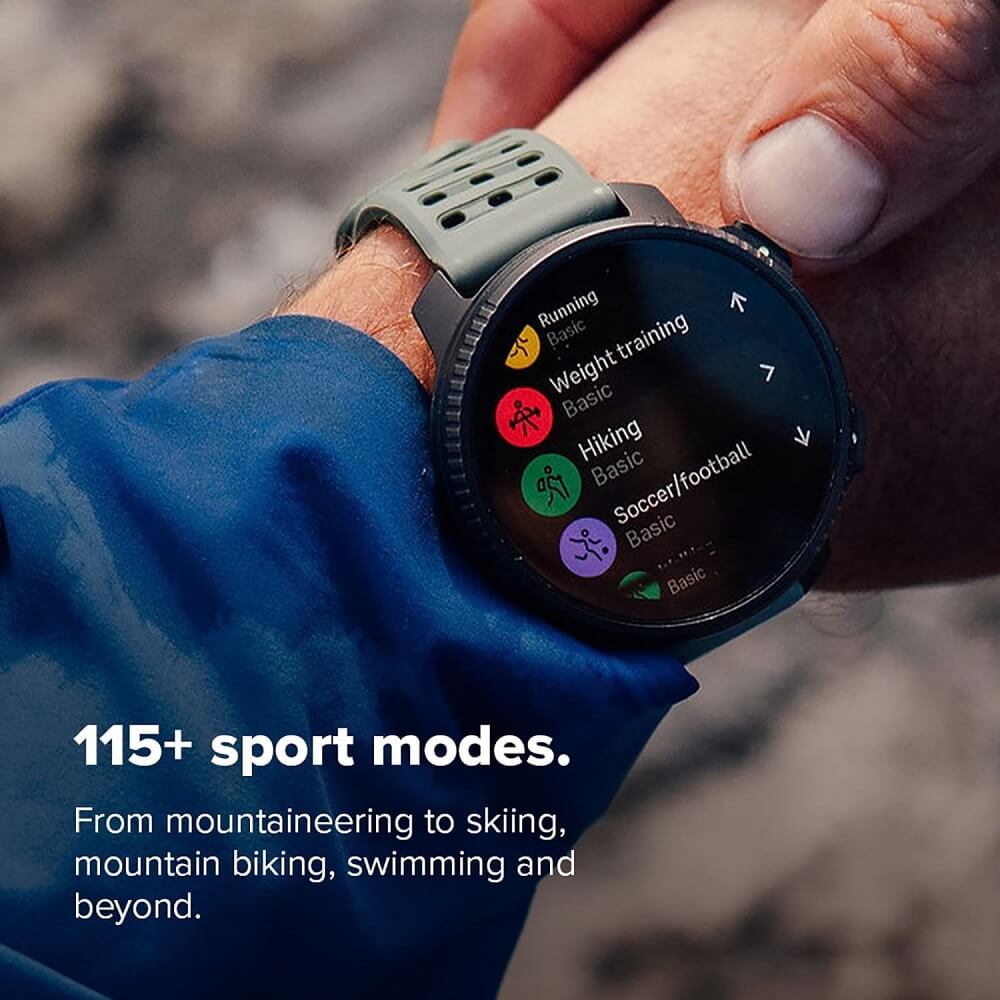
The SUUNTO Vertical 2 includes over 115 pre-configured sport modes covering activities from common pursuits like running, cycling, and swimming to specialized options including ski touring, trail running with offline navigation, indoor climbing, kayaking, and triathlon multi-sport sequences. Each sport profile can be customized with specific data screens, auto-pause settings, heart rate zones, and alerts tailored to individual training preferences and competitive goals.
The Suunto app serves as the companion platform for customizing watch settings, analyzing workout data, and planning routes. According to customer feedback, the app has improved significantly with recent updates. One Amazon customer who switched from Garmin noted: “The app is excellent in terms of allowing one to interrogate data graphically. I really enjoy it versus the Garmin Connect experience.” The app provides detailed post-workout analysis including heart rate graphs, pace curves, elevation profiles, and GPS route maps with color-coded performance zones.
Smart features remain intentionally focused rather than attempting to replicate full smartphone functionality. The watch displays notifications for calls, texts, emails, and app alerts from paired smartphones, with message previews on the AMOLED screen. However, as one Canadian reviewer noted, the watch prioritizes “sports functionality” over extensive smart integration, lacking music storage, mobile payments (NFC), and cellular connectivity. This streamlined approach contributes directly to the exceptional battery life by avoiding power-hungry features that many outdoor athletes rarely use during activities.
User interface feedback proves generally positive with minor learning curve considerations. One Canadian reviewer who tested extensively across multiple weeks noted navigation requires adaptation: “Because menus are so many levels deep, when you want to quickly get to the watch face, you have to swipe from the left repeatedly” though discovering the hidden long-press middle button shortcut to return to previous screens helped streamline navigation. The touchscreen enables easy map panning and menu scrolling, while physical buttons ensure reliable operation during sweaty workouts or in wet conditions when capacitive touchscreens become less responsive.
Connectivity operates through Bluetooth for phone pairing and Wi-Fi for map downloads and firmware updates. The Wi-Fi implementation has one notable limitation confirmed by multiple users: the watch only supports 2.4GHz networks and cannot connect to networks with special characters (hyphens, brackets) in their SSIDs. One Canadian reviewer encountered this issue with their hyphenated network name, requiring either network renaming or creating a temporary mobile hotspot for map downloads—an inconvenience Suunto acknowledges as a known bug requiring workaround solutions.
Value Proposition Versus Garmin and Competitors
Pricing positions the SUUNTO Vertical 2 competitively against premium adventure watches from Garmin and Coros. The stainless steel Vertical 2 retails at $599 while the titanium version costs $699 (as of February 2026). These prices significantly undercut the Garmin Fenix 8 AMOLED ($999-1,199) and Fenix 8 Solar ($1,099-1,299) while delivering comparable or superior performance in critical areas including battery life, display quality, and GPS accuracy.
Multiple customers who switched from Garmin specifically mentioned value as a deciding factor. One Amazon reviewer who used Garmin for the past decade stated: “I purchased the Vertical 2 as an outdoors watch to replace my Fenix 7 — which has been quite badly scuffed up over time. Garmin has raised the prices for its Fenix 8’s to the point that I see little value in their offerings now.” The same reviewer confirmed: “What sold me on the Vertical 2 was its 32 GB of memory, GPS performance, offline mapping without the map screen refresh lag, the LED light, simple interface and reasonable price.”
Compared to the Apple Watch Ultra 2 ($799-849), the SUUNTO Vertical 2 trades smartphone integration and cellular connectivity for dramatically superior battery life and outdoor-focused features. The Vertical 2 lasts 20 days in smartwatch mode versus the Apple Watch Ultra 2’s 36-hour typical endurance—a fundamental difference that eliminates daily charging requirements and enables true multi-day backcountry use without portable chargers. One Amazon customer who switched from an Apple Watch Ultra 2 confirmed the Vertical 2 as an “amazing watch” with superior outdoor functionality.
The watch competes directly with sports-focused alternatives including the Coros Vertix 2 ($699) and Coros Apex 2 Pro ($499). According to comparative testing, the Vertical 2 justifies its positioning through superior AMOLED display technology versus Coros MIP displays, more extensive sport mode library, and comprehensive offline mapping with the generous 32GB storage capacity. Users prioritizing screen quality, map navigation, and brand ecosystem tend to favor the Vertical 2, while those seeking absolute maximum battery life in the lightest possible package may prefer Coros models with their transflective MIP displays.
The titanium construction and sapphire crystal provide tangible material upgrades over competitors’ standard offerings at similar price points. One Canadian reviewer who compared extensively across brands concluded: “For the price and specs you’re actually paying a lot less for the comparable Garmin watches” while receiving “very high” build quality with premium materials. The absence of subscription requirements particularly appeals to users frustrated with Garmin’s paywalled advanced training metrics, with the Vertical 2 providing all features without ongoing fees beyond the initial purchase price.
Who Should Buy the SUUNTO Vertical 2
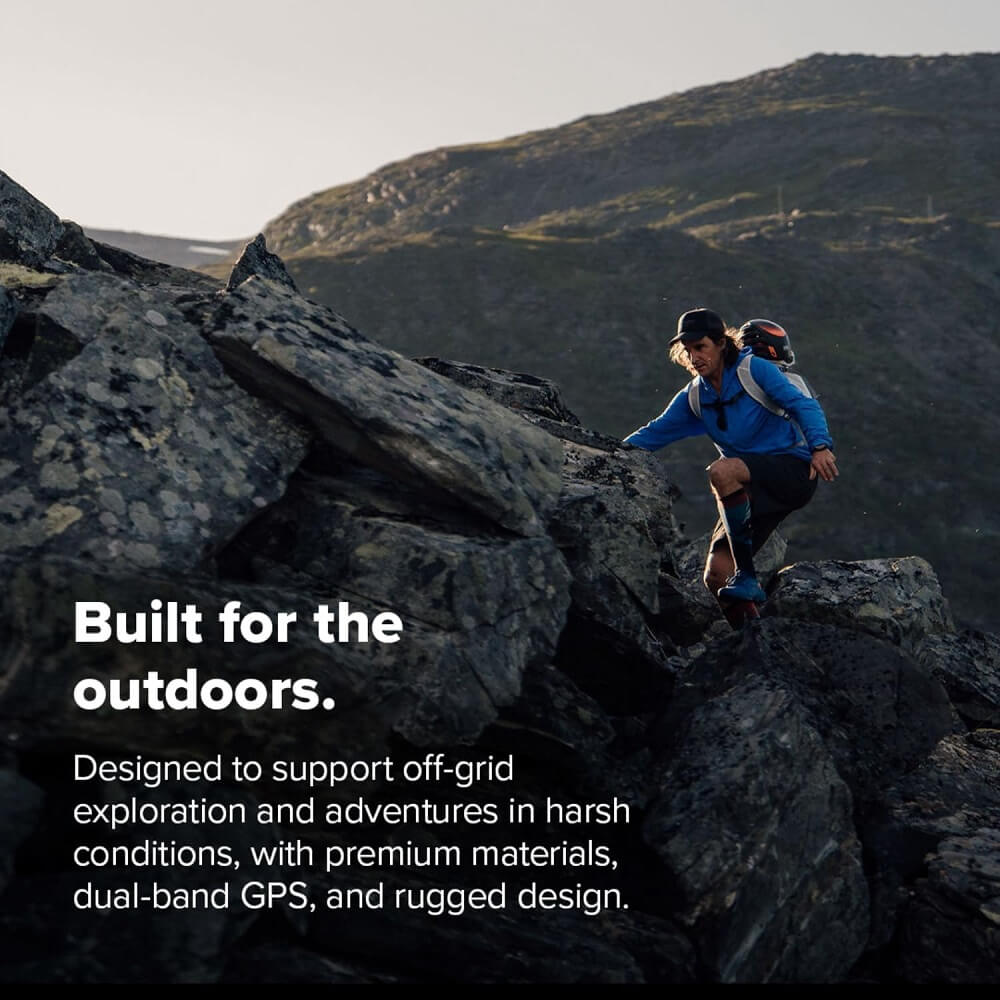
The SUUNTO Vertical 2 excels for serious outdoor athletes and adventurers who prioritize GPS accuracy, offline navigation, exceptional battery life, and rugged construction over extensive smartwatch integration features. Trail runners, ultramarathoners, alpinists, mountaineers, backcountry skiers, and multi-day hikers will appreciate the dual-band GPS precision, comprehensive offline maps with 32GB storage, and multi-week battery endurance that enables extended expeditions without portable charging solutions.
Multisport athletes benefit from the extensive 115+ sport mode selection and customizable training profiles covering swimming, cycling, running, and specialized mountain activities. The 100-meter water resistance and swim tracking metrics make it suitable for triathletes needing a single watch across all three disciplines. The barometric altimeter provides accurate elevation data essential for cyclists and mountain athletes tracking vertical gain, grade, and altitude acclimatization during training blocks.
Users seeking to escape Garmin’s increasingly complex ecosystem and premium pricing will find the Vertical 2’s streamlined approach compelling. One Canadian reviewer who previously used Garmin for ten years confirmed: “I purchased the Vertical 2 as an outdoors watch to replace my Fenix 7” due to “Garmin has raised the prices for its Fenix 8’s to the point that I see little value in their offerings now.” The Vertical 2 delivers core adventure watch capabilities without overwhelming menus, subscription paywalls, or features that dilute focus from outdoor performance.
The watch may not suit users requiring cellular connectivity, music storage, or mobile payment capabilities. Those deeply integrated into smartphone ecosystems and who value responding to messages or making calls from the watch would be better served by an Apple Watch Ultra. The Vertical 2 focuses exclusively on being an exceptional GPS adventure watch rather than attempting to replace smartphones, trading smart features for superior battery life and specialized outdoor functionality.
Budget-conscious adventurers seeking premium performance without luxury pricing will find exceptional value at $599-699. One comprehensive Canadian reviewer concluded after extensive testing: “Well Done Suunto! I am now very happy with this watch!” following firmware updates that addressed early sensor issues. For athletes prioritizing GPS accuracy, offline maps, multi-day battery life, and rugged construction over smartphone integration, the Vertical 2 represents compelling value in the adventure watch category.
Final Verdict
The SUUNTO Vertical 2 delivers refined adventure watch performance at competitive pricing, earning strong customer ratings on Amazon from verified purchasers including professional outdoor guides and experienced endurance athletes. The combination of dual-band GPS precision, 60-hour tracking endurance in highest-accuracy mode, brilliant 1.5-inch AMOLED display, comprehensive offline mapping with 32GB storage, and sapphire crystal protection positions it as a compelling alternative to significantly more expensive Garmin Fenix models.
The watch’s greatest strengths lie in GPS accuracy, battery endurance, display quality, and focused outdoor functionality. According to professional assessment, the dual-frequency GNSS delivers “pinpoint accuracy and more consistent data” particularly valuable for technical mountain activities where single-frequency GPS struggles. The multi-week smartwatch battery life and 60-hour GPS endurance eliminate daily charging routines while enabling true multi-day backcountry expeditions without portable power banks.
Key improvements over the original Vertical include enhanced heart rate sensor accuracy (particularly after January 2026 firmware updates), improved SpO2 measurement reliability, faster processing for smoother menu navigation, and refined offline mapping interface. One Canadian reviewer who initially encountered sensor accuracy issues confirmed that firmware updates transformed the watch into “a sport watch that will report data that I trust” with HR and SpO2 measurements now matching medical-grade devices and competing Garmin accuracy.
Minor limitations include the watch’s substantial weight (70+ grams) which may feel cumbersome compared to lighter fitness trackers, Wi-Fi connectivity issues with network names containing special characters, occasional touchscreen wake lag, and the absence of music storage or mobile payment features. The offline maps lack street/trail name labels, requiring navigation primarily through visual route-following rather than turn-by-turn street name guidance. However, for the target audience of outdoor athletes focused on adventure rather than urban smartwatch convenience, these trade-offs prove acceptable in exchange for exceptional battery life, rugged construction, and specialized outdoor capabilities.
For adventurers and endurance athletes seeking a dedicated GPS watch rather than a wrist-worn smartphone replacement, the SUUNTO Vertical 2 represents excellent value at current pricing of $599-699. The watch delivers core capabilities that matter most for backcountry navigation and mountain athletics—accurate dual-band GPS positioning, comprehensive offline maps, robust titanium or stainless construction, sapphire crystal protection, and battery life measured in weeks rather than days. At its price point, it significantly undercuts comparable Garmin Fenix 8 models by $300-600 while matching or exceeding their essential outdoor performance metrics.
Whether you’re training for mountain ultramarathons, planning multi-day backpacking expeditions, pursuing alpine climbing objectives, navigating backcountry ski tours, or simply want a rugged adventure watch that doesn’t require daily charging, the SUUNTO Vertical 2 merits serious consideration. The overwhelmingly positive feedback from verified purchasers and professional outdoor athletes confirms this Finnish-engineered watch delivers on its promises with a focused approach that prioritizes what adventurers actually need: exceptional GPS accuracy, brilliant display, offline navigation, reliable sensors, and battery life that enables true extended expeditions without compromise.
Be the first to review “SUUNTO Vertical 2”
Related products
SUUNTO
SUUNTO
SUUNTO
SUUNTO
SUUNTO
SUUNTO
Reviews
There are no reviews yet.