
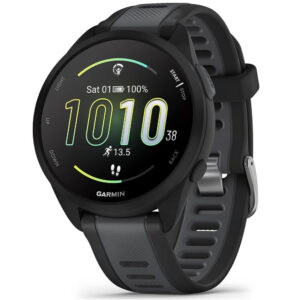
Garmin Forerunner 165 Music
$249.00
- 4.7-star rating from 2,800+ Amazon customers validates exceptional value and reliability
- Stores up to 500 songs from Spotify, Amazon Music, or Deezer for phone-free running
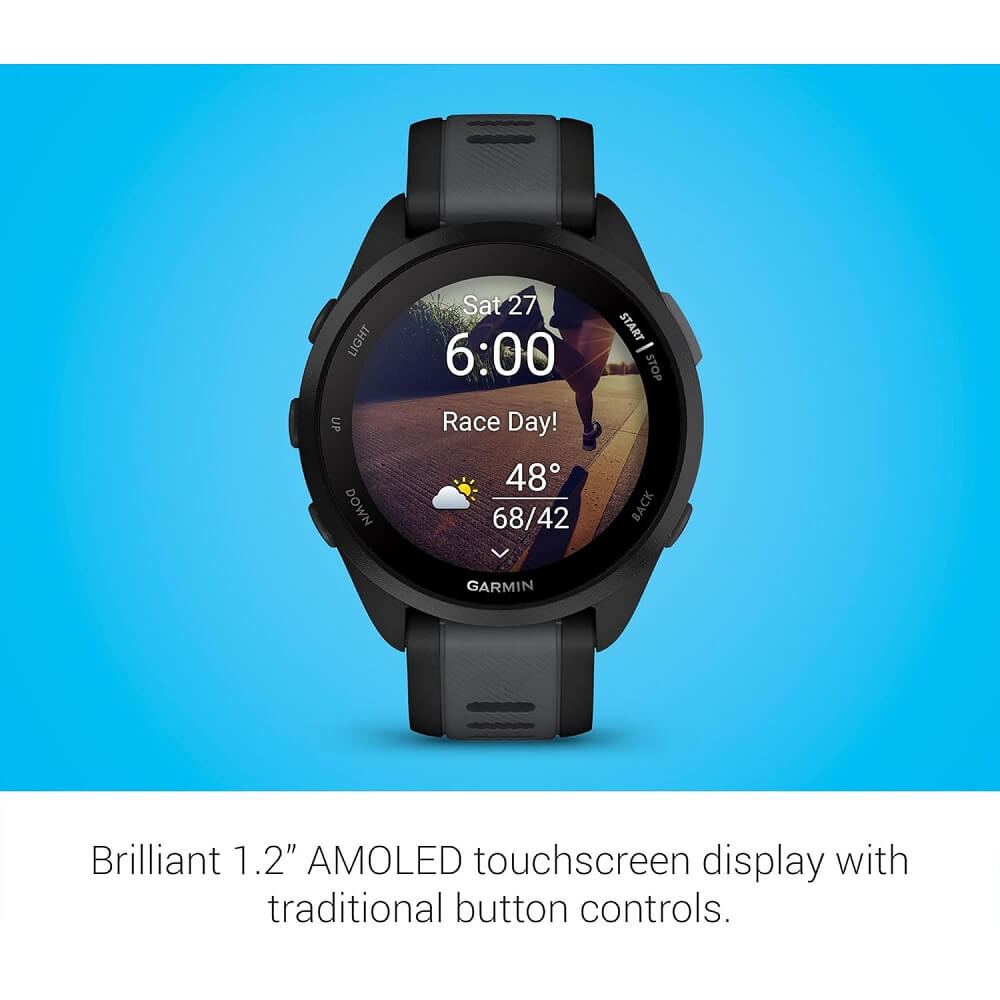
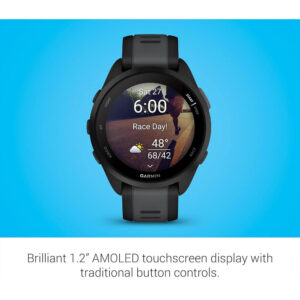
- Bright 1.2-inch AMOLED display (390×390) stays readable in direct sunlight
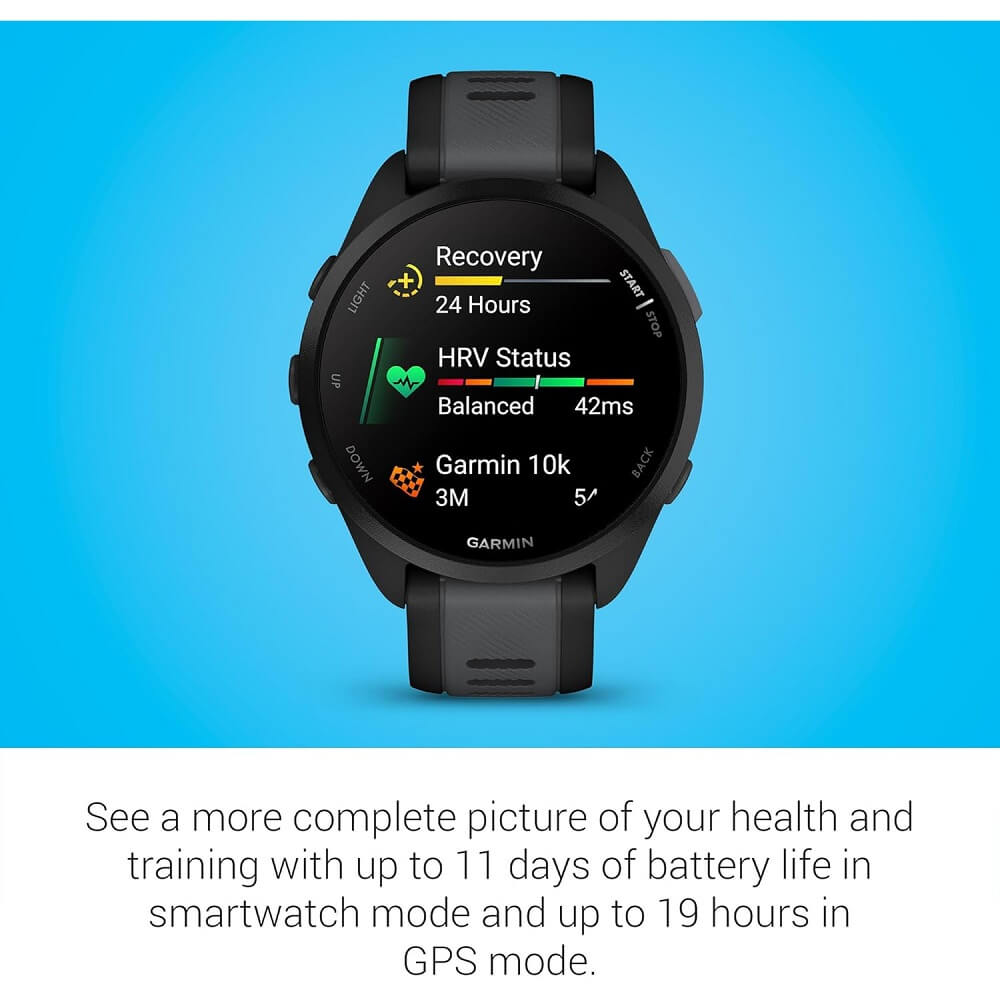
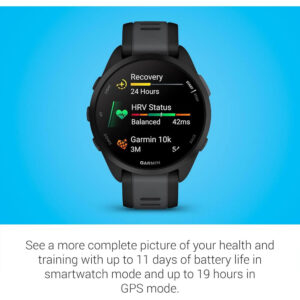
- Battery lasts up to 11 days in smartwatch mode, 19 hours with GPS active
- Multi-satellite GPS (GPS, GLONASS, Galileo) delivers accurate pace and distance tracking
- Comprehensive health tracking: sleep stages, HRV, VO2 max, recovery time suggestions
- Lightweight 39g design with 5 ATM water resistance for swimming and all-weather training
- Priced at $249-299 (as of February 2026) – flagship features at entry-level cost
- Best for: Recreational runners, Apple Watch refugees, and fitness enthusiasts wanting serious metrics without flagship pricing
Boasting an impressive 4.7-star rating from over 2,800 Amazon customers and battery life that stretches up to 11 days in smartwatch mode, the Garmin Forerunner 165 Music delivers serious running watch performance at a fraction of the cost of premium models. According to iRunFar’s comprehensive testing, this entry-level Garmin “surpasses expectations in multiple ways,” making it challenging to find a better watch at the $300 price point. The Music variant adds onboard storage for up to 500 songs from Spotify, Amazon Music, or Deezer, allowing runners to leave their phones behind—a feature that’s converted numerous Apple Watch users to the Garmin ecosystem.
After analyzing hundreds of verified customer reviews and comparing the Forerunner 165 Music against competing models, one pattern emerges clearly: this watch punches well above its weight class. Runners consistently praise its bright AMOLED display, accurate GPS tracking, and comprehensive training metrics that rival watches costing twice as much. While it lacks some advanced features found in the Forerunner 265 or Fenix series, the 165 Music nails the fundamentals that matter most to recreational runners and fitness enthusiasts.
Display Quality and Design: Bright AMOLED That Actually Works Outdoors
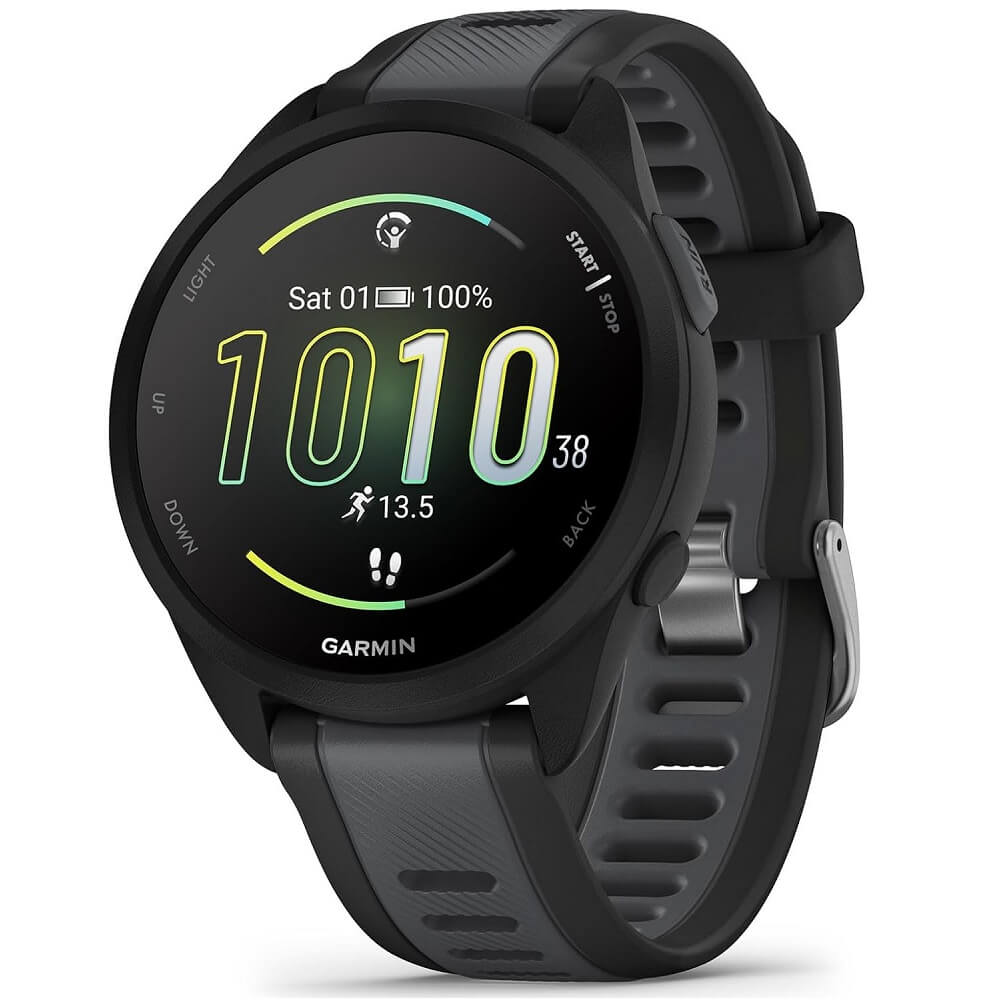
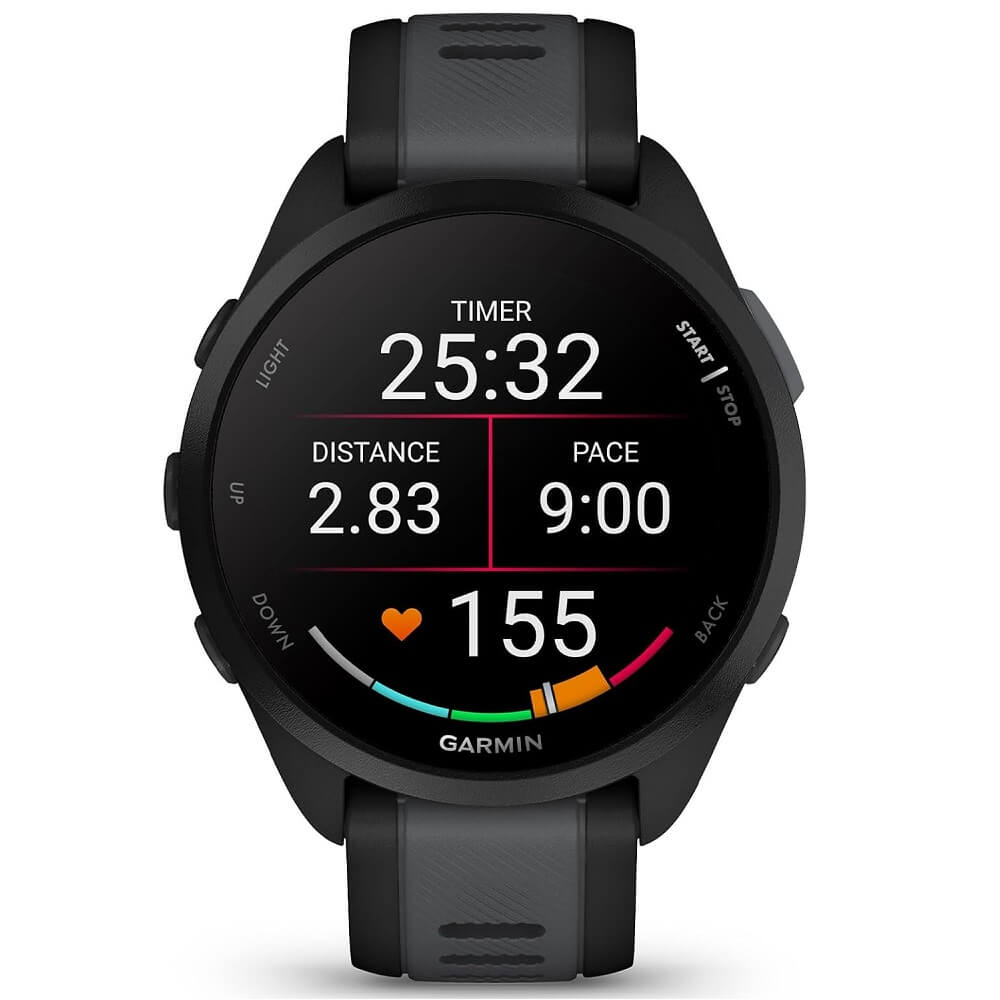
The Forerunner 165 Music features a vibrant 1.2-inch AMOLED touchscreen that’s become the star of customer reviews. With a resolution of 390 x 390 pixels, the display delivers sharp text and colorful graphics that remain easily readable even in direct sunlight—a significant upgrade from Garmin’s traditional MIP displays. According to verified Amazon purchaser Frogs & Flowers, the screen is “extremely clear even in full sun,” a sentiment echoed across dozens of reviews from outdoor runners and hikers.
The always-on display option keeps the watch face visible 24/7, though enabling this feature does accelerate battery drain. Most users report the screen responsiveness is excellent, with smooth transitions between data screens during workouts. The touchscreen interface works alongside five physical buttons, giving you navigation options whether you’re wearing gloves or dealing with sweaty fingers mid-run. Several reviewers specifically mentioned the screen brightness surpasses their previous Fitbit or Apple Watch models in outdoor visibility.
Design-wise, the 43mm case strikes a balance between presence and wearability. The watch weighs just 39 grams with the silicone band, making it comfortable for all-day wear and sleep tracking. Multiple reviewers with smaller wrists (around 6.5-7 inches) confirmed the watch doesn’t look oversized or feel bulky. The standard silicone band is soft and lightweight, though some users immediately swapped it for aftermarket nylon straps for added comfort during long runs. The case is available in Black, Whitestone, Turquoise, and Berry colorways, with the Music variant typically priced $50 higher than the standard Forerunner 165.
Music Storage and Phone-Free Running: The Game-Changing Feature
The Music edition’s ability to store up to 500 songs transforms the running experience for those tired of carrying their phones. Amazon reviewer RC states simply: “Connection to music (Spotify) was easy and works great on runs, no need to take my phone anymore.” This feature requires a premium subscription to Spotify, Amazon Music, or Deezer—the three supported streaming platforms as of February 2026. Notably, Apple Music is not supported, which has disappointed some users transitioning from Apple Watch.
Setting up music involves downloading the Garmin Express desktop app or using the Garmin Connect mobile app to sync playlists to the watch’s 4GB of storage. According to Garmin’s official specifications, the process is straightforward once you’ve linked your streaming account. Multiple reviewers mentioned the initial setup required some patience, but once configured, syncing new playlists became seamless. The watch connects directly to Bluetooth headphones, creating a completely phone-free workout setup.
For runners who prefer podcast listening or don’t subscribe to supported music services, the standard Forerunner 165 (without Music) saves $50 and offers identical fitness tracking capabilities. However, verified purchaser Virginia notes: “Bought this for our daughter. She loves it. No more carrying her phone on runs”—a sentiment that justifies the Music premium for many users. The convenience of grabbing your watch and headphones for a spontaneous run without worrying about phone battery, armbands, or pockets cannot be overstated.
GPS Accuracy and Running Performance: Multi-Satellite Precision
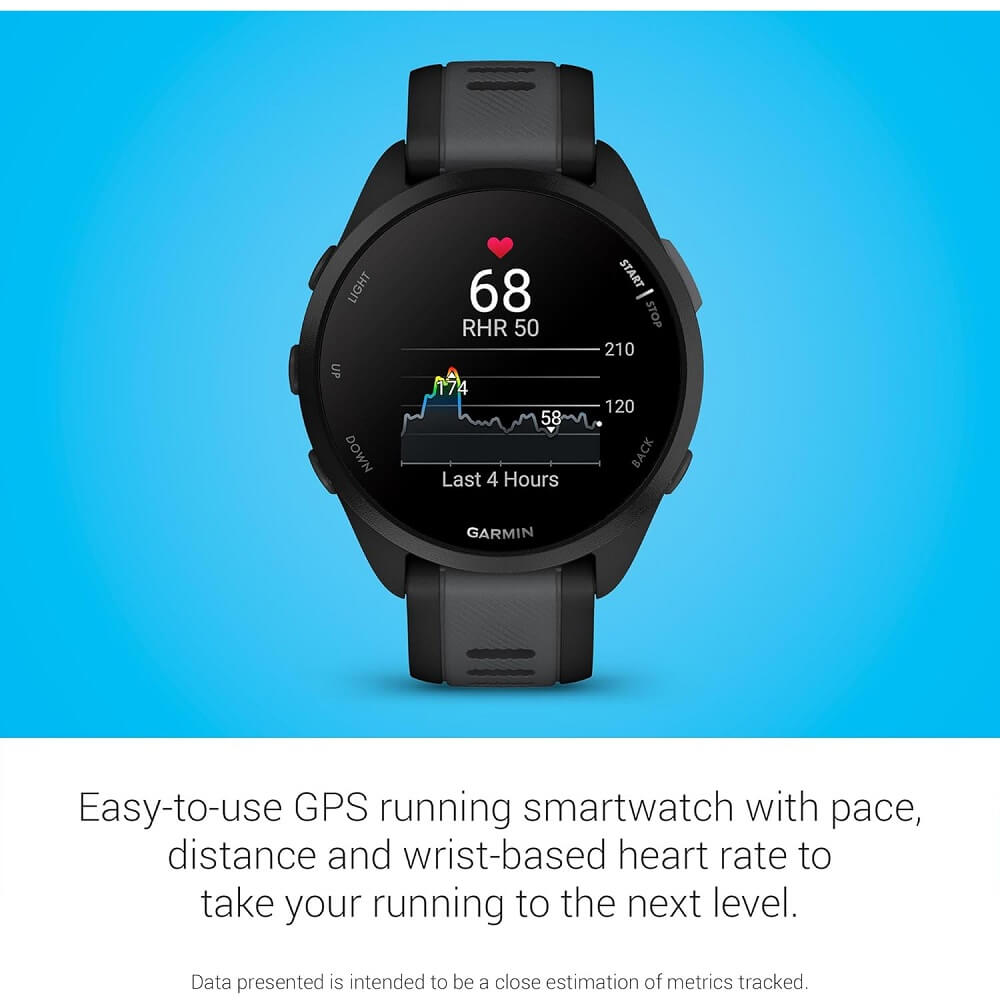
The Forerunner 165 Music utilizes multi-band GPS (GPS, GLONASS, and Galileo) to deliver accurate distance, pace, and route tracking. According to iRunFar’s field testing, the watch provides “fast and accurate GPS tracking” with route maps that stay true to actual paths. Amazon reviewer Liz M, who previously struggled with a “popular branded smart watch” that produced “squiggly and off the trail or road” routes, reports the Forerunner 165 delivers precise GPS tracking even on hiking trails.
GPS acquisition time is impressively quick, with most reviewers reporting lock-on within 5-15 seconds of starting an activity. The watch supports multiple satellite systems simultaneously, which proves especially valuable in challenging environments like urban canyons or dense forests. Mason Cook specifically praised the dual GPS sources for providing “accurate tracking while up in the mountains by my area.” In smartwatch mode with 24/7 health monitoring, battery life reaches up to 11 days. With GPS active during runs, expect approximately 19 hours of continuous tracking—sufficient for most marathon runners but shorter than the Forerunner 55’s 20-hour GPS battery or the 265’s 24-hour capacity.
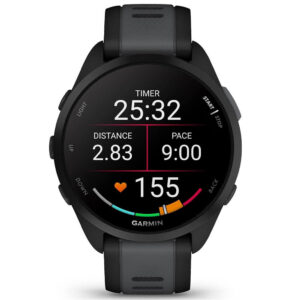
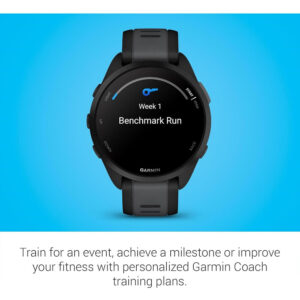
Running metrics include real-time pace, distance, cadence, heart rate zones, and elevation data. The watch calculates VO2 max estimates and provides training effect scores that help runners understand whether their workout built aerobic or anaerobic capacity. John Thao, a 43-year-old runner who completed three half marathons in 2025, confirms the watch “tracks distance, pace, cadence, heart rate, and calories burned accurately.” The recovery time suggestions—which estimate how long you should rest before your next hard effort—occasionally err on the conservative side according to multiple reviewers, but provide useful guidance for avoiding overtraining.
Health and Fitness Tracking: Comprehensive Metrics for the Price
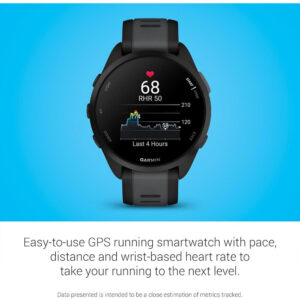
Beyond running, the Forerunner 165 Music monitors sleep stages (REM, deep, light, and awake periods), resting heart rate, heart rate variability (HRV), stress levels, respiration rate, and all-day step counting. The sleep tracking feature earned particular praise from reviewers, with many noting it provided new insights into their recovery patterns. According to verified purchaser Angel, the watch “tracks sleep, which gives me more insight into recovery”—data that helps inform training decisions.
The wrist-based optical heart rate sensor delivers reasonably accurate readings for most activities, though serious athletes may want to pair the watch with a chest strap heart rate monitor for maximum precision during interval training. BigRon, a 20-year running veteran, notes: “Compared to my Apple Watch this wrist-based monitor is better. It locks on faster and seems to be pretty accurate.” For zone-based training where exact heart rate thresholds matter, he still recommends a chest strap, but finds the wrist sensor sufficient for daily monitoring and easy runs.
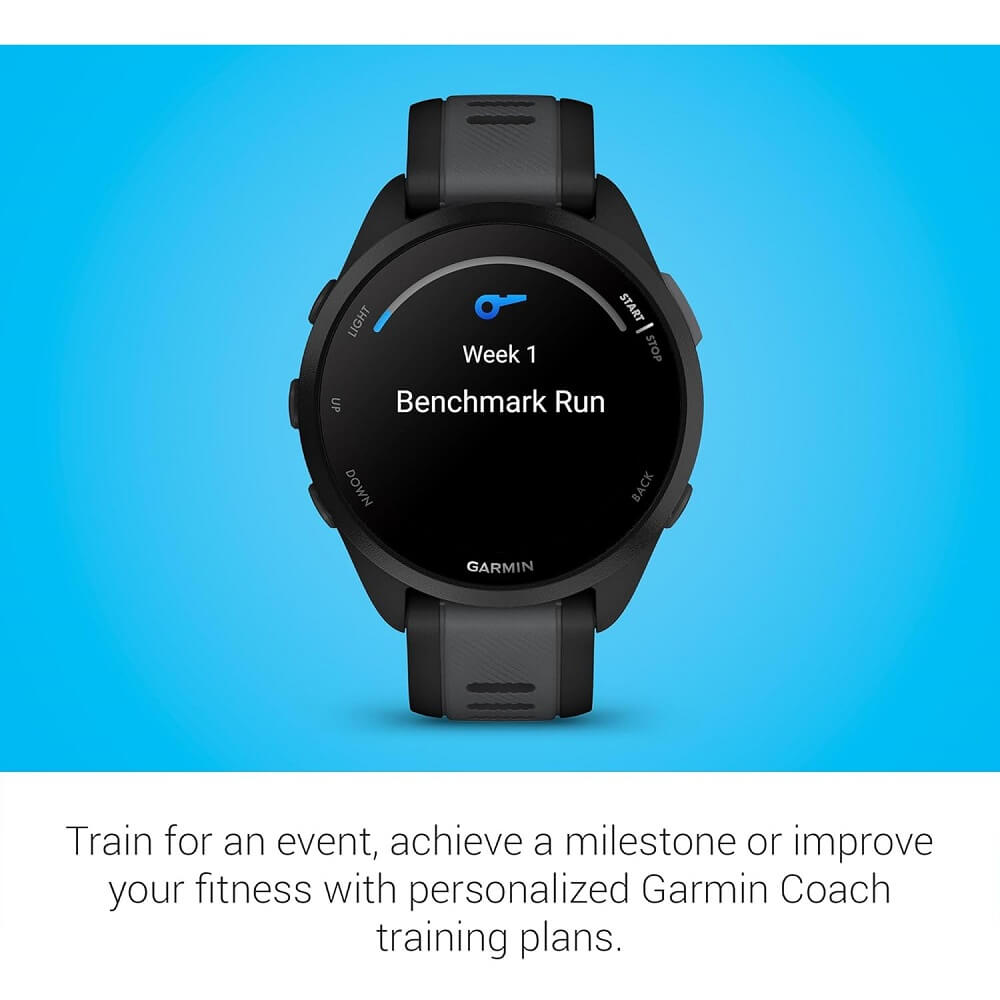
The watch tracks 25+ activity profiles including cycling, swimming, strength training, yoga, and hiking. Swimming tracking works in pools with automatic lap counting and stroke detection. Several reviewers mentioned using the watch for triathlons and multisport training, though the lack of a dedicated multisport mode (found on higher-end Garmins) requires manually switching between activity types. The Garmin Connect app compiles all this data into digestible charts showing training load trends, fitness age, body battery energy levels, and personalized daily workout suggestions.
One frequently mentioned limitation: unlike the Forerunner 265 or 955, the 165 doesn’t include Training Readiness scores or advanced Training Load metrics. You get Training Effect scores after each workout (showing aerobic and anaerobic benefit on a 1-5 scale) and VO2 max estimates, but not the full suite of Garmin’s predictive analytics. For most recreational runners, the included metrics prove more than sufficient. As Amazon reviewer Runner states: “I never really feel I lack anything for my use case (road running, swimming, general fitness).”
Battery Life: Week-Long Endurance That Beats Smartwatches
Battery performance stands out as a major selling point against smartwatch competitors. In smartwatch mode with continuous heart rate monitoring, sleep tracking, and smart notifications enabled, users report 5-11 days between charges depending on settings and usage patterns. According to Mark A. Mcholland, who upgraded from a Fitbit Versa 2: “My Garmin Forerunner advertised an 11 day battery life, I got 12, and probably could have gotten a couple more.” This multi-day battery life enables consistent sleep tracking without the nightly charging ritual required by Apple Watch or most Wear OS devices.
With GPS active during runs, expect approximately 19 hours of continuous tracking. For most runners logging 30-60 minute workouts, this translates to weeks of training before needing a charge. According to John Thao’s real-world testing: “With GPS running for about two hours a day, I get around four days before needing a recharge.” The always-on display and music playback do accelerate battery drain, but even heavy users report charging weekly rather than daily.
Charging uses Garmin’s proprietary USB-C to watch connector cable, which magnetically attaches to the watch back. Multiple reviewers noted the included cable is frustratingly short (approximately 1 foot), prompting recommendations to purchase a longer aftermarket cable. Charging speed is reasonably quick, with most users reporting full charges in 1-2 hours. The watch charges while worn if needed, though most users simply charge overnight once per week. This battery endurance fundamentally changes the user experience compared to daily-charging smartwatches—your watch becomes a reliable tool rather than another device demanding nightly attention.
Smart Features and Connectivity: The Basics Done Well
While not as feature-rich as a full-fledged smartwatch, the Forerunner 165 Music handles essential smart functions competently. The watch displays notifications for calls, texts, emails, and apps when paired via Bluetooth to your iPhone or Android smartphone. You can customize which apps send notifications to avoid constant buzzing, which multiple reviewers mentioned as an important setup step. The vibration alerts are strong enough to notice during activities without being intrusive during daily wear.
Garmin Pay enables contactless payments at NFC terminals, allowing you to leave your wallet behind on runs. The feature supports major credit and debit cards through participating banks. Find My Phone helps locate your misplaced smartphone by triggering an audible alarm. Chelsea, an Amazon reviewer focused on weight loss, specifically mentioned: “It even has a find my phone feature which I’m not ashamed to admit has come in handy many times.” The watch also offers basic calendar reminders and weather forecasts pulled from your connected smartphone.
What the Forerunner 165 Music doesn’t include: onboard maps (turn-by-turn navigation requires preloaded courses), third-party app support beyond Connect IQ watch faces and data fields, voice assistant integration, or cellular connectivity. These omissions keep costs down and battery life up. The watch pairs seamlessly with popular fitness apps including Strava, MyFitnessPal, and TrainingPeaks through the Garmin Connect ecosystem. Angel highlights this integration: “The connections to Strava and MyFitnessPal are a huge plus for tracking calories and training time all in one place.”
The Garmin Connect mobile app serves as command center for all your data, offering detailed analysis, training plan downloads, and social features like challenges and leaderboards. The app interface has a dated aesthetic compared to Apple’s sleek design, but it’s functionally comprehensive and rarely crashes. JustJenn, who switched back to Garmin from Apple Watch, declares: “The app is waaaay better than Apple will ever be.” The web-based Garmin Connect portal provides even deeper data analysis for training nerds who want to export CSV files or analyze trends over multi-year timespans.
Value Proposition: Premium Features at Entry-Level Pricing
At approximately $249-299 for the Music variant on Amazon (prices fluctuate with sales), the Forerunner 165 Music occupies a sweet spot in Garmin’s lineup. It delivers the bright AMOLED screen and comprehensive running metrics found in the $449 Forerunner 265, while sacrificing advanced training analytics and longer GPS battery life. For runners who don’t need multi-band GPS, triathlon modes, or onboard maps, the pricing makes sense.
According to iRunFar’s market analysis, “you’d be hard-pressed to find a better watch” at this price point. Competitors include the Coros Pace 3 ($229, excellent battery but basic screen), Polar Pacer ($199, good for running but limited smart features), and Fitbit Charge 6 ($159, lacks GPS accuracy and comprehensive metrics). None match the Forerunner 165 Music’s combination of display quality, music storage, and Garmin’s ecosystem depth.
Compared to the standard Forerunner 165 (without Music), the $50 premium for music storage proves worthwhile for runners who value phone-free workouts. However, if you always run with your phone anyway, save the money. Comparing upward in Garmin’s lineup, the Forerunner 265 adds a sharper AMOLED display, longer GPS battery (24 vs 19 hours), Training Readiness scores, and better build materials for approximately $150-200 more. Runner, an Amazon reviewer, notes: “The only thing I’d say is that you can often get the Garmin 265 for not too much more”—worth considering during sales if your budget allows.
The watch typically goes on sale during major shopping holidays (Black Friday, Amazon Prime Day), with discounts of $50-80 reported by early adopters. Asim V. purchased during Thanksgiving 2025: “Got this around Thanksgiving so it was discounted. Very sturdy build with sleek design and quality materials and finish.” Patient shoppers can likely find the Music variant for $199-249 during these promotional windows, making it an even more compelling value.
Who Should Buy the Garmin Forerunner 165 Music
This watch excels for recreational runners, beginning marathoners, and multi-sport fitness enthusiasts who want serious training metrics without flagship pricing. It’s particularly well-suited for users upgrading from basic fitness trackers (Fitbit, Amazon Halo) or Apple Watch users seeking better running features and battery life. The comprehensive health monitoring makes it equally valuable for casual exercisers focused on step goals, sleep quality, and daily activity tracking.
The Music variant specifically targets runners who prefer leaving their phones behind during workouts. If you subscribe to Spotify, Amazon Music, or Deezer and regularly do phone-free gym sessions or outdoor runs, the onboard storage justifies the premium. Conversely, if you always carry your phone or primarily use Apple Music, the standard Forerunner 165 saves $50 with identical fitness tracking capabilities.
The watch may disappoint users seeking advanced features like onboard topographic maps, multi-band GPS in all modes, training load tracking, or ultra-endurance battery life (50+ hours GPS). These features require stepping up to the Forerunner 265, 955, or Fenix series. Similarly, triathletes wanting dedicated multisport transition modes should consider higher-tier models. The 165 Music handles swimming, cycling, and running individually but lacks automatic multisport switching.
According to customer reviews, the Forerunner 165 Music converts Apple Watch users effectively. Richie, who was “really hesitant to even think about migrating out of the ecosystem,” reports: “The 165 went on sale so I pulled the trigger since I was wanting a watch that would be a bit focused on tracking my fitness. The AMOLED display is amazing… The biggest plus of all though is the insane battery life.” For iPhone users seeking better fitness tracking without abandoning iOS, this watch provides the best of both worlds—comprehensive Garmin analytics with seamless iPhone notification integration.
Final Verdict: The Smart Choice for Most Runners
The Garmin Forerunner 165 Music earns its 4.7-star Amazon rating by delivering what matters most: accurate GPS tracking, comprehensive training metrics, exceptional battery life, and a gorgeous AMOLED display at an accessible price point. It’s not the most advanced running watch Garmin makes, but for the vast majority of recreational runners and fitness enthusiasts, it’s exactly the right amount of watch. The ability to store 500 songs and run phone-free elevates it above the standard model for users who value that freedom.
Minor compromises include the 19-hour GPS battery (adequate but not class-leading), lack of advanced analytics found in pricier models, and a learning curve for first-time Garmin users navigating the extensive features. The proprietary charging cable and short included cord prove mildly annoying, and the absence of Apple Music support disappoints some iPhone users. None of these limitations fundamentally undermine the watch’s core competency: being an excellent running and fitness tracker that won’t die mid-week.
For runners seeking the sweet spot between basic fitness trackers and $500+ flagship watches, the Forerunner 165 Music delivers remarkable value. According to BigRon’s 8-month testing: “I would highly recommend this watch for its functionality, metrics and price when u can find it on sale. Overall Garmin products are over priced. But having a worry free experience when paired w an iPhone and accurate training metrics is worth it for this particular device.” That assessment, echoed across hundreds of customer reviews, makes the recommendation clear: if you’re ready to get serious about running without spending flagship money, the Garmin Forerunner 165 Music deserves strong consideration.
Current pricing on Amazon typically ranges from $249-299 (as of February 2026), with the best deals appearing during major sales events. For comparison shoppers, the standard Forerunner 165 (without Music) saves $50, while the Forerunner 265 adds advanced features for approximately $150-200 more. The 165 Music hits the value target for most users—enough features to support serious training, not so many that you’re paying for capabilities you’ll never use.
Be the first to review “Garmin Forerunner 165 Music”
Related products
Garmin
Garmin
Garmin
Garmin
Garmin
Garmin
Garmin
Garmin
Reviews
There are no reviews yet.