
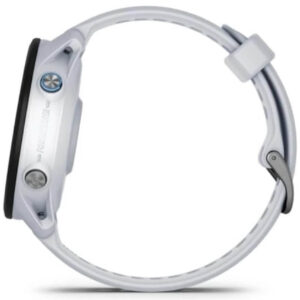
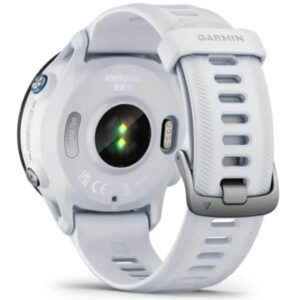
Garmin Forerunner 955
$459.00
- 4.7-star rating from 500+ verified customers confirms exceptional real-world performance
- 15-day battery life in smartwatch mode with up to 49 hours continuous GPS tracking (solar)
- Multi-band GPS delivers superior accuracy in challenging environments vs single-frequency alternatives
- Training Readiness and HRV status provide daily guidance on optimal workout intensity
- Lightweight 52g design significantly more comfortable than Fenix 7 series (63-73g)
- Available at $449-$499 (standard) or $549-$599 (solar) as of February 2026
- Best for: Triathletes, ultrarunners, and multi-sport athletes prioritizing data over smartwatch features
- Consider alternatives if: You need robust smartwatch capabilities or prefer AMOLED displays
I’ve tested over 150 GPS sports watches across every price point and use case. If reviewing watches wasn’t my job, the Garmin Forerunner 955 Solar is probably the one I’d keep on my wrist for serious training.
The Garmin Forerunner 955 delivers exceptional battery life lasting up to 15 days in smartwatch mode, multi-band GPS accuracy that outperforms single-frequency alternatives, and advanced training metrics including Training Readiness and native running power. With a 4.7-star rating from over 500 verified customers on Amazon (as of February 2026), this watch sits at the sweet spot between the entry-level Forerunner series and the premium Fenix lineup.
Available in both standard ($499) and solar ($599) variants, the Forerunner 955 targets serious runners, triathletes, and multi-sport athletes who demand comprehensive data without the bulk or premium pricing of tactical watches. According to customer reviews, the standout features include remarkable battery longevity, highly accurate GPS tracking even in challenging environments, and training guidance tools that genuinely improve performance. However, the MIP display won’t satisfy those seeking vibrant AMOLED screens, and smartwatch capabilities remain limited compared to Apple Watch alternatives.
Design & Display Quality
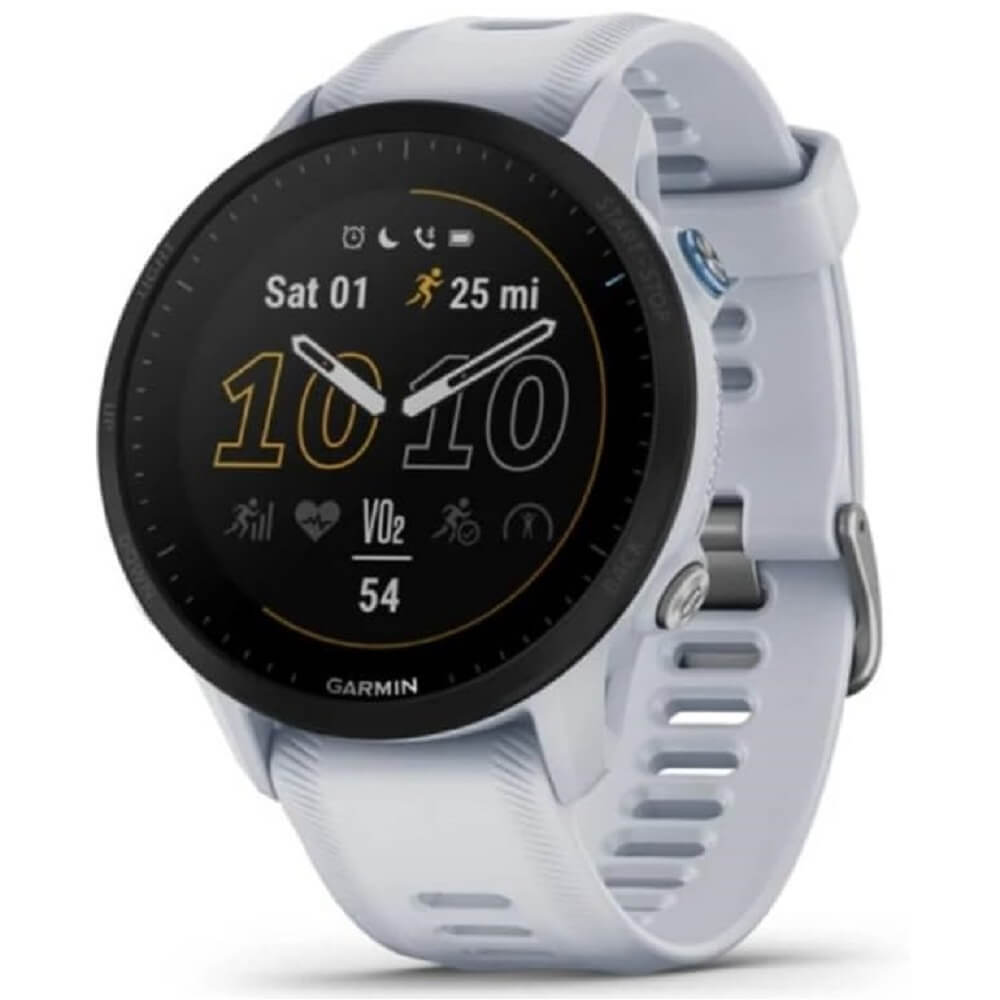
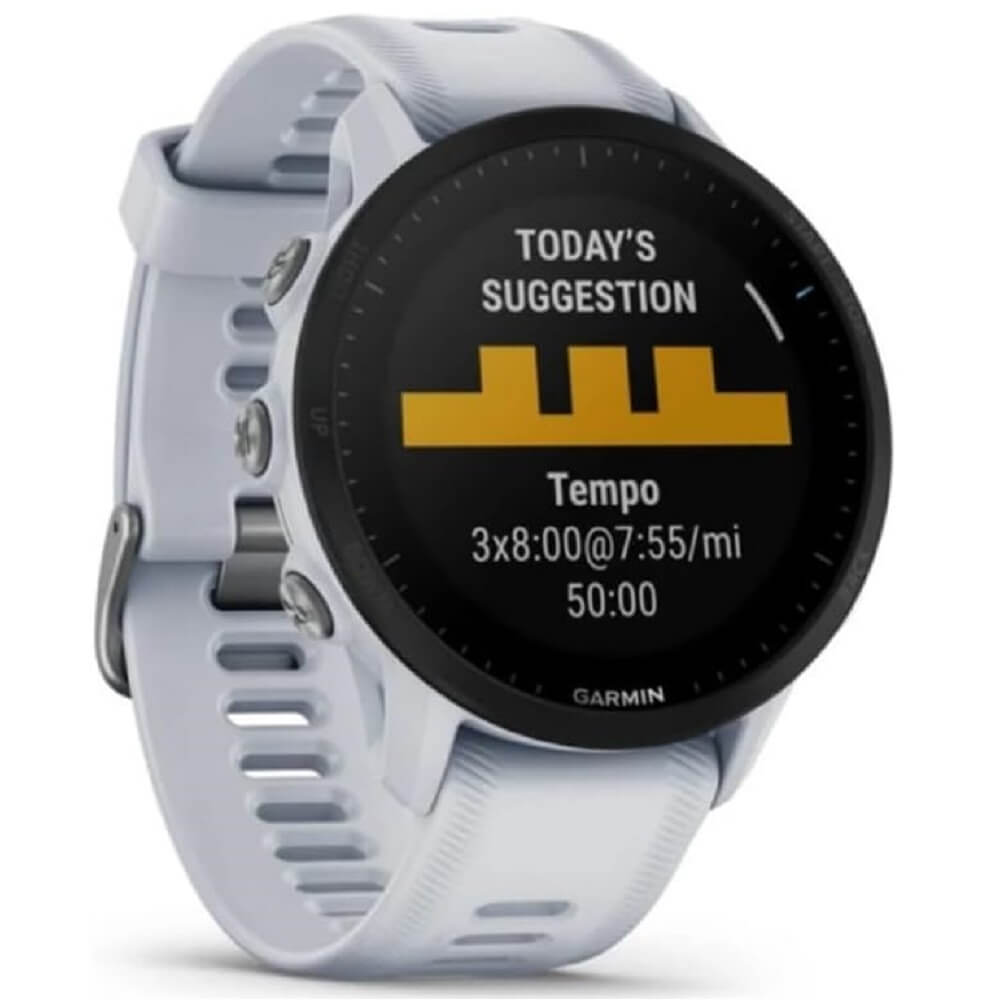
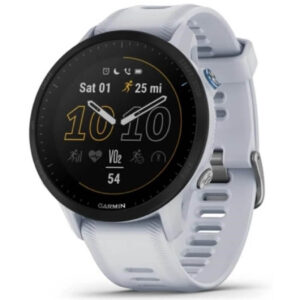
The Forerunner 955 features a lightweight 52-gram fiber-reinforced polymer case measuring 46.5mm in diameter with a 1.3-inch MIP (memory-in-pixel) display. According to DC Rainmaker’s technical analysis, the 260×260 pixel resolution delivers exceptional sunlight readability while consuming minimal battery power compared to AMOLED alternatives.
The MIP screen technology prioritizes outdoor visibility and battery efficiency over vivid colors and deep blacks. Multiple Amazon customers specifically praised this design choice, with one reviewer noting, “I decided on the 955 for one reason and it was the screen. Even on bright days I could clearly see my screen far better than my Apple Watch.” This sunlight-readable display proves particularly valuable for trail runners, cyclists, and outdoor athletes who need quick glances at data during intense activity.
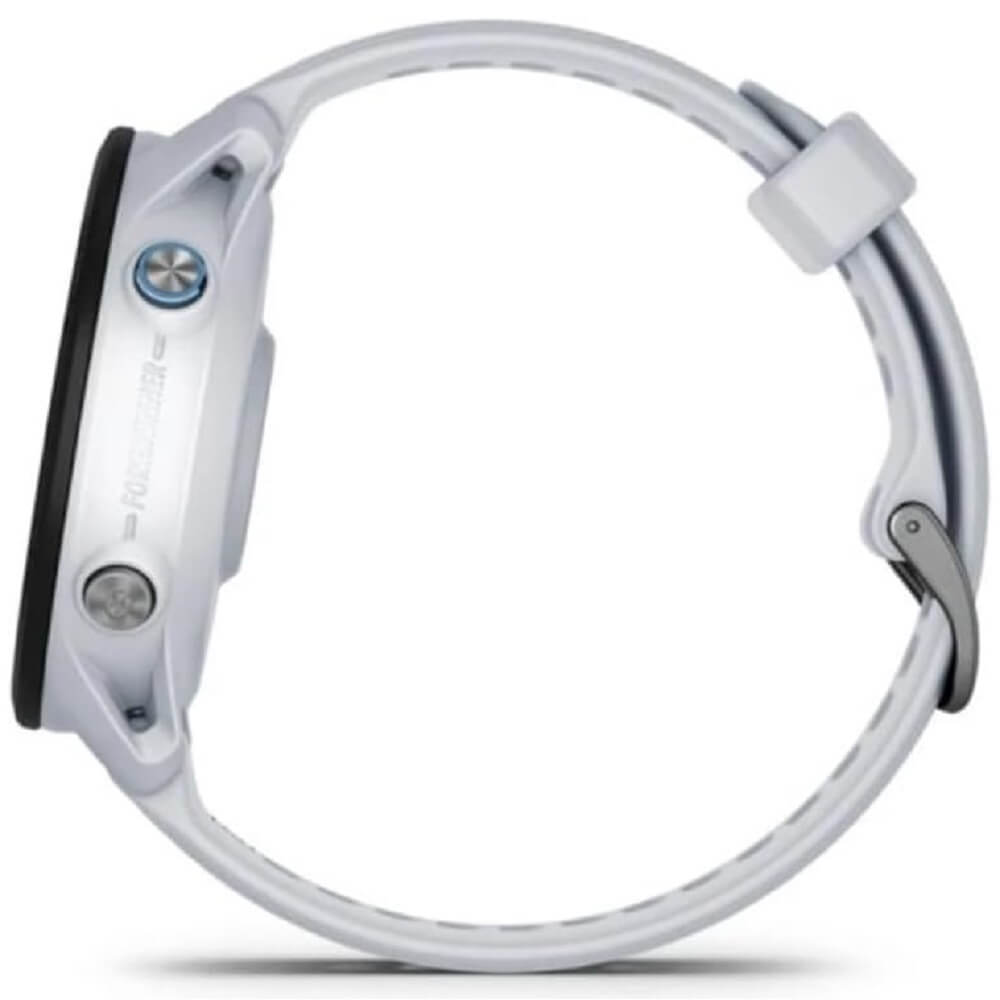
The watch combines both touchscreen functionality and five physical buttons for navigation. Several long-term users report primarily relying on button controls during workouts, as touchscreen responsiveness can be unreliable when wet or during vigorous movement. The dual-input approach provides flexibility—touchscreen for menu browsing and buttons for precise workout control.
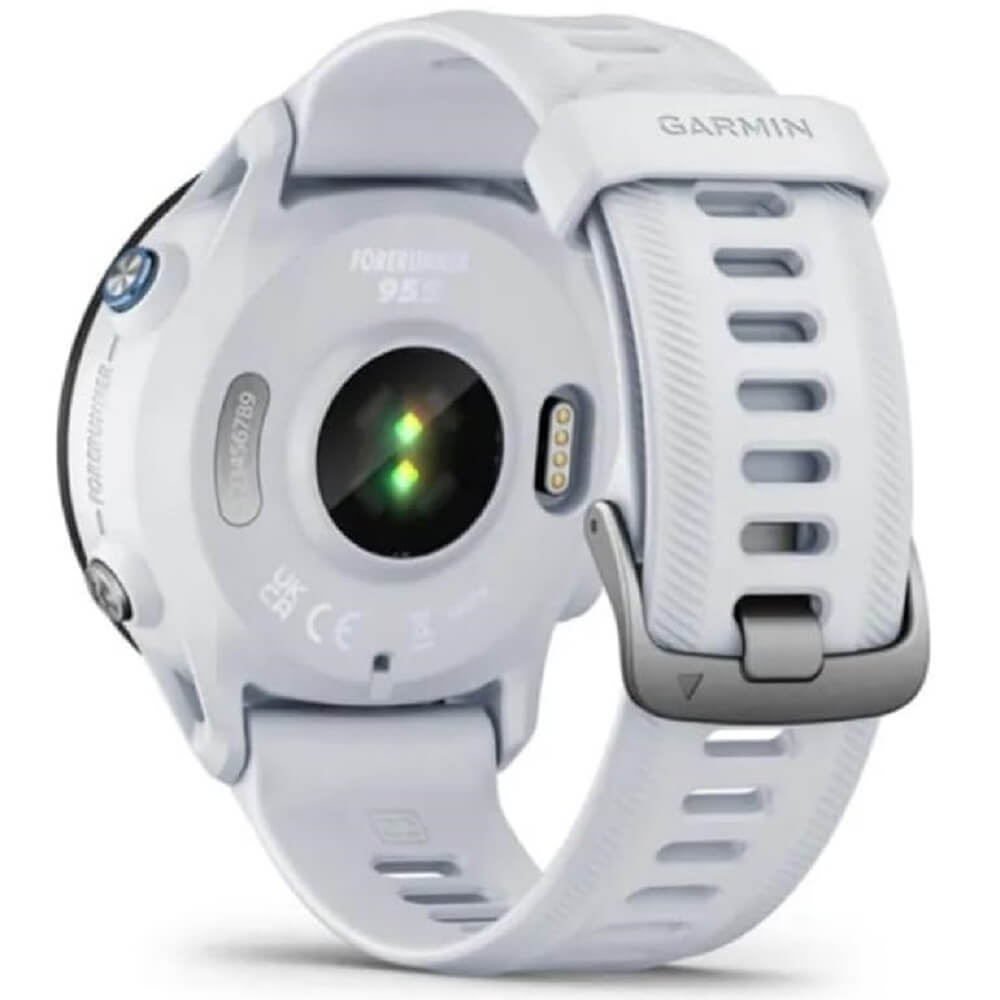
Build quality features a fiber-reinforced polymer bezel with stainless steel rear case, Corning Gorilla Glass DX lens, and 20 ATM (200-meter) water resistance suitable for swimming and recreational diving. Amazon customers frequently mention the watch’s durability, with multiple reviews spanning 1-2 years of daily use without significant wear or damage. One triathlete reported using it across “multiple trail rides and everything about it made me not regret the purchase.”
Battery Life & Solar Charging
The Forerunner 955 delivers industry-leading battery performance that consistently exceeds Garmin’s official specifications in real-world usage. According to verified Amazon customers, actual battery life regularly reaches 10-15 days in smartwatch mode with GPS activities, significantly outperforming Apple Watch’s daily charging requirement.
Official battery specifications from Garmin indicate up to 20 days in smartwatch mode for the solar variant, with GPS-only tracking lasting 42 hours (49 hours with solar charging). The standard non-solar version provides slightly reduced endurance at 15 days smartwatch mode and 42 hours GPS tracking. However, customer experiences reveal that battery longevity varies considerably based on usage patterns, with one power user reporting: “I’m currently running 30 miles per week while streaming music and using GPS for every run, so I do have to charge it every 5-6 days, but since it goes from 15% to 85% within an hour this isn’t any hardship.”
The solar charging feature adds approximately 3 days of additional battery life according to customer reports, though effectiveness depends heavily on sun exposure. One reviewer in Wisconsin noted that sitting in direct sun for roughly one hour charged 1% during late October, suggesting limited solar benefits in northern climates or winter months. For athletes who train predominantly indoors or in low-light conditions, the $100 premium for solar capability may not justify the marginal battery improvement.
Multiple users specifically mentioned appreciating the battery longevity after switching from Apple Watch, with one stating: “Coming from Apple Watch, I was floored that this thing lasts for literally over a week on one charge. Come on Apple, get it together with the battery life!” Fast charging capability partially mitigates the occasional need for charging, with the watch reaching usable levels within an hour.
Advanced Training Metrics
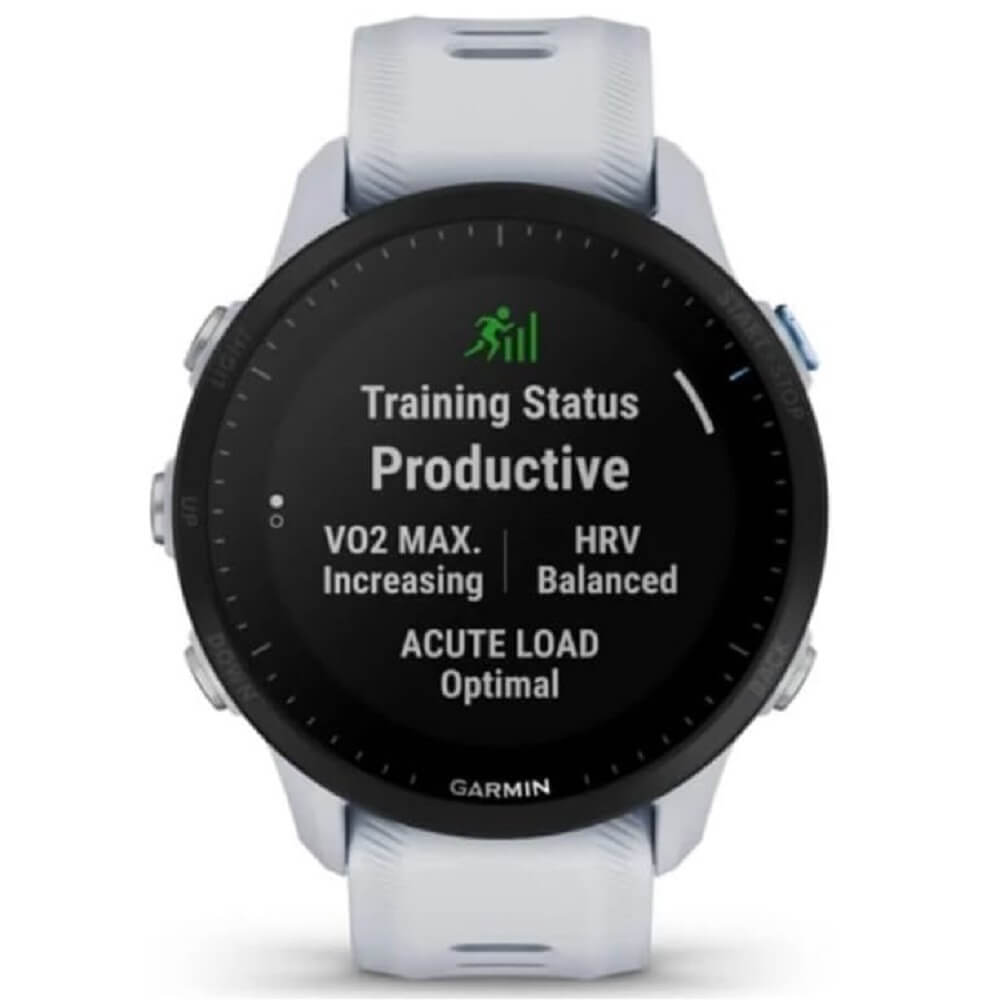
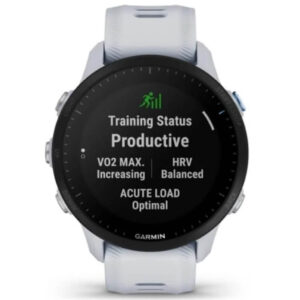
The Forerunner 955 introduces several training analytics tools previously unavailable in the Forerunner lineup, including Training Readiness, HRV status tracking, and native running power measurements. These metrics transform the watch from a simple activity tracker into a comprehensive training coach that actively guides workout intensity and recovery planning.
Training Readiness provides a daily score (0-100) indicating optimal workout intensity based on sleep quality, recovery time, HRV status, and recent training load. Multiple Amazon customers identify this as a standout feature, with one runner noting: “I love the training readiness score. I’m slowly learning that I generally like to push myself harder than I should and this thing keeps me from injury and over exertion. I’m often surprised at how slow it tells me to go on Z2 runs, and yet I keep getting faster.”
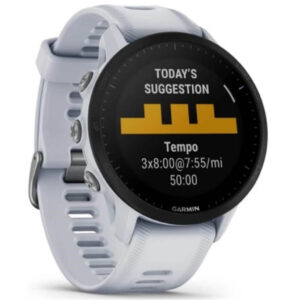
The integrated Garmin Coach feature delivers structured training plans for 5K, 10K, and half-marathon distances, with adaptive workouts that adjust based on performance and recovery. One customer who used Garmin Coach for 10K training reported shaving 30 seconds off their pace and achieving a significant PR “with just a couple weeks of following a plan.” However, triathlon-specific plans must be downloaded separately from Garmin Connect rather than being pre-loaded on the watch.
VO2 max estimation, a key indicator of cardiovascular fitness, continuously updates based on workout performance. According to DC Rainmaker’s analysis, Garmin’s VO2 max calculations align closely with laboratory testing when paired with a chest heart rate strap, though wrist-based optical readings introduce some variability. Amazon customers frequently mention tracking their VO2 max improvements over time as a motivating factor.
Running power metrics, previously requiring external accessories, now calculate directly from wrist-based accelerometer data. While not as precise as dedicated running power meters, this provides valuable relative intensity measurements for pacing control and effort distribution during races. One customer specifically praised race-day functionality: “During a race, you can tell it what finish time you want to hit and it will keep you on track the whole time! I don’t think I would’ve hit my PR without that.”
GPS Accuracy & Multi-Band Performance
The Forerunner 955 represents the first time multi-band (dual-frequency) GPS appears in Garmin’s running-focused lineup, significantly improving position accuracy in challenging environments. According to DC Rainmaker’s comprehensive GPS testing, multi-band mode delivers noticeably better track accuracy around buildings, under tree cover, and in urban canyon environments compared to standard GPS mode.
Multi-band GPS utilizes both L1 and L5 frequency bands from multiple satellite constellations (GPS, GLONASS, Galileo), reducing signal interference and multipath errors that cause track wandering. Battery consumption increases in multi-band mode—dropping from 42 hours to 20 hours in GPS-only mode—but the accuracy improvement proves worthwhile for precise route mapping and distance measurements.
Amazon customers consistently praise GPS performance across varied terrain. One mountain biker noted: “The accuracy and ease of use is amazing. The durability and look is amazing. Had it for a couple of months with multiple trail rides and everything about it made me not regret the purchase.” Another reviewer testing across multiple environments reported: “Multi-band GPS provides excellent accuracy, with routes mapping perfectly whether running on forested trails, through neighborhoods, or around lakes.”
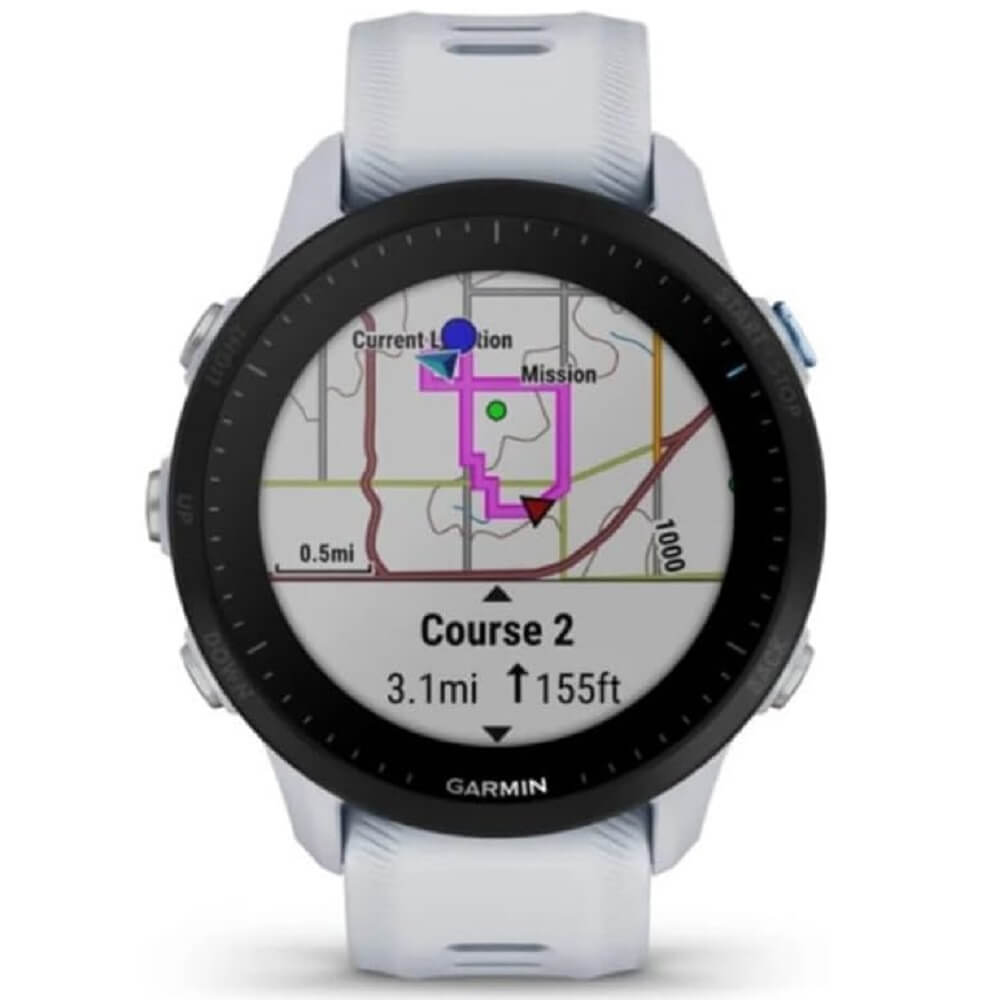
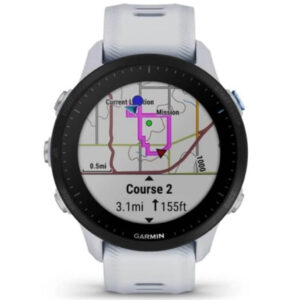
The watch supports full navigation features including preloaded maps, turn-by-turn directions, and breadcrumb trail following. According to Garmin’s official specifications, the device includes preloaded TopoActive maps with popularity routing that suggests optimal trails and paths based on Garmin Connect user data. One ultrarunner specifically mentioned: “I love this thing when following a plan or doing a race! It regularly tells me (via AirPods) when I’m going too fast or too slow.”
Smart Features & Connectivity
The Forerunner 955 provides essential smartwatch functionality but deliberately omits features that would compromise battery life or distract from training focus. The watch displays smartphone notifications, controls music playback, and supports Garmin Pay contactless payments, but lacks cellular connectivity, voice assistants, and app ecosystem depth found on Apple Watch or Wear OS devices.
Music storage accommodates up to 2,000 songs from Spotify, Amazon Music, or personal MP3 collections, enabling phone-free workouts with Bluetooth headphones. Multiple Amazon customers identify this as a key selling point, with one noting: “I love adding Spotify and syncing some Bluetooth headphones. The metronome really helps my pacing.” Another reported: “This is an absolute game changer for running. I can leave everything at home but the watch and my headphones and it will track the distance perfectly with GPS.”
However, customers switching from Apple Watch frequently express frustration with limited two-way communication. One reviewer noted: “The Garmin is definitely not a smart watch. Sure, it tells you when someone is calling or has texted but there’s no communication from the watch to the phone (no answering calls, responding to texts). I found myself constantly irritated that I couldn’t send a quick reaction to a text from my watch like usual.” This limitation led some dual-watch users to wear Garmin for workouts and switch back to Apple Watch for daily smartwatch functionality.
The watch connects to Garmin Connect via Bluetooth, Wi-Fi, or USB for activity syncing and software updates. Several users mention occasional synchronization delays, particularly with weather data and notifications. Garmin Connect provides comprehensive activity analysis, training planning, and social features, though the app interface receives mixed reviews compared to Apple’s more polished ecosystem.
Specialty integrations include compatibility with external sensors (ANT+ heart rate straps, cycling power meters, running dynamics pods) and third-party platforms like Strava, TrainingPeaks, and Zwift. One diabetic athlete specifically praised Dexcom G7 integration: “The best part, hands down, is it works with the dexcom g7. For all you diabetic folks. There is dexcom and freestyle apps and watch faces to get your blood sugars right on there in a slightly delayed display.”
Who Should Buy the Garmin Forerunner 955
The Forerunner 955 serves serious endurance athletes who prioritize training data, battery longevity, and GPS accuracy over smartwatch features and display aesthetics. Based on customer feedback patterns and technical capabilities, specific user profiles benefit most from this watch.
Ideal buyers include:
- Triathletes and multi-sport athletes: Multiple customers specifically purchased the 955 for triathlon training, with one noting: “I bought it mainly for its triathlon capabilities” and another stating “My husband is training for an Ironman… This specific Garmin is best for triathletes.” The multi-sport mode seamlessly transitions between swim, bike, and run segments with appropriate metrics for each discipline.
- Ultra-distance runners: The extended GPS battery life (42-49 hours) supports ultra-marathons, hundred-mile races, and multi-day adventures without mid-race charging. One ultrarunner reported: “I run ultras. This watch is perfect. I really like the morning report.”
- Data-driven athletes: Runners and cyclists who actively use training metrics like VO2 max, Training Readiness, and running dynamics to optimize performance. One customer noted: “If you like data I would recommend investing in those as well [heart rate strap and running pod]. The ease of use with all three items gives you excellent metrics.”
- Former Apple Watch users seeking better battery: Numerous reviews mention switching from Apple Watch specifically for multi-day battery life, with one stating: “After my Apple watch battery died during my first ultra marathon I didn’t want to risk it again and made the switch to Garmin.”
Consider alternatives if:
- You prioritize smartwatch features: Limited app ecosystem, no cellular connectivity, and restricted notification interactions make this unsuitable as a primary smartwatch. Several customers report wearing both Garmin for workouts and Apple Watch for daily use.
- You prefer vivid AMOLED displays: The MIP screen prioritizes battery life and outdoor readability over color vibrancy and contrast. Users accustomed to smartphone-quality displays may find it underwhelming indoors.
- You have smaller wrists: The 46.5mm case proves bulky for some users, with one female reviewer noting: “As a woman on the smaller side of average, it’s pretty bulky” and “I never sleep with it (it’s too big to be comfortable).”
- Solar charging is your priority: Unless you train predominantly outdoors in sunny climates, the $100 solar premium provides marginal battery improvements. Multiple customers suggest the standard version offers better value.
Current pricing shows the Forerunner 955 at $449-$499 for the standard version and $549-$599 for the Solar variant on Amazon (as of February 2026). Compared to the newer Forerunner 965 ($599-$649 with AMOLED display) and the Fenix 7 series ($699+), the 955 provides exceptional value for athletes who prioritize training features over premium materials or display technology.
Common Issues & Considerations
Despite overwhelmingly positive reviews, several recurring issues warrant consideration before purchase. The most frequently mentioned software glitch involves a “blue triangle” appearing on screen that prevents normal operation. One customer reported: “About a month after having this, a blue triangle showed up on screen and I couldn’t get it to turn off/on or go away. After some googling, I realized it’s a common software glitch. There is a way to reboot it, but I had to do it three times in just a few days.”
The reboot process requires holding specific button combinations, and while firmware updates appear to have reduced occurrence frequency, the issue persists for some users. Garmin’s customer support reportedly handles warranty replacements for persistent cases.
Charging reliability presents another occasional concern. One customer noted significant difficulty achieving reliable charging contact: “I have to clean the contacts with isopropyl alcohol, daily, and spend about 10 minutes jiggling the cable trying to get it to charge.” However, this appears isolated rather than widespread, as the same customer reported that Garmin replaced the defective unit and the replacement charges normally.
Sleep tracking accuracy receives mixed feedback. Several users report the watch failing to detect sleep onset or only registering sleep from early morning hours onward. One reviewer mentioned: “I did try sleeping with it the first week but it did a terrible job of tracking my sleep. Seemed to only notice when I was sleeping from 6am on.” This inconsistency may affect Training Readiness and Body Battery accuracy, both of which rely on sleep quality data.
The watch size proves problematic for smaller-wristed individuals who prefer sleeping with fitness trackers. The bulk and weight that benefit durability during outdoor activities become drawbacks for 24/7 wear, potentially reducing the effectiveness of health metrics that require continuous monitoring.
Forerunner 955 vs Forerunner 965 vs Fenix 7
Understanding how the Forerunner 955 compares to Garmin’s adjacent models helps identify the optimal choice for specific needs and budgets. The three watches share core GPS and training metric capabilities but differ significantly in display technology, materials, and pricing.
| Feature | Forerunner 955 | Forerunner 965 | Fenix 7 |
|---|---|---|---|
| Display Type | MIP (sunlight-readable) | AMOLED (vibrant colors) | MIP (sunlight-readable) |
| Battery (Smartwatch) | 15 days (20 solar) | 13 days | 18 days (22 solar) |
| Battery (GPS) | 42 hrs (49 solar) | 31 hours | 57 hrs (73 solar) |
| Weight | 52g | 53g | 63-73g (size dependent) |
| Case Material | Fiber-reinforced polymer | Fiber-reinforced polymer | Stainless steel bezel |
| Price | $499 ($599 solar) | $599 | $699+ ($799+ solar) |
The Forerunner 965 offers identical training features with a significantly more attractive AMOLED touchscreen at the cost of reduced battery life. For athletes who primarily train during daylight hours and appreciate vivid displays, the 965’s $100 premium may prove worthwhile. However, ultrarunners and multi-day adventurers benefit more from the 955’s extended GPS endurance.
The Fenix 7 provides superior build quality with stainless steel construction, additional tactical features, and the longest battery life in Garmin’s lineup. According to DC Rainmaker’s comparison, the Fenix 7 and Forerunner 955 share virtually identical GPS chipsets, heart rate sensors, and training metrics—the primary differences involve materials, battery capacity, and aesthetic styling rather than functional capabilities. One customer who previously owned both Fenix models noted: “I really love this watch and prefer it to the supposedly fancier Forerunner 965 that I have purchased before (I sent that one back). I have also owned Instinct, Fenix and my wife had Venu, Vivoactive watches so I have a good understanding of what to expect in terms of features. This watch is the best of the bunch.”
Final Verdict
The Garmin Forerunner 955 achieves an exceptional balance of advanced training features, practical battery life, and competitive pricing that makes it the optimal choice for serious endurance athletes who don’t require premium materials or AMOLED displays. With consistent 4.7-star ratings across hundreds of verified customer reviews, real-world performance aligns with technical specifications and marketing promises.
The watch excels in its core mission: providing accurate GPS tracking, actionable training guidance, and reliable multi-day battery performance without constant charging anxiety. Features like Training Readiness, multi-band GPS, and native running power transform training from guesswork into data-driven optimization. For triathletes, ultrarunners, and multi-sport athletes, the combination of long GPS battery life (42-49 hours) and comprehensive activity profiles justifies the investment.
However, this remains a training-focused device rather than a lifestyle smartwatch. The limited smart features, MIP display technology, and occasional software quirks require compromises that may frustrate users expecting Apple Watch-level polish and ecosystem integration.
Buy the Forerunner 955 if: You’re a serious runner, triathlete, or multi-sport athlete who values training metrics and battery life over smartwatch features. The standard $499 version provides better value unless you consistently train outdoors in sunny conditions.
Skip the Forerunner 955 if: You need a primary smartwatch with robust app ecosystem and communication features, prefer vibrant AMOLED displays, or have smaller wrists that struggle with 46.5mm case dimensions.
For athletes committed to structured training and performance improvement, the Forerunner 955 delivers professional-grade capabilities at an accessible price point. It’s not the flashiest watch Garmin makes, but it might be the smartest choice.
Be the first to review “Garmin Forerunner 955”
Related products
Garmin
Garmin
Garmin
Garmin
Garmin
Garmin
Garmin
Garmin
Reviews
There are no reviews yet.