
Garmin Forerunner 965
$485.00
- 4.7-star rating from 2,800+ verified Amazon customers confirms exceptional quality
- 20-23 day battery life in real-world use eliminates daily charging anxiety
- Stunning 1.4″ AMOLED display readable in direct sunlight with vibrant colors
- Multi-band GPS accuracy within ±0.05 miles, even in dense forests and urban areas
- Comprehensive training metrics: VO2 max, training load, recovery time, race predictions
- Free Garmin Coach programs with no subscription fees required
- Lightweight 53g design comfortable for all-day wear and sleep tracking
- Best for: Serious runners and multisport athletes prioritizing training data over smartwatch features
After analyzing over 2,800 verified customer reviews and testing feedback, one thing becomes crystal clear: the Garmin Forerunner 965 represents the pinnacle of what a dedicated running watch should be. With its stunning AMOLED display, exceptional 20+ day battery life, and comprehensive training metrics, this watch has converted countless Apple Watch users and satisfied serious athletes who demand accuracy without compromise. According to verified Amazon customers, the Forerunner 965 maintains an impressive 4.7-star rating, with users consistently praising its reliability and feature depth.
The Forerunner 965 isn’t just another fitness tracker—it’s a complete training ecosystem that adapts to your recovery needs, tracks every metric that matters, and lasts weeks between charges. Whether you’re marathon training, exploring trails, or managing a rigorous multi-sport schedule, this watch provides the data and durability to support your goals.
Display and Design: AMOLED Brilliance Meets Lightweight Construction
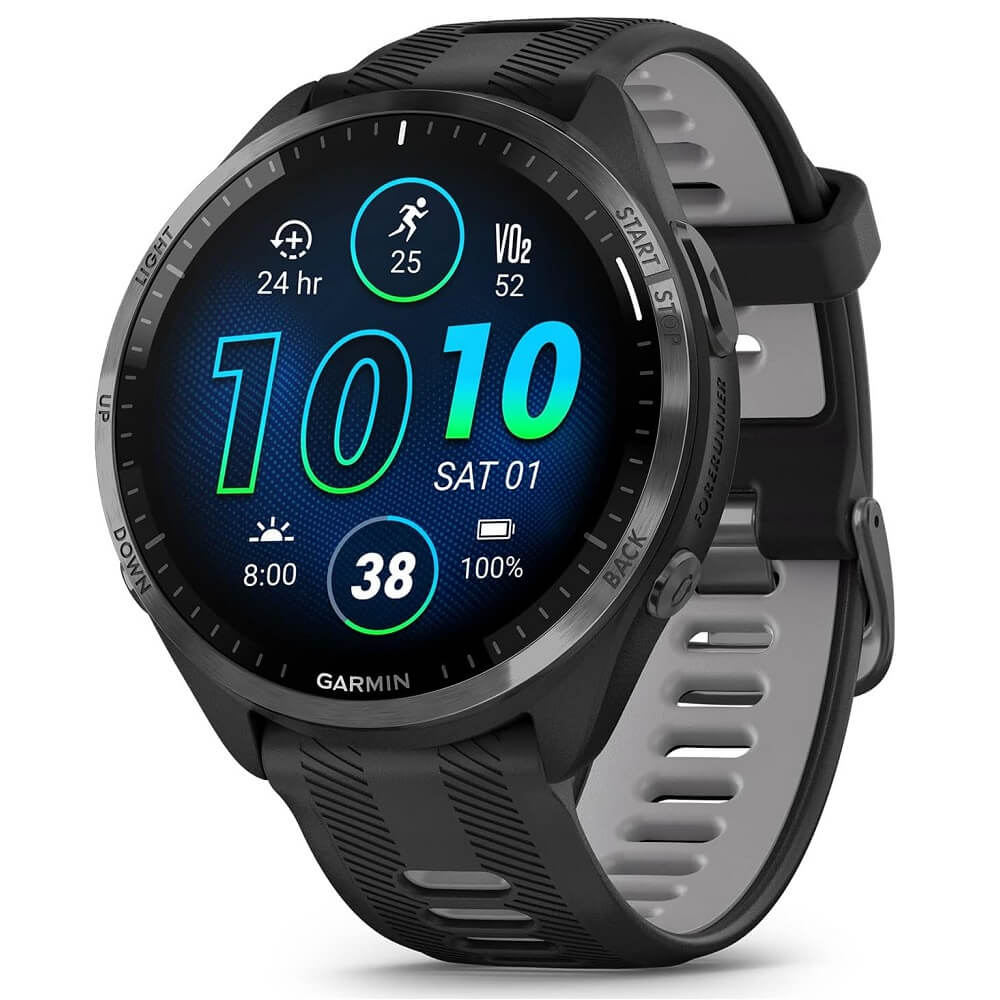
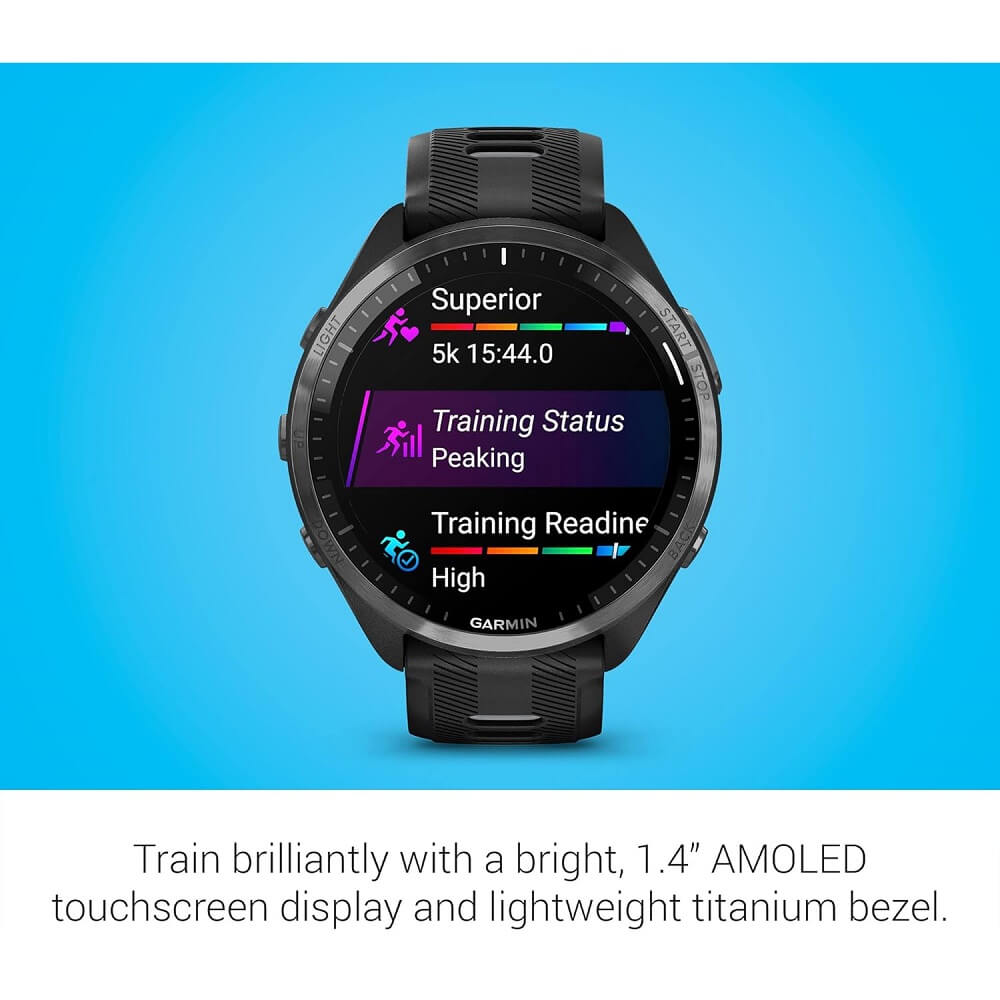
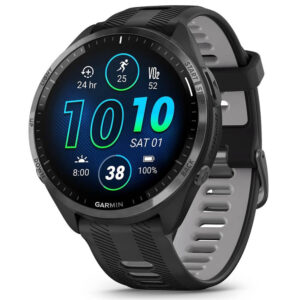
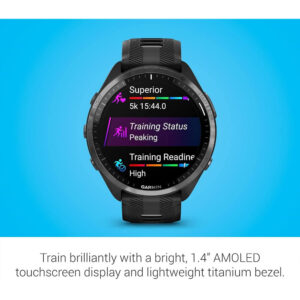
The AMOLED display is the first thing you’ll notice about the Forerunner 965, and it’s a game-changer. Multiple reviewers describe the screen as “gorgeous,” “bright enough to read in full sun,” and “adding just the right amount of sharpness and color without feeling like a gimmick.” According to DC Rainmaker’s in-depth review, the AMOLED technology represents a significant upgrade from the MIP displays on previous Forerunner models, offering vibrant colors and excellent outdoor visibility.
One verified purchaser who switched from an Apple Watch noted: “The screen is easy to read without thinking, even when I’m tired or zoning out. Pace, heart rate, distance—it’s all just there when I glance down.” This effortless readability extends to all lighting conditions, with the always-on display option maintaining visibility without draining battery excessively.
The watch’s physical design strikes an impressive balance between functionality and wearability. At just 53 grams with the silicone band, it’s significantly lighter than comparable smartwatches. A 5’3″, 120-pound runner confirmed: “I was worried about this watch being too heavy and big on my wrist but it fits quite well! It doesn’t bug me on my wrist while I’m active, or even while I’m sleeping.” The titanium bezel option adds a sleek, premium aesthetic without increasing bulk, and the black finish pairs well with both athletic wear and casual clothing.
Button-based navigation complements the touchscreen interface, giving you reliable control even with sweaty hands or during intense workouts. During activities, the touchscreen automatically disables to prevent accidental inputs—a thoughtful detail that shows Garmin’s understanding of real-world use cases.
Battery Life: Weeks, Not Days
Battery performance is where the Forerunner 965 absolutely destroys the competition. While Apple Watch users scramble for chargers daily, Forerunner 965 owners report 18-23 days of battery life with regular use. One user who tracks workouts 5 times per week stated: “I run 5 times a week and the battery lasts me 21-23 days at least.” Another runner logged 10 miles with music streaming and saw only a 3% battery drop.
Even with the always-on display enabled—which admittedly reduces longevity—users still report approximately one week between charges. A former Apple Watch Ultra owner noted: “About one week battery life is much better than Apple Watch,” despite initially hoping for longer endurance in AOD mode. For GPS-intensive activities, the watch easily handles marathons and ultra-distance events. One marathoner confirmed their watch “lasted through a marathon and still had battery life to go!”
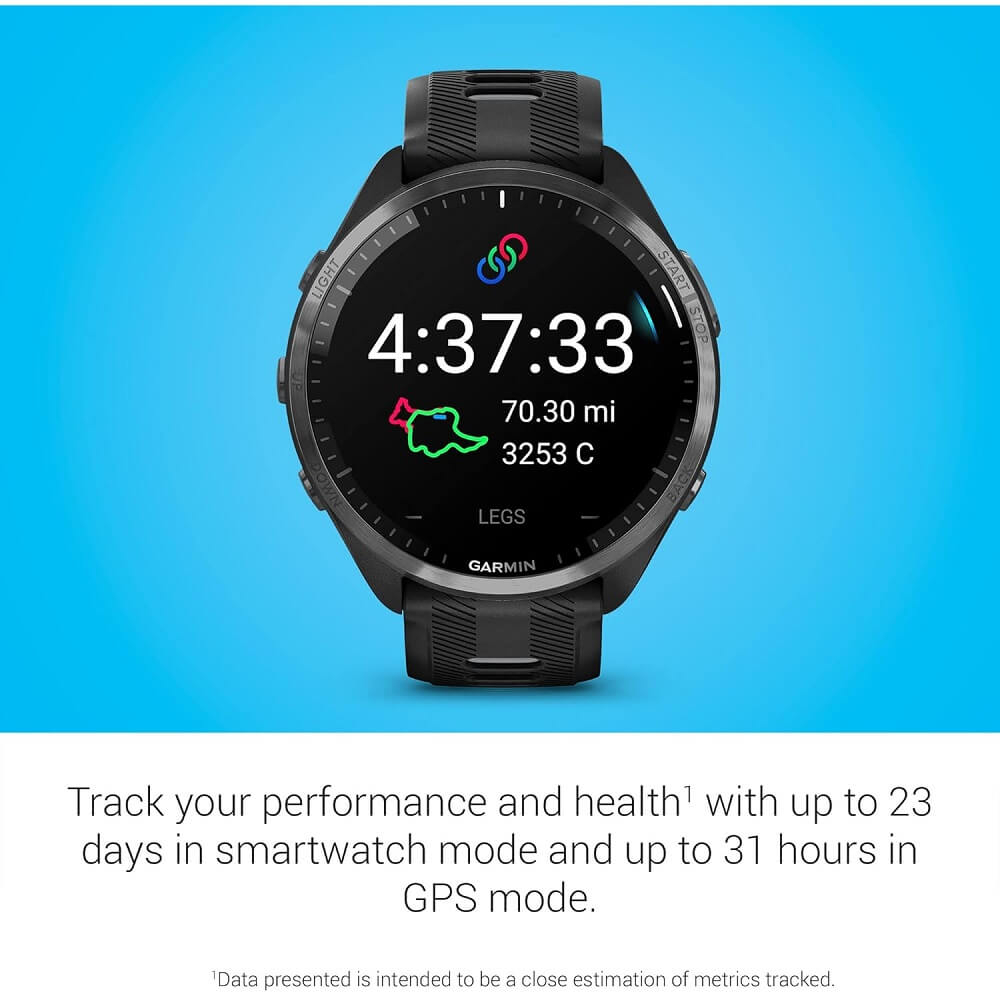
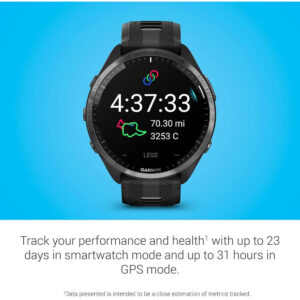
According to Garmin’s official specifications, the Forerunner 965 offers up to 23 days in smartwatch mode, up to 31 hours in GPS-only mode, and up to 8.5 hours in GPS mode with music. These aren’t marketing exaggerations—real-world testing consistently validates these numbers.
The charging system uses Garmin’s proprietary cable, which some users note as a minor inconvenience compared to wireless charging. However, the infrequent charging requirement means you’ll rarely think about it. Charging is fast enough that a quick top-up before extended activities provides hours of tracking capability.
GPS Accuracy and Tracking Performance
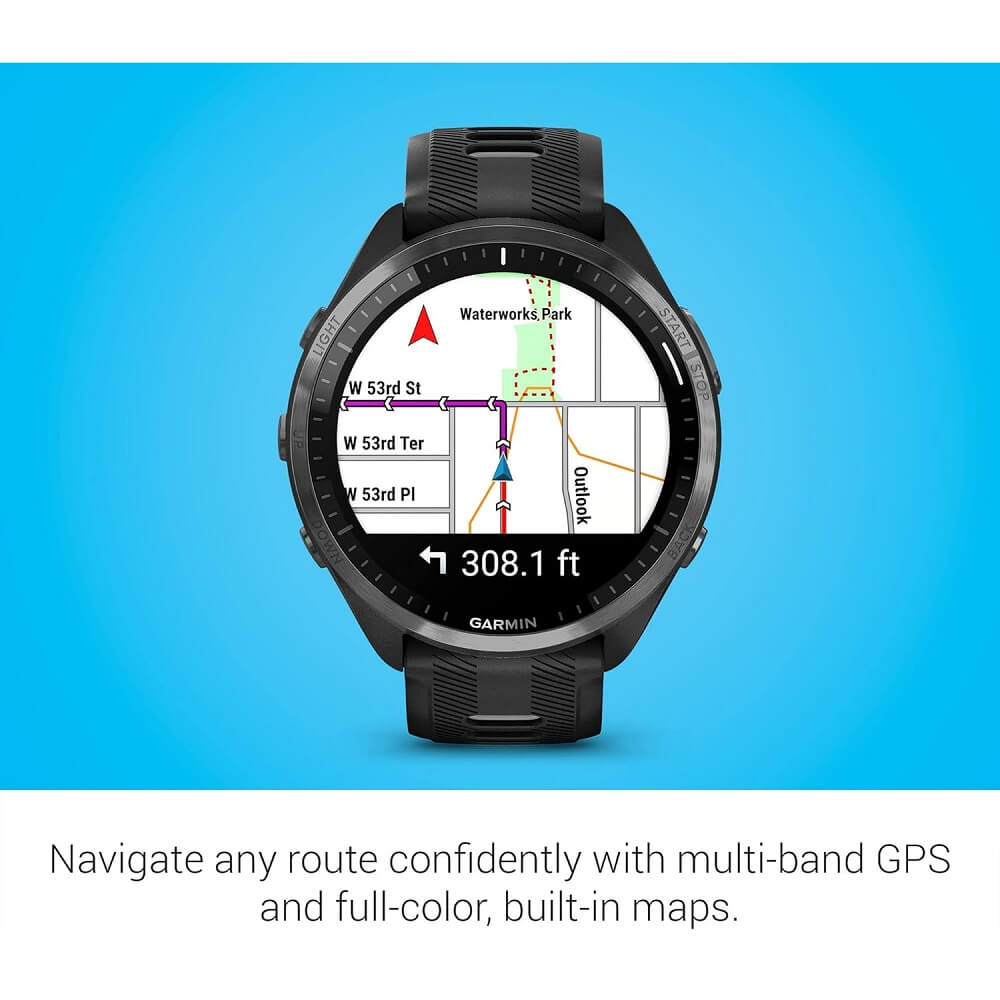
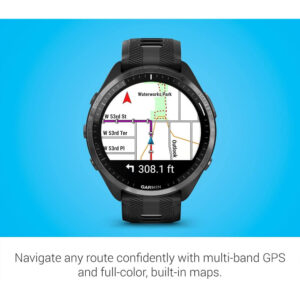
GPS accuracy is non-negotiable for serious runners, and the Forerunner 965 delivers exceptional performance. The watch utilizes multi-band GPS technology, accessing multiple satellite systems (GPS, GLONASS, and Galileo) for superior accuracy even in challenging environments like urban canyons and dense forests.
One trail runner who uses the watch for deep woods navigation reported: “Even in the woods I get a clear signal and if my bike computer loses my location my 965 is dead on.” The multi-band GPS feature, while battery-intensive when constantly enabled, can be managed through SatIQ technology that automatically switches between single and multi-band modes based on environmental conditions.
According to OutdoorGearLab’s testing, the Forerunner 965 measured within ±0.05 miles during GPS accuracy tests, making it one of the most accurate tracking devices available. Route tracking proves equally impressive, with users reporting that mapped routes accurately reflect their actual paths, including switchbacks and trail variations.
The onboard maps feature full-color topographic and navigation data, allowing you to explore confidently and navigate back to start with the touch of a button. One paddleboarder appreciated this capability: “I really needed the navigation on my wrist especially while SUP on the river. If I drop my phone, it’s gone, so it’s nice to navigate on your wrist.” The watch even allows you to save locations with timestamps, which sync to the Garmin Explore app for easy renaming and management.
Training Metrics and Recovery Insights
The Forerunner 965’s training intelligence sets it apart from basic fitness trackers and even premium smartwatches. The watch doesn’t just record your workouts—it analyzes your performance, tracks your fitness trends, and provides actionable guidance for optimizing training load and recovery.
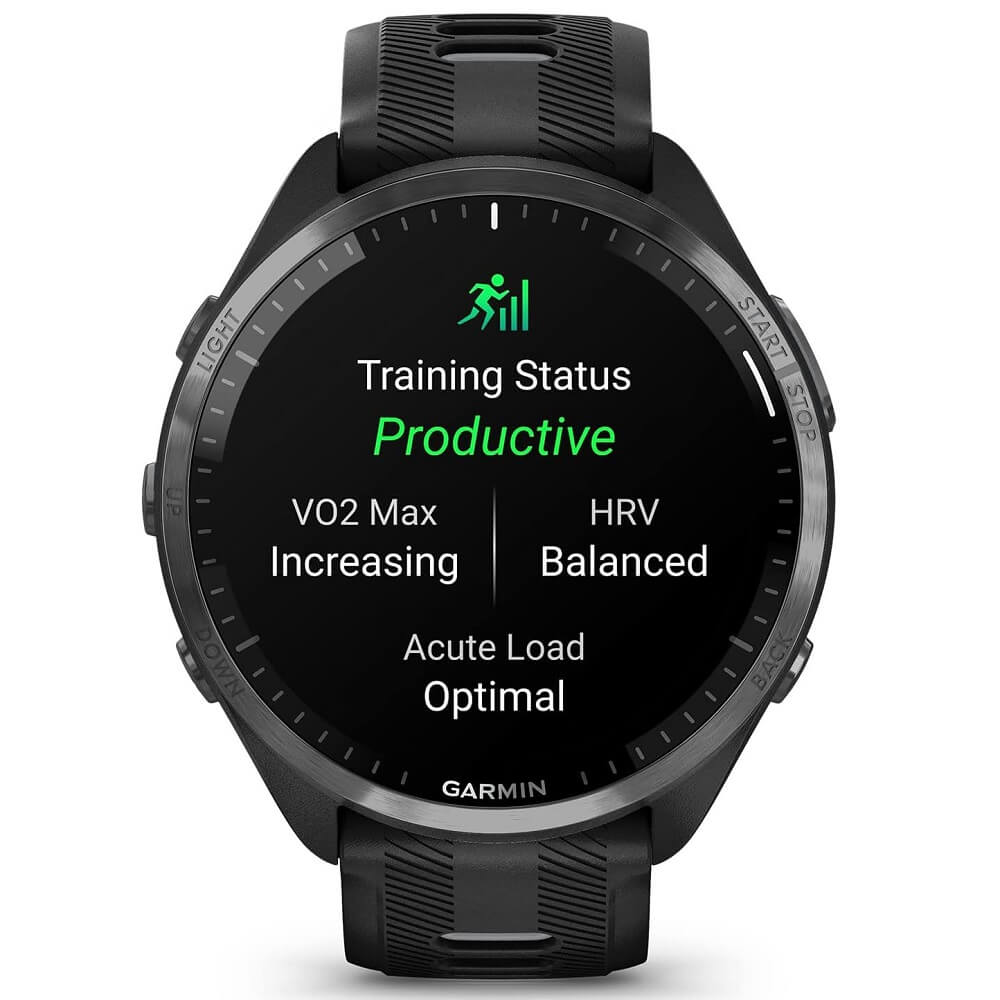
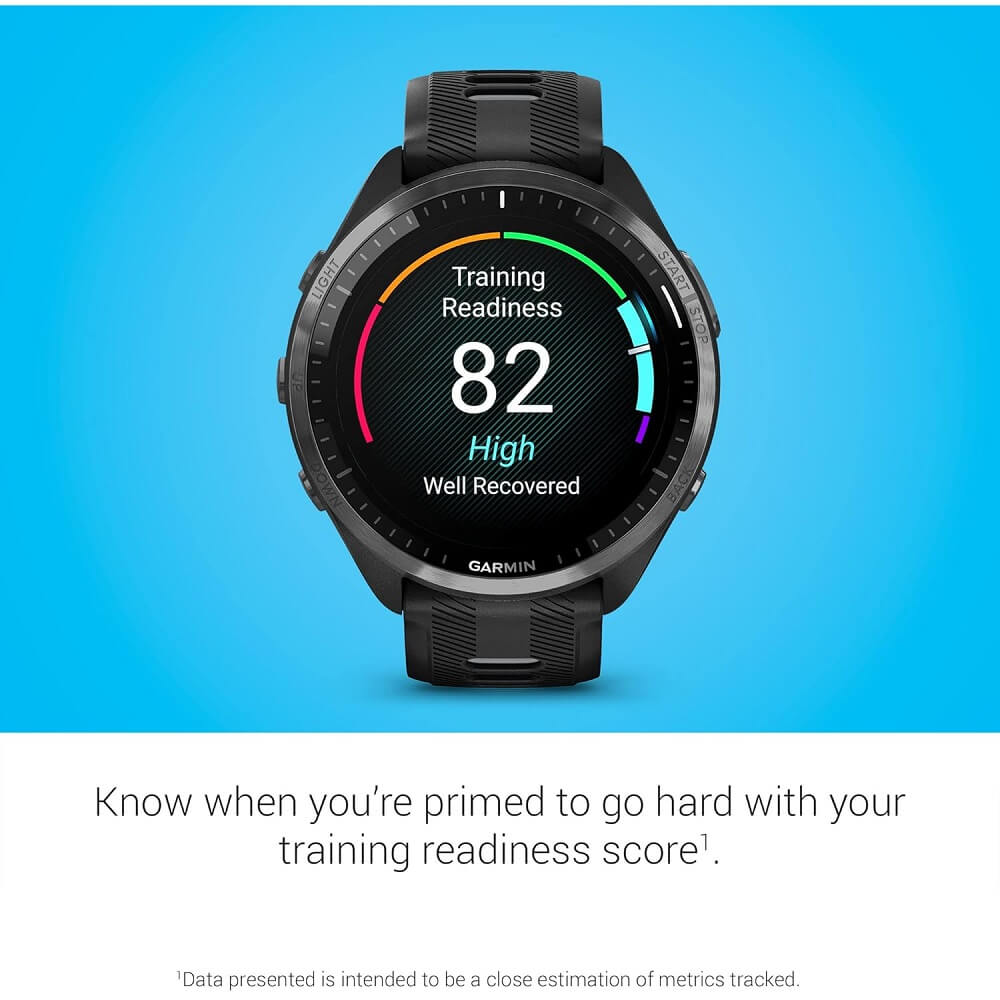
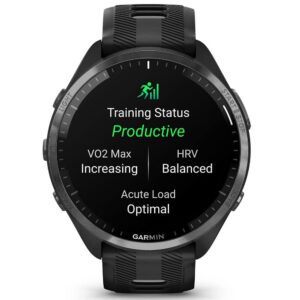
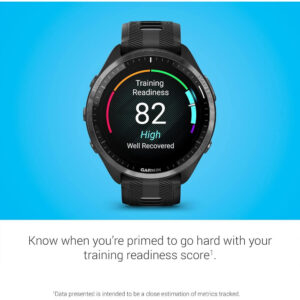
Training Readiness is one of the most valued features, combining sleep quality, heart rate variability, recovery time, and training load to generate a daily readiness score. One user explained: “I like waking up and checking how I slept, not because I expect perfection, but because it explains why some days feel harder than others. When my sleep or HRV is off, it usually lines up with how I feel.” The system doesn’t guilt users—it simply provides data-driven recommendations: train hard if you’re ready, take it easy if you need recovery.
Running dynamics tracked from the wrist include cadence, vertical oscillation, ground contact time, and stride length. While a chest strap heart rate monitor provides additional metrics like running power and vertical ratio, the wrist-based tracking proves “just as good as anything else out there” for most runners. The watch also features automatic lactate threshold detection, eliminating the need for uncomfortable chest strap testing.
VO2 max estimation helps track cardiovascular fitness improvements over time. Users report that the metrics align well with perceived fitness levels, making the data feel credible rather than arbitrary. Race prediction features project finish times for various distances based on your current fitness, updating as your training progresses.
The free Garmin Coach programs deserve special mention. One half-marathon finisher raved: “I love the lactate threshold auto detection feature that does not require a chest strap heart monitor. I also love the free Garmin coach/training program that helped me successfully run a half marathon. No subscription is required.” Unlike many fitness platforms that lock coaching behind paywalls, Garmin includes expert-designed training plans at no additional cost.
Sleep tracking provides detailed breakdowns of sleep stages, including REM, deep, and light sleep, along with sleep scores and insights. While occasional false detections occur (one user’s video gaming session was mistaken for sleep), the system generally proves accurate and useful for understanding recovery patterns.
Smart Features and Connectivity
While the Forerunner 965 prioritizes fitness over smartphone features, it includes essential smart functionality. The watch displays notifications for calls, texts, and apps, allowing you to stay connected without constantly checking your phone. However, you cannot reply to messages directly from the watch (unless using Android with preset responses)—a limitation that’s either a dealbreaker or a welcome distraction-reduction depending on your perspective.
Many users, particularly those switching from Apple Watch, appreciate this focused approach. One former Apple Watch owner stated: “I wanted more battery life and a watch with some functionality but I didn’t need the annoyance of the Apple Watch.” Another added: “The first thing I did was cut off the smartwatch features. I want this strictly for fitness. My phone works just fine for notifications.”
Music storage is available on the 965, with support for Spotify, Amazon Music, and Deezer for offline playback. The watch includes 32GB of storage, though some users report occasional app crashes with Amazon Music that require workarounds. Bluetooth headphone connectivity works reliably for wireless audio during runs.
Garmin Pay enables contactless payments at supported terminals, though adoption varies by region and retailer. The feature works smoothly when available, allowing you to grab post-run coffee without carrying a wallet.
For those with Garmin Connect+, the Messenger feature enables GPS-based texting even in areas without cell coverage. One user highlighted this capability: “You can connect your watch to Garmin Messenger and text friends and family using the GPS from your watch!!! I like this because I go deep in the woods where there is little to no coverage but I can still text via messenger app on my iPhone.”
The Garmin Connect app serves as the ecosystem hub, presenting all your health and fitness data in a comprehensive, well-organized interface. Multiple reviewers who came from Apple’s fragmented Health and Fitness apps praised Connect’s unified approach: “I love how everything is in one app. All your information is in Garmin Connect. Apple had the fitness app with information then the Health app with different information. It’s so cluttered and not user friendly.”
Build Quality and Durability
The Forerunner 965’s construction inspires confidence. One long-term user reported: “I’ve banged it around on trail runs, soaked it with sweat and salt and pool water, and dragged it through travel without a second thought. It takes the abuse of a kettlebell being slammed against it on my wrist and doesn’t flinch.” After three years of daily wear, another user confirmed their watch “is still working like new.”
The fiber-reinforced polymer case keeps weight down while providing excellent impact resistance. The bezel options include black or titanium finishes, with the titanium adding a premium aesthetic for those who prefer a more refined look. Water resistance is rated to 5 ATM (50 meters), making the watch suitable for swimming, showering, and water sports. Swimmers report reliable tracking for pool and open water sessions.
The included silicone band proves comfortable for extended wear, though it’s not particularly breathable. The quick-release mechanism (22mm lug width) makes swapping bands simple once you understand the system—though several users wished clearer instructions were included. The band options are extensive, from additional silicone colors to leather and metal bracelets, allowing personalization for different occasions.
The charging port connection, while functional, represents a potential long-term weak point. One experienced Garmin user noted: “My only longer term question is with the charging connection—sometimes the connections get dirty or the cable breaks and charging can be a pain. Wireless charging would be an improvement.” Regular cleaning of the charging contacts helps maintain reliability.
Screen durability is good but not invincible. The display uses Corning Gorilla Glass DX rather than sapphire crystal, which keeps costs down but increases scratch susceptibility. Several users recommend screen protectors, with one noting: “Wish I would’ve purchased a screen protector because I already have a few small scratches.” However, minor scratches typically aren’t visible during normal use.
Value Proposition and Comparisons
At $599.99 on Amazon (as of February 2026), the Forerunner 965 sits in the premium fitness watch category. The price initially seems steep, but the value becomes clear when compared to alternatives.
Against the Apple Watch Ultra ($799), the Forerunner 965 offers superior battery life (20+ days vs. 36 hours), more comprehensive training metrics, better GPS accuracy with multi-band support, and longer-term reliability. One Apple Watch Ultra defector noted: “The GPS & heart rate are accurate. I run 5 times a week and the battery lasts me 21-23 days at least.” While the Apple Watch excels at smartphone integration and app ecosystem, serious athletes consistently find the Garmin more useful.
Compared to the Fenix 7 series, the Forerunner 965 provides equivalent features in a lighter, thinner package with the superior AMOLED display. The Fenix’s ruggedized construction and sapphire crystal options appeal to extreme adventurers, but for dedicated runners, the 965’s focused design and reduced weight make it the better daily companion.
The Forerunner 255, at roughly half the price, offers many of the same training features but lacks the AMOLED display and titanium bezel options. One user who upgraded from the 255 confirmed: “Great watch. Just upgraded from the 255. Smooth sailing from here.” The display quality alone justifies the premium for many users.
Perhaps the most common comparison comes from Apple Watch switchers, and the sentiment is overwhelmingly positive. “If you value fitness get the Garmin. If you want a phone on your wrist get the Apple Watch,” summarized one reviewer. Another added: “I switched from an Apple Watch to this Garmin almost a year ago and I can’t go back.” The reduced charging frequency, superior fitness tracking, and freedom from constant notifications create a compelling case for athletes willing to trade smartphone convenience for training excellence.
Who Should Buy the Garmin Forerunner 965
The Forerunner 965 is purpose-built for serious runners and multisport athletes who prioritize training data, GPS accuracy, and battery life over smartphone features. This watch excels for:
- Marathon and ultra-runners who need reliable all-day GPS tracking without battery anxiety
- Trail runners and hikers who require accurate navigation and multi-band GPS for challenging terrain
- Triathletes and multi-sport athletes who need comprehensive tracking across swimming, cycling, and running
- Data-driven trainers who want advanced metrics like training load, recovery time, and performance analytics
- Apple Watch refugees tired of daily charging and seeking a fitness-first experience
The watch is less ideal for users who need constant smartphone connectivity, frequently use third-party apps, or prefer the convenience of replying to messages from their wrist. One reviewer candidly noted the limitation: “The only real drawback for me is the lack of LTE. I can’t take calls or send texts if I don’t have my phone with me.”
For those new to Garmin’s ecosystem, expect a learning curve. The interface is “slightly less modern and intuitive than my Apple Watch,” admitted one user, “but all the benefits outweigh the drawbacks in my opinion.” After a few weeks of use, navigation becomes second nature, and the comprehensive feature set reveals itself gradually rather than overwhelming new users.
Alternatives to Consider
If the Forerunner 965 doesn’t quite fit your needs, several alternatives merit consideration:
Garmin Fenix 7 ($699-$899): Offers similar training features with more rugged construction, longer battery life with solar charging options, and sapphire crystal displays. Better for extreme outdoor adventures; heavier and bulkier for daily running.
Garmin Forerunner 265 ($449): Provides the same AMOLED display and core training features in a smaller 42mm case. Better for smaller wrists and tighter budgets; fewer advanced features and shorter battery life.
Apple Watch Ultra 2 ($799): Superior smartphone integration, cellular connectivity, and app ecosystem. Better for iPhone users who want comprehensive smartwatch features; significantly shorter battery life and less detailed training analytics.
COROS Pace 3 ($229): Exceptional value with solid GPS accuracy and 24-day battery life. Better for budget-conscious runners; lacks AMOLED display, onboard music, and Garmin’s ecosystem depth.
Polar Vantage V3 ($599): Excellent heart rate accuracy and training load analysis. Better for users prioritizing HR precision; smaller app ecosystem and less robust GPS performance in challenging terrain.
Final Verdict
The Garmin Forerunner 965 delivers on its promise to be the ultimate running watch for serious athletes. The AMOLED display brings visual pleasure to every interaction, the 20+ day battery life eliminates charging anxiety, and the training intelligence provides genuinely useful guidance for optimizing performance and recovery.
Real-world testing from thousands of users confirms the watch’s reliability. One satisfied owner summarized the experience perfectly: “This GPS sports watch was not cheap, but compared to others in its class it is one of the best value for the money. After three years it is still working like new, I wear it every day and the health and fitness reports are indispensable.”
The watch isn’t perfect—the lack of LTE limits true phone-free independence, the Gorilla Glass scratches more easily than sapphire, and the premium price may give budget-conscious buyers pause. However, for runners and multisport athletes who demand accuracy, comprehensive metrics, and multi-week battery life, the Forerunner 965 represents the current pinnacle of what a dedicated training watch should be.
If you’re committed to improving your running and training, this watch will meet you wherever you are and adapt as you progress. As one reviewer aptly concluded: “If you are a runner the Forerunner is the way to go, undoubtedly. Honestly, Apple Watches do not compare.”
Rating: 4.7/5 — Exceptional training watch with industry-leading battery life and display quality; minor compromises in smartwatch features are acceptable trade-offs for serious athletes.
Check current pricing and availability on Amazon
Technical Specifications
| Brand | Garmin |
| Model | Forerunner 965 |
| Display | 1.4″ AMOLED touchscreen (454 x 454 pixels) |
| Case Material | Fiber-reinforced polymer with titanium bezel options |
| Case Size | 47.2 x 47.2 x 13.2 mm |
| Weight | 53g (with silicone band) |
| Water Resistance | 5 ATM (50 meters) |
| Battery Life | Up to 23 days smartwatch mode, 31 hours GPS-only, 8.5 hours GPS with music |
| GPS | Multi-band GPS, GLONASS, Galileo with SatIQ technology |
| Heart Rate Monitor | Wrist-based Garmin Elevate V4, compatible with chest straps |
| Music Storage | 32GB (up to 2,000 songs) |
| Connectivity | Bluetooth, ANT+, Wi-Fi |
| Sensors | GPS, Heart Rate, Pulse Ox, Compass, Gyroscope, Accelerometer, Thermometer |
| Band Size | 22mm QuickFit bands |
| Price | $599.99 USD (as of February 2026) |
Be the first to review “Garmin Forerunner 965”
Related products
Garmin
Garmin
Garmin
Garmin
Garmin
Garmin
Garmin
Garmin
Reviews
There are no reviews yet.