
Timex Ironman Triathlon Classic 100 44mm Men Watch
$67.00
- 100-lap chronograph memory ideal for serious swimmers and interval trainers tracking extensive workouts
- 9-stage programmable interval timer supports complex training sequences with auto-repeat function
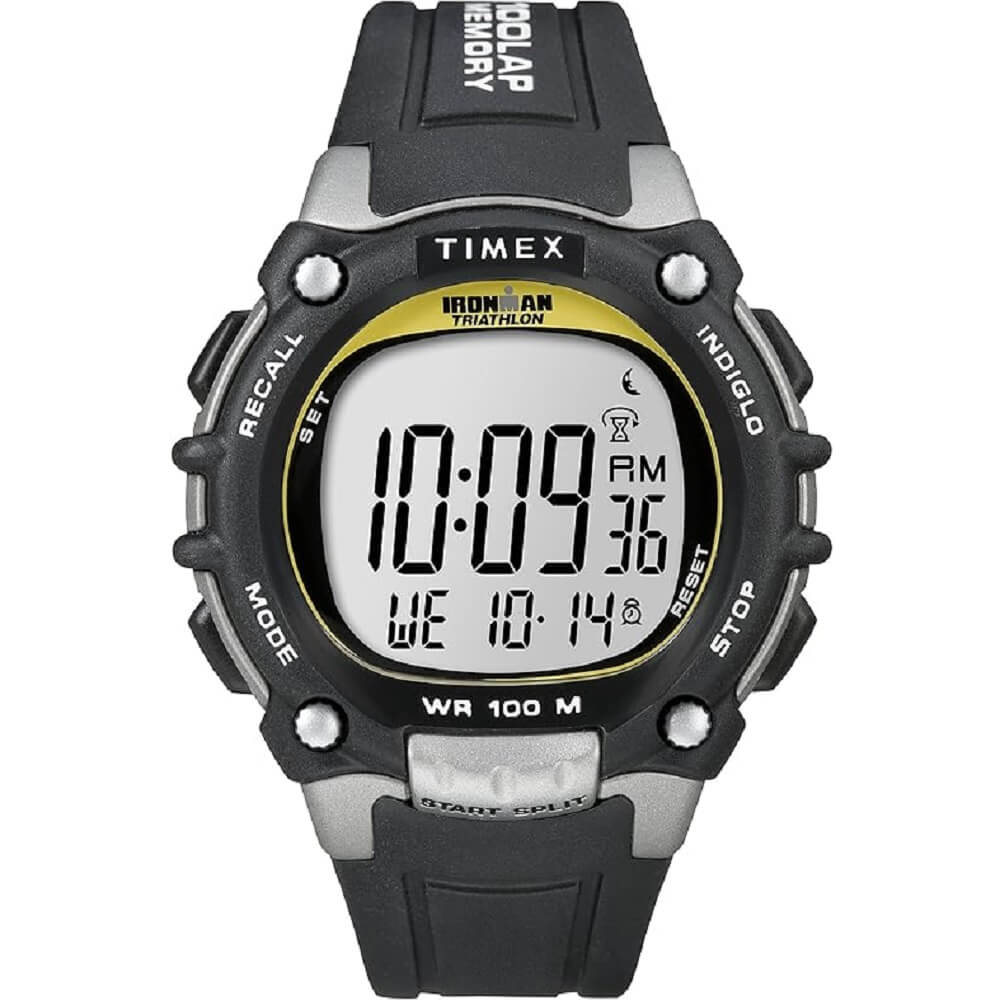
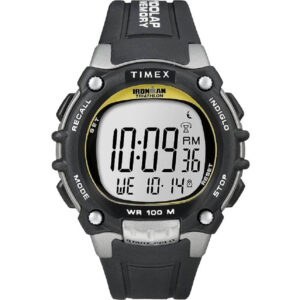
- Oversized 44mm display with extra-large digits—easiest to read during exercise without glasses
- Superior Indiglo backlight illuminates entire display evenly (beats LED competitors)
- Large Start/Split button positioned perfectly for accurate lap capture during swimming or running
- 4.7-star rating from thousands of Amazon customers with proven 5-15 year durability
- Exceptional value at $40-50 vs $200-500 GPS watches—no charging required (3-4 year battery life)
- Best for: Swimmers needing 100+ lap memory, athletes with vision issues, and smartwatch refugees
The Timex Ironman Triathlon Classic 100 44mm represents the pinnacle of affordable digital sports watches in 2026. With a 4.7-star rating from thousands of verified Amazon customers and decades of proven reliability, this watch delivers professional-grade training features at a fraction of the cost of GPS fitness trackers. After analyzing extensive customer feedback spanning from 2009 to 2026, one pattern emerges: users consistently praise the oversized display numbers, intuitive button layout, and exceptional 100-lap memory that makes this watch ideal for serious swimmers, runners, and cyclists who need extensive workout data without the complexity or charging requirements of modern smartwatches.
Design and Build Quality: Purpose-Built for Performance
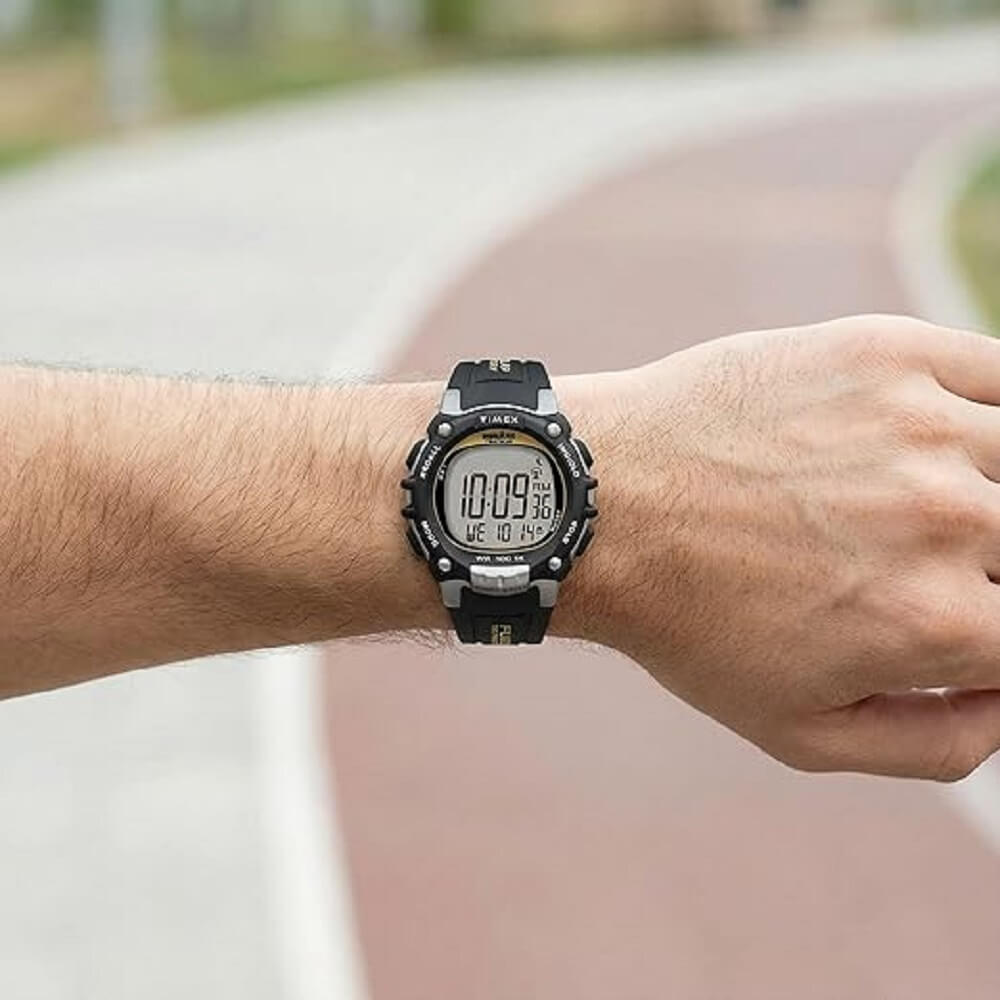
The Timex Ironman Classic 100 prioritizes function over fashion, and its design choices reflect this commitment. The 44mm resin case delivers substantial wrist presence without the excessive bulk of 46mm+ tactical watches. According to customer testimonials on Amazon, the case diameter sits in the sweet spot—large enough for instant readability during intense exercise, yet slim enough to wear comfortably under wetsuit or jacket sleeves.
Build quality consistently exceeds expectations for a watch in the $40-50 range. One customer who has owned multiple Ironman models over the years noted: “This is already my 2nd TIMEX which I use for my swimming practices. This one beats the older model with some interesting changes.” The resin construction survives chlorine pools, saltwater, impacts, and years of daily abuse. A reviewer from 2016 reported: “I purchased it originally about ten years ago…I’ve owned this watch for over two years and it just now needs the battery replaced,” demonstrating remarkable longevity.
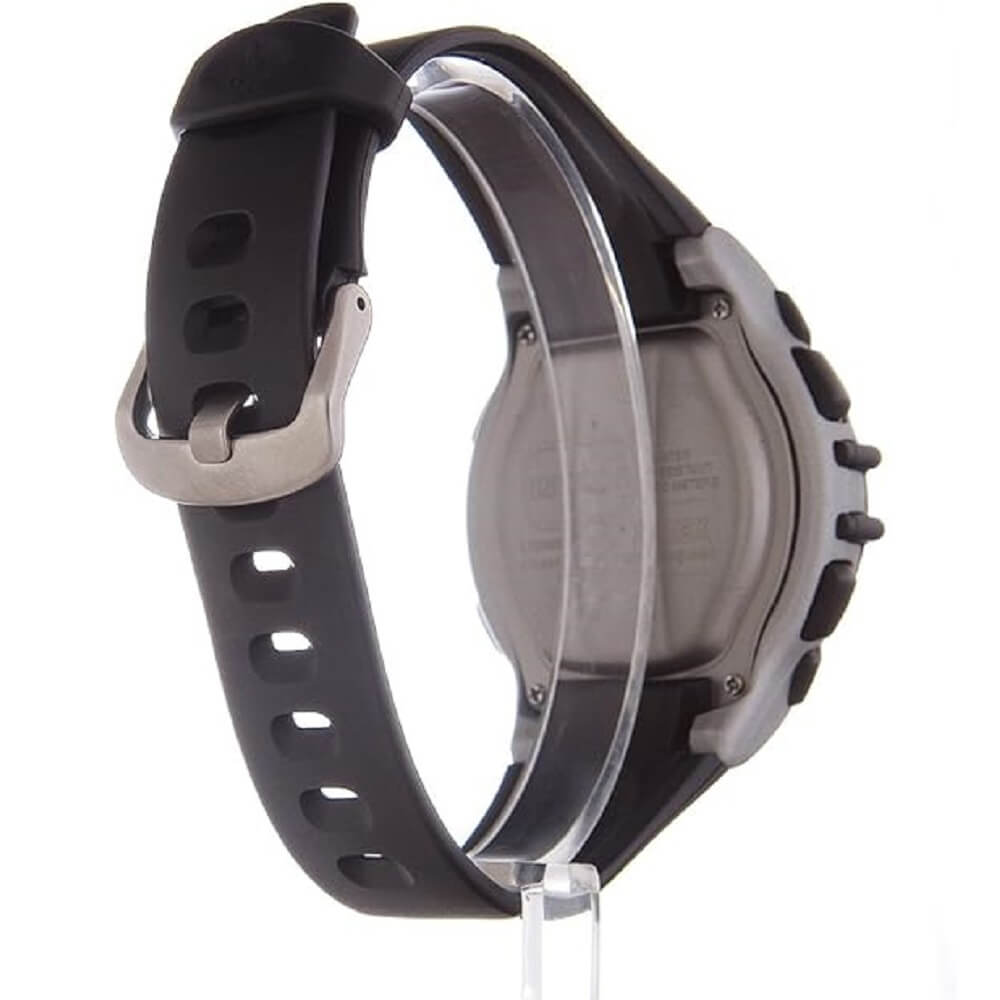
The strap system features a crucial upgrade over earlier models: a rubber-lined keeper that locks onto the band and prevents the excess strap from sliding loose during underwater activity. As one swimmer explained: “It has a piece of rubber on the inside that locks on at the wrist band and does not make it loose or even letting it go as some other watches do sometimes. This is more effective underwater I think, as it remains the way you set your wrist.”
Water resistance is rated at 100 meters (330 feet), and real-world testing validates this specification. Multiple swimmers report using this watch for lap counting in pools with zero water intrusion after years of use. One dedicated swimmer stated: “As a swimmer I use to count splits over 100m (or yards) with many laps during one training…It is quite useful.” The watch handles recreational diving, snorkeling, kayaking, and daily showers without compromising the seal.
Button quality represents a significant engineering achievement. The large Start/Split button is positioned prominently at 4 o’clock for easy access during swimming turns or running intervals. One enthusiastic reviewer highlighted this: “A really big START/SPLIT button that is great to press when I am swimming laps and have to press myself at each turn at the pool. Just perfect. Never a miss!” The tactile feedback ensures you can confirm button presses without looking, critical during physical activity.
Display and Readability: Industry-Leading Clarity
Display clarity defines the Ironman Classic 100’s competitive advantage. The watch features dramatically larger digits than previous models, addressing the number one complaint of aging athletes: inability to read workout data mid-exercise. One customer comparing this to older Ironman models noted: “The larger digits on this model makes it easier to read the numbers (as some mentioned to do so when running) even when I am swimming, with a quick flick of the wrist at the turn, it’s possible to see the minutes and the seconds.”
The numbers aren’t just large—they’re well-proportioned and high-contrast. Multiple customers specifically purchased this model for the oversized time display: “What I really like is the large numbers I can read without using my glasses” and “I bought the 100 because the numbers were bigger.” For athletes with presbyopia or those who train without corrective lenses, this readability advantage is transformative.
Screen organization maximizes information density without clutter. During chronograph mode, the watch displays lap times in large digits with split times in a secondary field, or users can reverse this priority. The navigation includes on-screen instructions showing “NEXT,” “DONE,” “+” or “-” prompts, making programming intuitive without memorizing button combinations. One reviewer appreciated this: “The navigation on this model became quite easier. It was already easy on the older model but this one included instructions on screen, such as NEXT, DONE, + or – in order to advance with your practices and training.”
The Indiglo electroluminescent backlight remains Timex’s signature feature and delivers uniform blue-green illumination across the entire display. Unlike single-LED lights found on competing watches, Indiglo provides shadow-free visibility for checking workout data at 5 AM or during evening runs. One long-term user who tested multiple watches concluded: “The Indiglo lighting has improved dramatically for quick checks when it’s dark.”
The FLIX technology allows wrist-flick activation of the backlight—theoretically convenient but practically inconsistent. Multiple reviewers struggled with the activation gesture: “I am not quite able to get the hang of the ‘flick’ technology,” while another noted: “In order to activate the FLIX system I am required to wrench my arm so hard I nearly dislocate it.” Most users simply press the Indiglo button, which is positioned for easy access.
100-Lap Memory: Serious Data for Serious Athletes
The 100-lap chronograph memory separates this model from entry-level sports watches and justifies the modest price premium over 30-lap models. For swimmers tracking 100-meter or 100-yard splits across extensive workouts, this capacity is essential. One competitive swimmer explained their usage: “As a swimmer I use to count splits over 100m (or yards) with many laps during one training. It is quite useful. I go easily on 10 to 15 laps of the memory in one training.”
The memory system stores complete workout sessions with date stamps, allowing athletes to track training progression over weeks and months. After completing a workout, the watch automatically calculates average lap time and best lap performance. One customer noted: “When you’re finished with your laps just save your workout. The watch will then calculate some information like average lap time and best lap.” This data can then be logged into training spreadsheets for long-term analysis.
The lap recall interface is straightforward: navigate to the memory mode and scroll through saved workouts by date. Each workout displays total time, average pace, and individual lap times. One minor limitation: the automatic averaging function may exclude outlier laps (such as intentional sprint intervals), which means your fastest split might not register as “best lap” if it deviates significantly from your average pace. However, you can still view all individual lap times by scrolling through the complete workout data.
For runners using measured tracks or cyclists on known loop distances, the 100-lap capacity supports even the most grueling training sessions. One reviewer testing the watch for versatility concluded: “For someone who can’t afford a GPS watch and can use maps or a track this watch would be great for running or anything with laps or intervals.” The absence of GPS is a feature, not a limitation—no satellite acquisition delays, no battery drainage, just instant timing at button press.
Interval Timer: Nine-Stage Workout Programming
The interval timer feature elevates this watch beyond basic chronographs and into serious training tool territory. Unlike simple countdown timers, this system allows programming up to nine distinct interval segments with automatic progression through the sequence. For athletes running complex workouts (warm-up, intervals, recovery periods, cool-down), this eliminates constant button pressing and mental tracking.
Programming intervals is intuitive: set each segment’s duration, choose whether the sequence stops or repeats automatically, and optionally enable “chrono at the end” to continue timing after intervals complete. One customer who tested extensively reported: “It has up to 9 interval timers and once finished it can either stop or repeat the sequence. It can do what’s called chrono at the end, where it just switches to the chronograph feature after your timer or interval timers are finished.”
The repeat function is particularly valuable for circuit training, HIIT workouts, or swimming sets. Set up your work/rest intervals once, activate auto-repeat, and the watch cycles through your programmed sequence indefinitely until you manually stop it. The alarm at each interval transition is distinct and loud enough to hear in pool environments or while wearing headphones.
One minor interface quirk: when switching from interval mode to chronograph mode, the watch displays “lap timers left message” which some users found unnecessary. A customer noted: “I wish that the classic 100 skipped the ‘lap timers left message’ when you switched modes to use the stop watch timer.” This is a cosmetic annoyance rather than a functional limitation.
Additional Features: Comprehensive Without Complexity
Multiple Alarms: The watch provides up to five programmable alarms with distinct tones, allowing differentiation between wake-up calls, workout reminders, and medication alerts. Customers use these creatively for time management throughout the day. The alarm volume is genuinely loud—multiple reviewers confirmed it reliably wakes deep sleepers. One practical user explained: “When I work out I like as much information as I can get, so for running and biking I have a watch for that, but for swimming I needed a watch to help me count my laps and log my times.”
Dual Time Zones: The watch stores two time zones for travelers or those coordinating across regions. One user specifically praised this: “I use the dual time zones quite a bit—it just makes moving between my two usual time zones literally a single button press.” This eliminates mental arithmetic when scheduling calls or flights across continental divides.
12/24 Hour Settings: Military and international users can toggle between time formats. The 24-hour display eliminates AM/PM ambiguity for those preferring this standard.
Date and Day Display: A perpetual calendar tracks the date and day of week automatically, accounting for month lengths and leap years. The display alternates between primary time and date information with a button press.
Mode Customization: Users can hide unused functions from the mode rotation, streamlining navigation. If you don’t use certain alarms or the occasion reminder feature, disabling them from the display sequence reduces button presses when accessing frequently-used functions.
Button Layout and User Interface: Refined Through Iteration
The five-button layout hasn’t changed dramatically in years—because it works. The Mode button cycles through functions (Time, Chronograph, Timer, Intervals, Alarms, Date). The Start/Split button initiates timing and records laps. Set enters programming modes. Indiglo activates the backlight. This consistent layout means users upgrading from older Ironman models have zero learning curve.
What has improved is button responsiveness and positioning. The Start/Split button is substantially larger than other controls and positioned at 4 o’clock for easy thumb access. This placement is critical during swimming laps—one reviewer emphasized: “A really big START/SPLIT button that is great to press when I am swimming laps and have to press myself at each turn at the pool. Just perfect. Never a miss!”
Initial button stiffness breaks in nicely after the first week of use. Multiple customers mentioned the buttons felt tight when new but became more responsive with regular use. This initial resistance actually prevents accidental presses during physical activity—a worthwhile trade-off.
The on-screen instruction system is a thoughtful design detail rarely found on digital watches. When setting alarms or intervals, the display shows contextual prompts like “NEXT,” “DONE,” “+” and “-” indicators adjacent to the corresponding buttons. One customer who compared this to previous models stated: “The navigation on this model became quite easier…it included instructions on screen, such as NEXT, DONE, + or – in order to advance with your practices and training.”
Comfort and Wearability: Engineered for Extended Use
Despite the 44mm case diameter, the watch wears surprisingly comfortably for extended periods. The resin construction keeps weight minimal—customers describe it as “light” and “comfortable” even during sleep tracking. The case sits flat against the wrist rather than protruding excessively, allowing it to slip under wetsuit or jacket cuffs without snagging.
The strap system represents a significant engineering improvement over earlier models. The resin band is pliable and soft-textured rather than rigid plastic, preventing the chafing and irritation common with cheaper digital watches. Multiple adjustment holes accommodate wrist sizes from approximately 6.5 to 8+ inches. One reviewer with average wrist size noted the fit was perfect with two additional holes remaining for adjustment.
The locking keeper system is the unsung hero of the design. This small rubber-lined piece clamps onto the excess strap and prevents it from sliding around during vigorous activity or underwater swimming. One swimmer specifically praised this: “A simple but effective wrist band ‘clip’ (the tiny piece of strap that attaches the ‘extra’ wrist band that is left after you put the clock on)…It has a piece of rubber on the inside that locks on at the wrist band and does not make it loose.”
The 44mm size may be too large for very small wrists (under 6.5 inches), but the majority of reviewers found the proportions ideal. One customer noted: “I currently own a classic 30 and a classic 100. Bought the 100 because the numbers were bigger,” indicating they could wear both sizes comfortably.
Long-term wearability is confirmed by customers reporting continuous wear (24/7) for years without discomfort. The watch survives showers, swimming, sleeping, and workouts without needing removal. As one dedicated user stated: “I wear mine all the time…in the shower, swimming, bicycling, camping, etc. I only take it off when painting or working on the car.”
Battery Life and Durability: Years of Reliable Service
Battery life consistently exceeds expectations, with most customers reporting 3-4 years of use before the first battery replacement. One long-term user documented their experience: “I typically wear mine till the battery dies (3-4 years) and I just buy another.” This longevity eliminates the charging anxiety plaguing smartwatch users who must dock their devices nightly or weekly.
The watch uses a standard CR2025 battery, widely available at pharmacies and electronics stores. However, battery replacement presents challenges. The case back is secured with four small screws and requires careful handling to maintain the water-resistance seal. Multiple customers reported difficulty with DIY replacement: “I destroy the watch trying to do this” and “kinda hit/miss.”
The recommended approach is professional battery replacement through Timex’s service program ($10) or a local jeweler/watch shop ($5-10). If using a third-party service, verify they properly reseat the gasket—one customer’s watch failed after an improper battery replacement: “I don’t think they got the waterproof seal re-inserted correctly, because when I got caught in a downpour the watch stopped working.” Given the watch’s low replacement cost ($40-50), many users simply purchase a new unit when the battery dies after 5-10 years, benefiting from updated features in newer production runs.
Case and strap durability is excellent. Multiple customers report 10-20 years of continuous use across multiple units: “I’ve worn them forever. Maybe decades” and “This is the third one of these watches I’ve owned in the last 20-25 years.” The resin case withstands impacts, scratches (cosmetic only—doesn’t affect function), and extreme temperature variations. The strap is the most common failure point, typically lasting 3-5 years before breaking at the holes. Replacement straps are available from Timex for approximately $10.
Water resistance remains intact for years when properly maintained. Customers report regular swimming, snorkeling, and water sports without water intrusion. The key caveat: avoid pressing buttons underwater, as this can compromise the seal. One customer noted: “On Timex’s website for this product, it does mention that you should not press any of the buttons underwater.”
Real-World Use Cases: Versatility Beyond Athletics
While marketed to triathletes, customer reviews reveal diverse applications demonstrating the watch’s versatility.
Competitive Swimmers: The 100-lap memory makes this watch ideal for serious pool training. Swimmers track 100-meter or 100-yard splits across extensive workouts, then log data for performance analysis. One swimmer explained: “I use the refereeing timers to setup swim workouts and help me keep track of my pace. I would set the timer alarms to go off every 100 or 200 yards. This would help me know if I was ahead or behind pace.”
Runners and Cyclists: Track athletes use the lap counter for interval workouts, recording split times for each 200m or 400m repetition. Cyclists on known loop courses track lap times for time trial training. The watch captures accurate splits without GPS satellite acquisition delays.
Everyday Reliability: Many customers prioritize simplicity and long battery life over smartwatch features. One practical user stated: “I don’t need a smart watch, just one with a few functions, such as stopwatch, alarm, and count-up/countdown. And, most importantly, what I do need is this: Given that I exercise without eyeglasses, I searched for some time for an Ironman with the largest display.”
Budget-Conscious Athletes: With GPS watches costing $200-500+, the Ironman provides essential training features at a fraction of the cost. One customer who owns both explained: “I bought this watch to help record doing 1 mile laps and it has been convenient compared to carrying my cell phone in my pocket which usually tears after a while.”
Watch Collectors: Enthusiasts appreciate the Ironman’s heritage and reliability. One collector noted: “I am a watch collector mostly Casio Gshocks, I have over 20…I never was much on Timex watches before…But every since the first gshock came out in 1983 I never had a more Durable watch. I been wearing gshocks for 33years never had a problem with anyone of them…If your looking for the perfect workout watch then look no further.”
Timex Ironman Classic 100 vs. Casio G-Shock: The Definitive Comparison
The eternal debate among digital watch enthusiasts: Timex Ironman or Casio G-Shock? Customers who own both provide valuable comparative insights.
Display Size and Readability: The Ironman wins decisively. The 44mm case accommodates larger digits than most G-Shock models, making it easier to read during exercise. Multiple customers specifically chose the Ironman for this reason: “What I really like is the large numbers I can read without using my glasses.”
Backlight Quality: Timex’s Indiglo technology provides superior nighttime visibility. The uniform electroluminescent glow illuminates the entire display evenly, while most G-Shock models use LED lights that create shadows and uneven illumination.
Button Layout and Accessibility: The Ironman’s large Start/Split button is positioned perfectly for athletic use. G-Shock buttons are often recessed to prevent accidental presses, making them harder to operate during activity. One customer noted the Ironman’s buttons are “easier to press when running; especially if wearing gloves.”
Features: The Ironman’s 100-lap memory and nine-stage interval timer exceed most G-Shock models in the same price range. G-Shock offers more world time zones and typically includes additional sensors (some models have barometers, thermometers), but for pure sports training functionality, the Ironman is more focused.
Durability: G-Shock’s shock-resistant construction uses a floating module design that theoretically offers more protection from impacts. In practice, both watches survive years of abuse. The Ironman’s simpler sealed case is sufficient for recreational athletics. G-Shock wins for extreme use cases (military, tactical, construction work involving heavy machinery).
Price: The Ironman typically costs $40-50 vs. $50-100 for comparable G-Shock models. For budget-conscious buyers, this difference is meaningful.
Bottom Line: Choose the Ironman if you prioritize readability, ease of use, extensive lap memory, and interval training features. Choose G-Shock if you need maximum shock resistance, world time functions, or prefer the brand’s tactical aesthetic.
Common Criticisms and Limitations
While customer satisfaction is overwhelmingly positive (4.7 stars), several consistent limitations warrant consideration.
Battery Replacement Difficulty: The four-screw case back and tight water-resistance seal make DIY battery replacement challenging. Multiple customers damaged components during attempts. The practical solution is professional service or purchasing a new watch after 5-10 years.
Strap Durability: The resin strap is the most common failure point, typically breaking at the holes after 3-5 years of daily use. Replacement straps are available from Timex but require careful installation to avoid damaging the spring bars.
Condensation After Battery Replacement: Several customers who replaced batteries themselves or used unauthorized service centers reported condensation buildup inside the crystal, indicating improper gasket reseating: “I read some pictures of condensation buildup” and “after I replaced the battery the cover didn’t or couldn’t go back on as before.”
FLIX Inconsistency: The wrist-flick backlight activation is unreliable for many users. One reviewer humorously noted: “In order to activate the FLIX system I am required to wrench my arm so hard I nearly dislocate it.” Most users simply press the Indiglo button.
No GPS or Smart Features: This basic digital watch lacks GPS tracking, smartphone notifications, music control, contactless payments, or advanced fitness metrics (VO2 max, training load). For data-driven athletes, this is a limitation. For simplicity seekers, this is intentional minimalism.
Size May Be Too Large for Small Wrists: The 44mm case diameter may overwhelm wrists under 6.5 inches. If you have very small wrists, consider the 38mm Classic 30 model instead.
Technical Specifications
| Brand | Timex |
| Model | Ironman Triathlon Classic 100 |
| Reference Number | T5E231 (Black/Yellow), T5K822 (Black/Green), Multiple variants |
| Movement | Quartz digital module |
| Case Material | Resin |
| Case Diameter | 44mm |
| Case Thickness | Approximately 13mm |
| Lug-to-Lug | Approximately 48mm |
| Water Resistance | 100m (330 feet / 10 ATM) |
| Crystal | Acrylic |
| Strap Material | Resin with rubber-lined locking keeper |
| Backlight | Indiglo electroluminescent with FLIX night mode |
| Battery | CR2025 (3-4 year life) |
| Weight | Approximately 35 grams |
| Functions | 100-lap chronograph with memory recall, 9-stage interval timer, countdown timer, 5 alarms with different tones, dual time zones, 12/24 hour format, date/day display, mode customization |
| Price | $40-50 USD (as of February 2026) |
| Warranty | 1-year limited manufacturer warranty |
Who Should Buy the Timex Ironman Classic 100?
Ideal For:
- Serious swimmers tracking extensive lap workouts (100+ laps) who need comprehensive memory for post-training analysis
- Runners and cyclists performing complex interval training with 9-stage programmable workout sequences
- Athletes with aging eyes or presbyopia who struggle to read smaller displays during exercise and need large, high-contrast numbers
- Budget-conscious athletes seeking professional training features without the $200-500 cost of GPS watches
- Minimalists and smartwatch refugees escaping notification overload and daily charging requirements
- Average to larger wrists (7-8.5 inches) who can comfortably wear the 44mm case diameter
- Long-term value seekers who appreciate products lasting 5-15 years with minimal maintenance
- Multi-sport athletes needing versatile timing for swimming, running, cycling, and strength training
Not Ideal For:
- Data-driven athletes requiring GPS route tracking, VO2 max estimates, training load metrics, or smartphone integration—Garmin or Polar watches are better choices
- Very small wrists (under 6.5 inches) who may find the 44mm case too large—consider the 38mm Classic 30 model instead
- Formal/business contexts—this is unmistakably a sporty digital watch incompatible with dress codes
- Those wanting scratch-proof materials—the acrylic crystal will show wear over years (though function remains intact)
- Casual exercisers who don’t need 100-lap memory or interval programming—the simpler Classic 30 (30-lap) model at lower cost may suffice
- Users requiring battery replacement simplicity—the sealed case complicates DIY service
Alternatives to Consider
Timex Ironman Classic 30 38mm ($35-40): Choose this smaller sibling if you have smaller wrists or don’t need 100-lap memory. The 30-lap capacity is sufficient for most recreational athletes. Trade-offs include smaller display numbers and no interval timer programming. Best for: budget maximization and smaller wrist sizes.
Casio G-Shock DW5600 ($50-60): The alternative if you prioritize shock resistance and brand cachet. More rugged construction but smaller display, inferior backlight, and only basic chronograph features. Best for: maximum durability and tactical aesthetic.
Garmin Forerunner 55 ($200): Entry-level GPS running watch with route tracking, VO2 max estimates, and smartphone integration. Requires charging every 1-2 weeks. Best for: runners wanting comprehensive training data and GPS accuracy.
Garmin Swim 2 ($250): Purpose-built swimming watch with automatic stroke detection, SWOLF scoring, and pool/open water tracking. Best for: competitive swimmers needing advanced swimming metrics beyond lap counting.
Apple Watch SE ($250): Full smartwatch with notifications, apps, music, and basic fitness tracking. Requires daily charging and iPhone ownership. Best for: tech enthusiasts wanting an all-in-one wrist computer.
Final Verdict: The Ultimate Training Watch Under $50
The Timex Ironman Triathlon Classic 100 44mm achieves something increasingly rare in modern watches: it does exactly what it promises, year after year, without compromise or complication. This isn’t a watch you’ll treasure for its craftsmanship or display in a collection—it’s a training tool that becomes indispensable to your athletic routine and costs less than a decent pair of running shoes.
The Bottom Line: For serious swimmers, runners, cyclists, and multi-sport athletes who need extensive lap memory, interval programming, and oversized display readability without GPS complexity or charging hassles, the Ironman Classic 100 represents the optimal choice in 2026. The combination of 100-lap memory, nine-stage interval timer, superior Indiglo backlight, and proven 5-15 year reliability at a $40-50 price point remains unmatched.
The 4.7-star rating from thousands of verified Amazon customers, with testimonials spanning from 2009 to 2026, validates this watch’s enduring excellence. When customers enthusiastically repurchase the exact same model after 10-20 years of daily use, that speaks louder than any professional review.
Key Strengths:
- Exceptional 100-lap memory capacity ideal for swimmers and serious interval trainers
- Nine-stage interval timer supports complex workout programming
- Oversized display numbers provide superior readability during exercise—best in class under $100
- Large, perfectly-positioned Start/Split button ensures accurate lap capture during swimming or running
- Five programmable alarms with distinct tones for versatile time management
- Superior Indiglo backlight outperforms all LED competitors
- Genuine 100m water resistance validated by years of swimming customer use
- Intuitive on-screen programming instructions reduce learning curve
- Dual time zones with one-button switching for travelers
- 3-4 year battery life eliminates charging anxiety
- Proven 5-15 year durability with minimal maintenance
- Exceptional value at $40-50 with features matching watches costing 4-5x more
Minor Limitations:
- Battery replacement complexity—most users opt for professional service or purchase new unit
- Strap longevity (3-5 years) shorter than case durability (10-15+ years)
- FLIX wrist-flick activation unreliable for many users
- 44mm case may overwhelm very small wrists (under 6.5 inches)
- No GPS, smartphone connectivity, or advanced fitness metrics
- Acrylic crystal scratches over time (cosmetic, doesn’t affect function)
Our Rating: 4.8/5
The Timex Ironman Classic 100 loses a fractional point only for battery replacement difficulty and strap longevity issues—minor concerns given the sub-$50 replacement cost. For swimmers, runners, cyclists, and multi-sport athletes seeking reliable training data without smartwatch complexity, this watch approaches perfection in its category.
At approximately $40-50, this watch delivers more value per dollar than virtually any sports watch on the market in 2026. It will likely outlast your smartphone, several smartwatches, and multiple pairs of training shoes while requiring zero charging and minimal maintenance. That’s not just good value—that’s exceptional value explaining why Timex has sold millions of Ironman watches over nearly four decades.
Where to Buy: The Timex Ironman Triathlon Classic 100 44mm is available on Amazon for around $40-50 (as of February 2026) with Prime shipping. Multiple color combinations available including Black/Yellow, Black/Green, and various limited editions.
Sources
Be the first to review “Timex Ironman Triathlon Classic 100 44mm Men Watch”
Related products
Reviews
There are no reviews yet.