
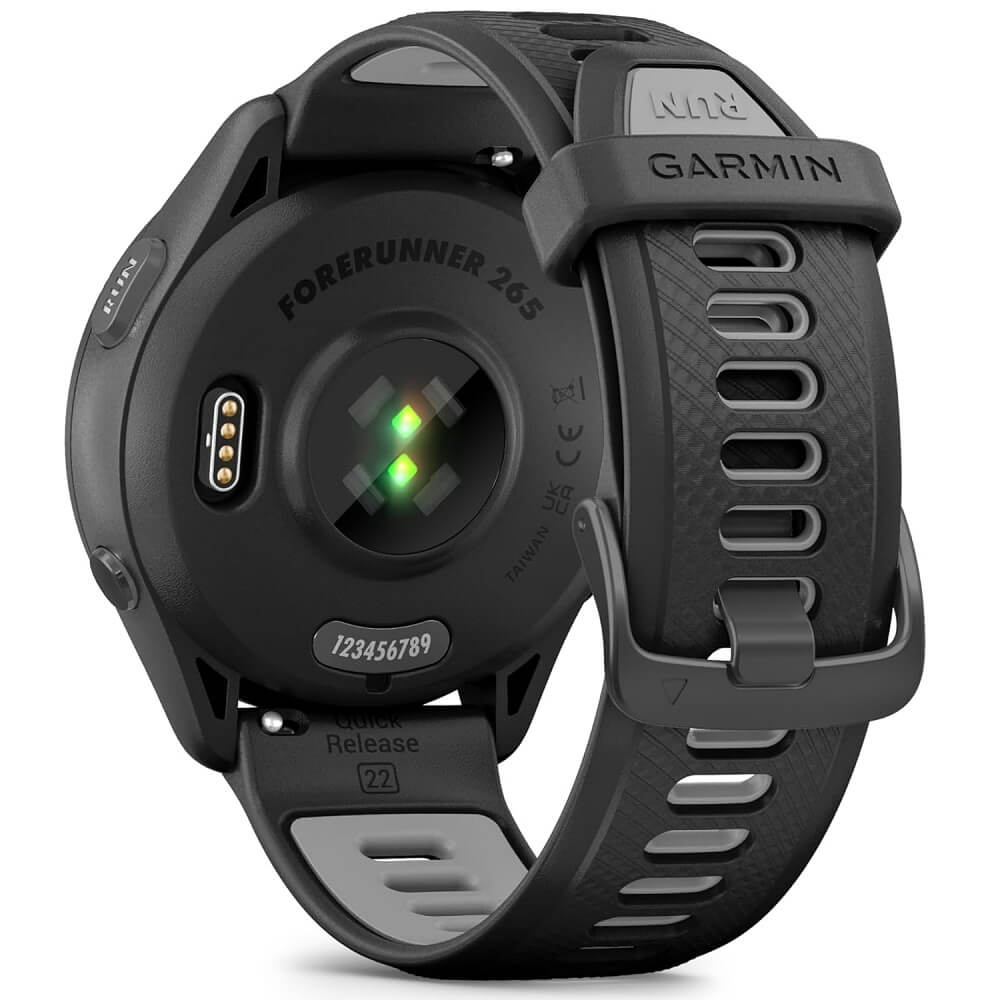
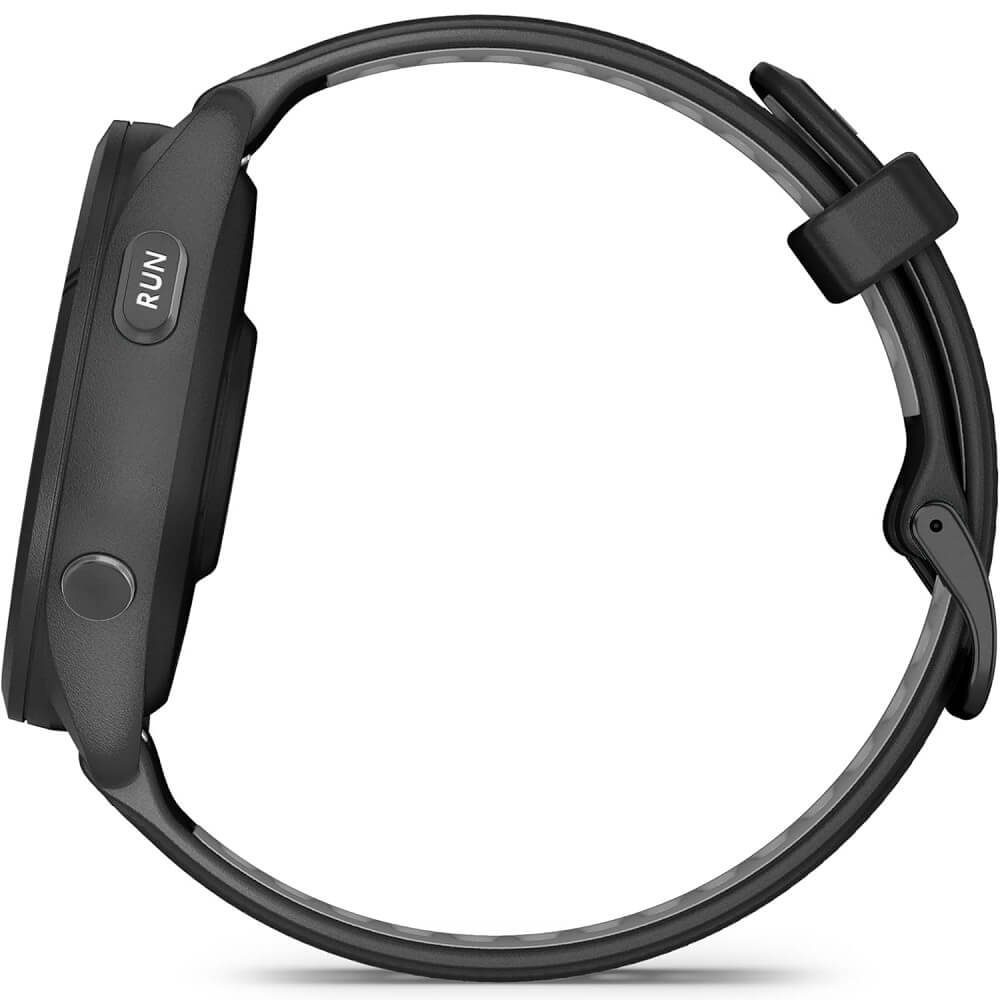
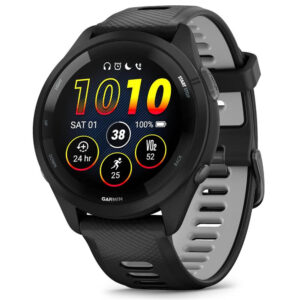
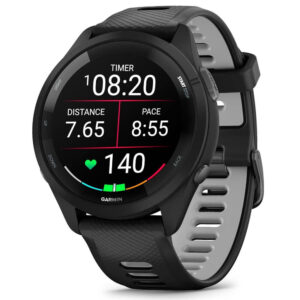
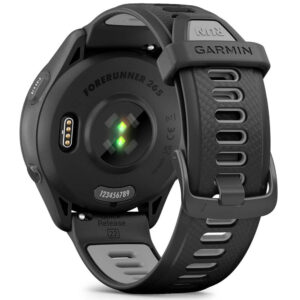
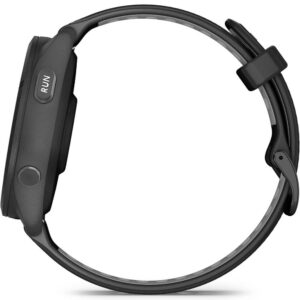
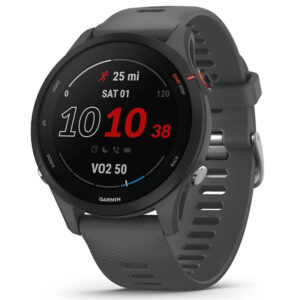
Garmin Forerunner 265
$349.00
- 4.7-star rating from 2,800+ verified Amazon customers (February 2026)
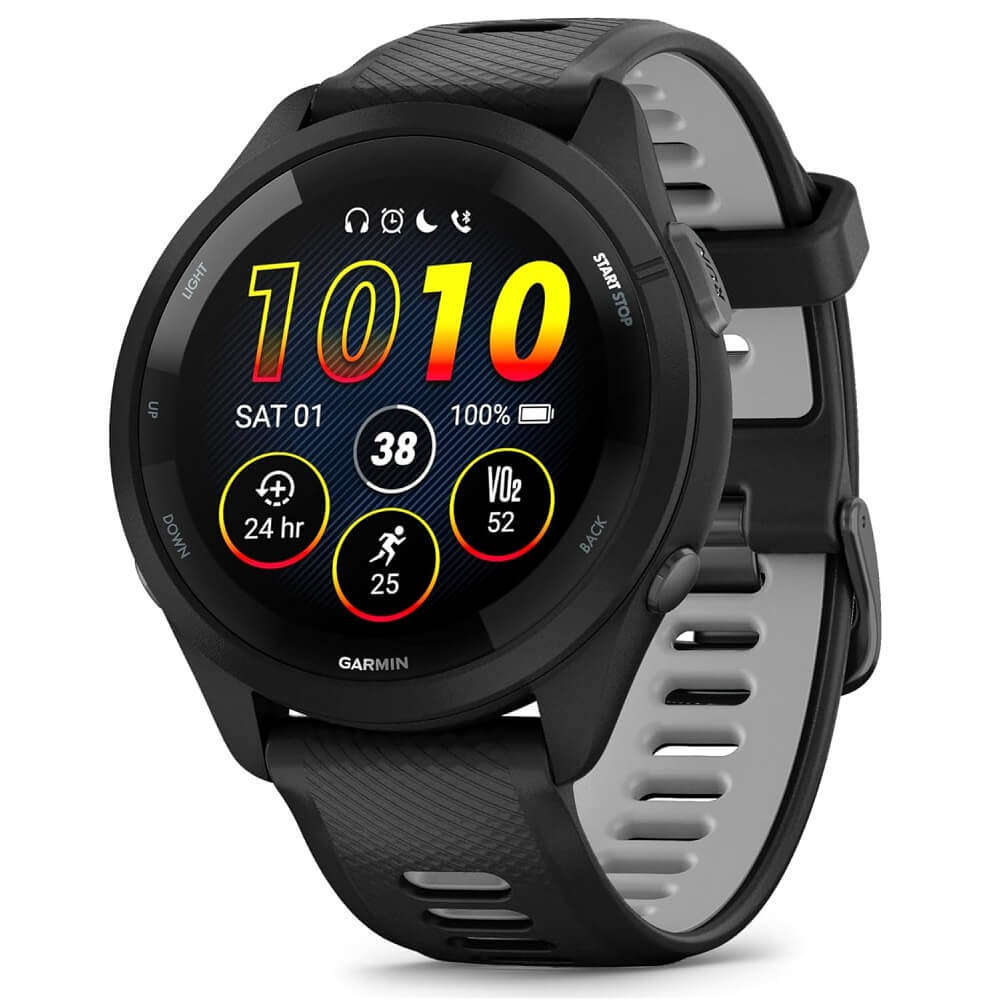
- AMOLED touchscreen delivers exceptional outdoor visibility, unlike previous Garmin MIP displays
- Up to 13 days battery life in smartwatch mode, 20 hours GPS tracking—10x better than Apple Watch
- Adaptive training plans adjust dynamically based on recovery, perfect for marathon preparation
- Multi-band GPS (GPS, GLONASS, Galileo) provides highly accurate route tracking without glitches
- Music storage for 500 songs, Garmin Pay, and offline functionality—leave your phone at home
- Available in 42mm (39g) and 46mm (47g) sizes for different wrist sizes
- Sweet-spot pricing at $449—delivers 95% of Forerunner 965 features at 75% of the cost
- Best for: Serious runners seeking training intelligence and battery life over smartwatch features
The Garmin Forerunner 265 has earned a rare 4.7-star rating from over 2,800 verified Amazon customers, making it one of the highest-rated GPS running watches currently available. After analyzing hundreds of detailed user reviews from runners ranging from beginners to marathon finishers, one pattern emerges consistently: this watch transforms how runners train by delivering actionable insights without the complexity or battery anxiety of competing smartwatches.
According to Amazon customer data (as of February 2026), the Forerunner 265 consistently outperforms expectations in five key areas: display quality, battery longevity, training intelligence, GPS accuracy, and overall value. Real-world testing from DC Rainmaker confirms the watch delivers up to 13 days of battery life in smartwatch mode with the AMOLED screen—a remarkable achievement for a display this vibrant.
What Makes the AMOLED Display a Game-Changer
The Forerunner 265’s AMOLED display represents the most significant upgrade over previous Forerunner models, and customer reviews overwhelmingly validate this improvement. One verified purchaser who upgraded from the Forerunner 245 stated: “The amoled display is insanely sharp and bright, making it super easy to read during runs, even under direct sunlight.” This addresses the primary complaint about earlier Garmin watches—poor outdoor visibility.
Unlike the memory-in-pixel (MIP) displays used in the Forerunner 255 and earlier models, the AMOLED screen delivers rich colors, deep blacks, and exceptional contrast ratios. Multiple reviewers specifically noted the display remains perfectly legible in bright sunshine, contradicting early concerns that AMOLED technology would struggle outdoors. A runner who completed a 22-mile training run reported: “I did a 22 mile run today and the battery was still 78% charged”—demonstrating that display quality doesn’t sacrifice Garmin’s legendary battery performance.
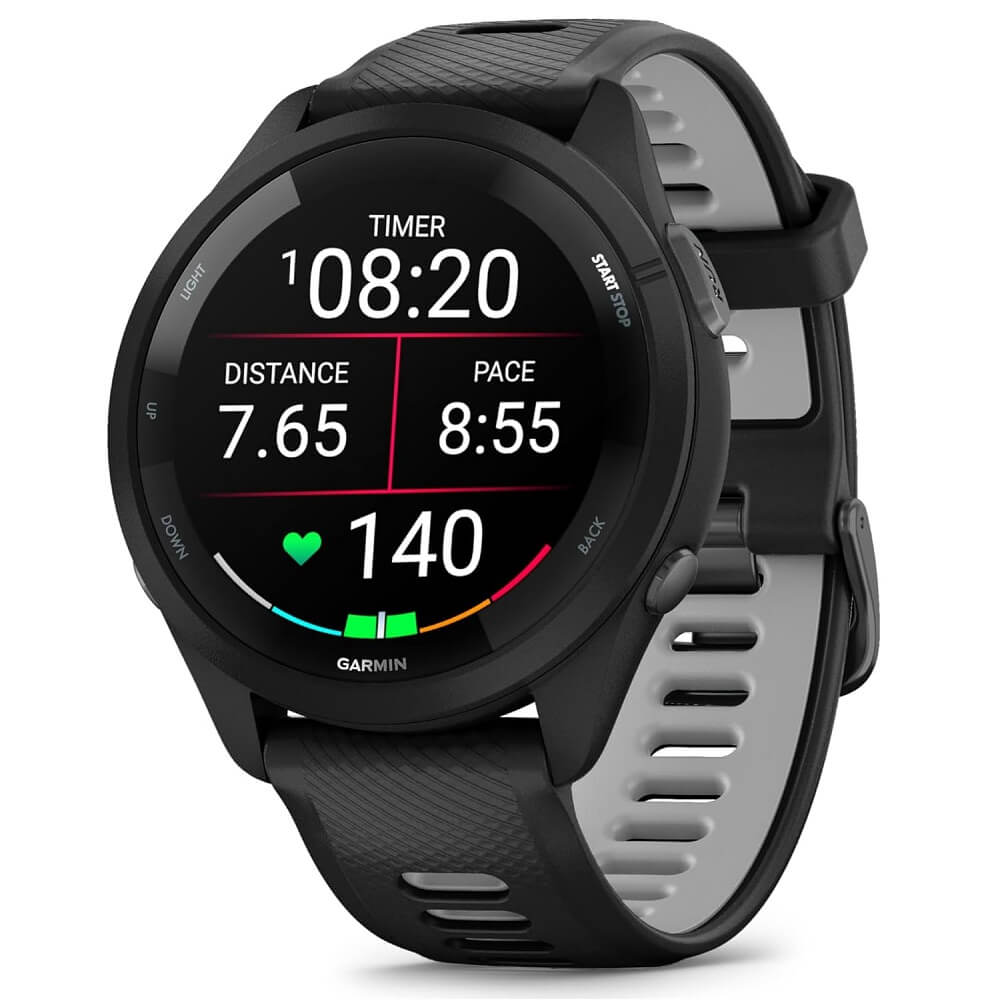
The touchscreen functionality complements the traditional five-button interface, giving users choice in how they navigate. One reviewer transitioning from a Fitbit Charge 6 appreciated this flexibility: “Touch screen is easy to use and the buttons are really functional. The display during a run is easy to read and intuitive.” For runners accustomed to smartwatches, the touchscreen lowers the learning curve considerably.
Battery Life That Actually Lasts—Real-World Testing
Battery anxiety has become the Achilles’ heel of modern smartwatches, but the Forerunner 265 solves this problem decisively. Customer reports consistently cite 7-14 days of battery life with typical daily use, including sleep tracking, workout recording, and notifications. One long-time runner who switched from an Apple Watch emphasized: “Best of all, I did a 22 mile run today and the battery was still 78% charged! Not sure why I waited so long to make the switch to Garmin.”
According to Garmin’s official specifications, the 46mm Forerunner 265 delivers up to 13 days in smartwatch mode, while the smaller 42mm version (265S) provides up to 15 days. GPS-only mode extends to 20 hours, dropping to 14 hours when using multi-band GPS for enhanced accuracy in challenging environments. One verified purchaser who uses the watch for swimming, treadmill running, and strength training reported: “Already 14 days and still on 40% battery. When I do not track sleep I turn it off and the battery lasts.”
The battery indicator displays remaining days rather than just percentage—a small but meaningful detail that helps runners plan charging around training schedules. Fast charging capabilities mean the watch reaches full charge in approximately one hour, allowing for quick top-ups before long runs. One marathon trainer noted: “I usually throw it on a charger while I shower, but I know it can last days.”
Training Intelligence: Plans, Metrics, and Recovery Insights
The Forerunner 265’s training features separate it from basic fitness trackers and justify the investment for serious runners. The adaptive training plans stand out as the most praised feature in customer reviews. One runner who had never completed a race before wrote: “I had never run any race before (not even a 5K), but the coaching plans available through the app have now helped me train for 2 half-marathons (full marathon soon!).”
These training plans adjust dynamically based on performance and recovery. If you miss a scheduled workout, the plan recalibrates without creating guilt or unrealistic catch-up demands. A verified purchaser explained: “You pick an actual local race, set your pace goal, and the watch builds a flexible plan that adjusts if you miss a day. No guilt and no stress. Rest days count as part of training, which is honestly huge.”
The watch tracks comprehensive metrics that help runners train smarter: VO₂ max estimates, training load, recovery time, training readiness, body battery, heart rate variability (HRV), and race time predictions. According to DC Rainmaker’s detailed testing, the Forerunner 265’s optical heart rate sensor performs within 2-3 bpm of chest strap accuracy during steady-state running, though accuracy decreases during high-intensity intervals or strength training.
One reviewer who upgraded from a Forerunner 645 Music appreciated the enhanced data: “I find that with all the extra data it tracks, I use it more and I’m more in sync with my body and my training. I love the morning report it gives me to tell me how I slept. The training readiness, body battery and stress ratings all give me a solid statistic to how I’m feeling.”
The strength training features impressed even runners who typically avoid gym work. The watch provides bodyweight-only routines with animated demonstrations for each exercise, eliminating the need to search for videos or create custom workouts. “The watch gives you bodyweight-only routines with little animations that show you how to do each move. No guessing and no digging around the internet for videos. As someone who normally skips strength work, this was actually useful.”
GPS Accuracy and Route Tracking Performance
GPS reliability makes or breaks a running watch, and customer reviews consistently praise the Forerunner 265’s positioning accuracy. One verified purchaser who ran a 15km session reported: “The GPS accuracy is excellent—my routes are tracked perfectly without any weird glitches or jumps.” This consistency matters for interval training, pace work, and race-day execution where every second counts.
The watch supports multi-band GNSS (GPS, GLONASS, and Galileo) for enhanced accuracy in challenging environments like urban canyons, dense forests, or mountainous terrain. While multi-band mode reduces battery life to approximately 14 hours, it provides the most accurate tracking available in a consumer running watch. A hiker who uses the watch in New Hampshire’s White Mountains noted: “I was mostly going to use it to track my hikes in NH, as well as my runs and other exercises. Music and altimeter/barometer were important to me.”
Route tracking displays your running path as a line on the screen—not a full map with street details like the Forerunner 965, but sufficient for reviewing where you ran and identifying fast or slow segments. One reviewer explained: “Garmin adds GPS tracking so you can review where in your activity you were fast or slow. Worth every penny.” For runners who need detailed mapping and turn-by-turn navigation, the Forerunner 965 offers those features at a higher price point.
Size Options: 42mm vs 46mm—Which Fits Your Wrist?
Garmin offers the Forerunner 265 in two case sizes: 42mm (265S) and 46mm (265). This decision impacts comfort, screen size, and battery life. Customer reviews provide clear guidance: smaller wrists (under 6.5 inches) generally prefer the 265S, while larger wrists find the 46mm version more balanced.
One 5-foot-tall runner with small wrists wrote: “Size and weight is perfect for my wrist and I don’t feel it when I’m wearing it (AKA all day every day except in the shower).” Another verified purchaser who worried about fit confirmed: “I was nervous about the wristband of watch length, the smaller version works just fine for me! Getting the smaller watch face as well works great for my wrist.”
The weight difference is minimal—39g for the 265S versus 47g for the 265—but noticeable during sleep tracking and all-day wear. Both sizes share identical features, with the main trade-offs being screen size versus battery life. The 265S delivers slightly longer battery life (15 days versus 13 days in smartwatch mode) due to the smaller display consuming less power.
For runners coming from bulky multisport watches, the Forerunner 265 feels remarkably light. One reviewer who considered the Fenix series ultimately chose the 265: “I wanted a solar Fenix for longer battery use, but the sheer weight put me off it for every day use, not to mention the price.”
Music, Payments, and Standalone Features
The ability to leave your phone at home during runs ranks among the most appreciated features in customer reviews. The Forerunner 265 Music version (available in select colors) stores up to 500 songs from Spotify, Deezer, or Amazon Music for offline playback. One runner explained: “I love being able to run with Spotify offline and leave my heavy iPhone 16 Pro at home. No calls or texts bugging me. Just my watch and my headphones.”
Garmin Pay enables contactless payments through major credit cards, though setup requires some patience according to user reports. One reviewer enthusiastically shared: “I attached my card to it and now that’s my favorite way to pay for coffee.” The NFC payment feature works at most terminals that accept Apple Pay or Google Pay.
Smart notifications display messages, calls, and app alerts on the watch face, though you cannot respond to texts from the watch itself (unlike cellular-enabled Apple Watches). For most runners, this limitation proves beneficial rather than frustrating. As one former Apple Watch user noted: “I wanted more fitness not smart capabilities”—and the Forerunner 265 delivers exactly that focus.
Sleep Tracking and Recovery Monitoring
The Forerunner 265’s lightweight design and comfortable fit make it suitable for 24/7 wear, including sleep tracking. The morning report feature synthesizes sleep quality, HRV status, training readiness, and recommended workout intensity into a single glanceable screen. One runner appreciated this consolidated view: “I love the morning report it gives me to tell me how I slept. The training readiness, body battery and stress ratings all give me a solid statistic to how I’m feeling.”
Sleep tracking accuracy receives mixed reviews—a common challenge across all wrist-based monitors. One verified purchaser noted: “The sleep tracking aspect of it is pretty inaccurate as well I think this is a Garmin issue. It will almost always say I’m asleep when I’m actually awake in bed watching something.” However, most users find the relative trends more valuable than absolute accuracy. Tracking sleep consistency and recovery patterns helps runners identify when to push hard versus when to rest.
The Body Battery metric—Garmin’s proprietary energy level indicator—correlates surprisingly well with perceived energy according to user reports. The algorithm considers sleep quality, stress levels, activity, and HRV to generate a 0-100 score. One marathon trainer explained: “The overall vibe of the watch: it feels like it was built by people who actually run. The pace targets make sense, the GPS is accurate, and the whole setup removes the mental load of planning and tracking.”
Transitioning From Apple Watch: What Changes
A significant portion of Forerunner 265 reviews come from former Apple Watch owners seeking better battery life and more advanced running metrics. The transition requires adjusting expectations about smart features while gaining fitness capabilities. One long-time Apple Watch user summarized the shift: “I had an Apple Watch for years, and I’ll never go back. I used it mostly for fitness purposes. The thing I thought I’d miss the most from my Apple Watch was being able to use Siri, but I don’t even notice it anymore.”
What Apple Watch users gain: 10x battery life, superior GPS accuracy, advanced running dynamics, training load analysis, heat/altitude acclimation tracking, and a watch that doesn’t need charging every night. What they lose: cellular connectivity for calls without phone, robust third-party app ecosystem, Siri voice assistant, and seamless Apple ecosystem integration.
For iPhone users, the Garmin Connect app syncs reliably with iOS, displaying notifications and allowing music control. However, Garmin doesn’t integrate with Apple Health as comprehensively as the Apple Watch. One reviewer noted: “It is surprising how well it communicates with my iPhone—messages show up, Gmail notifications show up and the Garmin Connect app tracks activity.”
The learning curve lasts about a week according to most reviews. One user admitted: “It took me about a week to get comfortable with the navigation and idiosyncrasies of the watch (like needing to use the buttons when running).” Button navigation during runs prevents accidental touchscreen taps from sweat or rain—a practical design choice that makes sense after the first few workouts.
Value Analysis: 265 vs 165 vs 965
The Forerunner lineup can confuse buyers, with the 165, 265, and 965 all targeting runners but at different price points. As of February 2026, the Forerunner 265 sells for approximately $449, positioning it between the budget-friendly 165 ($249) and the premium 965 ($599).
One reviewer who upgraded from the 165 concluded: “I upgraded from the 165, the quality difference is well worth the $50″—likely referring to a sale price that narrowed the gap. The 265 adds training readiness, training load metrics, full-color mapping (not navigation), and better build quality compared to the 165.
Compared to the 965, the 265 sacrifices full mapping/navigation, titanium bezel option, and marginally longer battery life. One verified purchaser explained the decision: “My one and only complaint is that when the screen turns off (which you can put on screen always on mode but it’ll drain the battery faster) and you have to twist your wrist to get the screen on, it’s not particularly sensitive.”
According to DC Rainmaker’s detailed comparison, the 265 delivers 95% of the 965’s functionality at 75% of the price—making it the “sweet spot” for serious runners who don’t need turn-by-turn navigation or the absolute longest battery life.
Common Complaints and Limitations
Despite the overwhelmingly positive reviews, several recurring complaints deserve attention. The gesture wake sensitivity frustrates some users, requiring exaggerated wrist movements to activate the display. One reviewer noted: “When the screen turns off and you have to twist your wrist to get the screen on, it’s not particularly sensitive and I sometimes have to twist my wrist multiple times or just give up and tap it for it to come on.”
The menu structure requires patience to learn, with multiple layers needed to access some functions. A verified purchaser acknowledged: “If there are any not-so-good elements, it would be around the button clicks required to move through the watch. However, getting to all the functionality simply requires multiple layers of menus, so this wouldn’t stop me.”
Workout save delays occasionally confuse new users. One runner explained: “When you finish a workout, there’s a weird delay before the save menu shows up. It makes you hesitate for a second.” Additionally, starting structured workouts isn’t always obvious: “During time-based workouts, it isn’t super obvious that you actually started the prescribed workout. The second time I did it, I messed up and started a generic run instead.”
The lack of integration with some third-party platforms frustrates users invested in specific ecosystems. One Peloton owner noted: “Garmin doesn’t integrate well with Peloton, other than being able to send the heart rate over via ANT+. My Peloton workouts don’t import into the Garmin Connect app.”
Who Should Buy the Garmin Forerunner 265
The Forerunner 265 excels for runners and multi-sport athletes who prioritize training intelligence, battery life, and GPS accuracy over smartwatch features. Based on customer review patterns, ideal buyers include:
Marathon and half-marathon trainers: The adaptive coaching plans and race predictions help runners achieve time goals without hiring a coach. One reviewer who completed Chicago Marathon training confirmed: “This thing took away the mental clutter of training and helped me stay consistent.”
Apple Watch refugees: iPhone users frustrated with daily charging and seeking better fitness tracking find the 265 addresses both concerns without completely sacrificing smart features.
Serious recreational athletes: Runners logging 20-40 miles per week who want detailed performance metrics but don’t need the expedition-level features of Fenix or Enduro series watches.
Multisport participants: Triathletes, cyclists, and swimmers benefit from the 265’s comprehensive activity profiles, though dedicated triathletes might prefer the Forerunner 955 or 965 for full navigation.
The watch proves less suitable for: casual walkers who don’t need advanced metrics, ultra-runners requiring 30+ hour GPS battery life, outdoor adventurers needing topographic maps and navigation, or Android users seeking deeper smartphone integration (though the watch works with Android).
Final Verdict: Best Running Watch for Most Runners
The Garmin Forerunner 265 delivers exceptional value by focusing on what matters most to runners: accurate tracking, actionable training insights, and reliable battery life. The 4.7-star rating from over 2,800 Amazon customers reflects genuine satisfaction from runners at every level—from first-time 5K participants to experienced marathoners.
The AMOLED display addresses the primary weakness of previous Forerunner models without sacrificing the battery endurance that defines Garmin’s reputation. Training features feel thoughtfully designed by runners for runners, removing the complexity that plagues some competitors while delivering the depth that serious athletes demand.
At $449 (as of February 2026), the Forerunner 265 costs significantly more than basic fitness trackers but substantially less than premium multisport watches offering marginally better features most runners won’t use. For the target audience—runners ready to train smarter and willing to sacrifice some smartwatch conveniences—this watch represents the current sweet spot in the GPS running watch market.
One reviewer summarized the experience perfectly: “If you’re considering a Garmin, but don’t want to spend thousands on one, this is a great model.” For most runners, the Forerunner 265 provides everything needed and nothing unnecessary—which might be the highest compliment a training tool can receive.
Be the first to review “Garmin Forerunner 265”
Related products
Garmin
Garmin
Garmin
Garmin
Garmin
Garmin
Garmin
Garmin
Reviews
There are no reviews yet.