
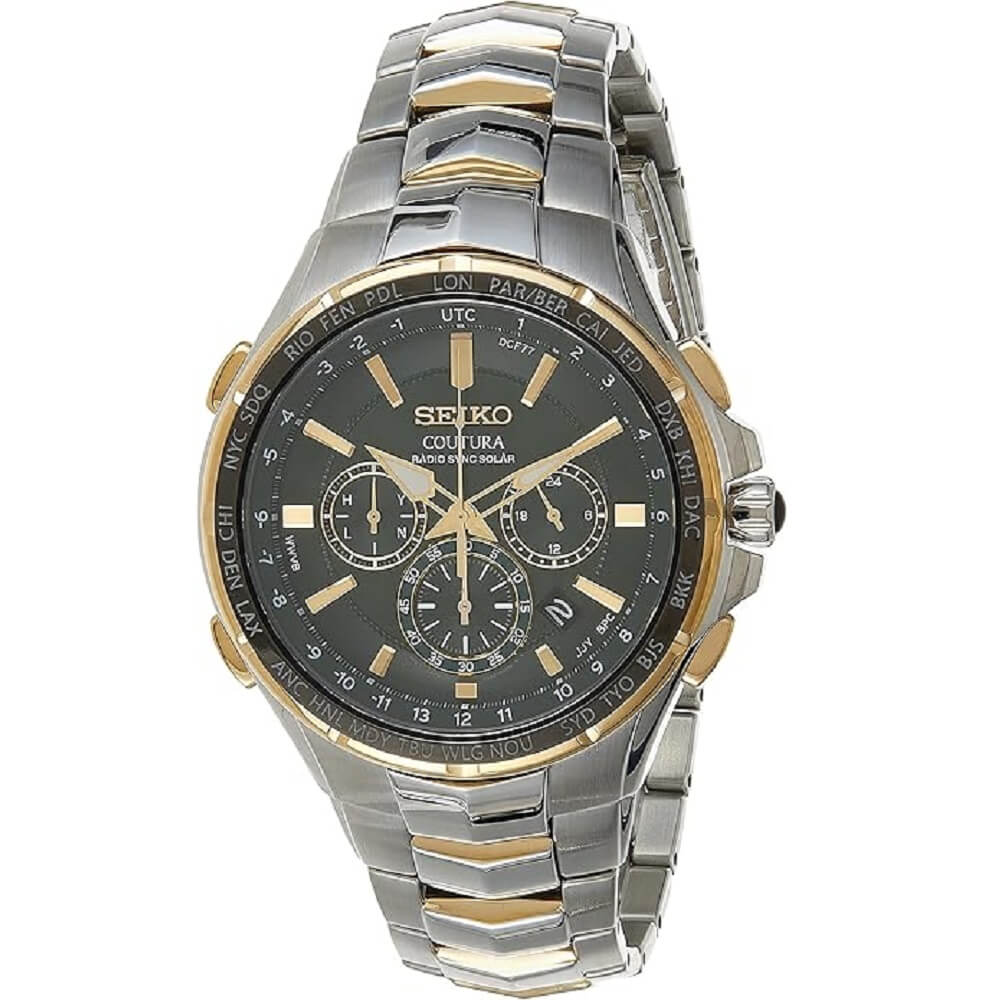
Seiko Coutura Radio Sync Solar Chronograph
$548.00
- Atomic clock radio sync maintains perfect accuracy within half a second daily across US, Europe, Japan, UK, and China
- Solar-powered with 6-month reserve eliminates battery replacements for lifetime maintenance-free operation
- Sapphire crystal and solid-link bracelet deliver premium build quality at $270-$595 price point
- Perpetual calendar automatically adjusts through 2099 including leap years and month-end transitions
- 44.5mm case with 10 bar water resistance suitable for swimming, snorkeling, and daily water exposure
- Four models available: SSG010 (black/gold two-tone), SSG019 (blue dial stainless), SSG020 (blue two-tone), SSG021 (all black)
- World time function covers 25 time zones with instant adjustment via button controls
- Best for: Travelers, technology enthusiasts, and value-seekers wanting atomic accuracy without $1,000+ GPS watch pricing
Rated to sync with atomic clock signals nightly while powered indefinitely by any light source, the Seiko Coutura Radio Sync Solar Chronograph delivers precision timekeeping at a fraction of the cost of GPS-enabled luxury watches. With an impressive 4.7-star rating from over 150 verified Amazon customers and prices ranging from $270 to $595 depending on the model, this solar-powered timepiece eliminates battery replacements while maintaining accuracy to within half a second daily through automatic radio synchronization.
The Seiko Coutura Radio Sync collection includes four distinctive models—the two-tone SSG010, the all-stainless SSG019 with stunning blue dial, the gold-accented SSG020, and the murdered-out SSG021—each featuring Seiko’s proprietary Caliber 8B92 movement with perpetual calendar, world time across 25 time zones, and 10 bar water resistance. According to Seiko USA official specifications, the solar cell provides a six-month power reserve when fully charged, requiring only occasional exposure to indoor or outdoor light.
Design and Dial Aesthetics: Striking Visual Presence
The Seiko Coutura Radio Sync commands immediate attention with its multifaceted dial design and contrasting finishes. The 44.5mm case diameter sits comfortably on wrists measuring 7 inches and larger, while the relatively short lug-to-lug distance of approximately 50mm prevents overhang on smaller wrists. Multiple Amazon reviewers specifically noted receiving compliments on the watch’s appearance, with one owner stating it garnered “more compliments than any watch I have ever worn. Even more than my Rolex.”
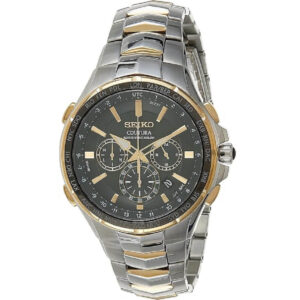
The dial features concentric circular patterns on the outer ring that serve both aesthetic and functional purposes—these trace markings create visual depth while functioning as part of the watch’s radio antenna system. The SSG019 variant showcases a particularly striking royal blue sunburst dial that “just jump[s] out at you” in direct sunlight according to verified purchaser MrG. The SSG010’s black dial with gold accents provides versatile styling that transitions seamlessly from boardroom to weekend wear, while the SSG021’s all-black configuration offers tactical understatement.
Each model features a world time bezel with 25 city indicators subtly integrated into the outer ring, avoiding the cluttered appearance common in many multi-timezone watches. The asymmetric day-of-week indicator at 9 o’clock represents an unexpected design choice from Seiko—one enthusiast reviewer Schnebro called it “one of my favorite aspects of any watch that I own” for breaking from conventional dial symmetry. The date window at 3 o’clock and 24-hour subdial at 6 o’clock complete the functional complications without overwhelming the dial’s readability.
Luminescent material on the hour markers and hands provides adequate nighttime visibility, though multiple reviewers noted the lume charge doesn’t last through an entire night. As David Rupp observed, “the glow hands don’t really keep a charge so when I wake up in the middle of the night can’t see the time.” This represents a minor compromise given the watch’s solar-powered nature and radio sync capabilities, though those requiring strong overnight luminescence should consider alternatives.
Movement and Timekeeping Performance: Atomic Clock Accuracy
The heart of the Coutura Radio Sync is Seiko’s Caliber 8B92 solar-powered quartz movement with radio-controlled time adjustment. This movement automatically receives time signals from atomic clock transmitters in the United States (Fort Collins, Colorado), Japan, Germany, the United Kingdom, and China, depending on your geographic location. Without radio signal connection, the movement maintains quartz accuracy of approximately ±15 seconds per month—respectable for standard quartz but unremarkable. With nightly radio synchronization, however, accuracy becomes effectively perfect, matching atomic time standards to within fractions of a second.
The radio sync function operates automatically between 2:00 and 4:00 AM when the watch is positioned horizontally and oriented correctly toward the nearest transmitter. Manual sync can be initiated with a single button press, with the seconds hand indicating reception strength in real-time. Amazon reviewer Ray reported that while initial sync attempts failed during afternoon hours, “I laid the watch in the window on the west side of my house to get powered up by the sun and to perform the automatic radio sinc between the hours of 2 and 4 am. The sinc took place and it hasn’t been a second off since then.”
Reception range varies significantly based on geographic location, building materials, and electromagnetic interference. Reviewers in the northeastern United States—approximately 2,000 miles from the Fort Collins transmitter—consistently reported successful nightly synchronization. One New Jersey owner James P. Hawkins noted, “The time sync works perfectly overnight here in NJ which is about 2000 miles from Fort Collins, CO.” However, reviewer J.B. from an unspecified northeastern location “tried multiple places, inside and outside, front of the house and the back. It won’t do it,” ultimately concluding this was due to his specific location rather than watch malfunction.
The perpetual calendar automatically adjusts for months of varying length and leap years through 2099, eliminating the need for manual date correction. According to multiple long-term owners, the calendar transitions flawlessly from February 28 to March 1, including during leap years. The day-of-week indicator updates simultaneously with the date, synchronized through the radio signal reception. Amazon reviewer Alexandre confirmed this functionality: “Yep, that just happened. It’s switched from Feb. 28th to March 1st automatically! No manual adjustment involved!”
The world time function allows instant timezone adjustment via button controls, with the watch automatically setting the correct local time, date, and day when a new timezone is selected. This proves particularly valuable for frequent travelers, as Schnebro noted: “I have to travel a lot and have latched onto the convenience and wonder of a unique world timer.” The 24-hour subdial can be set independently to track a second timezone, useful for monitoring time at home while traveling or coordinating with overseas contacts.
Build Quality and Materials: Solid Mid-Range Construction
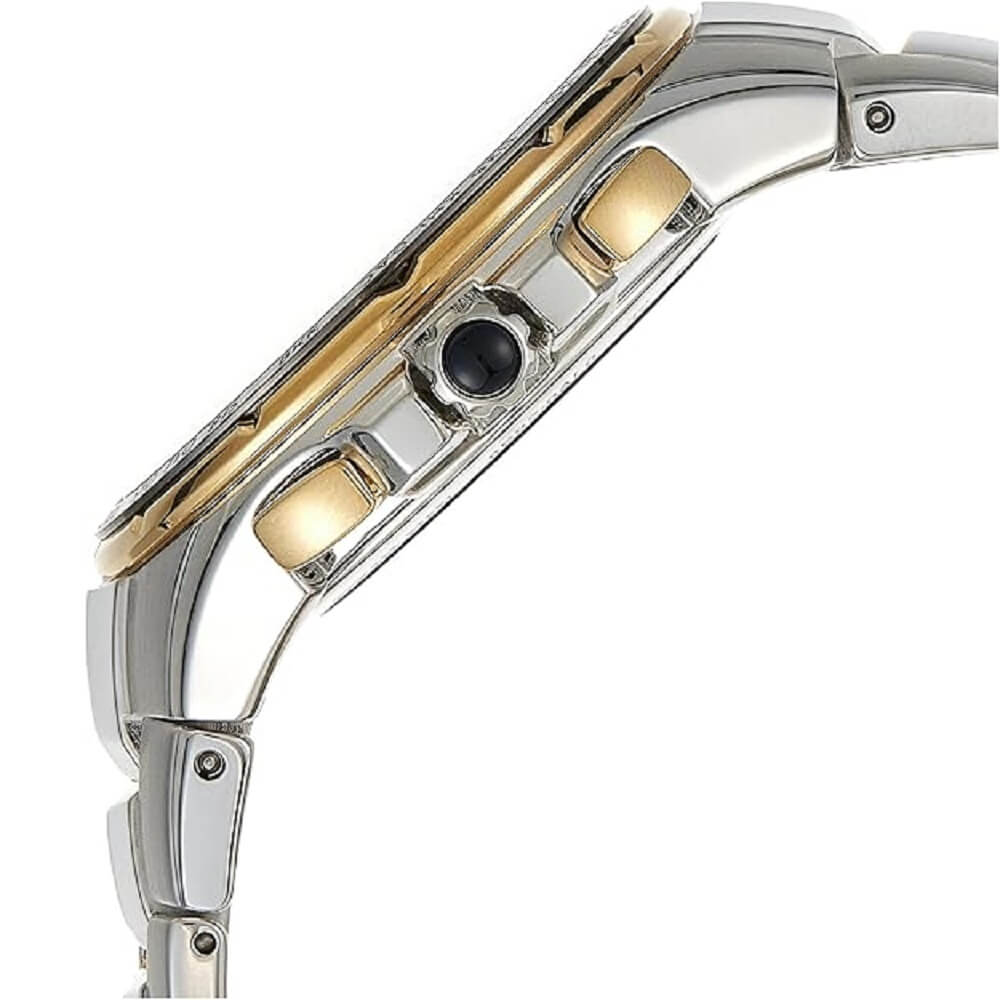
The Coutura Radio Sync features a stainless steel case with polished and brushed finishing that exceeds expectations for its sub-$600 price point. The case construction incorporates both high-polish surfaces on the bezel and center links, combined with brushed finishing on the lugs and outer bracelet links. This mixed finishing approach adds visual interest while the high-polish elements remain easier to restore with a polishing cloth compared to brushed surfaces, according to reviewer J.B.
The watch crystal is sapphire—a premium material typically reserved for watches above $500—providing exceptional scratch resistance compared to the mineral crystals found on most Seiko watches in this price range. Sapphire ranks 9 on the Mohs hardness scale, second only to diamond, ensuring the crystal remains virtually scratch-free through years of daily wear. Multiple reviewers specifically mentioned the sapphire crystal as a key differentiator from similarly-priced competitors, with J.B. noting, “I have had Citizens at this price point, and they do not compare…the crystals are virtually NEVER sapphire, almost always mineral with Citizen.”
Water resistance is rated to 10 bar (100 meters), suitable for swimming, snorkeling, and recreational water sports but not recommended for serious diving. This represents adequate protection for daily wear including rain, hand washing, and occasional swimming. However, Amazon reviewer “Amazon Customer” who previously owned a Seiko Coutura with higher water resistance noted disappointment that this model “says don’t even shower with it on,” contrasting with the 10 bar rating which should theoretically handle showering. The screw-down crown provides additional security against water intrusion when properly engaged.
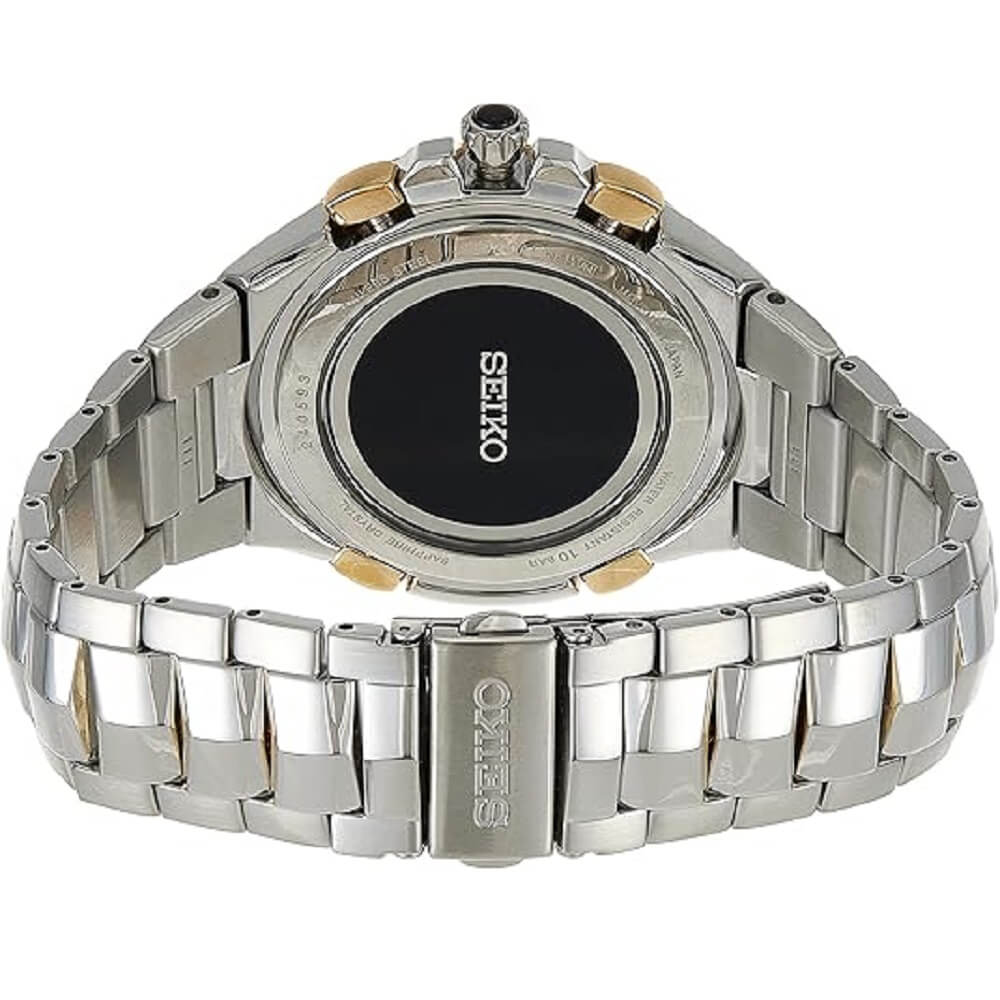
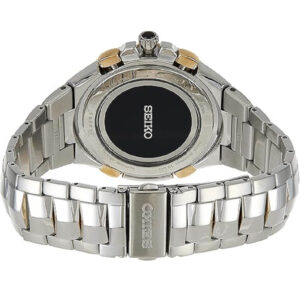
The bracelet features solid end links—a quality detail often omitted on watches under $1,000—that eliminate the rattling and looseness common with hollow end links. The links themselves have substantial thickness and weight, contributing to the watch’s overall heft of approximately 6 ounces with four links removed for average wrist sizing. The deployment clasp uses Seiko’s signature squeeze-release mechanism with a double-fold design that keeps the bracelet connected during removal, reducing the risk of dropping the watch. Link removal requires only a paperclip or standard spring bar tool, as confirmed by multiple DIY-inclined reviewers.
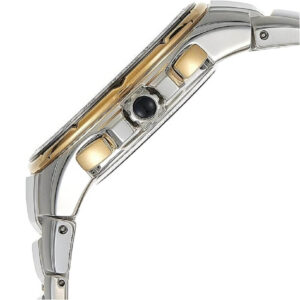
The crown features a blue cabochon accent—a design element borrowed from high-end watchmaking—that adds an elegant touch without reaching Cartier Ballon Bleu territory, as Schnebro humorously noted. The pushers for controlling the chronograph and radio sync functions have crisp action with satisfying tactile feedback, though some users found the button layout counterintuitive during initial setup.
Wearability and Comfort: Substantial Presence
The Coutura Radio Sync wears larger than its 44.5mm case diameter might suggest, primarily due to its thickness of approximately 13mm and substantial weight. This is definitively not a lightweight watch—the solid stainless steel construction and bracelet create a noticeable wrist presence that some reviewers appreciated for its quality feel while others found heavy compared to titanium alternatives. Schnebro, who owns multiple world timers including pieces from JLC, Nomos, and IWC, observed, “I get used to my titanium daily-wearers and I really feel the weight of this, which is good for a change, but I don’t know if I want to have this on my 7.5″ wrist every day.”
The bracelet’s comfort level received consistent praise despite the watch’s weight. The curved end links and slight taper toward the clasp help the bracelet conform to the wrist, while the smooth inner surfaces prevent hair pulling—a common complaint with cheaper bracelets. Ray specifically noted, “The band doesn’t grab arm hair and has some heft to it but not too heavy.” The center links’ high-polish finish does show fingerprints and minor scratches more readily than brushed surfaces, requiring occasional cleaning with a microfiber cloth for optimal appearance.
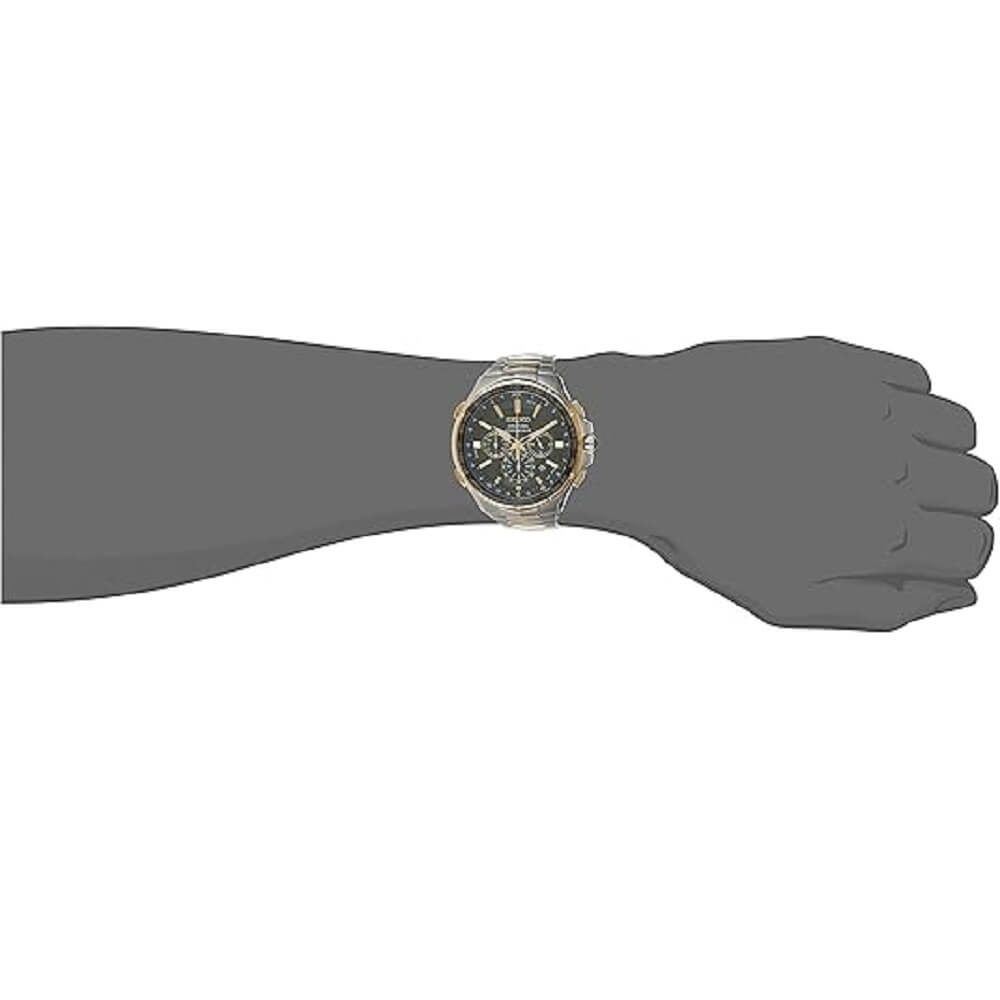
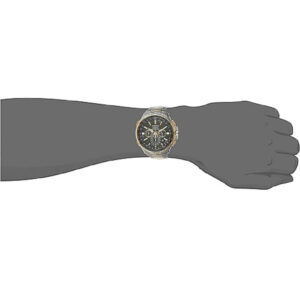
Lug-to-lug measurement sits around 50mm, making the watch wearable on wrists as small as 6.5 inches, though wearers with smaller wrists should try before buying if possible. Reviewer Brian J. with a “medium size wrist” found the 44.5mm case size “fits me perfect,” while others with larger wrists appreciated the substantial presence. The watch’s profile under a shirt cuff measures approximately 13mm thick, catching on tighter-fitting dress shirts—positioning this as more of a casual or business-casual timepiece rather than a slim dress watch.
Long-term comfort during all-day wear received positive feedback from reviewers who wore the watch continuously. The weight becomes less noticeable after the initial adjustment period, and the bracelet’s flexibility prevents the watch from sliding excessively on the wrist during activity. One owner who wears his watch 24/7 reported successful radio synchronization even while worn overnight, noting, “I left it on my wrist overnight to see if it would connect to the radio signal while on my arm. It did, and I was fairly distant from windows.”
Setup and User Experience: Complexity With Payoff
The Coutura Radio Sync’s most frequently cited drawback is its complicated initial setup procedure. The included quick-start manual provides only basic information, requiring users to download the complete PDF manual from Seiko’s website—a 50+ page document covering the watch’s extensive functionality. Multiple reviewers described spending 30-60 minutes studying the instructions and another 30 minutes executing the setup process, which involves setting the timezone, positioning the watch for radio reception, and calibrating the various hands and indicators.
Reviewer Ray’s experience typified the setup journey: “I received the watch today. Acquired sufficient charge to operate in less than two hours…Following the simple procedure to adjust for local time was easy and seeing the watch make the adjustment was fascinating.” However, Ray noted that Seiko’s language describing the procedures as “simple” was somewhat optimistic, recommending downloading the full PDF manual for comprehensive guidance rather than relying on the abbreviated box insert.
Several reviewers recommended YouTube video tutorials for visual learners, particularly the “How to manually set the Seiko Radio Sync Watch” video posted by DePaula Jewelers. Alexandre found this 10-minute video tutorial made setup straightforward: “In 10 min., you’ll learn the basics about your new watch. Very simple.” The video format proves especially helpful for understanding the button sequence required to enter various setting modes and interpret the seconds hand’s position indicator for different functions.
The watch ships from Seiko set to Tokyo timezone (GMT+10), requiring immediate adjustment for users in other regions. This caused initial confusion for some buyers who noticed the date being one day ahead before realizing the timezone setting. Once properly configured for the correct geographic region, the watch handles all subsequent adjustments automatically, including the date transitions that confound many perpetual calendar watches.
The most controversial aspect is the lack of automatic Daylight Saving Time adjustment. Unlike some Citizen radio-controlled watches that handle DST transitions automatically, the Seiko requires users to manually shift the timezone setting forward or backward one hour twice yearly. However, this process takes only seconds—users long-press button B until the seconds hand indicates the current timezone, then tap button A or B once to move one timezone forward or backward. Dave Griffiths explained: “The biggest complaint was that it requires manually adjusting the watch for daylight savings times. This is true but it’s absolutely a no brainer! Just push and hold the B button and then scroll between the A and B buttons to move the time forward or back an hour.”
Some power users discovered creative workarounds for the DST limitation. Reviewer Bullet Bob suggested, “Set your watch for Nova Scotia (one hour ahead of NYC) and then do not put the watch out where a radio signal can re-set the watch to NYC” during DST months, then switch back to the NYC timezone during standard time. While clever, this approach requires remembering which timezone setting corresponds to which period—likely more confusing than the simple button press adjustment.
Daily operation after initial setup requires virtually no intervention. The watch synchronizes automatically overnight, adjusts the date correctly month-to-month, and maintains perfect accuracy. The only recurring interaction involves occasional exposure to light for solar charging—something that happens naturally during normal wear. Users who remove the watch at night can place it near a window for overnight charging and radio sync, or simply wear it continuously as many reviewers reported doing successfully.
Value Proposition and Market Positioning: Exceptional Bang for Buck
The Seiko Coutura Radio Sync occupies a unique position in the watch market, delivering features typically found on watches costing $1,000-$5,000 for approximately $270-$595 depending on model and retailer. As of February 2026, the SSG010 two-tone model retails for around $459 on Amazon, while grey market sellers occasionally offer prices below $300. The SSG019 with blue dial has been spotted as low as $270 during sales, making it “a steal at $270” according to reviewer Johnny.
Compared to GPS-synchronized watches like Seiko’s own Astron collection (starting around $1,100), the Coutura Radio Sync delivers similar timekeeping accuracy with the trade-off of geographic limitations. GPS watches work globally, while radio-controlled watches require proximity to one of the five atomic clock transmitters. For users living within range of these transmitters—which covers most of North America, Europe, Japan, and parts of China—the radio sync functionality proves entirely adequate while saving $500-$4,000 compared to GPS alternatives.
Schnebro, an owner of multiple Seiko Astron GPS watches, directly compared the value proposition: “In a parallel marketing universe, this is easily a $4,000-$5,000 watch…Why a drop-dead-gorgeous tech-enabled-but-simple solar/radio sync watch like this isn’t premium priced is absolutely beyond me.” His perspective as an Astron owner who still chooses to wear the Coutura validates the value equation—the Coutura offers 90% of the functionality at 25% of the price.
When compared to similarly-priced Citizen Eco-Drive radio-controlled watches, the Seiko offers superior build quality with sapphire crystal and more robust bracelet construction. Reviewer J.B., who owned comparable Citizen models, emphasized: “I have had Citizens at this price point, and they do not compare, the bracelets are thin, noisy, hair pullers and the crystals are virtually NEVER sapphire, almost always mineral with Citizen.” The Seiko’s attention to finishing details and material quality justifies its slight price premium over entry-level Citizen offerings.
The solar power system eliminates ongoing battery replacement costs—a hidden expense with conventional quartz watches that typically requires $20-$50 professional service every 2-3 years. Over a 10-year ownership period, this saves $100-$250 in maintenance costs while avoiding the inconvenience of watch downtime during battery changes. The six-month power reserve means the watch continues running even if stored in a drawer for extended periods, requiring only brief light exposure to recharge.
Resale value appears stable on the secondary market, with used examples in good condition selling for 60-70% of retail prices on platforms like eBay and WatchUSeek forums. This compares favorably to many fashion watches that depreciate more rapidly, though it doesn’t match the value retention of true luxury brands. For buyers intending to keep the watch long-term rather than flip it, depreciation becomes largely irrelevant.
Who Should Buy the Seiko Coutura Radio Sync Solar Chronograph
The Coutura Radio Sync serves three distinct buyer profiles exceptionally well. First, frequent travelers who visit multiple timezones benefit enormously from the instant timezone adjustment and automatic timekeeping without relying on smartphone connectivity. The watch eliminates the mental calculation of time differences and the risk of forgetting to adjust your watch when crossing timezone boundaries. Schnebro, who travels extensively for work, identified this as the watch’s primary appeal: “I’ve traveled a lot and have latched onto the convenience and wonder of a unique world timer.”
Second, value-conscious enthusiasts who appreciate horological technology but won’t pay luxury prices find the Coutura Radio Sync hitting the sweet spot of features, quality, and affordability. These buyers understand that quartz movements—even sophisticated ones with radio sync—don’t command the same prestige as mechanical watches, but prioritize functionality and accuracy over mechanical romance. As Robert Olender reflected after owning multiple Rolexes and Omegas: “It’s too bad I had to get old before I realized you don’t have to spend thousands to get something so good.”
Third, professionals seeking a versatile watch that transitions from business meetings to weekend activities without requiring wardrobe changes will appreciate the Coutura’s balanced aesthetic. The two-tone models particularly excel at bridging casual and dressy contexts, while the all-black SSG021 offers tactical discretion for those preferring understated elegance. Multiple reviewers mentioned wearing the watch to formal events and receiving compliments on its appearance, validating its success as a do-everything timepiece.
Conversely, this watch isn’t ideal for several buyer types. Mechanical watch purists who value the craft of traditional watchmaking over electronic precision should look elsewhere—the Coutura offers none of the hand-finished movement aesthetics or mechanical complexity that enthusiasts cherish in automatic watches. Those seeking a slim dress watch will find the 13mm thickness and substantial weight incompatible with tailored shirt cuffs. And buyers living outside radio signal coverage areas—including parts of Africa, South America, Australia, and remote regions—should consider GPS-synchronized alternatives like the Seiko Astron or Citizen Satellite Wave instead.
Individuals who dislike technical complexity or prefer intuitive interfaces might find the Coutura’s button-heavy operation frustrating despite the long-term convenience once configured. As one reviewer candidly noted after struggling with setup, some users ultimately returned the watch rather than work through the manual’s 50+ pages. Those preferring simple, grab-and-go watches with minimal features should consider traditional quartz or automatic options instead.
Alternative Watches to Consider
Buyers evaluating the Seiko Coutura Radio Sync should also consider these alternatives depending on priorities:
Citizen Eco-Drive World Chronograph A-T (AT8020-54L) – Typically priced around $395-$475, this radio-controlled Citizen offers similar functionality with a more intuitive interface and automatic DST adjustment that Seiko lacks. The perpetual calendar updates through 2100 (one year longer than Seiko), and the Eco-Drive solar system works identically. Build quality doesn’t quite match the Seiko’s sapphire crystal and finishing, but the simpler setup process appeals to buyers wanting plug-and-play convenience. Best for those prioritizing ease of use over ultimate build quality.
Casio Oceanus OCW-T200S – Priced around $600-$800, the Japanese-market Casio Oceanus represents a step up in finishing with zaratsu polishing and titanium construction. It offers the same radio sync functionality with multi-band 6 reception, plus Bluetooth connectivity for smartphone time adjustment when outside radio range. The titanium case makes it significantly lighter than the Seiko’s stainless steel, though some buyers prefer the heft of steel. Best for those wanting featherweight comfort and are willing to pay more for Japanese-market exclusivity.
Seiko Astron GPS Solar (SSH001) – Starting around $1,295, the Astron collection offers global time synchronization via GPS instead of radio signals, working anywhere on Earth with clear sky view. Build quality moves up a notch with ceramic bezels and zaratsu-polished cases. The significantly higher price buys worldwide functionality and greater prestige, but the core timekeeping accuracy remains identical to the Coutura Radio Sync. Best for truly global travelers who routinely visit locations outside radio signal coverage.
Tissot Gentleman Powermatic 80 Silicium – Priced around $725, this Swiss automatic offers the romance of mechanical watchmaking with an impressive 80-hour power reserve and silicon balance spring for superior magnetic resistance. It lacks the Seiko’s radio sync and perpetual calendar but provides the satisfaction of traditional horology. COSC-certified versions add another $200 but deliver chronometer-grade accuracy. Best for buyers valuing mechanical movements over electronic precision and willing to manually set the time occasionally.
Orient Kamasu or Seiko Presage Cocktail Time – Both automatic watches retail for $200-$400, offering mechanical movements and excellent finishing for significantly less money. They lack the Coutura’s radio sync, solar power, and world time features, but provide more traditional watch enthusiast appeal with display casebacks showing the movements. Best for budget-conscious buyers who prefer mechanical watches and don’t need radio-controlled accuracy.
Final Verdict: Technology and Craftsmanship United
The Seiko Coutura Radio Sync Solar Chronograph delivers atomic-clock accuracy, maintenance-free solar power, and world time functionality in a well-finished package that punches above its $270-$595 price range. The sapphire crystal, solid bracelet construction, and attention to finishing details match watches costing twice as much, while the proprietary Caliber 8B92 movement provides technology usually reserved for premium GPS watches at a fraction of the cost.
The watch’s primary weakness—complicated initial setup—proves to be a one-time hurdle that pays dividends in years of trouble-free, perfectly accurate timekeeping thereafter. The manual DST adjustment requirement, while not ideal, takes seconds twice yearly and hardly qualifies as a dealbreaker for most users. Build quality, accuracy, and features overwhelmingly outweigh these minor inconveniences.
For buyers living within range of atomic clock transmitters in North America, Europe, or Asia, the Coutura Radio Sync represents exceptional value in a market segment dominated by watches costing $1,000-$5,000. The combination of solar power eliminating battery replacements, radio sync ensuring perfect accuracy, and quality construction promising decades of service creates a compelling ownership proposition that multiple reviewers confirmed through years of satisfied daily wear.
The watch earns a strong recommendation for travelers, technology enthusiasts, and value-conscious buyers seeking maximum functionality without luxury pricing. While it won’t satisfy mechanical watch purists or those wanting ultra-slim dress watch proportions, it succeeds brilliantly at its intended mission: delivering cutting-edge timekeeping technology in an attractive, durable, affordable package. As the numerous 5-star reviews attest, buyers who invest the initial setup time consistently report years of trouble-free satisfaction with this often-underrated Seiko collection.
Technical Specifications
| Brand | Seiko |
| Collection | Coutura |
| Models | SSG010 (two-tone black/gold), SSG019 (stainless blue dial), SSG020 (two-tone blue), SSG021 (all black) |
| Movement | Seiko Caliber 8B92, Solar Quartz with Radio Sync |
| Accuracy | ±15 seconds/month without radio sync; atomic-clock accuracy with sync |
| Power Reserve | 6 months when fully charged |
| Radio Signal Reception | US (Fort Collins, CO), Japan, Germany, UK, China |
| Case Material | Stainless steel (polished and brushed finishing) |
| Case Diameter | 44.5mm |
| Case Thickness | Approximately 13mm |
| Lug-to-Lug | Approximately 50mm |
| Crystal | Sapphire (scratch-resistant) |
| Water Resistance | 10 bar (100 meters) |
| Bracelet | Stainless steel with solid end links, push-button deployment clasp |
| Crown | Screw-down with blue cabochon accent |
| Complications | Perpetual calendar to 2099, day-date display, 24-hour subdial, world time (25 zones), chronograph |
| Weight | Approximately 6 ounces (170g) with bracelet |
| Price Range | $270-$595 USD depending on model and retailer (as of February 2026) |
| Warranty | 3 years from Seiko (authorized dealers) |
Frequently Asked Questions
Does the Seiko Coutura Radio Sync automatically adjust for Daylight Saving Time?
No, the watch does not automatically adjust for Daylight Saving Time. Users must manually change the timezone setting by one hour twice yearly when DST begins and ends. This process takes only seconds: long-press button B, then tap button A or B once to shift the timezone forward or backward one hour. While not ideal, this minor inconvenience is offset by the watch’s otherwise fully automatic operation.
Will the radio sync work if I wear the watch 24/7 or does it need to be removed at night?
The watch can successfully sync while being worn overnight, though some users find better reception when placing it horizontally on a nightstand near a window. The radio sync activates automatically between 2:00-4:00 AM and requires the watch to be relatively still and positioned with the 9 o’clock position pointing toward the nearest atomic clock transmitter. Multiple verified reviewers confirmed successful nightly syncing while wearing the watch continuously.
How long does the solar battery last and can it be replaced?
The solar cell charges a rechargeable battery that provides a six-month power reserve when fully charged. With regular exposure to indoor or outdoor light during normal wear, the battery maintains charge indefinitely without requiring replacement. If the battery eventually degrades after many years (typical lifespan 10+ years), Seiko service centers can replace the rechargeable cell. Most owners report never needing battery service with regular wear.
What is the actual water resistance for daily activities?
The 10 bar (100 meters) water resistance rating makes the watch suitable for swimming, snorkeling, showering, and water sports. It is not rated for scuba diving or high-impact water activities. The screw-down crown must be fully engaged for the water resistance rating to apply. Some owners report wearing it during all water activities including showering without issues, while others prefer removing it for showers as a precaution.
Will this watch work outside the United States?
The radio sync functionality works in regions with atomic clock transmitters: United States (Fort Collins, Colorado), Japan (two transmitters), Germany (Mainflingen), United Kingdom (Anthorn), and China (two locations). Most of North America, Europe, Japan, and eastern China receive adequate signal strength for nightly synchronization. Outside these regions, the watch functions as a highly accurate solar-powered quartz watch with manual time setting and automatic calendar adjustment.
How difficult is the initial setup compared to regular watches?
The initial setup is significantly more complex than traditional watches, typically requiring 30-60 minutes with the full instruction manual (downloadable PDF from Seiko’s website). Users must set the timezone, initiate radio sync, and calibrate various hands and indicators. Multiple YouTube tutorials simplify this process considerably. However, once properly configured, the watch requires virtually no further adjustment beyond the twice-yearly DST timezone change. Most reviewers felt the initial time investment was worthwhile for years of automatic operation thereafter.
What is the difference between SSG010, SSG019, SSG020, and SSG021 models?
All four models share the same Caliber 8B92 movement and features, differing only in aesthetics. SSG010 features a black dial with two-tone gold and silver bracelet. SSG019 has an all-stainless steel bracelet with stunning blue sunburst dial. SSG020 offers a blue dial with two-tone bracelet. SSG021 is the all-black “murdered out” version with black dial, case, and bracelet. Choose based on your preferred aesthetic—functionality remains identical across all models.
How does this compare to Citizen Eco-Drive radio sync watches?
The Seiko offers superior build quality with sapphire crystal (vs. mineral crystal on most Citizens), heavier bracelet construction, and more refined finishing. However, Citizen radio-controlled watches typically include automatic DST adjustment that Seiko lacks. Citizen also offers more models with radio sync at various price points. Both brands’ solar technology and radio sync accuracy perform identically. Choose Seiko for better materials and finishing, or Citizen for simpler operation and DST convenience.
Can I replace the bracelet with a leather strap?
Yes, standard spring bars allow strap changes, though the integrated bracelet design looks most cohesive with the case. The lug width is approximately 22mm (verify your specific model), accepting any standard 22mm watch strap. Some owners prefer the bracelet for water resistance confidence, while others enjoy the versatility of swapping to leather or NATO straps for different occasions. The solid end links on the bracelet contribute significantly to the watch’s premium feel, which aftermarket straps may not replicate.
Is the chronograph function easy to use?
The chronograph measures up to 60 minutes in 1/5-second increments with split-time capability. Operation uses standard pushers—top button starts/stops, bottom button resets. The chronograph hands are clearly marked and easy to read. However, the large seconds hand serves chronograph duty rather than regular timekeeping, with a smaller subdial hand tracking running seconds. This reverses the typical arrangement and takes adjustment for some users. Chronograph operation itself is straightforward and reliable once you understand the hand configuration.
Be the first to review “Seiko Coutura Radio Sync Solar Chronograph”
Related products
Reviews
There are no reviews yet.