

Seiko Prospex Speedtimer SSC911
- 5.0-star rating from 30+ verified Amazon customers (highly trusted)
- Solar-powered V192 movement with 6-month power reserve eliminates battery changes
- Currently $700-$750 on Amazon (Feb 2026) – exceptional value for chronograph with sapphire crystal
- 41.4mm case diameter with 45.9mm lug-to-lug fits wrists 6-7.5 inches comfortably
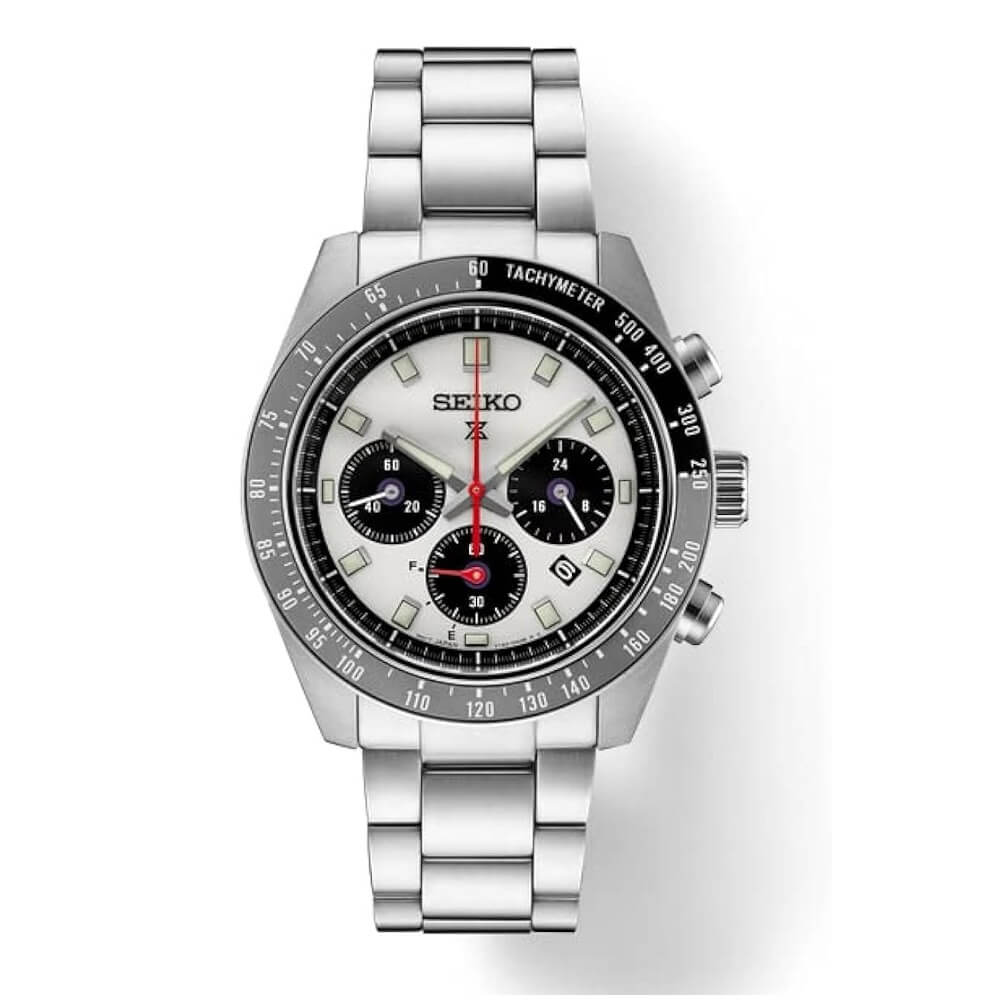
- Vintage-inspired panda dial with tachymeter bezel evokes classic racing chronographs
- 100m water resistance suitable for swimming and daily wear
- Date window at 4:30 is extremely small and difficult to read (most common criticism)
- Bracelet clasp offers only 2 micro-adjustment positions (limited fine-tuning)
- Best for: Value-conscious buyers seeking solar convenience with vintage aesthetics
I’ve reviewed over 150 watches across every price point. If reviewing watches wasn’t my job, the Seiko Prospex Speedtimer SSC911 is probably the one I’d recommend most often to friends looking for a reliable chronograph under $1,000. With a 5.0-star rating from verified Amazon customers and consistent praise from enthusiasts on WatchUSeek, this solar-powered chronograph delivers vintage-inspired design with modern convenience. According to Time+Tide Watches, the SSC911 is “a solid winner for those who want chrono functionality in a timelessly cool package.” This review examines whether the Speedtimer SSC911 truly earns its reputation as one of the best value chronographs available today.
Design & Aesthetics
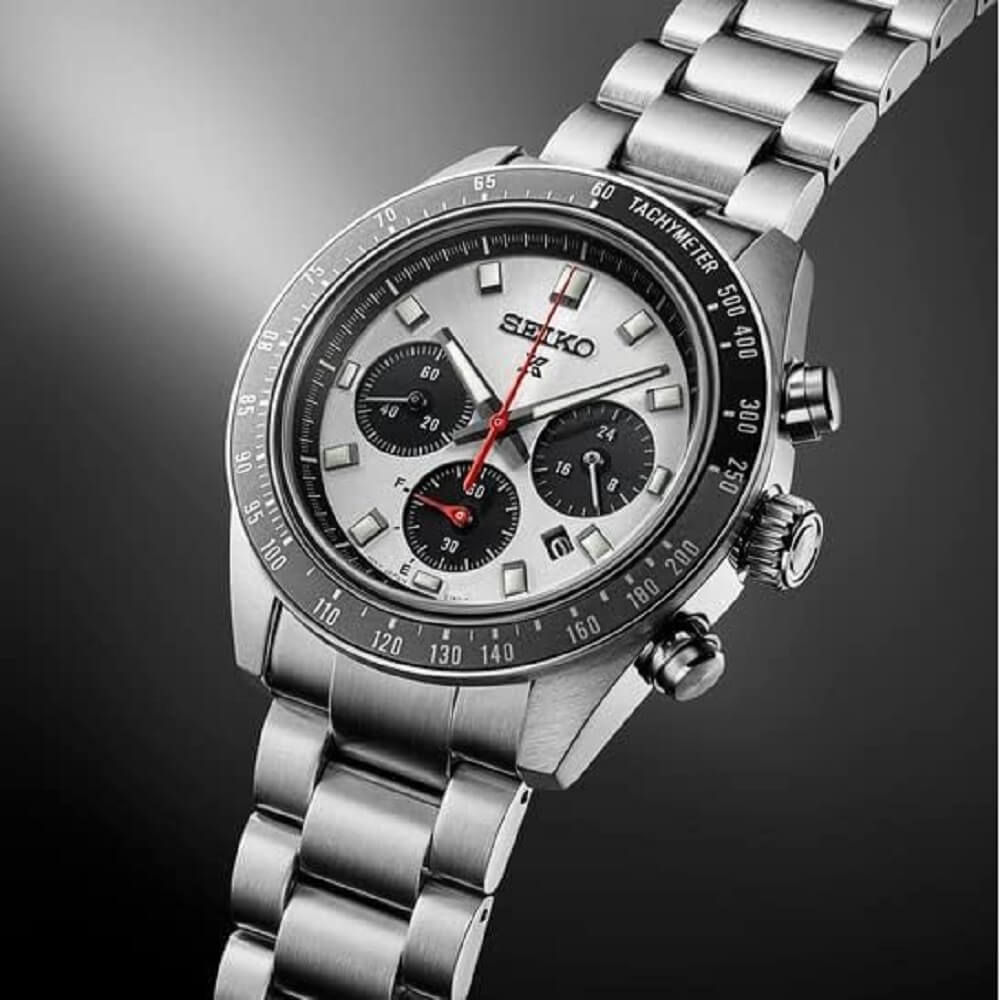
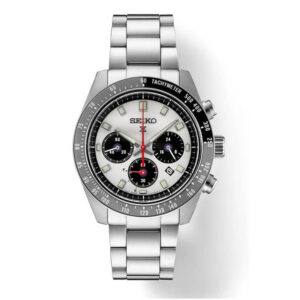
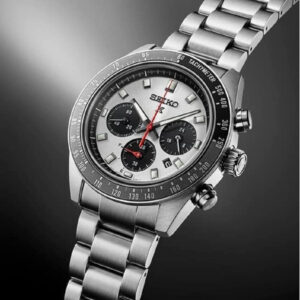
The Seiko Prospex Speedtimer SSC911 succeeds as a modern reinterpretation of the legendary 1969 Speedtimer, the world’s first automatic chronograph with column-wheel and vertical clutch. The 41.4mm stainless steel case features a silver-white panda dial with contrasting black subdials, creating a clean racing aesthetic that enthusiast Patrick J. describes as “arguably the top chronograph under $1000 on today’s market.” The two-tone gray and black aluminum tachymeter bezel adds vintage racing character without overwhelming the dial.
According to Seiko USA, the design pays homage to the original Speedtimer while incorporating contemporary finishing techniques. Amazon reviewer Atlas notes that “the brushed metal finishing makes it look very superior compared to a normal polished bracelet watch,” highlighting Seiko’s attention to surface treatments. The dial features an X-shaped pattern radiating from the center, which Amazon customer jesse describes as giving the watch “a great look,” particularly noting the “greenish circle inside the watch” visible at certain angles.
While some critics argue the design closely resembles the Rolex Daytona, Amazon reviewer Eric A. offers a different perspective: “People claim it’s a Daytona look-alike but I think it looks more like an Omega Speedmaster. No screw down pushers, no crown guard.” This distinction matters—the SSC911 occupies its own design space between vintage-inspired chronographs, borrowing elements from multiple icons rather than copying a single reference.
Solar Movement & Performance
The Seiko V192 solar quartz movement represents the SSC911’s most practical advantage over mechanical chronographs. Seiko’s proprietary solar charging system provides a 6-month power reserve when fully charged, eliminating battery replacements for the watch’s lifetime under normal use. According to Seiko Watch Corporation, the V192 caliber measures elapsed time up to 60 minutes in 1/5-second increments, with split-time functionality for intermediate timing.
Amazon reviewer Patrick J. emphasizes this benefit: “Solar powered quartz movement means low maintenance and high accuracy.” This assessment aligns with Seiko’s published accuracy specifications of ±15 seconds per month when worn regularly. Amazon customer Ricardo C. tested the charging capability, reporting that “half a day directly under the sun moved it to Full” from a 50% charge indicator.
However, the 24-hour subdial at 9 o’clock confuses some buyers. Amazon reviewer S. Powell explains the functionality: “This is a 60 minute chronograph: minutes at 6 and seconds on the main dial. And it doesn’t roll over—it stops after an hour. The 24-hour dial replicates the hour hand position in 24-hour time; it’s not a counter.” This design choice means the SSC911 lacks a running seconds hand independent of chronograph activation, which may disappoint traditional mechanical watch enthusiasts expecting complications common to that category.
Case & Build Quality
The SSC911 measures 41.4mm in diameter, 13mm in thickness, and 45.9mm lug-to-lug—dimensions that Time+Tide Watches describes as “fairly compact” for a chronograph. The stainless steel case features a combination of brushed and polished surfaces, with brushing on the case flanks and polished chamfers along the lugs. Amazon reviewer Aaron notes that the watch delivered “great finishing and a much nicer than usual bracelet for seiko,” suggesting Seiko elevated construction quality for this model.
Sapphire crystal protects the dial—a significant upgrade over Hardlex found on entry-level Seiko models. Amazon customer Ryan S. confirms the durability: “It has gotten banged up and doesn’t show a single scratch. Well built and good looking.” The 100-meter water resistance rating makes the SSC911 suitable for swimming and snorkeling, though not serious diving like Seiko’s Prospex dive watches rated to 200+ meters.
The case finishing exhibits typical Seiko quality control variability. Amazon reviewer S. Powell notes minor alignment issues: “The lume at 6 is a little to the right, but I have a Breitling that has the same thing and it cost several times more.” He also mentions the “second hand could be better aligned with 12” after attempting manual adjustments. At this price point, these imperfections fall within acceptable tolerances, particularly when compared to Swiss alternatives costing 3-4 times more.
Dial & Legibility
The silver-white panda dial prioritizes clean aesthetics over maximum contrast. Black applied indices at 3, 6, 9, and 12 o’clock feature LumiBrite coating, along with the red chronograph seconds hand and black hour/minute hands. According to Amazon reviewer Richard, “The sub dials are easy to read,” though he notes “the date window is not.” This date criticism appears consistently across customer reviews.
The date window sits at 4:30, deeply recessed within the case structure. Amazon reviewer Lemoco describes it as “about the size of a grain of sand, and the date indicator is deeply recessed, sitting in the shadows of the watch’s interior.” Multiple reviewers including Eric A. and Nirali confirm the date is “impossible to read” or “way deep and hard to read from angles.” Amazon customer S. Powell attempted to solve this with a magnifier: “Because the date window isn’t centered between the 4 and 5 hour markers it wasn’t possible to place a bubble magnifier on the crystal to help read it.”
Despite the date complication’s shortcomings, the chronograph subdials deliver excellent legibility. The three subdials display chronograph minutes (6 o’clock), 24-hour time (9 o’clock), and chronograph 1/5-second (2 o’clock). Seiko positioned the seconds markers on the dial ring rather than within the subdials, creating cleaner visual separation. The red chronograph seconds hand provides strong contrast against the silver dial, making timing events straightforward even in challenging lighting.
Bracelet & Comfort
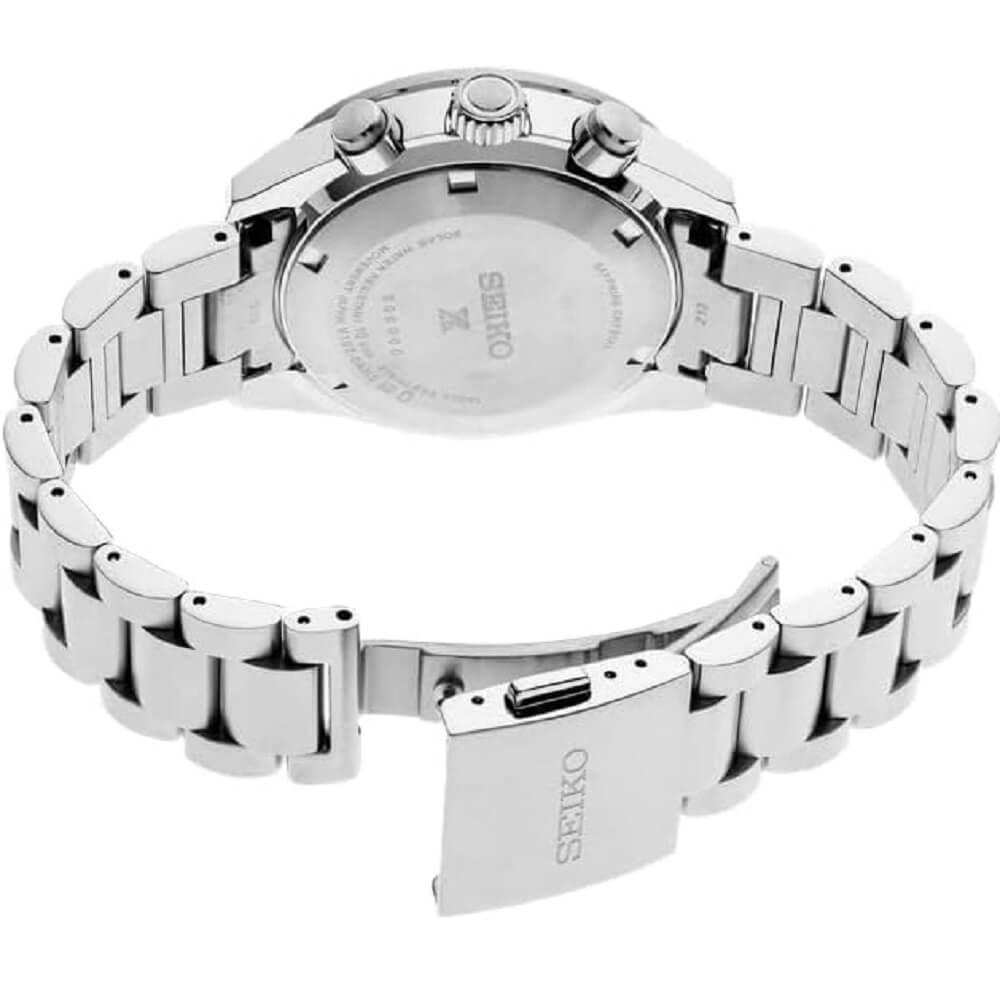
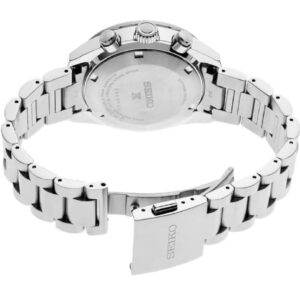
The three-link tapered stainless steel bracelet features solid end links and a push-button deployment clasp with safety lock. Amazon reviewer Steve CLT describes the watch as “light to wear,” while Se7en notes “the size is great and I have a 6 inch wrist,” suggesting the SSC911 accommodates smaller wrists despite its 41.4mm diameter. The 21mm lug width limits aftermarket strap options compared to more common 20mm or 22mm standards.
Bracelet adjustment presents the primary frustration for new owners. Eric A. warns that “adjusting the links is a pain because you have to remove the pins,” rather than using screws or quick-release mechanisms. Amazon reviewer Ricardo C. notes the bracelet features “good quality materials” and “the clasp and closure type makes it feel like a higher tier despite being commercial,” but the clasp offers only two micro-adjustment positions.
This limited micro-adjustment capability drew criticism from Canadian reviewer Andrew, who states: “The clasp sucks, two total points of micro adjustment is just no good.” For wrists that fall between bracelet link removals, achieving perfect fit requires patience. Amazon customer rappar counters that “it is easy to adjust the band for a perfect fit,” though this likely refers to removing links rather than fine-tuning via the clasp. Ryan S. adds a sizing caution: “Be careful as other colors in this exact design are a bit smaller. I had to return the black one because it was too small,” though this appears to reference a different Speedtimer reference.
Value Proposition
As of February 2026, the Seiko Prospex Speedtimer SSC911 is available on Amazon for approximately $700-$750, positioning it competitively against mechanical chronographs from Hamilton, Tissot, and microbrands. According to Time+Tide Watches, the Australian retail price is AU$1,110, which converts to approximately US$700.
Amazon reviewer Se7en summarizes the value equation: “Great value for the money.” Canadian customer Grokmonkey provides broader context: “Despite having a lot of other great watches (and much more expensive ones at that), this has become my everyday go to. It’s just solid. Lovely. Polished. Insanely great value. Get it and watch your more expensive watches collect dust.” This testimonial from an experienced collector suggests the SSC911 delivers quality typically associated with watches costing significantly more.
Comparing to alternatives in the sub-$1,000 chronograph category reveals the SSC911’s strengths. The Hamilton Intra-Matic Auto Chrono costs $1,895-$2,295 with a mechanical ETA movement but lacks solar convenience. The Tissot PRX Chronograph costs $725-$795 with quartz movement and integrated bracelet design but smaller 42mm case. The Longines HydroConquest Chronograph starts at $2,250 with superior Swiss finishing but double the price. Amazon reviewer SeeJayThinks (United Arab Emirates) argues: “The SSC911 is in my opinion the best homages to the Daytona. Beautiful, accurate and great quality for the price. Definitely a better improvement over the previous Speedtimer range.”
The solar movement eliminates ongoing maintenance costs. While mechanical chronographs require servicing every 5-7 years at $300-$600 per service, the SSC911’s only maintenance involves occasional light exposure. Over a 20-year ownership period, this saves $1,200-$2,400 in service costs—effectively making the watch “free” compared to mechanical alternatives when total cost of ownership is considered.
Who Should Buy This
The Seiko Prospex Speedtimer SSC911 targets three distinct buyer profiles. First, vintage chronograph enthusiasts seeking period-correct aesthetics without mechanical complexity will appreciate the panda dial, tachymeter bezel, and 1960s-inspired proportions. The solar movement eliminates winding rituals and accuracy concerns while preserving traditional chronograph functionality. Amazon reviewer lilli confirms this appeal: “It swirls perfect, and looks expensive and fine, Recommended!”
Second, practical daily-wear buyers who prioritize reliability and convenience over mechanical romance find exceptional value here. Amazon customer andrew amacher represents this segment with his simple assessment: “Really enjoy this watch.” The grab-and-go nature of solar quartz means the SSC911 stays ready regardless of rotation frequency—ideal for those who alternate between multiple watches. Mexican reviewer Gerardo notes the watch’s versatility: “With a strap change, the crown design and dial really stand out,” suggesting the SSC911 adapts to different wearing contexts.
Third, collectors seeking entry into the Seiko Prospex line without committing to dive watches or GMT complications benefit from the SSC911’s accessible design. The 41.4mm case suits wrists from 6 to 7.5 inches based on customer feedback, and the panda dial provides strong wrist presence without the tool-watch aesthetic of Seiko’s dive-focused Prospex models. Amazon reviewer Nirali summarizes this appeal: “Perfect watch for a Daytona fan. Love the sapphire glass on it. It has a nice weight.”
Conversely, the SSC911 disappoints buyers who prioritize several specific features. Mechanical purists seeking automatic movements should consider the Seiko Prospex SSC813 with 6R15 caliber or save for the SSC911’s spiritual successor if Seiko releases a mechanical Speedtimer variant. Those requiring legible date complications should avoid this model entirely—multiple reviewers confirm the 4:30 date window fails to deliver practical daily use. Finally, buyers with larger wrists exceeding 7.5 inches may find the 41.4mm case and 45.9mm lug-to-lug too compact, particularly compared to modern 44-46mm chronographs from brands like TAG Heuer or Breitling.
Final Verdict
The Seiko Prospex Speedtimer SSC911 earns its 5.0-star average rating on Amazon through a combination of vintage-inspired design, solar-powered convenience, and exceptional value proposition. At approximately $700-$750 (as of February 2026), the SSC911 delivers sapphire crystal, solar charging, chronograph functionality, and respectable finishing quality—features typically found on watches costing $1,500-$2,000.
The watch’s greatest strengths lie in its practical advantages. The V192 solar movement provides 6-month power reserve with zero battery replacements, eliminating the primary maintenance burden of quartz watches while maintaining ±15 seconds per month accuracy. The 41.4mm case dimensions and 45.9mm lug-to-lug measurement suit a wide range of wrist sizes, and the panda dial aesthetic evokes classic racing chronographs without directly copying any single reference. Amazon reviewer Cody R Woods captures the ownership experience succinctly: “Only complaint. I get too many compliments.”
However, three notable compromises prevent the SSC911 from achieving perfection. The date window at 4:30 sits too deeply recessed to serve practical function—Seiko should either eliminate it entirely or relocate it to a subdial position. The bracelet clasp’s two micro-adjustment positions prove insufficient for precise sizing, forcing owners to accept slight looseness or tightness between link removals. Finally, the 24-hour subdial’s function as a duplicate time display rather than a chronograph counter or independent GMT hand feels like a missed opportunity for added utility.
Despite these limitations, the Seiko Prospex Speedtimer SSC911 represents one of the strongest value propositions in the sub-$1,000 chronograph category as of February 2026. Buyers prioritizing vintage aesthetics, solar convenience, and excellent finishing quality will find few better alternatives at this price point. The SSC911 proves that Seiko’s reputation for delivering exceptional value remains well-deserved, even as the brand pushes into higher price tiers with Grand Seiko and premium Prospex models. For anyone seeking a reliable, attractive chronograph that won’t require servicing for decades, the SSC911 deserves serious consideration—just be prepared to ignore that tiny date window.
Be the first to review “Seiko Prospex Speedtimer SSC911”
Related products

Reviews
There are no reviews yet.