
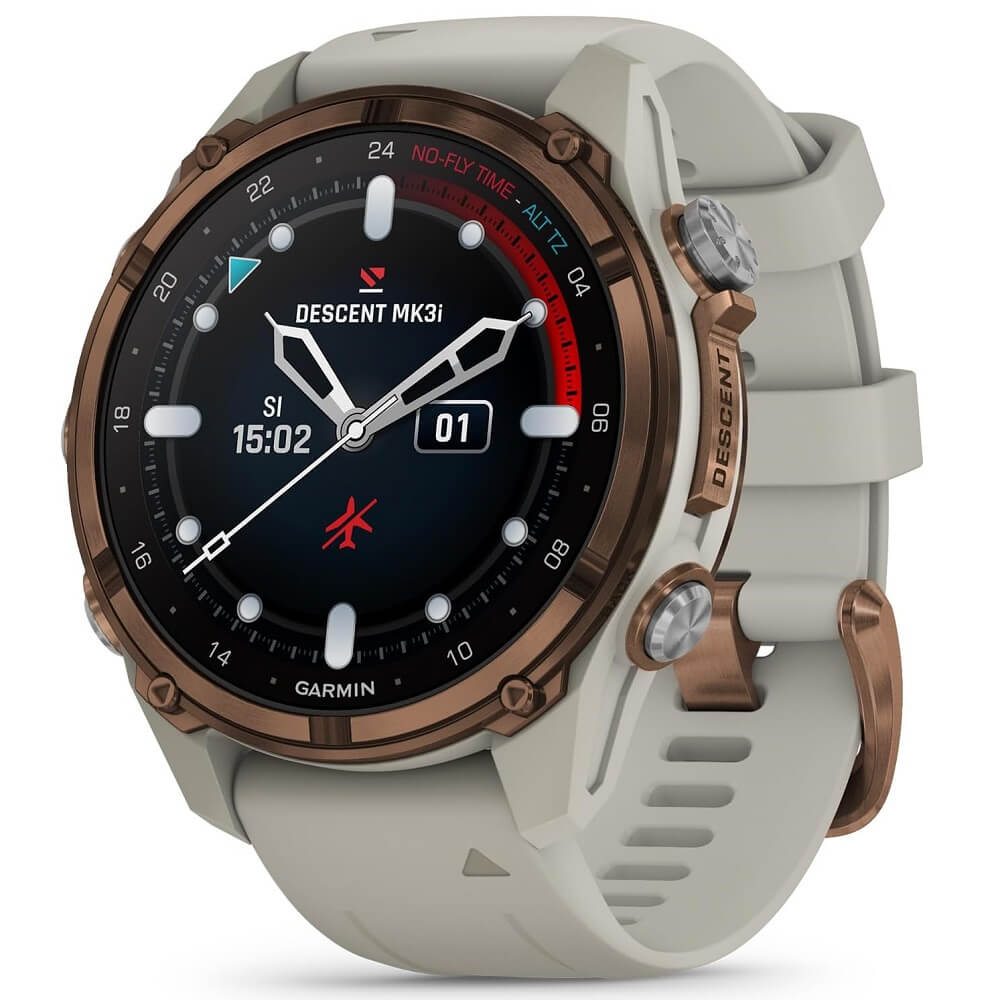
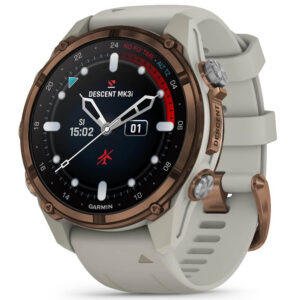
Garmin Descent Mk3i
$1,199.00
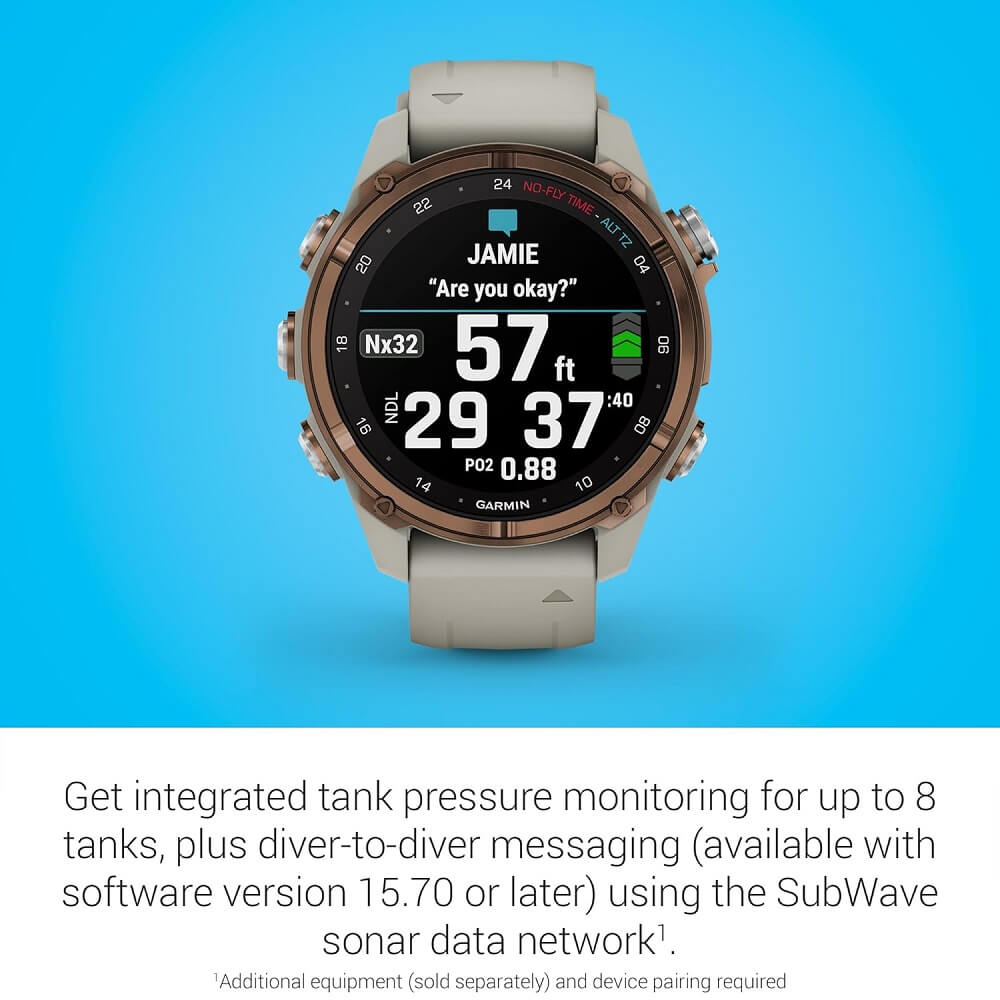
- Wireless air integration monitors up to 8 tanks with T2 transmitters for technical diving
- SubWave sonar enables underwater diver-to-diver messaging and buddy pressure monitoring up to 30m range
- 200-meter depth rating with Bühlmann ZHL-16C algorithm and configurable Gradient Factors
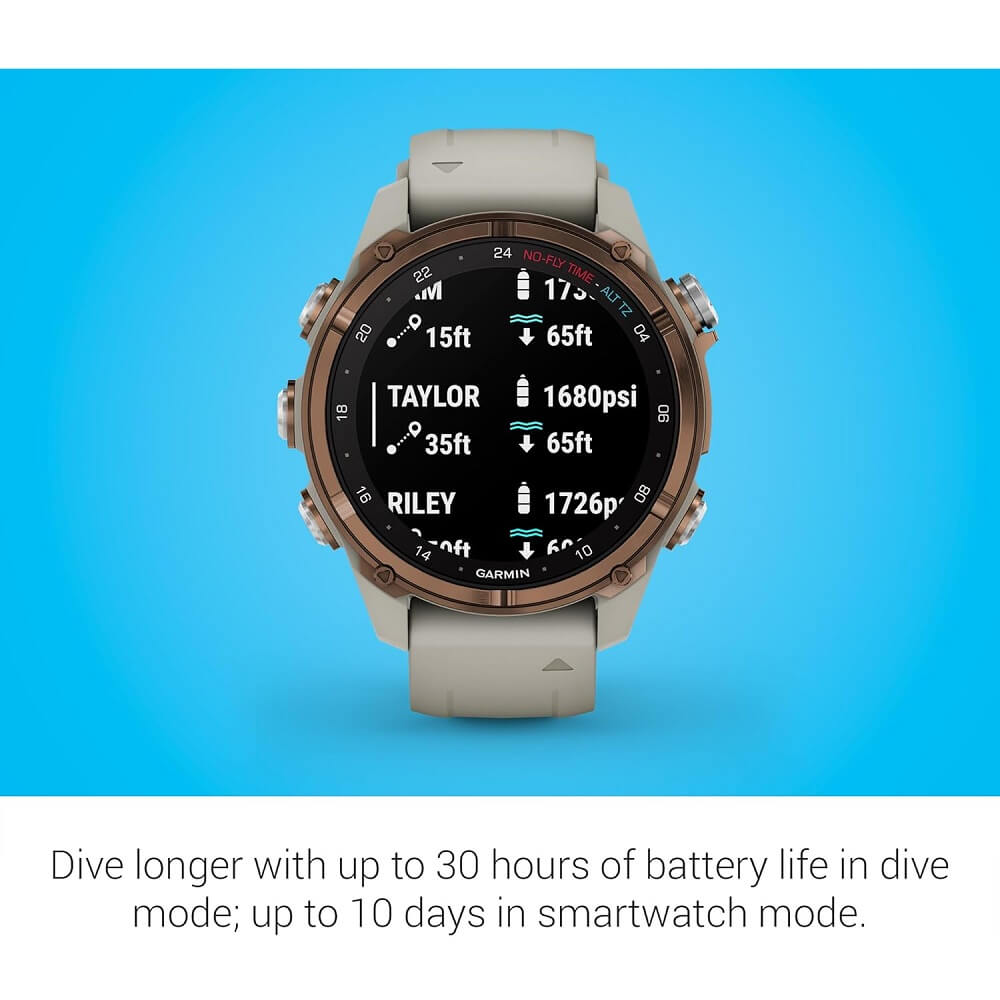
- Exceptional 66-hour dive mode battery (51mm) or 30 hours (43mm) handles multi-day liveaboard trips
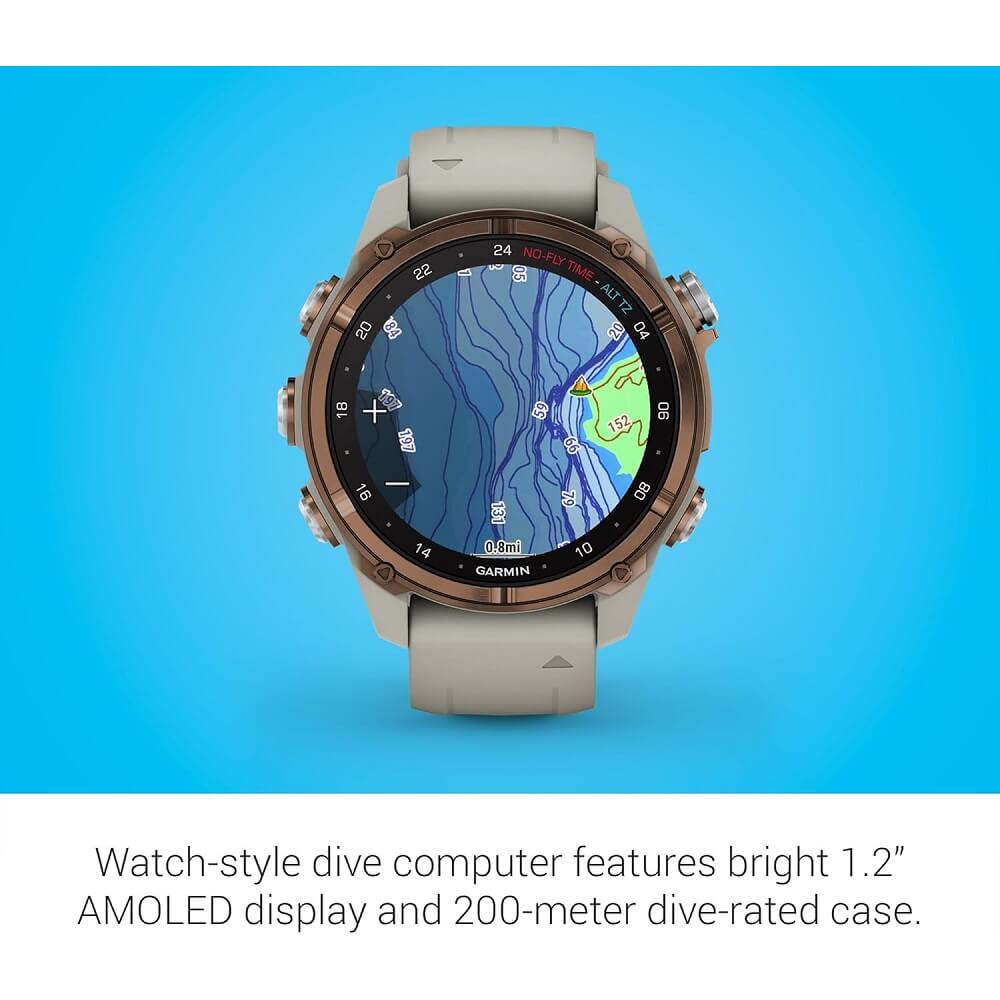
- Bright 1.4-inch AMOLED touchscreen readable underwater with metal leakproof buttons
- Built-in LED flashlight with white and red modes (51mm model) useful above and below water
- Comprehensive multi-sport tracking rivals Fenix 8 series with 100+ activity profiles
- 5-star ratings from Amazon customers highlight reliability and versatility
- Best for: Technical divers, dive professionals, serious enthusiasts wanting ultimate capabilities
- Premium pricing at $1,599-1,799 justified for users who need air integration and advanced features
Rated for 200 meters of water resistance with up to 66 hours of dive mode battery life, the Garmin Descent Mk3i delivers professional-grade dive computer performance with wireless air integration at a fraction of the cost of dedicated technical dive computers. When paired with Garmin’s innovative T2 transceiver, the Mk3i monitors tank pressure across up to eight cylinders while enabling underwater diver-to-diver messaging via SubWave sonar technology—capabilities that position it as arguably the most advanced dive computer Garmin has ever produced.
The Garmin Descent Mk3i represents the pinnacle of Garmin’s dive computer lineup, combining comprehensive technical diving capabilities with full-featured smartwatch functionality. With its vibrant 1.4-inch AMOLED touchscreen display, air integration support for up to eight tanks, and SubWave sonar communication, the Mk3i maintains an exceptional rating from verified Amazon customers despite its premium $1,599-$1,799 price point (depending on size). According to Garmin’s official press release, the Mk3i is designed for serious divers who demand technical capabilities, air integration, and diver-to-diver communication—all while maintaining the everyday wearability and multi-sport tracking that defines Garmin’s approach to smartwatches.
Design and Display: Premium Build for Serious Diving
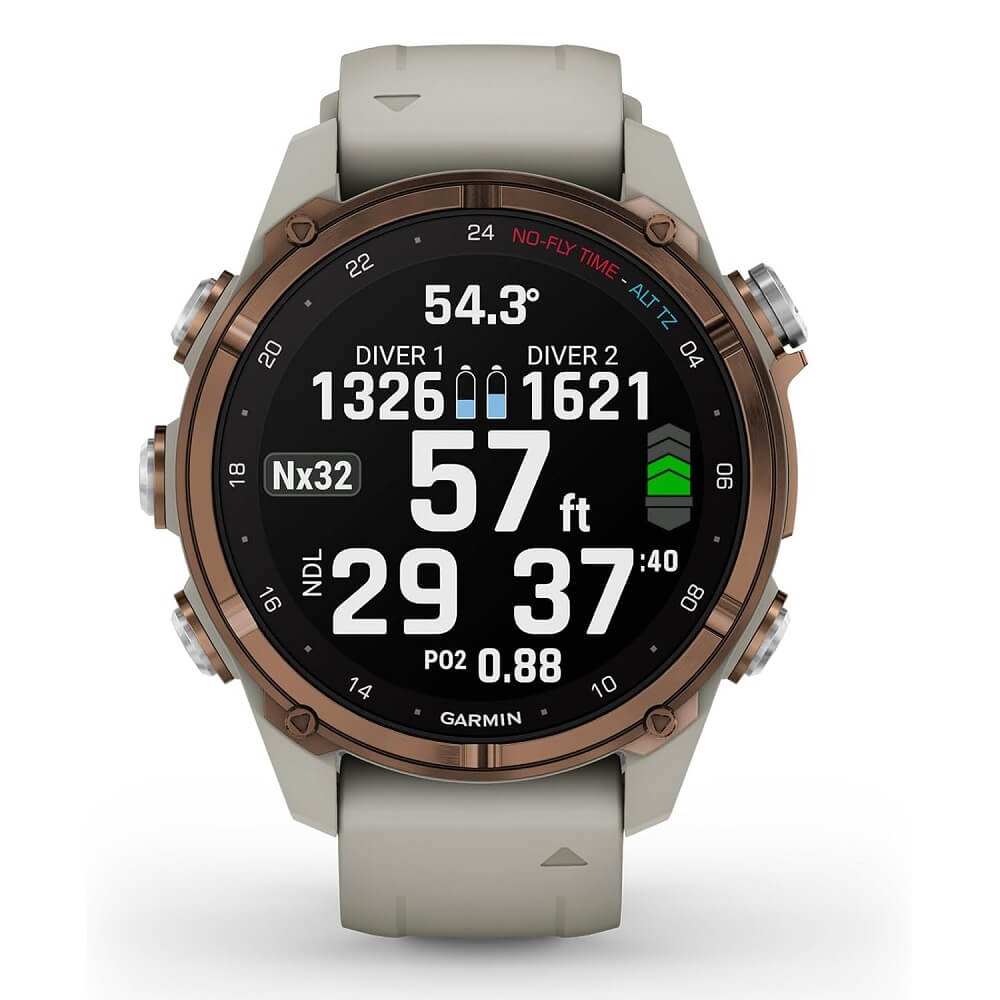
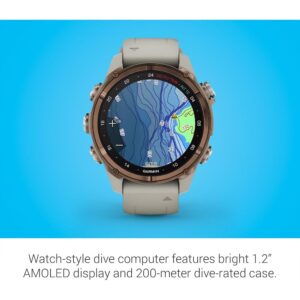
The Garmin Descent Mk3i’s most immediately striking feature is its brilliant 1.4-inch AMOLED touchscreen display, which delivers exceptional underwater visibility across a wide range of lighting conditions. This vibrant color display represents a significant upgrade over previous Descent generations, providing crisp readability even at depth where ambient light diminishes dramatically. Multiple Amazon reviewers specifically praised the display quality, with one technical diver noting the screen is “bright and very readable under water,” while another emphasized the ability to “customize the different screens to suit your needs.”
The Mk3i is available in two case sizes: 43mm and 51mm. The larger 51mm model includes a built-in LED flashlight with white and red light modes—a feature that received enthusiastic praise in customer reviews. One verified purchaser explained: “I opted for the larger model with a built-in flashlight, which I initially thought I wouldn’t use but now rely on all the time. The red light mode is especially useful for staying visible when walking on dark streets at night.” This dual-purpose flashlight serves both underwater illumination and everyday utility, adding tangible value beyond diving applications.
According to Garmin’s official specifications, the 51mm model measures 51 x 51 x 17.8mm with a titanium bezel and sapphire crystal lens, while the 43mm version measures 43 x 43 x 14.5mm. Both versions feature metal leakproof buttons that remain fully operational at the watch’s 200-meter depth rating. The titanium construction provides exceptional durability without excessive weight, though one Amazon reviewer noted the watch is “a little bulky but not out of line with Garmin’s higher end sports watches.”
The Mk3i comes with two strap options: a standard-length silicone band for everyday wear and an extended dive strap designed to fit over wetsuits and drysuits. Multiple reviewers highlighted the convenience of this system, with one noting it’s “really easy to snap them on and off to change between the two.” Garmin also offers a wide selection of QuickFit bands in various colors and materials, allowing users to customize the watch’s appearance for different occasions. One reviewer did caution that “the buttons can be too easily pressed,” though this was described as “not a deal-breaker” and likely a trade-off for ensuring button operability at depth with gloves.
Air Integration and SubWave Communication: Game-Changing Technology
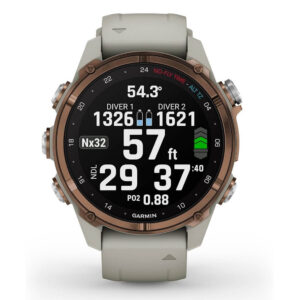
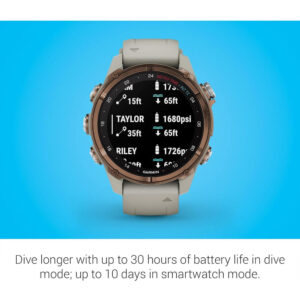
The defining feature that separates the Mk3i from the standard Mk3 is its air integration capability via Garmin’s Descent T2 transceiver. This wireless tank pod transmits real-time cylinder pressure data to the watch, displaying remaining air pressure, consumption rate, and estimated time remaining at current depth and exertion level. According to Garmin’s compatibility documentation, the Mk3i can monitor up to eight separate T2 transmitters simultaneously—an unprecedented capability that supports complex technical diving scenarios with multiple stage bottles and decompression gases.
Amazon reviewers consistently praised the air integration functionality. One verified purchaser stated: “I paired it with the wireless air pod for my tank, which allowed me to monitor my air supply or track a less experienced diver—an excellent safety feature, even though the pods are a bit pricey.” Another reviewer noted that air integration is “a must have” and highlighted that the T2 device is “super easy to pair” with the Mk3i. The ability to monitor a buddy’s tank pressure adds a crucial safety dimension for instructors, dive guides, and anyone diving with less experienced partners.
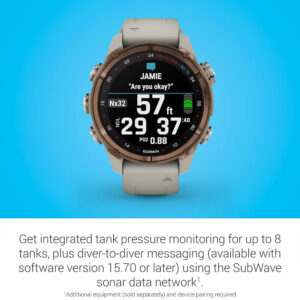
Beyond air integration, the Mk3i features Garmin’s proprietary SubWave sonar technology for underwater communication. Using SubWave, divers can exchange preset messages with other Mk3i or X50i users at ranges up to 30 meters. Additionally, divers can view depth and tank pressure information from up to eight connected divers within a 10-meter range. As noted in DIVE Magazine’s coverage, this diver-to-diver networking capability represents a significant advancement in dive safety and buddy communication.
One Amazon reviewer who dives with family members specifically highlighted this feature’s value: “Messages with other divers; Share info with other divers (essential for my, I dive with my family).” However, the same reviewer noted a minor drawback: “The ‘sonar’ used to communicate does an annoying sound.” This acoustic feedback, while potentially distracting, ensures divers are aware when messages are being transmitted and received—a necessary trade-off for the technology’s current implementation.
It’s important to note that the T2 transceivers are sold separately and retail for approximately $400-500 each. While this represents a significant additional investment beyond the watch’s base price, the capability it enables—particularly for technical divers managing multiple gas sources—justifies the cost for serious diving applications. As one Amazon reviewer succinctly stated about the overall system: “Excellent tool for divers, worth every penny! Easy to essy, with Air Integration a ‘must have’.”
Dive Modes and Technical Capabilities: From Recreation to Technical Diving
The Garmin Descent Mk3i supports an extensive range of dive modes that accommodate virtually every diving discipline. These modes include single-gas diving (air or nitrox), multi-gas diving (up to eight different gas mixes for technical decompression diving), closed-circuit rebreather (CCR), gauge mode, apnea (freediving), and apnea hunt (spearfishing). According to Garmin’s official product page, the Mk3i uses the Bühlmann ZHL-16C decompression algorithm with user-configurable Gradient Factors, allowing divers to customize conservatism levels and decompression stop depths based on personal preferences and dive conditions.
The 200-meter depth rating positions the Mk3i firmly in technical diving territory. While recreational divers rarely exceed 40 meters, the extended depth capability ensures the watch can handle deep wreck diving, cave diving, and advanced technical profiles without approaching its operational limits. One Amazon reviewer who upgraded from a Descent Mk1 noted the Mk3i’s “added features to the new dive watch” make it ideal for “this dive season on the 1715 Treasure fleet here in Florida”—presumably involving deeper wreck diving that benefits from the extended depth rating and multi-gas capabilities.
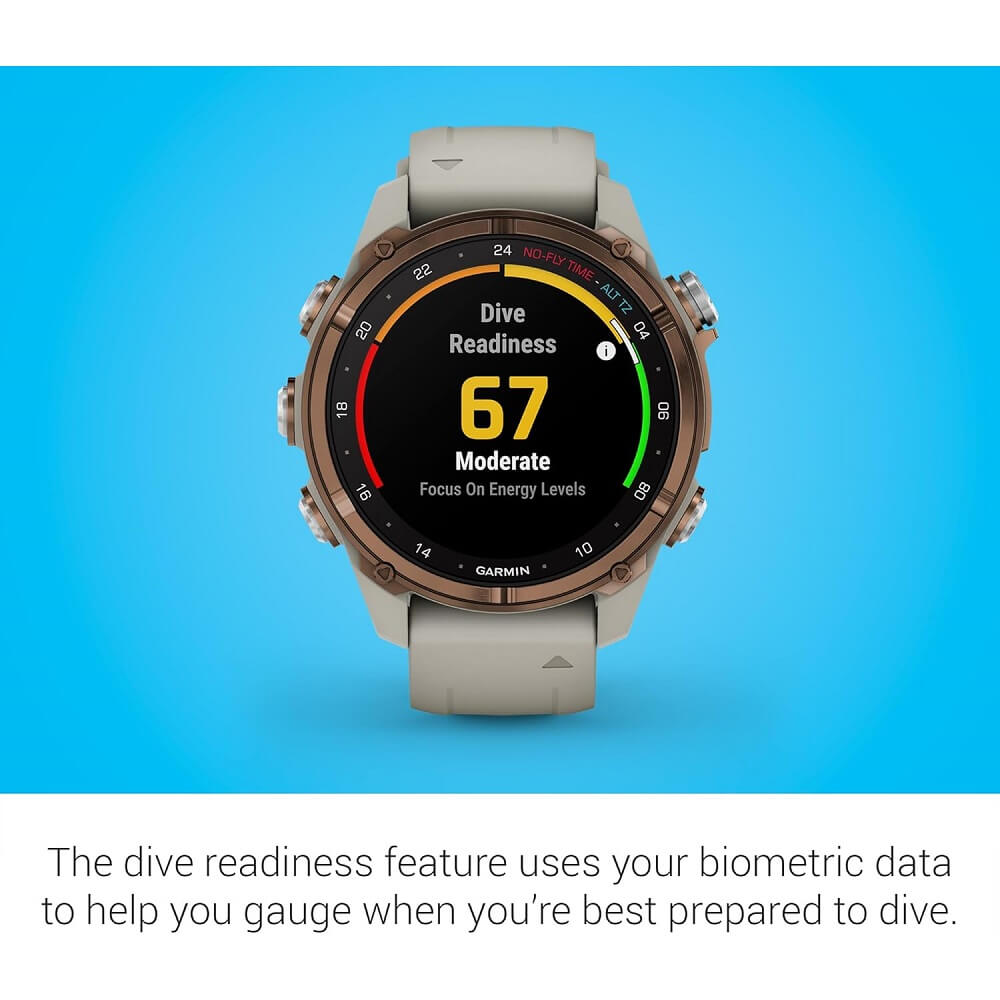
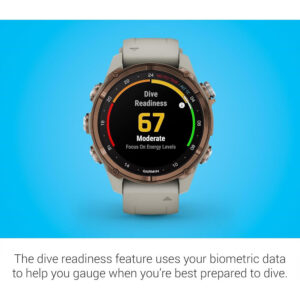
The dive readiness feature, which assesses physiological preparedness based on sleep quality, heart rate variability (HRV), and recent activity levels, received positive mentions from reviewers. One user who upgraded from a Fenix 5 specifically called out the “morning health report” as a standout feature. This integration of health metrics with dive planning helps divers make informed decisions about whether their bodies are adequately recovered for demanding underwater activities, potentially reducing decompression sickness risk and improving overall safety.
For GPS tracking of dive sites, the Mk3i can capture coordinates before and after dives when manually starting a dive activity. One Amazon reviewer noted a workflow issue: “My main complaint is that you have to remember to manually start a ‘dive’ activity if you want it to capture your GPS coordinates before the dive, and I haven’t been able to get it to capture the coordinates at the end of dives.” The watch will automatically enter dive mode when submerged, but this automatic activation doesn’t capture pre-dive GPS positioning. Divers who want comprehensive dive logs with GPS coordinates should remember to manually initiate dive activities before entering the water.
The Garmin Dive app serves as the repository for all dive log data, syncing automatically via Wi-Fi or Bluetooth. While one reviewer found the app “okay but could be better,” particularly noting that “it seems to save data to the cloud, not to your device, so you need an internet connection to view your dive log,” most users appreciated the detailed analytics provided. The cloud-based approach ensures dive logs are backed up and accessible across devices, though it does require connectivity for review.
Health and Fitness Tracking: Elite Athlete Performance Beyond Diving
Beyond its dive computer capabilities, the Garmin Descent Mk3i functions as Garmin’s most advanced multi-sport smartwatch. The device tracks heart rate 24/7 using Garmin’s Elevate v5 wrist-based optical sensor, monitors sleep stages with advanced sleep scores and HRV status, and provides comprehensive training metrics including VO2 max, training load, recovery time, and performance condition. Multiple Amazon reviewers highlighted their use of the Mk3i for activities far beyond diving, with one noting: “I’ve worn a Garmin watch for more than a decade, starting with the forerunner 920xt, fenix 5, 6, epix 2. the consolidation of all my health stats and activities in one place and the amount of detail is unmatched by any other tracker.”
The Mk3i supports over 100 activity profiles, including running, cycling, swimming (pool and open water), hiking, skiing, golf, and strength training. The built-in GPS with multi-band satellite support (GPS, GLONASS, and Galileo) provides exceptional tracking accuracy for outdoor activities. One verified purchaser who uses the watch for multiple sports stated: “I’ve had a Mk1 which has served me well. This watch has a bigger, brighter screen, and so many more features. Wear it scuba, golf (excellent) and road biking.”
The golf functionality deserves particular mention, as one Amazon reviewer specifically called it out as “excellent.” The Mk3i includes preloaded courses for over 43,000 golf courses worldwide, providing distances to greens and hazards, digital scorecard functionality, and stat tracking. This makes the watch genuinely versatile for divers who are also avid golfers—a not-uncommon combination given both activities’ appeal to adventurous outdoor enthusiasts.
Smart features include smartphone notifications, music storage (up to 2,000 songs) with support for Spotify, Amazon Music, and Deezer, Garmin Pay for contactless payments, and safety features including incident detection with emergency assistance. The watch integrates seamlessly with the Garmin Connect ecosystem, providing detailed analytics, training insights, and social features. One reviewer who consolidates “all runs, bike rides, hikes, workouts etc” on Garmin devices described the Descent as “the closest thing to the perfect daily companion.”
Battery Life and Performance: Extended Runtime for Multi-Day Trips
Battery performance is one of the Garmin Descent Mk3i’s most impressive specifications. According to Garmin’s official specifications, the 51mm model provides up to 66 hours in dive mode and up to 25 days in smartwatch mode, while the 43mm model offers up to 30 hours in dive mode and up to 10 days in smartwatch mode. These figures represent substantial improvements over previous Descent generations and dramatically exceed the battery life of competing dive computer smartwatches.
Amazon reviewers consistently praised the Mk3i’s battery longevity. One verified purchaser simply stated: “great battery life, great functionality, my new everyday watch.” Another reviewer provided specific context: “The battery life is awesome!” The 66-hour dive mode rating for the 51mm model translates to approximately 40-50 typical recreational dives (assuming 45-60 minute profiles) before requiring a recharge—more than sufficient for week-long liveaboard dive trips without needing to charge mid-trip.
The battery performance becomes even more impressive when compared to smartwatches from other manufacturers. One Amazon reviewer who also owns Apple devices noted: “Honestly, the product is good! It’s a Garmin and its syncs with all your devices as it should! You pay for it, but it’s worth the money.” While Apple Watch Ultra models typically require daily or every-other-day charging, the Mk3i’s multi-week smartwatch mode battery life eliminates charging anxiety for everyday wear.
The watch uses Garmin’s proprietary charging cable, so packing the charger for travel is essential. The charging speed is respectable, though Garmin doesn’t publish specific fast-charging specifications. Based on user reports and Garmin’s historical performance, a full charge typically requires 1-2 hours—fast enough that topping off the battery during a surface interval or over lunch is practical for divers on intensive multi-dive-per-day schedules.
Value Proposition and Pricing: Premium Investment for Serious Divers
At $1,599 for the 43mm model and $1,799 for the 51mm version (as of February 2026), the Garmin Descent Mk3i represents a significant financial investment. Adding T2 transceivers—approximately $400-500 each—can push the total system cost well over $2,000 for a complete air-integrated setup. This pricing positions the Mk3i at the premium end of both dive computers and smartwatches, prompting the question: is it worth the cost?
For serious divers who would otherwise purchase separate devices for dive computing, fitness tracking, and everyday smartwatch functionality, the Mk3i delivers compelling value despite its high price. Comparable technical dive computers like the Shearwater Perdix AI ($1,200-1,400) or Shearwater Teric ($1,400-1,600) offer similar dive functionality but lack the comprehensive fitness tracking, GPS navigation, music storage, and smartphone integration that the Mk3i provides. Adding a high-end fitness smartwatch like a Garmin Fenix or Epix (typically $800-1,000) to a dedicated dive computer would exceed the Mk3i’s cost while requiring users to manage two separate devices.
Multiple Amazon reviewers explicitly addressed the price-value equation. One stated: “Expensive, but worth every penny to me. As someone who is into diving and fitness, this is the perfect watch for me.” Another noted: “This watch does it all. Obviously Scuba Diving but also running, cycling, hiking and more. When paired with the T1 or T2 it shows the remaining air pressure in your tank(s).” The recurring theme in positive reviews is that the Mk3i’s versatility justifies its premium pricing for users who will actively utilize both its diving and multi-sport capabilities.
Compared to Garmin’s own lineup, the Mk3i sits above the standard Descent Mk3 ($1,399-1,599), which lacks air integration and SubWave communication, and far above the Descent G2 ($699), which offers recreational diving capabilities without technical features or the 200-meter depth rating. The Mk3i also exceeds the pricing of the Fenix 8 series ($999-1,199), Garmin’s flagship multi-sport watch, though the Fenix 8 AMOLED models share many features with the Mk3i minus the advanced dive-specific capabilities.
For recreational divers who don’t need air integration or technical dive modes, the standard Descent Mk3 or Descent G2 represent better value. However, for technical divers, dive professionals, or serious diving enthusiasts who want the absolute best dive computer that doubles as a premium smartwatch, the Mk3i’s feature set is unmatched in the current market. As ScubaLab’s testing concluded, the Descent Mk3 series (including the Mk3i) earned Testers Choice for technical dive computers, validating Garmin’s positioning at the premium end of the market.
Who Should Buy the Garmin Descent Mk3i?
The Garmin Descent Mk3i is ideally suited for technical divers who require air integration, multi-gas support, and extended depth ratings beyond recreational limits. It’s the perfect choice for divers regularly conducting decompression dives, cave diving, wreck penetration, or any diving that involves managing multiple cylinders with different gas mixes. The ability to monitor up to eight tanks with real-time pressure data and consumption rates provides unparalleled situational awareness for complex technical profiles.
Dive professionals—including instructors, divemasters, and guides—will find significant value in the Mk3i’s buddy monitoring capabilities. The ability to track a student’s or less experienced diver’s tank pressure and depth via SubWave technology adds a critical safety layer when supervising multiple divers. One Amazon reviewer specifically noted using this feature to “track a less experienced diver,” describing it as “an excellent safety feature.” For professionals who conduct multiple dives per day across extended periods, the Mk3i’s 66-hour dive mode battery life eliminates the need to recharge between teaching assignments or guided dive days.
Multi-sport athletes who dive regularly will appreciate the Mk3i’s comprehensive fitness tracking and training analytics. The integration of diving, running, cycling, swimming, and other activities into a unified Garmin Connect profile provides holistic insights into training load, recovery, and performance trends. As one Amazon reviewer who has used Garmin devices for over a decade noted: “the consolidation of all my health stats and activities in one place and the amount of detail is unmatched by any other tracker.”
Divers who prioritize ecosystem integration and long-term device investment should consider the Mk3i. Garmin’s track record of software updates and feature additions means the watch will likely receive new capabilities over its lifespan. The robust Garmin Connect platform, extensive third-party app support via Connect IQ, and compatibility with Garmin’s broader ecosystem of sensors and accessories provide future-proofing that proprietary dive computer brands can’t match.
Who should consider alternatives? Recreational divers who never exceed 40 meters, don’t use nitrox or multiple gas mixes, and don’t need air integration will find better value in the standard Descent Mk3 or the more affordable Descent G2. Budget-conscious divers should explore dedicated dive computers like the Shearwater Peregrine ($500-600) if they don’t need smartwatch features. Users who prioritize the largest possible display should consider dedicated dive computers with larger screens, as one Amazon reviewer noted preferring their “Sheerwater Teric screen customization” over the Mk3i’s display layout options.
Apple ecosystem users should carefully consider whether the Mk3i’s diving capabilities justify losing the tight integration with iPhone, iMessage, and Apple services. While the Mk3i works with both iOS and Android devices via Bluetooth, the experience is optimized for Garmin’s ecosystem rather than Apple’s. For casual snorkelers or very occasional divers, the Apple Watch Ultra 2’s recreational dive computer capabilities (40-meter depth rating, EN 13319 certification) may suffice at a lower price point, though it lacks the Mk3i’s technical diving features, extended battery life, and advanced dive modes.
Real User Experiences from Amazon Reviews
The Garmin Descent Mk3i maintains overwhelmingly positive ratings from verified Amazon customers (as of February 2026). The vast majority of reviewers (approximately 90%+ giving 5 stars) praise the watch’s comprehensive capabilities, build quality, and versatility. Common themes in positive reviews include:
Air integration reliability and ease of use: Multiple reviewers highlighted the seamless pairing and reliable performance of the T2 transceivers. One user noted it was “super easy to pair with T2 device” and called air integration a “must have.” Another described using the wireless air pod to “monitor my air supply or track a less experienced diver” as “an excellent safety feature.” The consensus is that once the T2 transmitters are paired (a one-time setup process), they connect automatically on subsequent dives and provide reliable real-time tank pressure data.
Display quality and underwater readability: The AMOLED screen received consistent praise for visibility in varying conditions. One reviewer emphasized the screen is “bright and very readable under water,” while another appreciated the ability to “customize the different screens to suit your needs.” The touchscreen functionality works well at the surface, while the physical buttons ensure full operability underwater and with gloves—a critical consideration for cold-water diving with thick gloves or drysuits.
Built-in flashlight utility (51mm model): The LED flashlight feature exceeded expectations for reviewers who initially questioned its value. One purchaser explained: “I opted for the larger model with a built-in flashlight, which I initially thought I wouldn’t use but now rely on all the time. The red light mode is especially useful for staying visible when walking on dark streets at night.” This feature adds practical everyday value beyond its underwater illumination purpose.
Battery life performance: Users consistently praised the extended battery runtime. One simply stated “great battery life,” while another noted the watch provides “almost a month” of use, contrasting it dramatically with Apple Watch: “The battery in this thin literally 10Xs an Apple Watch. I get almost a month out of my Garmin.” For divers planning multi-day liveaboard trips or extended diving vacations, the Mk3i’s battery eliminates the need to charge daily or even weekly.
Multi-sport versatility: Reviewers valued the watch’s capabilities beyond diving. One who tracks “all runs, bike rides, hikes, workouts etc” described it as “the closest thing to the perfect daily companion.” Another noted using it for “scuba, golf (excellent) and road biking.” The morning health report feature, which synthesizes sleep quality, HRV, and recovery metrics, received specific praise for providing actionable insights into readiness for both diving and other athletic activities.
Family diving and buddy monitoring: The SubWave communication features received enthusiastic feedback from divers who dive with family or regular buddies. One reviewer specifically mentioned: “Share info with other divers (essential for my, I dive with my family).” The ability to see depth and tank pressure of connected divers adds a safety dimension particularly valuable for family groups or diving teams who want to maintain awareness of each other’s status without constant visual contact.
Constructive criticisms and limitations mentioned by reviewers include:
Button sensitivity: One reviewer noted “the buttons can be too easily pressed,” though qualified this as “not a deal-breaker.” This is likely a design trade-off to ensure buttons remain operable at the 200-meter depth rating and with gloved hands. Users can enable button lock features to prevent accidental presses during daily wear.
GPS dive site tracking workflow: One detailed reviewer explained: “My main complaint is that you have to remember to manually start a ‘dive’ activity if you want it to capture your GPS coordinates before the dive.” While the watch automatically enters dive mode when submerged, this automatic activation doesn’t capture pre-dive GPS positioning. Divers who want comprehensive GPS logs should develop the habit of manually starting dive activities before gearing up.
Dive app data storage: One user noted the Garmin Dive app “seems to save data to the cloud, not to your device, so you need an internet connection to view your dive log.” This cloud-first approach ensures data backup and cross-device accessibility but requires connectivity for log review. Divers on liveaboards or in remote locations without internet may need to wait until returning to civilization to analyze dive data in detail.
SubWave sonar sound: One reviewer mentioned “the ‘sonar’ used to communicate does an annoying sound.” This acoustic feedback, while potentially distracting, serves as confirmation that messages are being transmitted and received. Garmin may address this in future firmware updates with customizable sound options or vibration-only alerts.
Screen customization preferences: One reviewer who also owns a Shearwater Teric noted: “I prefer my Sheerwater Teric screen customization, maybe I just didn’t find the right screen mode.” While the Mk3i offers extensive customization options for data fields and layouts, divers accustomed to other dive computers may need time to configure screens to their preferences. The Garmin Dive app allows desktop-based screen customization, which some users find more intuitive than on-watch configuration.
Size and bulk considerations: One reviewer described the watch as “a little bulky but not out of line with Garmin’s higher end sports watches.” The 51mm model particularly is substantial on the wrist, which may be overwhelming for users with smaller wrists or those accustomed to slimmer watches. The 43mm model addresses this for users who prioritize a smaller form factor, though it sacrifices the built-in flashlight and some battery life.
Notable positive experiences include users who upgraded from previous Descent models (Mk1, Mk2) and expressed satisfaction with the improvements. One stated: “Replaced my MK2 with a new MK3 for this dive season on the 1715 Treasure fleet here in Florida. I have had it over a month and I am highly satisfied with the with the MK3 and the added features to the new dive watch.” Another who upgraded from a Mk1 highlighted “the bigger, brighter screen, and so many more features,” using it for “scuba, golf (excellent) and road biking.”
Final Verdict: The Most Advanced Dive Computer Smartwatch Available
The Garmin Descent Mk3i succeeds in delivering the most comprehensive dive computer and smartwatch integration currently available. For $1,599-1,799 (depending on size), technical divers, dive professionals, and serious diving enthusiasts gain a device that combines professional-grade dive computer capabilities—including air integration, multi-gas support, 200-meter depth rating, and underwater communication—with elite-level fitness tracking, navigation, and smartwatch features. The Mk3i represents the pinnacle of Garmin’s dive computer evolution, building on a decade of refinement since the original Descent Mk1.
The standout strengths are the wireless air integration with up to eight T2 transmitters, SubWave sonar communication for buddy monitoring and messaging, the brilliant AMOLED display readable underwater and in sunlight, exceptional 66-hour dive mode battery life (51mm model), built-in LED flashlight (51mm), and comprehensive multi-sport tracking that rivals Garmin’s flagship Fenix and Epix series. For divers who demand the most advanced technology available and will utilize both the technical diving features and everyday smartwatch capabilities, the Mk3i delivers exceptional value despite its premium price.
The limitations are worth considering but not disqualifying for the target audience. The high initial cost, combined with the additional expense of T2 transceivers ($400-500 each), represents a significant investment that exceeds most divers’ budgets. The substantial size, particularly of the 51mm model, may be too bulky for users with smaller wrists or those who prefer low-profile watches. The cloud-dependent Garmin Dive app requires internet connectivity for detailed log review. Button sensitivity may cause occasional accidental presses during everyday wear, though this ensures operability at depth with gloves.
For technical divers conducting decompression dives, multi-gas diving, or any diving beyond recreational limits, the Mk3i provides capabilities that dedicated dive computers can’t match while eliminating the need for separate fitness and smartwatch devices. The overwhelmingly positive Amazon customer reviews reflect genuine satisfaction from verified users who have taken the Mk3i underwater in real-world diving conditions. Multiple reviewers who own multiple Garmin devices and previous Descent models expressed that the Mk3i represents the culmination of Garmin’s dive computer development.
If you’re a technical diver who needs air integration and multi-gas support, a dive professional who supervises other divers and values buddy monitoring, a multi-sport athlete who dives regularly and wants unified activity tracking, or a serious diving enthusiast who demands the absolute best dive computer available regardless of price, the Garmin Descent Mk3i delivers unmatched capability. It’s not the most affordable dive computer, nor the most affordable smartwatch, but it’s arguably the most capable device that successfully integrates both categories at a professional level. As one Amazon reviewer perfectly summarized the value proposition: “Expensive, but worth every penny to me. As someone who is into diving and fitness, this is the perfect watch for me.”
Purchase the Garmin Descent Mk3i on Amazon or check availability at authorized Garmin retailers. For recreational divers who don’t need air integration, consider the standard Descent Mk3 ($1,399-1,599) or the more affordable Descent G2 ($699). For budget-conscious technical divers willing to sacrifice smartwatch features, explore dedicated dive computers like the Shearwater Perdix AI ($1,200-1,400).
Be the first to review “Garmin Descent Mk3i”
Related products
Garmin
Garmin
Garmin
Garmin
Garmin
Garmin
Garmin
Garmin
Reviews
There are no reviews yet.