
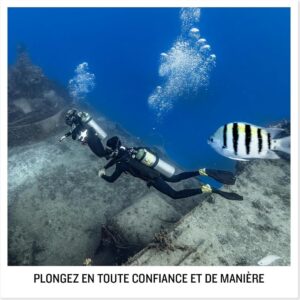
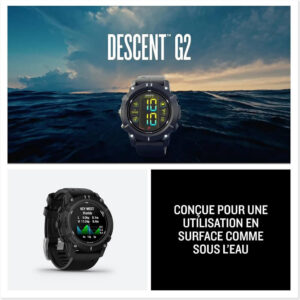
Garmin Descent G2
$599.00
- 4.8-star rating from Amazon customers – highly praised for freediving and recreational diving
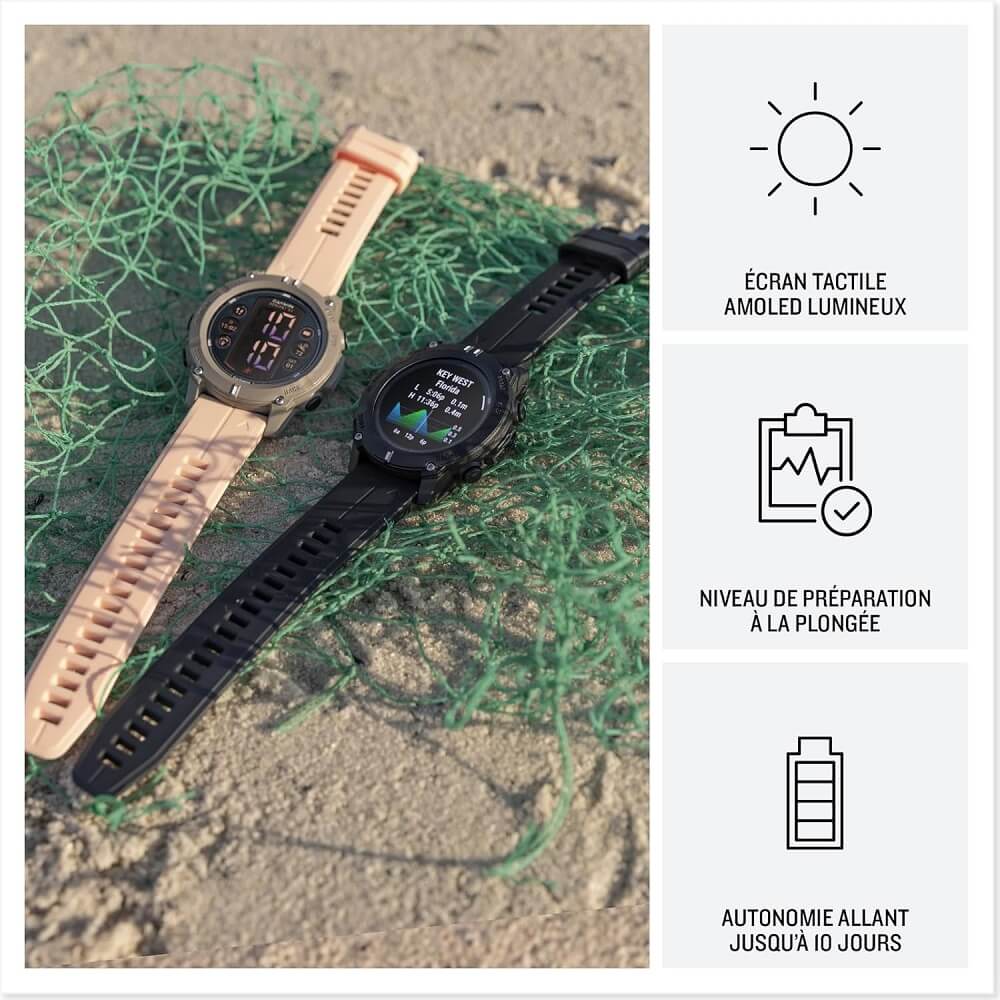
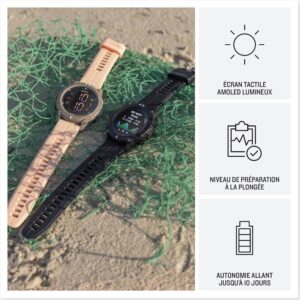
- Vibrant 1.2-inch AMOLED display easily readable underwater in all lighting conditions
- Six dive modes: scuba (single/multi-gas), CCR, apnea, apnea hunt, and gauge mode
- 100m water resistance with sapphire crystal lens and 100% recycled ocean-bound plastics
- Up to 25 hours dive mode battery, 21 days smartwatch mode with 24/7 health tracking
- Dive readiness monitoring uses sleep, HRV, and stress data to optimize performance
- Priced at $699.99 – half the cost of Descent Mk3 with most of the same features
- Best for: Recreational divers, freedivers, and spearfishermen wanting dive computer plus smartwatch
When I started pushing past 40 meters in freediving competitions, one thing became very clear: my basic dive computer wasn’t providing the detailed metrics I needed to improve my performance and safety margins. I needed a device that could track my pace, monitor my heart rate for relaxation analysis, and provide actionable data for both freediving and spearfishing. But then the Garmin Descent G2 changed everything about how I approach underwater training and dive planning.
The Garmin Descent G2 delivers exceptional value as a mid-range dive computer, bridging the gap between budget options and premium models like the Descent Mk3 series. With its vibrant 1.2-inch AMOLED display, comprehensive dive modes, and 24/7 health tracking, the G2 maintains a 4.8-star rating from verified Amazon customers and offers professional-grade features at $699.99—about half the cost of Garmin’s flagship dive computers. According to Garmin’s official press release, the G2 is designed to grow with divers from recreational scuba to technical diving and freediving, featuring a sustainable design with 100% recycled ocean-bound plastics.
Design and Display: AMOLED Brilliance Underwater
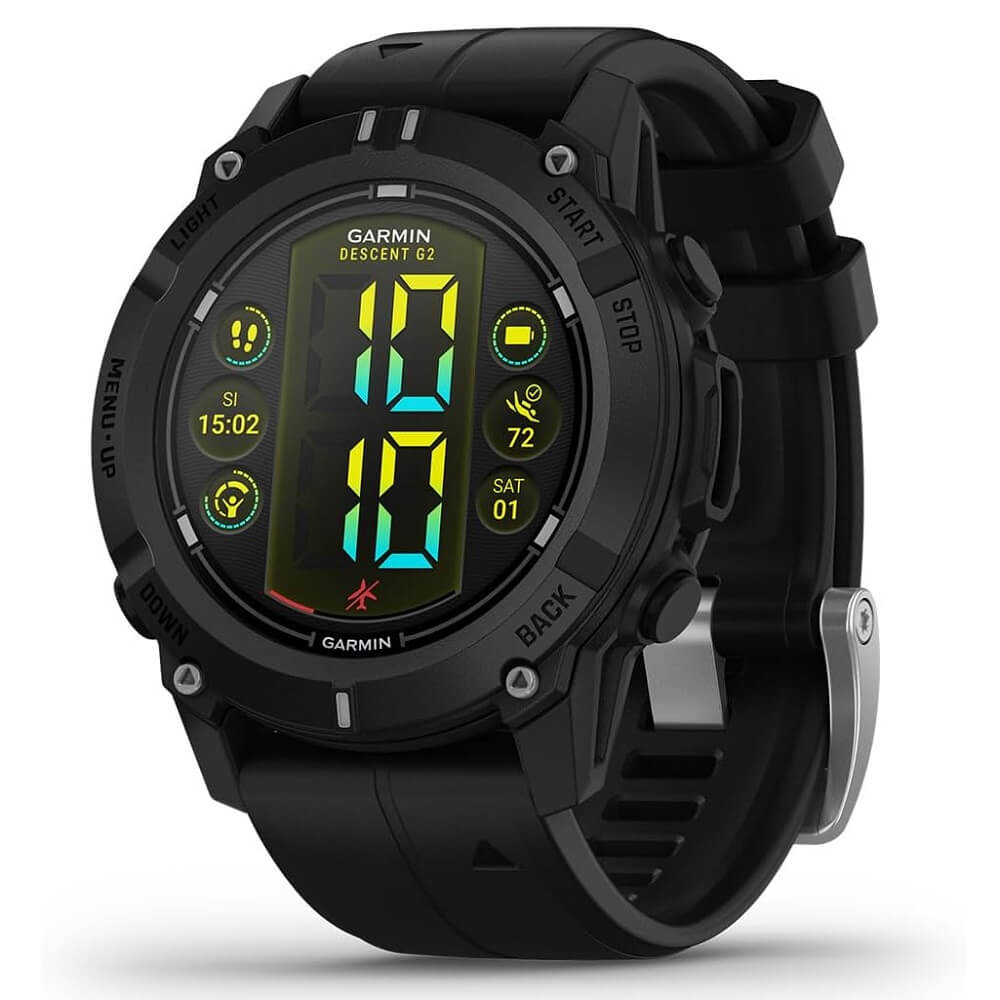
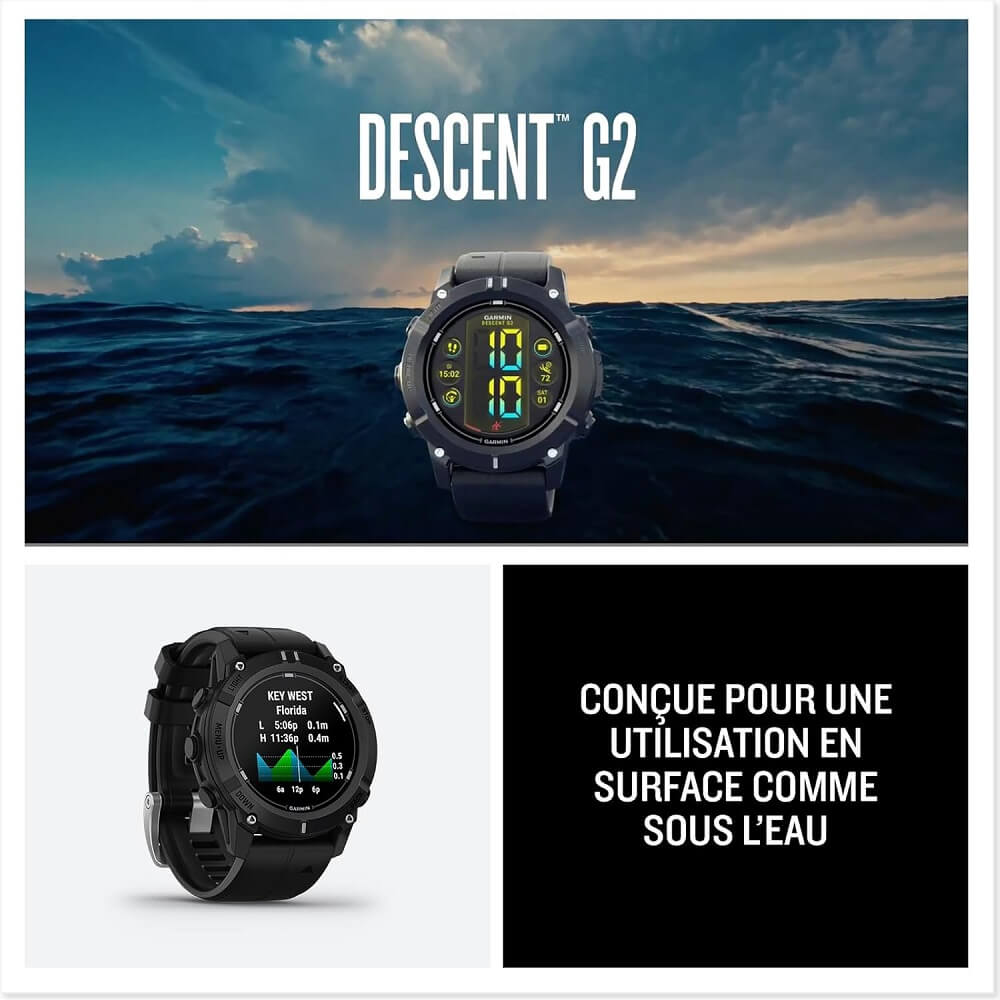
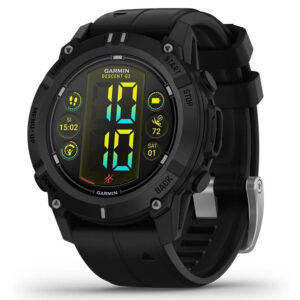
The Garmin Descent G2’s most striking upgrade is its 1.2-inch AMOLED display, which represents a massive leap forward from the G1’s monochrome screen. This vibrant color touchscreen delivers exceptional underwater visibility, allowing divers to read critical metrics at a glance even in challenging lighting conditions. As noted in customer reviews on Amazon, the “very visible AMOLED screen was very easy to read underwater where light and colors are much more different than at the surface.”
The G2 measures 45.5 x 45.5 x 15.2mm with a case thickness that balances dive computer functionality with everyday wearability. Unlike the bulkier Descent Mk3 series, the G2 is designed for smaller wrists and all-day comfort. According to Wareable’s coverage, the G2 weighs 25-45% less than the Mk3i depending on configuration, making it significantly more comfortable for extended wear both above and below water.
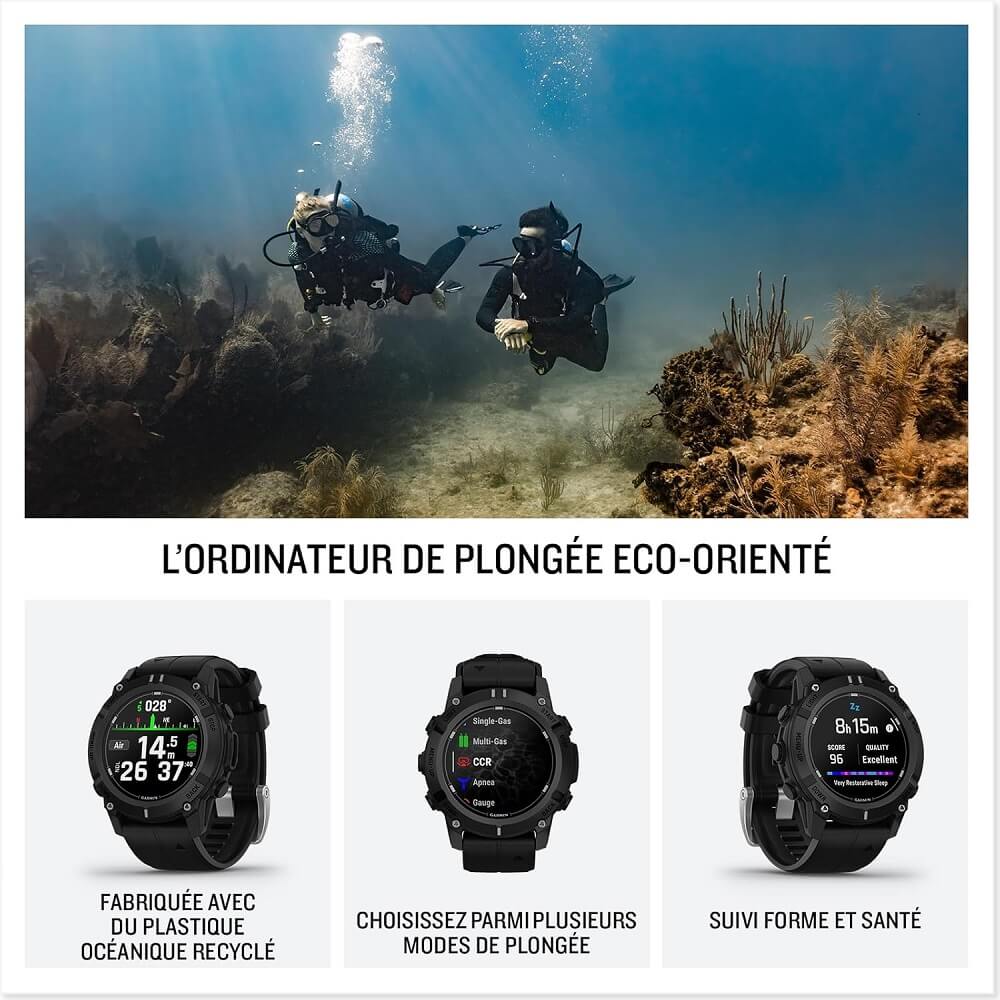
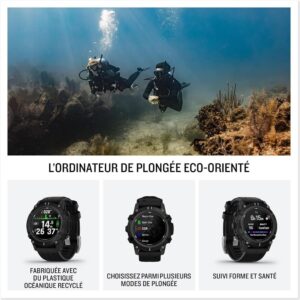
Garmin has taken an environmentally conscious approach with the G2’s construction. The housing, bezel, and buttons are manufactured from 100% recycled ocean-bound plastics, giving the watch an eco-friendly profile without compromising durability. The sapphire lens provides scratch resistance for daily wear, while the 10 ATM (100-meter) dive rating and leakproof buttons ensure reliable performance during recreational dives. Multiple verified purchasers praised the G2’s compact profile, with one reviewer noting it’s “compact, light and powerful” compared to the larger Mk3.
The G2 is available in two colorways: classic black and paloma with shell pink band. The watch is compatible with Garmin’s QuickFit band system, allowing divers to swap between standard silicone bands for daily wear and the included dive strap for underwater excursions. One Amazon reviewer mentioned that “the regular band is small for my wrist and comes to the end of the band,” suggesting that users with larger wrists should consider aftermarket band options, which are both abundant and affordable.
Dive Modes and Performance: From Freediving to Technical Diving
The Garmin Descent G2 supports six distinct dive modes, making it versatile enough for virtually any underwater activity. These modes include single-gas diving, multi-gas diving, closed-circuit rebreather (CCR), apnea (freediving), apnea hunt (spearfishing), and gauge mode. According to Garmin’s official specifications, the G2 can support up to 11 different gas mixes, making it suitable even for complex technical decompression dives.
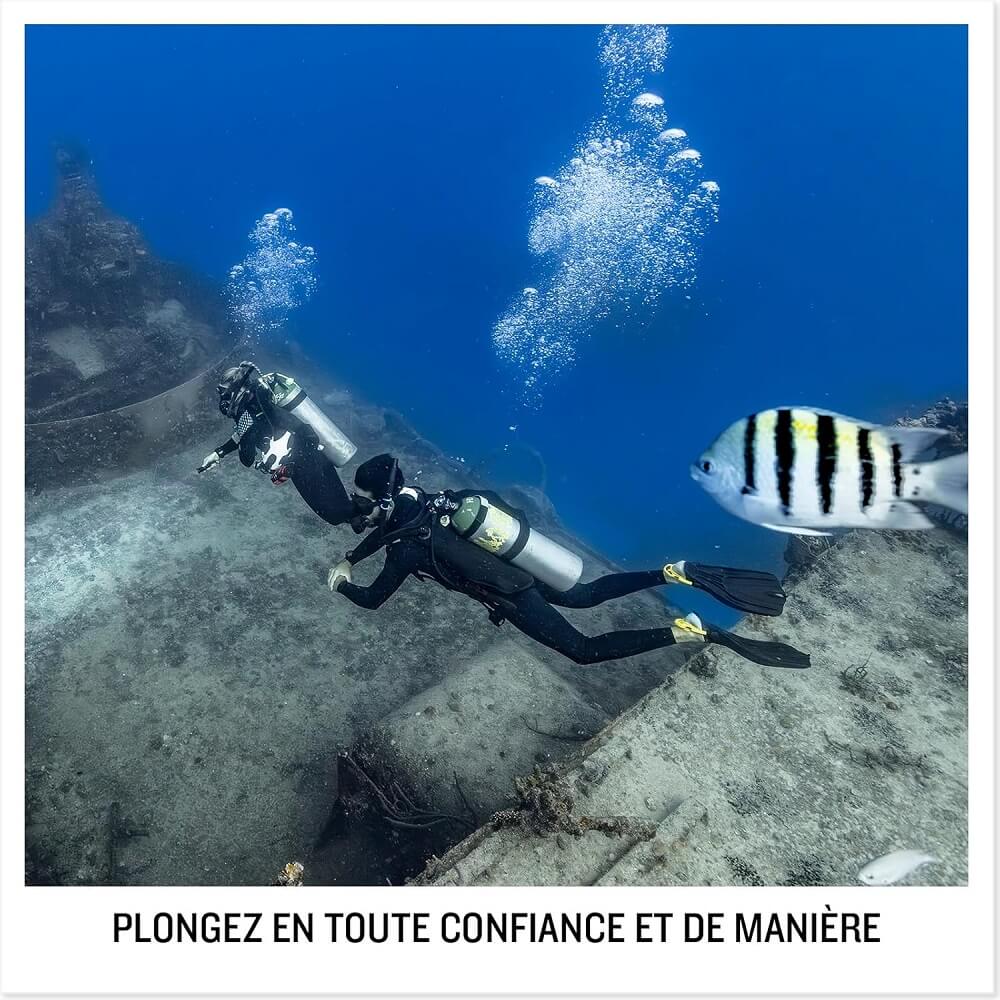
For freedivers and spearfishermen, the G2’s apnea modes deliver exceptional value. A PADI Master Freediver who reviewed the watch on Amazon explained: “This watch allows me to analyze my pace going up and down, my heart rate to understand relaxation, and many more things, not to mention the alarms that allow me to have a sense of where I’m in terms of depth when I’m going down to the plate.” The reviewer, who has passed 40 meters and is training to reach 60 meters, found the G2’s detailed metrics essential for performance improvement and safety.
The surface interval timer and customizable alarms are particularly valuable for spearfishing. One reviewer noted that “knowing your surface time and having alarms to let you know when you are ready is key, but also being able to look at my heart rate to understand when it is calm and ready, is key!” This real-time biometric feedback helps divers optimize their breathing cycles and avoid shallow water blackout—a critical safety consideration for breath-hold diving.
For recreational and technical scuba divers, the G2 provides comprehensive dive computer functionality at a fraction of the cost of the Descent Mk3 series. The dive readiness feature uses your recent activity, sleep quality, and heart rate variability (HRV) to assess whether you’re physiologically prepared for diving. Multiple reviewers mentioned appreciating this feature, with one noting that “the training and dive readiness metrics are awesome as they allow you to understand how your rest influences your performance.”
The G2’s 100-meter depth rating (10 ATM) covers the vast majority of recreational diving scenarios. While the Descent Mk3i extends to 200 meters and includes Subwave sonar communication and air integration with up to eight transmitters, most recreational divers will never approach the G2’s depth limits. As the5krunner’s comparison notes, the G2 is positioned as the value option for divers who want professional features without the premium price tag of air integration and advanced technical capabilities.
Health and Fitness Tracking: 24/7 Monitoring On Land
Beyond its dive computer capabilities, the Garmin Descent G2 functions as a comprehensive health and fitness smartwatch. The device tracks heart rate 24/7 using Garmin’s Elevate wrist-based heart rate technology, monitors sleep stages (light, deep, and REM) with sleep scores and advanced insights, and provides heart rate variability (HRV) status to assess recovery and stress levels. According to Garmin’s press release, the G2 also tracks stress, hydration reminders, respiration, and Pulse Ox (blood oxygen saturation) monitoring.
Multiple Amazon reviewers highlighted the value of these everyday health features. One user noted: “I’ve never owned a smartwatch and I have also gotten obsessed at understanding several health stats, sleep, stress, etc.” The integration of dive readiness with sleep quality and HRV metrics provides divers with actionable insights into how recovery affects underwater performance, helping users avoid diving when their bodies aren’t adequately rested.
The G2 supports a wide range of activity profiles beyond diving, including running, cycling, swimming, hiking, and strength training. The built-in GPS tracks outdoor activities with route mapping and distance accuracy. While the G2 lacks the preloaded TopoActive maps and 32GB storage of the Mk3 series (the G2 has 4GB), it provides sufficient navigation features for most users. As noted in the5krunner’s review, serious backcountry explorers who need detailed topographic maps and turn-by-turn navigation should consider the Mk3, but the G2’s breadcrumb trail and waypoint navigation suffice for typical outdoor activities.
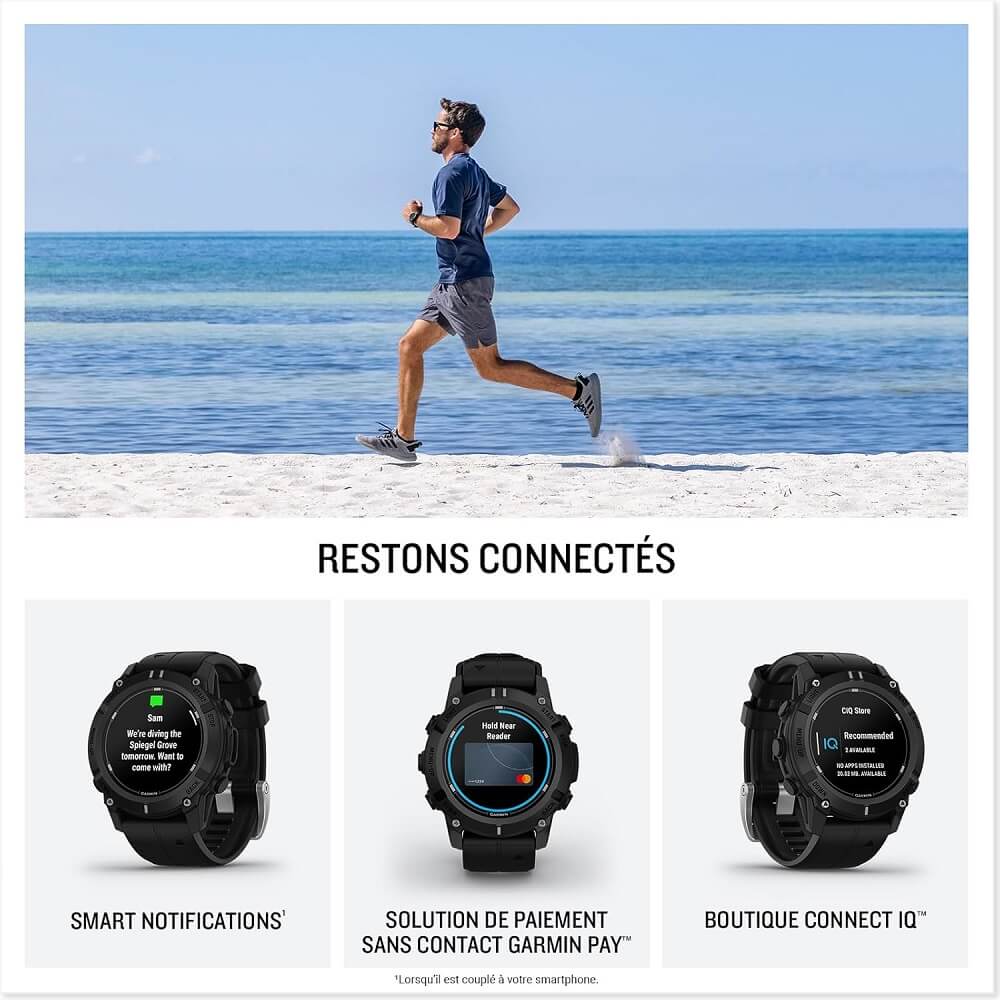
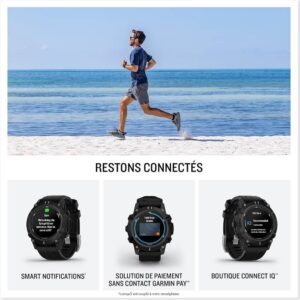
Smart features include smartphone notifications, music storage for offline playback, Garmin Pay for contactless payments, and safety features like incident detection with emergency assistance. One reviewer who uses the watch for “hookah diving for work” praised the emergency contact mode: “best of all has an emergency contact mode in case you’re in trouble—it will send out a help message to a list of people.” This LiveTrack feature can automatically share your location with designated contacts during activities, providing an additional safety layer for solo divers and outdoor enthusiasts.
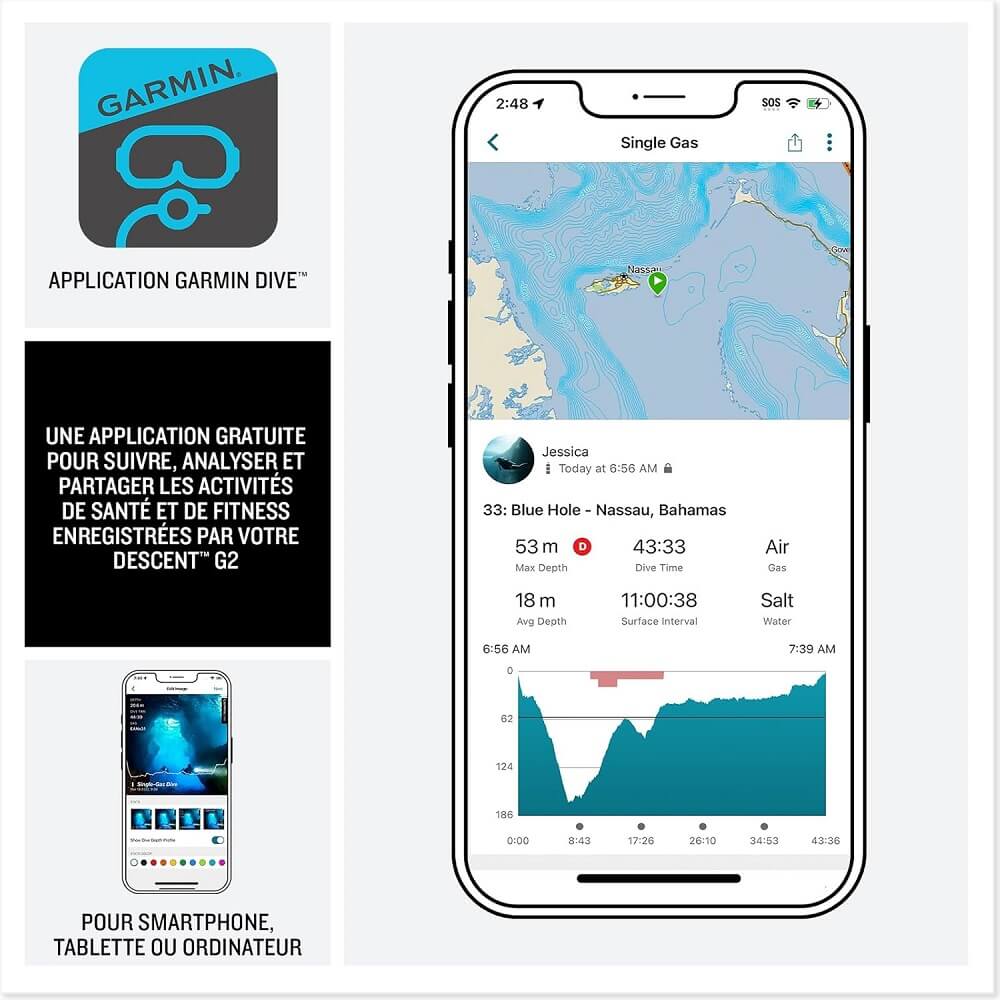
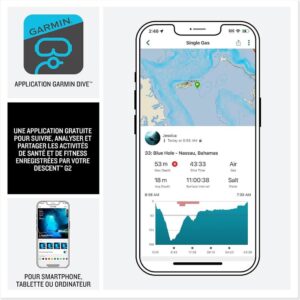
The G2 integrates with the Garmin Connect app ecosystem, which provides detailed analytics, training insights, and social features. While one reviewer noted that “the software interface is clunky with multiple apps needed to setup and use all the functionality,” most users found the ecosystem valuable once configured. The Garmin Connect app allows divers to review detailed dive logs, analyze ascent rates, track repetitive dive profiles, and share dive data with buddies or instructors.
Battery Life and Charging: Balancing Features with Longevity
Battery performance is the G2’s most frequently discussed limitation. According to Garmin’s official specifications, the G2 provides up to 25 hours in dive mode and up to 3 weeks (approximately 21 days) in smartwatch mode. However, real-world testing from Amazon customers suggests more conservative estimates depending on feature usage.
One detailed Amazon review provided specific battery insights: “It lasts 10 days in normal operation and about 7 days running Pulse Ox fulltime, which for me is more than fine.” The reviewer emphasized that while the G2’s battery life is shorter than other Garmin models (particularly the Descent Mk3 with its extended battery modes), it still provides adequate runtime for typical dive trips and daily wear. The AMOLED display, while stunning underwater, consumes more power than the memory-in-pixel (MIP) displays used in Garmin’s ultra-endurance watches like the Fenix or Enduro series.
For divers planning multi-day liveaboard trips, the 25-hour dive mode rating translates to approximately 15-20 dives before requiring a recharge, assuming typical 45-60 minute dive profiles. This should cover most recreational dive vacations, though technical divers completing longer decompression dives may need to recharge mid-trip. The G2 uses Garmin’s proprietary charging cable, so packing the charger for dive travel is essential.
The trade-off between AMOLED vibrancy and battery longevity is inherent to the technology. As Wareable noted, the G2 positions itself between the ultra-long battery life of MIP displays and the visual excellence of AMOLED screens. For divers who prioritize underwater readability and don’t need multi-week battery performance, the G2 strikes an effective balance. Users concerned about battery life can disable always-on display mode, reduce Pulse Ox frequency, and lower display brightness to extend runtime between charges.
Value Proposition: Half the Price, Most of the Features
At $699.99, the Garmin Descent G2 occupies a strategic position in Garmin’s dive computer lineup. It costs approximately $200 more than the Instinct 3 AMOLED (which lacks dedicated dive modes) but roughly half the price of the Descent Mk3 ($1,399.99) and Mk3i ($1,799.99 with air integration). According to the5krunner’s comparison, the G2 delivers “most of the Descent Mk3’s features with sporty and environmentally conscious construction at a reasonable price.”
What you gain with the G2 over budget alternatives: AMOLED display clarity, multiple advanced dive modes (including CCR and multi-gas), comprehensive health tracking with HRV and dive readiness, sapphire lens durability, and integration with Garmin’s robust ecosystem. What you sacrifice compared to the Mk3 series: air integration with wireless tank pressure transmitters, SubWave sonar communication, preloaded topographic maps, extended battery life, and 200-meter depth rating (vs. 100-meter).
For the vast majority of recreational divers, freedivers, and spearfishermen, the G2 provides everything they need. As one Amazon reviewer succinctly stated: “I do not need more than this, it is amazing.” The G2’s feature set aligns well with typical dive profiles—recreational depths within 30-40 meters, standard nitrox mixes, and surface intervals tracked with dive readiness monitoring. Technical divers planning deep decompression dives, cave diving with multiple stages, or utilizing closed-circuit rebreathers may eventually need the Mk3i’s advanced capabilities, but most users will never outgrow the G2.
The G2 also competes favorably against non-Garmin dive computers in its price range. Compared to dedicated dive computers like the Shearwater Peregrine ($500-600) or Suunto D5 ($600-700), the G2 adds comprehensive fitness tracking, smartphone connectivity, music storage, and Garmin Pay—features that dedicated dive computers lack. This makes the G2 an excellent choice for divers who want a single device that handles both underwater adventures and everyday smartwatch functionality.
The environmental credentials—100% recycled ocean-bound plastics—also add intangible value for eco-conscious divers. While this doesn’t affect performance, it aligns with the values of many in the diving community who are deeply invested in ocean conservation and sustainable practices.
Who Should Buy the Garmin Descent G2?
The Garmin Descent G2 is ideally suited for recreational scuba divers, freedivers, and spearfishermen who want a capable dive computer that doubles as an everyday fitness smartwatch. It’s particularly well-matched for divers who prioritize screen clarity and want detailed health metrics to optimize dive readiness and recovery. The compact 45.5mm case makes it appropriate for smaller wrists and users who find the Descent Mk3 series too bulky for daily wear.
The G2 excels for freedivers and spearfishermen seeking detailed apnea performance data. The combination of heart rate monitoring, customizable depth alarms, and surface interval tracking provides the precise feedback needed to improve technique and maintain safety margins. Multiple Amazon reviewers specifically praised the G2’s freediving capabilities, with one PADI Master Freediver calling it essential for training beyond 40 meters.
Fitness-focused divers who want comprehensive health tracking will appreciate the G2’s 24/7 monitoring, sleep analysis, and HRV-based recovery insights. The dive readiness feature helps users make informed decisions about whether to dive based on physiological recovery, reducing the risk of diving while fatigued or stressed. For divers who are “just as extreme on land as underwater,” as the5krunner describes, the G2’s multi-sport capabilities deliver excellent value.
Who should consider alternatives? Technical divers requiring air integration, multiple tank pressure monitoring, and SubWave communication should invest in the Descent Mk3i. Divers planning extreme depths beyond 100 meters need the Mk3’s 200-meter rating. Users who prioritize maximum battery life over display quality should consider MIP-display alternatives like the Garmin Instinct series or other long-battery dive computers. Budget-conscious divers who don’t need smartwatch features may find better value in dedicated dive computers like the Shearwater Peregrine or previous-generation Descent G1 (if still available).
Real User Experiences from Amazon Reviews
The Garmin Descent G2 maintains a 4.8-star rating on Amazon (as of February 2026) based on verified customer reviews. The overwhelming majority of users (77% giving 5 stars) praise the watch’s versatility, display quality, and comprehensive feature set. Common themes in positive reviews include:
Freediving and spearfishing excellence: Multiple reviewers highlighted the G2’s value for breath-hold diving. One user described upgrading from an Omer Mystral after becoming a PADI Master Freediver, noting that the G2’s pace analysis, heart rate monitoring, and depth alarms were “key” for training to 60 meters. Another reviewer who uses the watch for both spearfishing and freediving praised the surface time tracking and heart rate visibility for timing dive readiness.
Display visibility underwater: The AMOLED screen received consistent praise for underwater readability. One reviewer specifically mentioned that the “very visible AMOLED screen was very easy to read underwater where light and colors are much more different than on the surface.” This represents a significant upgrade from the G1’s monochrome display.
Compact and comfortable design: Users appreciated the G2’s wearability compared to larger dive computers. One reviewer noted relief that the plastic construction didn’t compromise quality: “Coming from a Descent Mk1, I was kind of nervous to move to a plastic shell. But I think this one is just as good.” The lighter weight and smaller profile make it suitable for all-day wear without the “dive gear” aesthetic of bulkier models.
Comprehensive health tracking: Several reviewers mentioned becoming “obsessed” with the G2’s health metrics, including sleep tracking, stress monitoring, and HRV status. The dive readiness feature, which correlates rest quality with dive performance, received particular praise for helping users understand when fatigue affected their underwater capabilities.
Versatility across activities: Users valued the G2’s multi-sport capabilities. One reviewer mentioned using it for “motorcycle riding and speed” as well as motocross, while another noted tracking data for “hookah diving for work.” The emergency contact feature—which sends help messages to designated contacts—was highlighted as a valuable safety feature for solo activities.
Constructive criticisms and limitations mentioned by reviewers include:
Band sizing: One reviewer noted that “the regular band is small for my wrist and comes to the end of the band,” suggesting Garmin should include both small and large bands rather than just the oversized dive band. Users with larger wrists may need to purchase aftermarket QuickFit bands immediately.
Software complexity: One user found “the software interface is clunky with multiple apps needed to setup and use all the functionality.” Garmin’s ecosystem requires the Garmin Connect app for primary fitness tracking, Garmin Dive for dive log analysis, and potentially Garmin Explore for advanced navigation—which can feel fragmented to new users.
Screen size preference: A few reviewers wished for a larger display. One stated: “My only thought is wish the screen were bigger,” while another mentioned that the screen “could be bigger.” This is a subjective preference, as the 1.2-inch display balances readability with the compact case size that other users specifically praised.
Battery life expectations: While most users found battery life adequate, one reviewer noted it’s “not the longest” compared to other Garmin models, lasting “10 days in normal operation and about 7 days running Pulse Ox fulltime.” This is shorter than MIP-display Garmin watches but typical for AMOLED models.
One notable issue mentioned was a “blue triangle of death” on an initial unit, which required a replacement. The second unit worked properly, suggesting this was an isolated quality control issue rather than a systemic problem. Overall, the high satisfaction rate and enthusiastic reviews indicate that the G2 delivers on its promises for the target audience of recreational divers and fitness enthusiasts.
Final Verdict: Best Value Dive Computer for Recreational Divers
The Garmin Descent G2 succeeds in its mission to deliver professional-grade dive computer capabilities at a mid-range price point. For $699.99, recreational divers, freedivers, and spearfishermen gain a device that combines a brilliant AMOLED display, comprehensive dive modes, 24/7 health tracking, and everyday smartwatch convenience—all in a compact, environmentally conscious package. The G2 represents the sweet spot in Garmin’s dive computer lineup: significantly more capable than the Instinct series, yet half the cost of the Mk3 series while retaining most of its core features.
The standout strengths are the vibrant underwater-readable display, detailed freediving and apnea tracking with heart rate analysis, dive readiness monitoring based on sleep and HRV data, and the compact form factor that’s comfortable for all-day wear. The integration with Garmin’s ecosystem provides robust dive logging, fitness analytics, and smart features that dedicated dive computers can’t match. For divers who want a single device that handles underwater adventures and everyday fitness tracking, the G2 eliminates the need to own separate devices.
The limitations are worth noting but not deal-breaking for the target audience. Battery life is shorter than MIP-display alternatives, requiring recharges every 7-10 days with typical use. The 100-meter depth rating, while adequate for virtually all recreational diving, excludes extreme technical diving beyond 100 meters. The absence of air integration means divers can’t monitor tank pressure on the watch (a feature exclusive to the Mk3i). Garmin’s multi-app ecosystem has a learning curve for new users unfamiliar with the brand’s software.
For the vast majority of recreational divers—those diving within 20-40 meters, using standard nitrox mixes, and completing typical 45-60 minute profiles—the G2 provides everything needed and more. The 4.8-star rating from Amazon customers reflects genuine satisfaction from verified users who have taken the G2 underwater in real-world conditions. Multiple reviewers who upgraded from previous dive computers or competing brands expressed no regrets about choosing the G2.
If you’re a freediver or spearfisherman seeking detailed apnea metrics, a recreational scuba diver who wants both dive computer and fitness tracker in one device, or an active individual who values comprehensive health monitoring, the Garmin Descent G2 delivers exceptional value. It’s not the cheapest dive computer, nor the most feature-packed, but it strikes an optimal balance of capability, usability, and price that makes it arguably the best value dive computer available in 2026. As one Amazon reviewer perfectly summarized: “I do not need more than this, it is amazing.”
Purchase the Garmin Descent G2 on Amazon or check availability at authorized Garmin retailers. For divers requiring air integration and advanced technical features, consider the Descent Mk3i. For budget-conscious buyers who don’t need smartwatch features, explore dedicated dive computers like the Shearwater Peregrine.
Be the first to review “Garmin Descent G2”
Related products
Garmin
Garmin
Garmin
Garmin
Garmin
Garmin
Garmin
Garmin
Reviews
There are no reviews yet.