



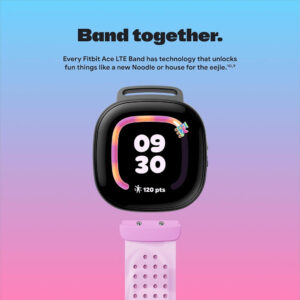
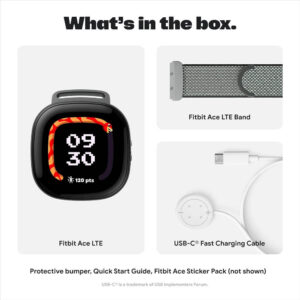
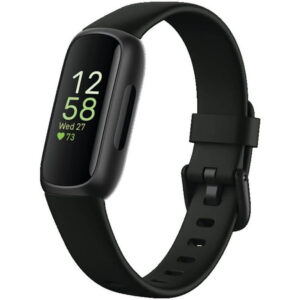
Fitbit Google Ace LTE
$123.00
- 4.7-star rating from 450+ Amazon customers confirms reliability and parent satisfaction
- GPS tracking provides ~95% accuracy for real-time location monitoring via LTE
- Activity-based games unlock only after kids meet step goals, dramatically increasing voluntary exercise
- 16+ hours battery life requires daily charging, but fast-charges to 11 hours in 30 minutes
- Secure calling and messaging through closed ecosystem (approved contacts only via Fitbit Ace app)
- School Mode blocks all notifications during set hours but also prevents emergency calls
- $229.95 device cost plus $9.99/month subscription (comparable to phone line costs)
- Best for: Ages 7-12 seeking smartphone alternative with fitness motivation and parental peace of mind
With over 16 hours of battery life and built-in LTE connectivity, the Fitbit Google Ace LTE delivers serious smartwatch functionality designed specifically for kids aged 7-12. According to Amazon customer reviews, this smartwatch maintains an impressive 4.7-star rating from hundreds of verified purchasers, reflecting its effectiveness as both a communication device and fitness motivator. The Fitbit Google Ace LTE represents a meaningful evolution in kids’ wearable technology, combining GPS tracking, calling capabilities, and activity-based games into a package that parents trust and children actually want to wear.
Design & Build Quality: Durability Meets Kid-Friendly Aesthetics
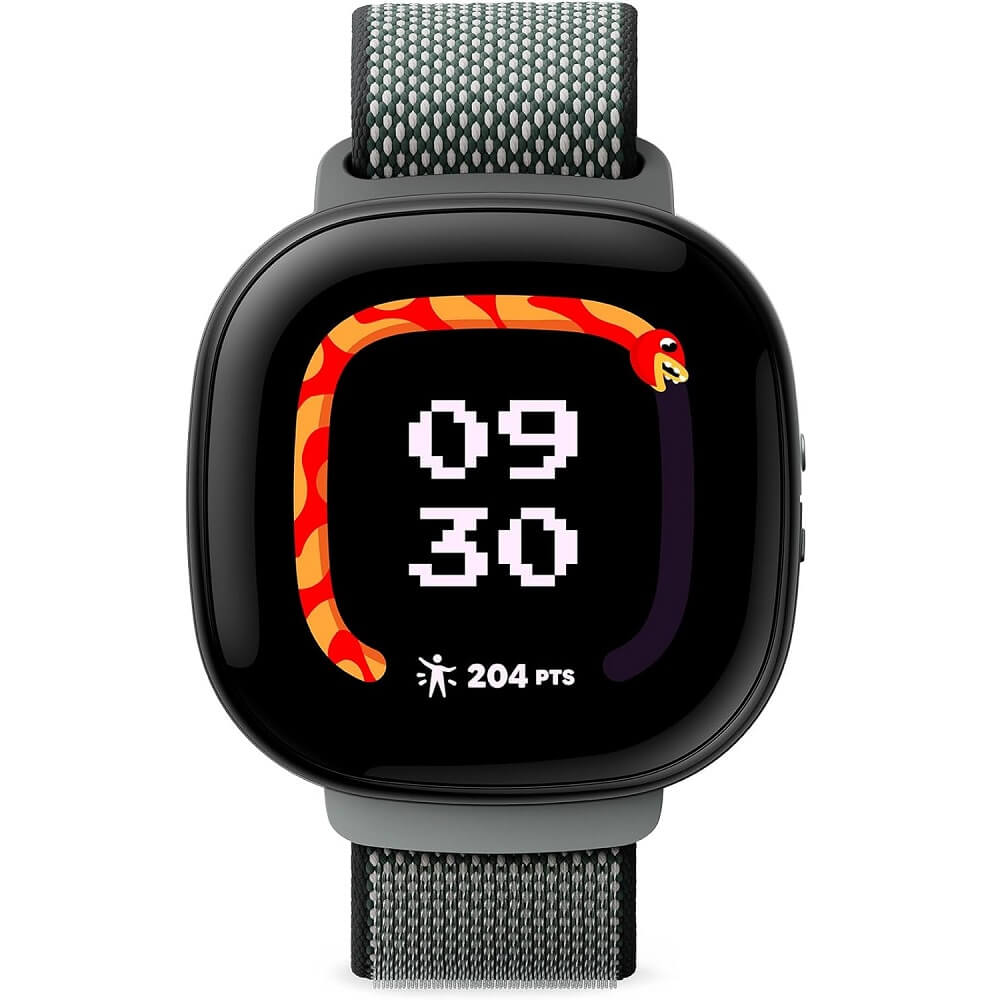
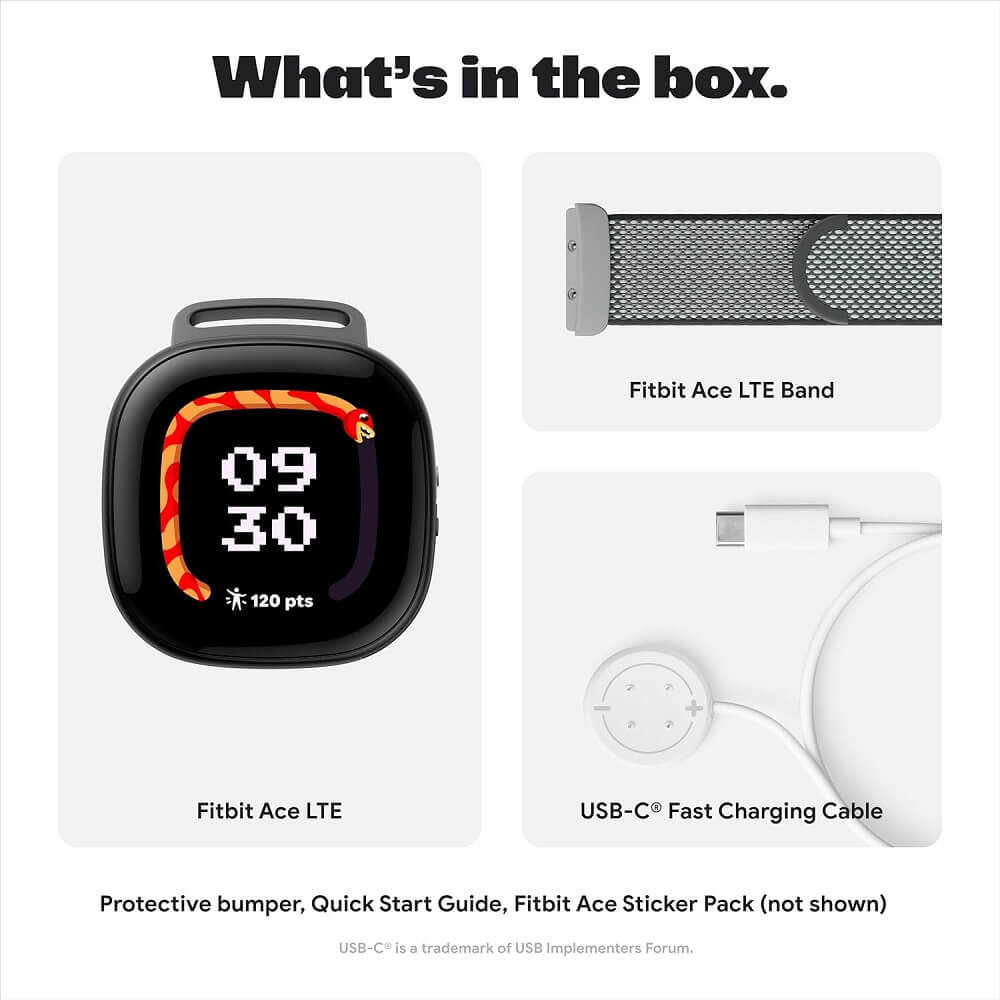
The Fitbit Google Ace LTE features Corning Gorilla Glass 3 protection and comes with a protective bumper case, making it resistant to the inevitable bumps and drops that come with active kids. Multiple Amazon reviewers specifically praised the watch’s durability, with one parent noting their child “managed to chip the glass on the bottom edge” only after nearly a year of daily wear—a testament to the robust construction. The watch face measures appropriately for smaller wrists without feeling bulky, addressing a common concern parents had with competing kids’ smartwatches.
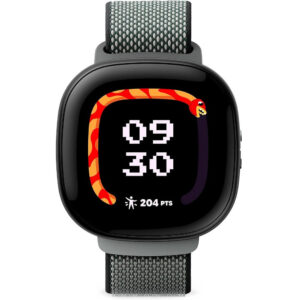
The device comes in two colorway options: “Spicy – Moovin” and “Mild – Strange Arcade,” each featuring vibrant designs that appeal to the target demographic. The touchscreen is notably responsive according to user feedback, with one reviewer specifically mentioning “the touchscreen is responsive and simple to use.” The watch bands deserve special attention—they’re available in both fabric and silicone materials, with the Velcro-style fabric bands earning particular praise for ease of use. As one 8-year-old reviewer stated, “I like the Velcro strap because it’s easy to get on and off.”
Water resistance is rated at 50 meters, which covers everyday exposure and pool use. One Amazon reviewer confirmed this capability when their “kid forgot it was on and wore it in the bath and it survived.” However, as noted in the official Fitbit documentation, the device is water-resistant rather than waterproof—a distinction parents should understand for proper care.
GPS Tracking & Location Accuracy: Peace of Mind for Parents
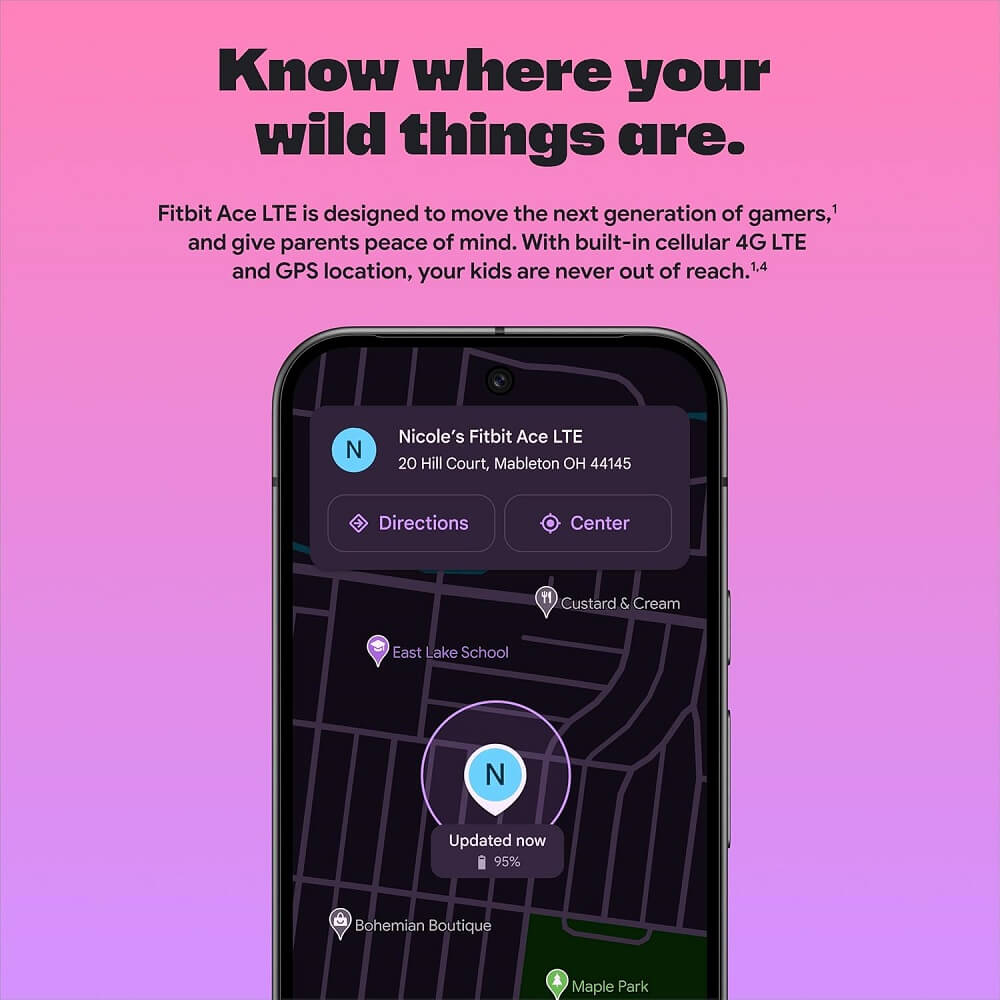
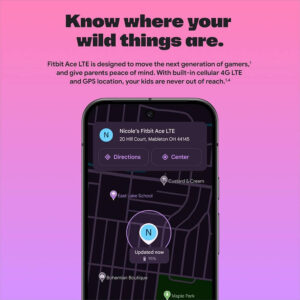
GPS tracking functionality stands out as one of the Fitbit Google Ace LTE’s most valued features among parents. The location tracking works independently via LTE connectivity, meaning kids don’t need to carry a smartphone for parents to monitor their whereabouts. According to Amazon customer feedback, the GPS accuracy is impressive—one parent noted, “we could determine it was at a friend’s house rather than at the house diagonal across the street…it’s that exact!”
The tracking feature provides real-time location updates through the Fitbit Ace app, which parents install on their smartphones. Multiple reviewers confirmed the system works reliably both on and off WiFi, with one stating the watch “had service in an area where we usually do not have any.” The app displays the approximate address and allows parents to check their child’s location at any time without actively calling or messaging them—preserving kids’ independence while maintaining parental oversight.
However, a few users noted occasional GPS precision limitations. One young reviewer mentioned, “I was at my house and checked the location, and it says that i was on the highway ten minutes away from my house.” These instances appear to be outliers, as the majority of reviews describe 95% accuracy or better for location tracking. The system also includes an on-wrist detection feature, alerting parents when the watch has been removed—useful for determining why a child might not be responding to messages.
Calling & Messaging Features: Safe, Parent-Controlled Communication
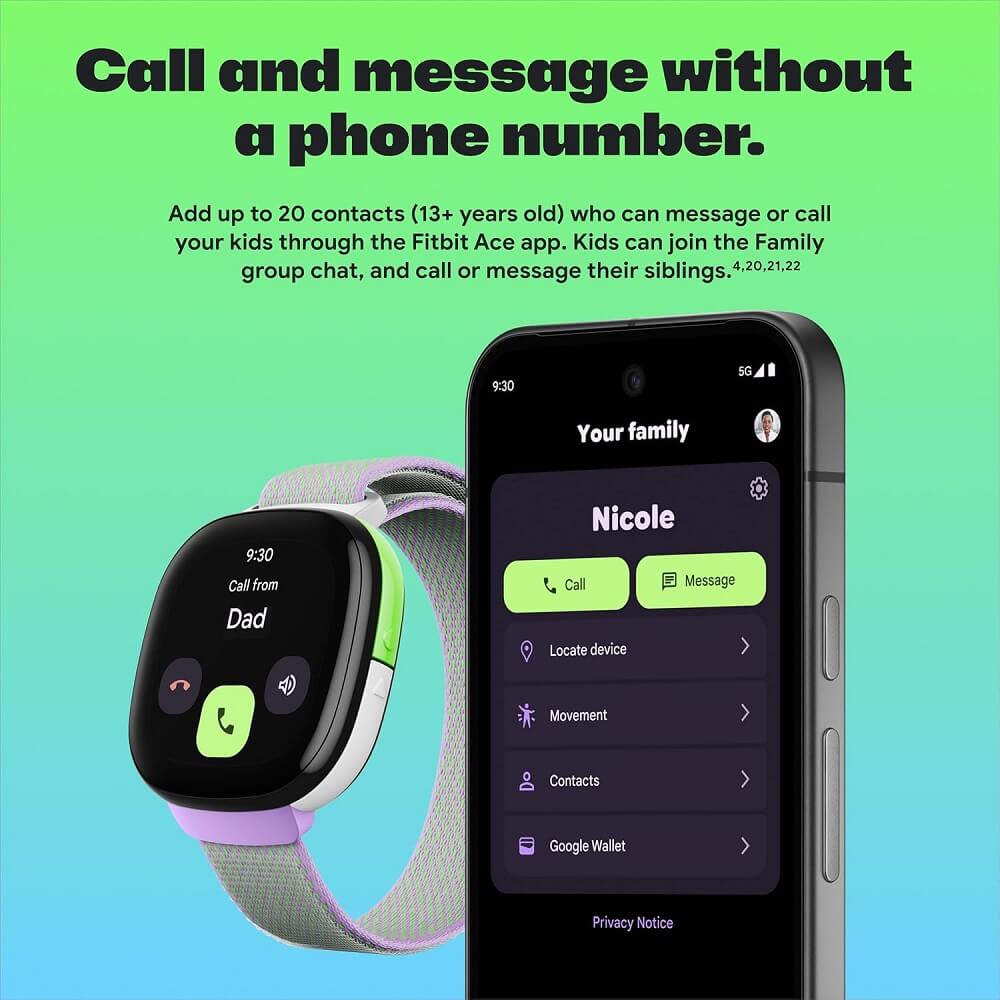
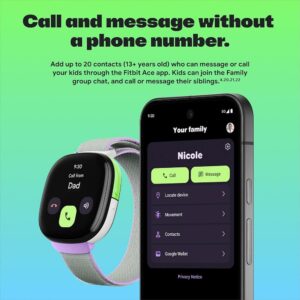
The Fitbit Google Ace LTE operates through a closed ecosystem where children can only communicate with pre-approved contacts added by parents through the Fitbit Ace app. This security-focused design addresses parents’ concerns about unrestricted smartphone access while still enabling essential communication. Call quality receives generally positive feedback, with one detailed Amazon review noting, “The sound quality is more than adequate on the other callers end. It’s not perfect on the Fitbit end but it’s very close when it comes to clarity.”
Messaging capabilities include text input via an on-screen keyboard, quick response buttons, talk-to-text functionality, and voice memo recording. The keyboard, while small, proves functional for short messages. As one parent observed, “My kid enjoys it because its like a little spy watch, but mainly uses quick responses or just chooses to call if he needs something more elaborate.” Kids particularly enjoy the ability to send emojis and voice recordings, with parents reporting frequent (and sometimes silly) messages throughout the day.
An important limitation to understand: all communication happens through the Fitbit Ace app rather than traditional phone numbers. This means approved contacts must have a Google account and download the app to communicate with the watch. Some parents found this requirement “awkward to ask people for” their Gmail and request they download another app. However, this approach also ensures communication remains controlled and monitored within the family ecosystem.
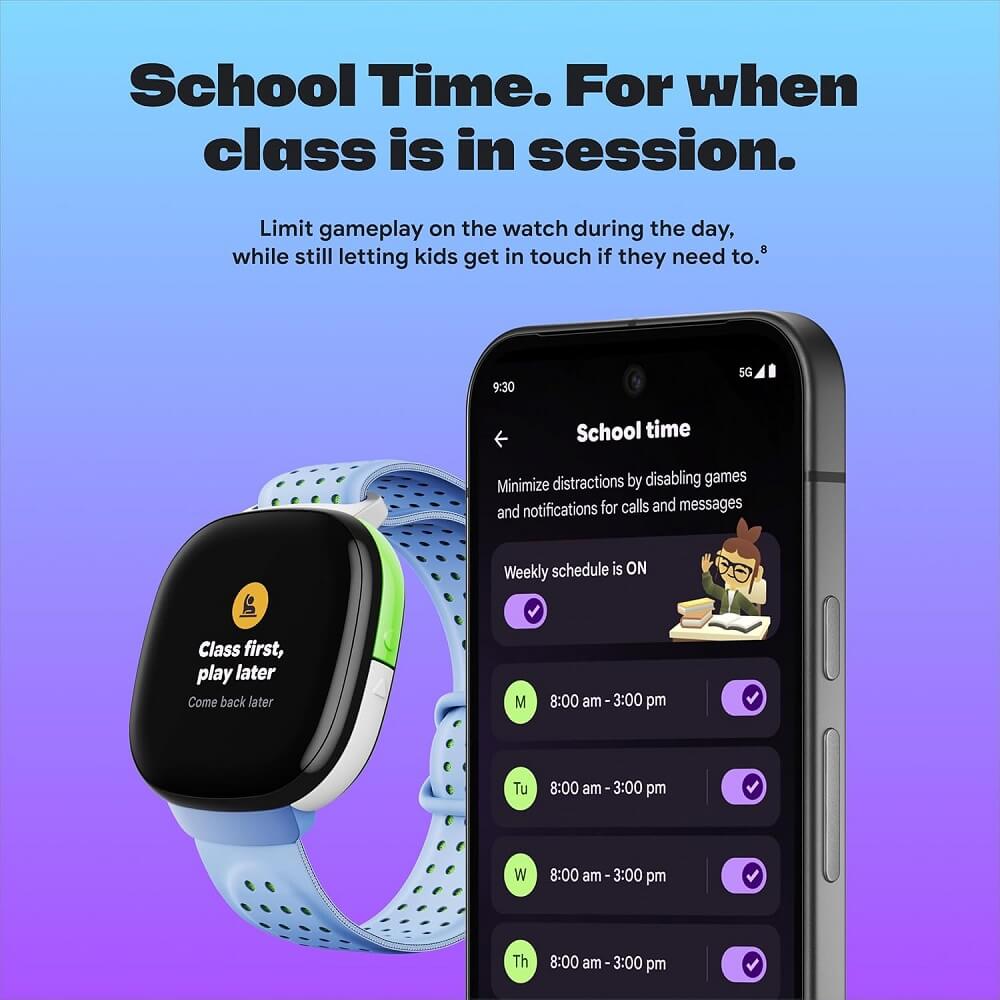
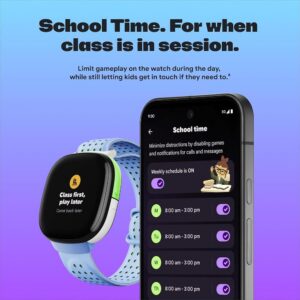
The School Mode feature allows parents to schedule Do Not Disturb periods during school hours, preventing distractions while still allowing the watch to accumulate fitness data. One significant limitation noted by multiple reviewers: School Mode blocks ALL calls and messages, including from parents. As one parent recounted, their daughter was unable to call for help when unexpectedly left alone at a friend’s house because School Mode was still active on what had become a snow day. Parents should carefully consider scheduling settings and have a backup plan for emergencies.
Activity Tracking & Games: The Motivation That Actually Works
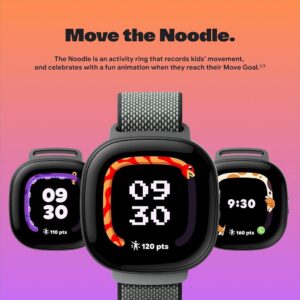
The Fitbit Google Ace LTE’s most distinctive feature is its gamification approach to physical activity—and according to customer reviews, it works remarkably well. The watch tracks steps, active minutes (called “heart points”), and other movement metrics, but rather than simply displaying statistics, it requires kids to meet activity goals to unlock game time and features. One parent enthusiastically reported, “my daughter has to meet certain fitness goals (steps) in order to unlock any game features is such a great idea. She will go out of her way to meet the step goal every day and every month.”
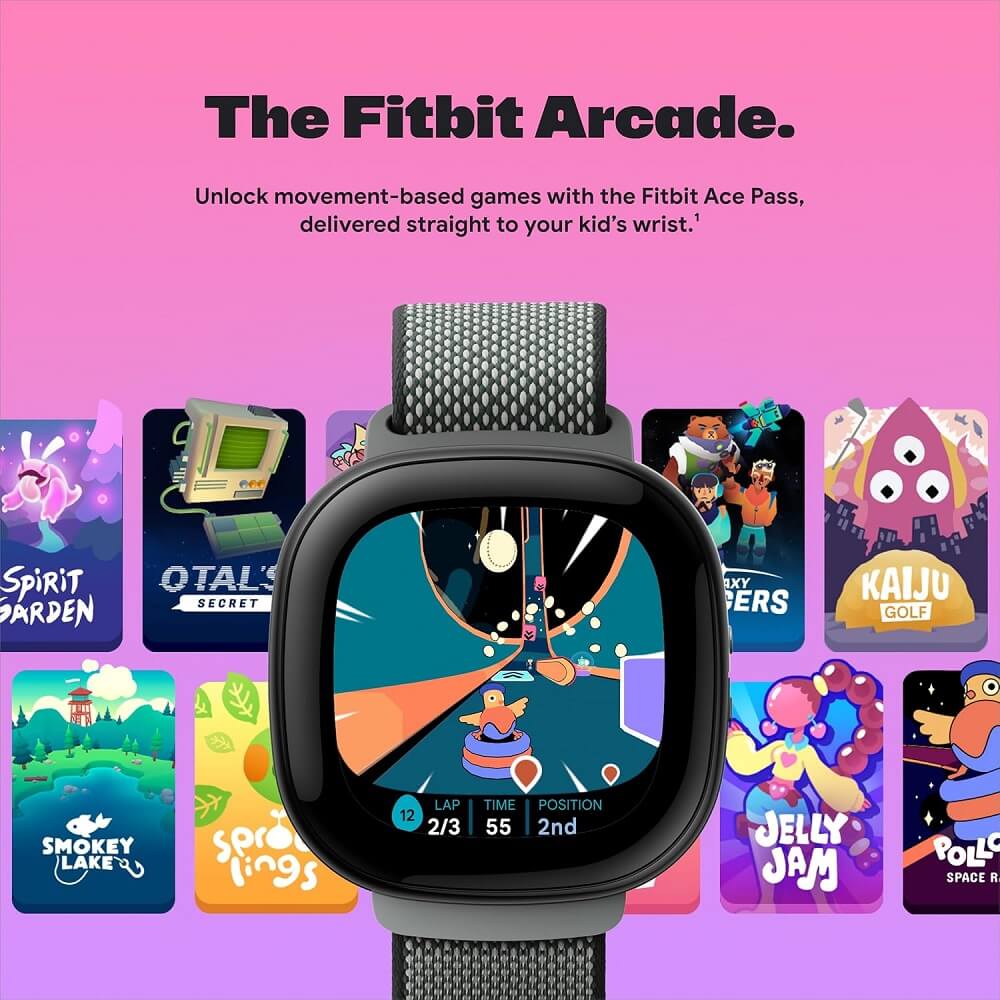
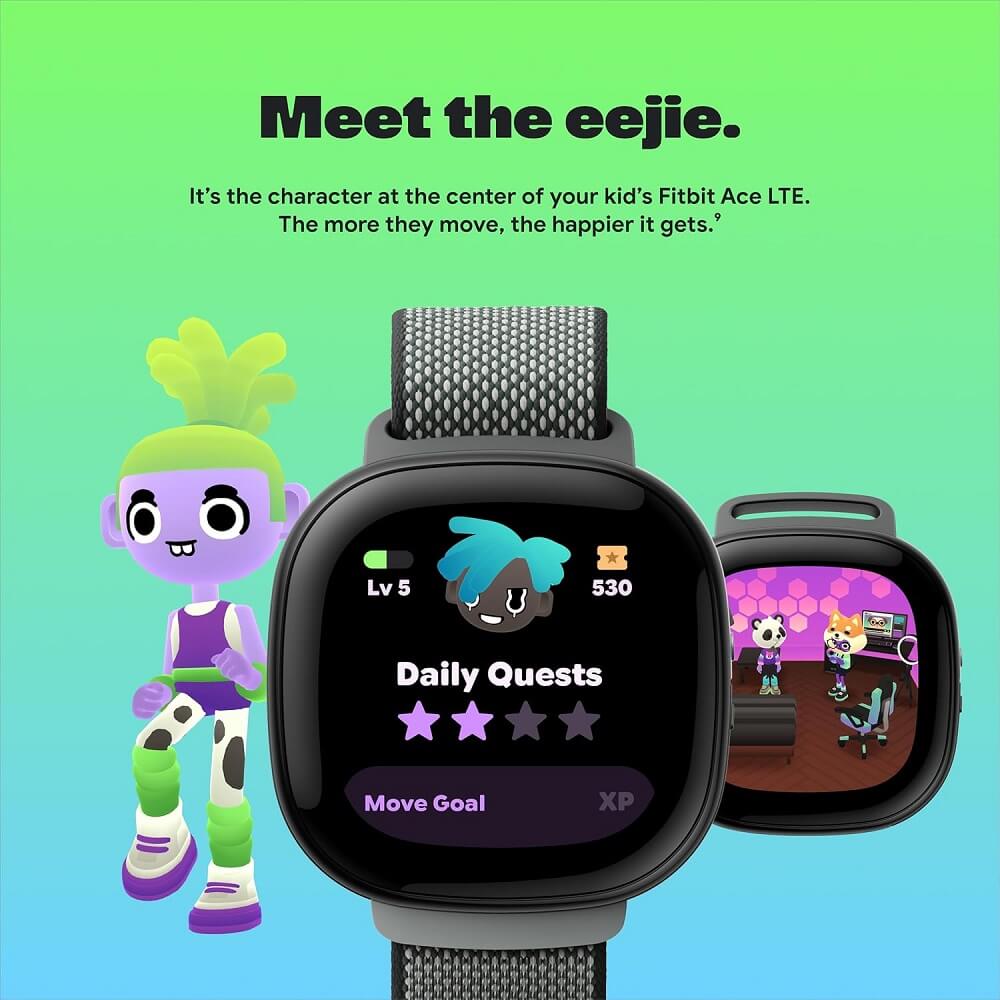
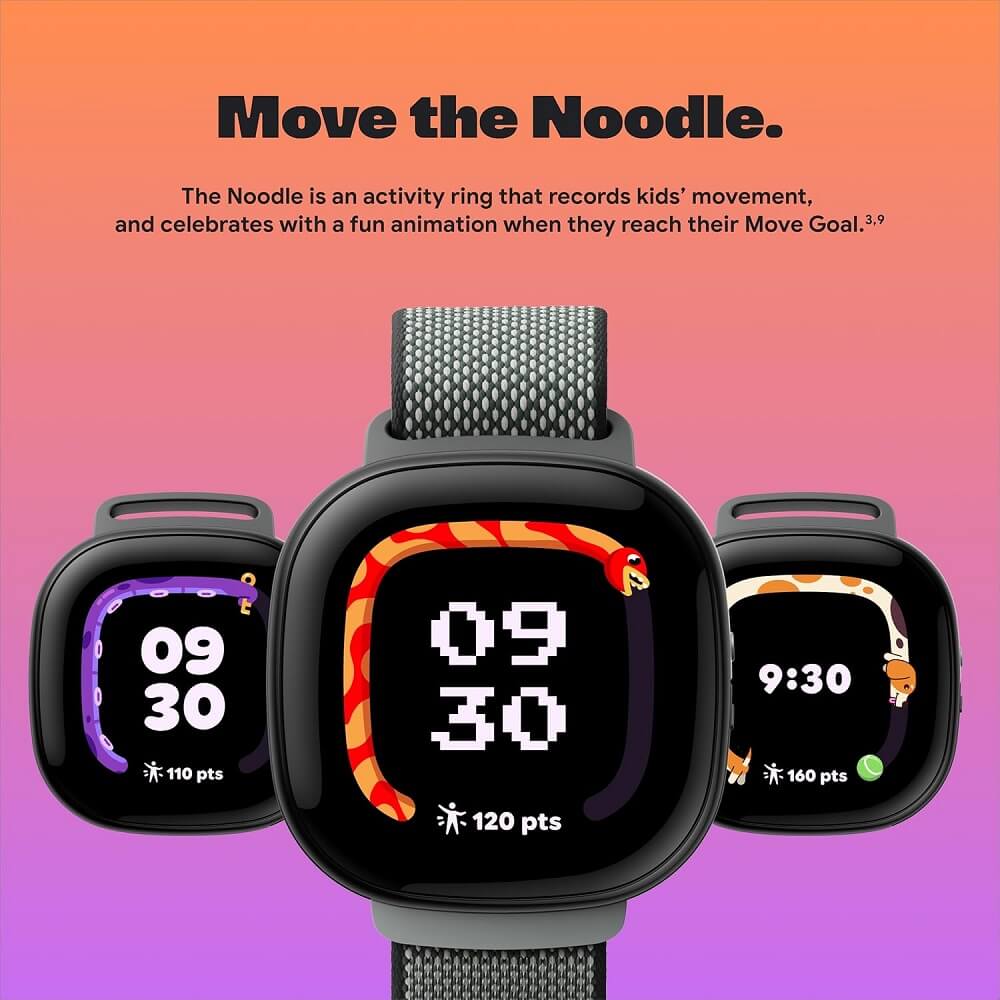
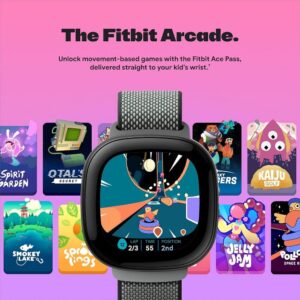
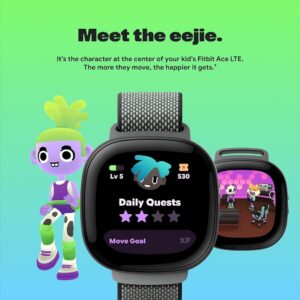
The activity tracker features a character called “Noodle” that visualizes daily movement progress, while kids can also interact with a virtual pet called an “Eejie” in the Bit Valley ecosystem. Games available through the Fitbit Arcade include titles like Kaiju Golf, Jelly Jam, Pollo 13, and Smokey Lake, all designed to encourage physical movement. An 8-year-old reviewer detailed their favorites: “In Kaiju golf, I like how it can bounce on cars and the swing noise to tell that I hit it…I like playing Smokey Lake but it makes me take 2,000 steps to get more bait.”
Parents consistently reported dramatic increases in their children’s voluntary physical activity. One reviewer noted, “He has become way more active trying to meet the daily goals! It definitely gets him wanting to move more.” Another parent observed their kids “actively ask me to walk instead of drive to the local shops, and the look of joy when they get something cool for their eejie character makes me so happy!” The gamification proves effective even with typically sedentary children, with kids performing activities like jogging in place, dancing, or walking laps specifically to earn game time.
The games themselves receive mixed but generally positive feedback. Some parents appreciate that they’re “just enough to get her excited about wearing it and completing her activity goals every day,” while others find them slightly simplistic. The interval-based design means kids play for short bursts before needing to complete more physical activity to continue—a deliberate choice that balances screen time concerns with engagement.
Battery Life & Charging: The Daily Routine
Battery performance on the Fitbit Google Ace LTE is the most commonly cited limitation among otherwise satisfied customers. The watch typically lasts approximately 16-24 hours depending on usage intensity, meaning daily charging is effectively required. As one reviewer summarized, “The battery drains pretty quickly. It is of course, affected by how much she uses it, but on average it only lasts around 24 hours.”
This battery life is notably shorter than some competing kids’ smartwatches, particularly those without LTE connectivity. The constant cellular connection, bright OLED display, GPS tracking, and gaming features all contribute to power consumption. Several parents noted they could achieve 1.5 days of battery life if their child used the watch moderately, but active use with frequent location checks, calls, and gaming typically exhausts the battery within a day.
The positive side: charging is fast and easy. The watch uses a magnetic charging connection that kids can manage independently, and many parents reported establishing a simple nighttime charging routine. As one parent explained, “we bought a charger stand made specially for the device and she easily charges it while she sleeps.” Another noted, “It charges up pretty quick so it isn’t too much of an issue.” Fast charging capability provides 11 hours of battery life in just 30 minutes according to official specifications.
Parents should note that the Fitbit Google Ace LTE does not track sleep, which aligns with the expectation that kids will remove the watch for overnight charging. This represents a trade-off compared to fitness trackers that monitor sleep patterns but require less frequent charging.
App Experience & Parental Controls: Comprehensive But Invite-Only
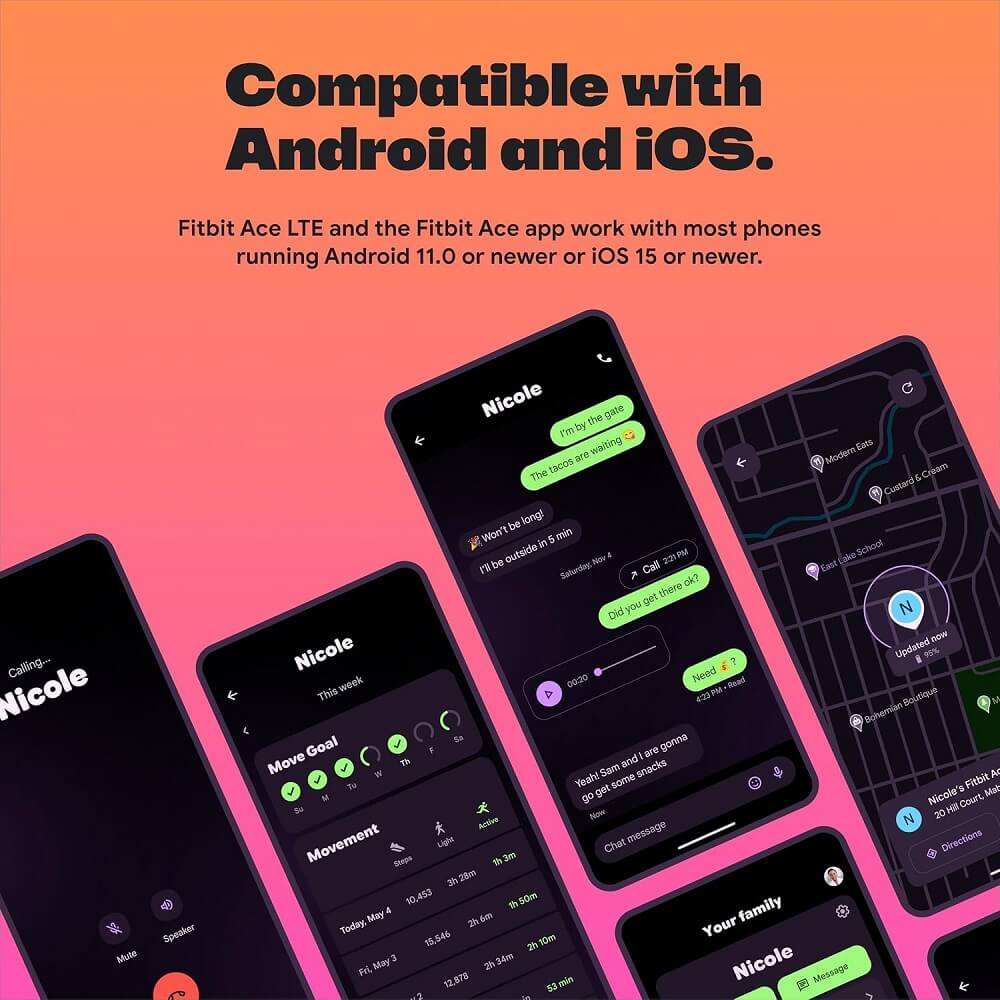
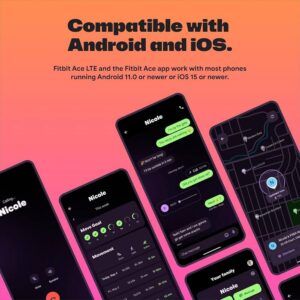
The Fitbit Ace app serves as the control center for parents, offering comprehensive features for monitoring, communication, and device management. Setup receives consistently positive feedback, with multiple reviewers describing it as “very easy” or completing it in “less than 5 minutes.” The app works on both iOS and Android devices, and multiple family members can install it to communicate with the child’s watch.
Through the app, parents can view their child’s real-time location, send and receive messages and calls, monitor activity statistics, set School Mode schedules, manage approved contacts, and participate in family fitness challenges. The interface is described as “simple and easy to navigate” with the ability to see multiple children’s profiles on one screen. Parents particularly appreciate the granular controls, including the ability to block specific games while allowing others.
The contact approval system requires inviting individuals through their Google accounts. Once invited, contacts must download the Fitbit Ace app to communicate with the watch. While this creates a secure, closed communication environment, it also means kids cannot directly call emergency services or communicate with anyone not pre-approved and app-equipped. Parents planning to list grandparents or other relatives should ensure those contacts are comfortable downloading and using smartphone apps.
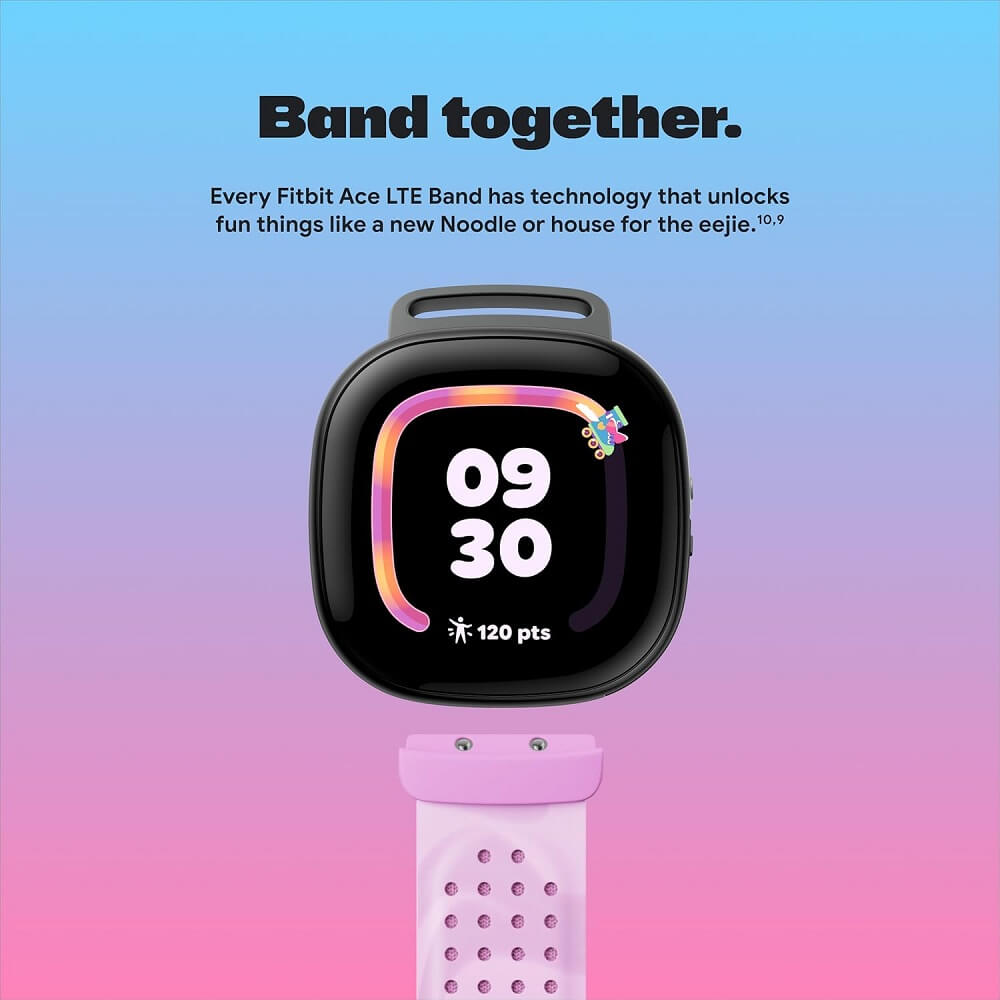
Family challenges represent a popular feature, allowing parents and siblings to contribute steps toward shared goals. As one reviewer noted, “There’s family challenges too…so we all pitch in steps towards a goal.” The app also enables parents to customize watch faces, manage band unlocks (certain bands unlock additional in-watch features), and adjust notification settings.
Value Proposition & Subscription Costs: Is It Worth The Investment?
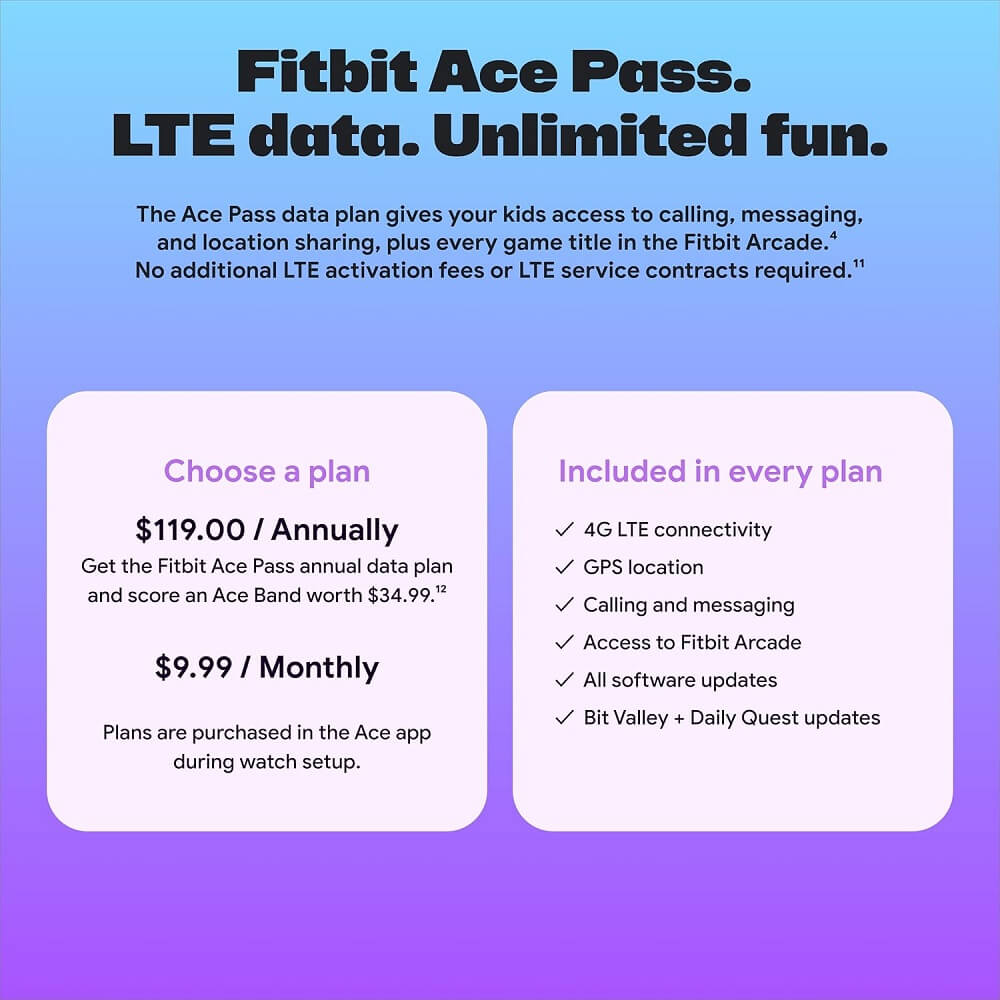
The Fitbit Google Ace LTE is currently available on Amazon for $229.95 (as of February 2026), positioning it at the premium end of the kids’ smartwatch market. However, the device also requires a mandatory subscription to the Fitbit Ace Pass for LTE functionality, priced at $9.99 per month or $119.99 annually. Parents purchasing the annual subscription receive a free watch band, which partially offsets the upfront cost.
When evaluating value, parents consistently compare the total cost against giving their child a smartphone with a cellular plan. As one reviewer calculated, “The data plans all run about the same price. The watches vary, and this one is on the high end, but seems to go on sale fairly often.” The $9.99 monthly subscription is comparable to or less expensive than adding a line to most family cellular plans, with the significant advantage that kids cannot access social media, web browsing, or unrestricted apps.
Customer satisfaction with value appears high among those who purchased the device, with many stating they would buy it again. One detailed review concluded: “This is well worth the cost!” Another parent specifically noted, “The monthly service payment $9.99/month is super cheap and WAY less than a cellphone payment. So this is a win!” The consensus among reviewers is that the device delivers meaningful value for families seeking a middle ground between no connectivity and full smartphone access.
Several factors enhance the value proposition according to user feedback: the significant increase in children’s physical activity, the peace of mind from reliable location tracking, the ability to maintain communication during activities where a phone would be impractical or likely to get lost, and the reduction in screen time compared to smartphone alternatives. Parents of multiple children noted that after purchasing one watch, siblings quickly requested their own—a strong endorsement of the device’s appeal and utility.
Who Should Buy The Fitbit Google Ace LTE?
Based on hundreds of customer reviews and professional evaluations, the Fitbit Google Ace LTE is best suited for families with children aged 7-12 who are beginning to seek independence but aren’t ready for the full responsibility of a smartphone. The device particularly shines for kids who are starting to walk to school alone, visit friends’ houses independently, participate in activities where parent drop-off is required, or generally need a reliable way to stay in contact during unsupervised time.
The watch works exceptionally well for children who need motivation to be more active. Multiple parents of less-active children reported dramatic improvements, with one stating their autistic son “wasn’t all that active before, but since getting the watch he has become way more active trying to meet the daily goals!” Families already invested in the Fitbit ecosystem may find the integration particularly valuable, especially for family challenges and shared activity goals.
Parents should consider the Fitbit Google Ace LTE if they value a closed, secure communication environment over flexibility. The requirement that all contacts use the Fitbit Ace app means this isn’t ideal for families who need their child to contact a wide range of people or who have extended family uncomfortable with app-based technology. The School Mode limitation that blocks all communication—including emergency calls from parents—may also be a concern for families who need more nuanced scheduling options.
The device may not be the best choice for children under 7 (for whom the watch may be too large) or over 12 (who may find the games and aesthetic too juvenile). Additionally, families with very tight budgets might find the combined hardware and subscription costs prohibitive, though many reviewers felt the value justified the expense when compared to smartphone alternatives.
Alternatives To Consider
Parents evaluating the Fitbit Google Ace LTE should also consider several competing kids’ smartwatches, each with distinct trade-offs. The Apple Watch SE (when paired with Family Setup) offers more comprehensive smartwatch features and cellular calling through a traditional phone number, but costs significantly more ($249+ for the watch plus carrier fees of $10-15/month) and works only within the Apple ecosystem. It’s better suited for older children (10+) who can responsibly manage more advanced functionality.
The Gabb Watch 3 ($149.99 with $9.99/month service) specifically targets parents seeking maximum simplicity and minimal screen engagement. It offers GPS tracking and calling but deliberately excludes games and internet access. Multiple Amazon reviewers mentioned trying Gabb watches before switching to the Fitbit Ace LTE, citing superior GPS accuracy and the motivational value of the Fitbit’s activity games as key differentiators.
The Garmin Bounce ($149.99 with similar subscription costs) provides comparable GPS tracking and communication features with Garmin’s established fitness tracking expertise. However, several reviewers who switched from the Garmin Bounce to the Fitbit Ace LTE cited issues with location accuracy and message delivery reliability, stating the Ace LTE “got our address numbers (where she currently was) perfectly” compared to the Bounce showing incorrect locations.
For families prioritizing the lowest cost, the Xplora X6Play ($199 with varying carrier plans) offers similar core features at a slightly lower price point. However, it lacks the sophisticated gamification and fitness motivation that make the Fitbit Ace LTE particularly effective at increasing children’s activity levels.
Final Verdict: A Smartwatch That Delivers On Its Core Promise
The Fitbit Google Ace LTE succeeds in its primary mission: creating a kids’ smartwatch that parents trust and children enthusiastically wear. With a 4.7-star rating from hundreds of Amazon customers and overwhelmingly positive feedback regarding its impact on children’s activity levels, the device stands out in a crowded market of kids’ wearables. As professional reviewers at Good Housekeeping noted after testing with kid testers, the combination of entertainment value, fitness motivation, and parental controls creates a compelling package.
The watch’s greatest strengths lie in its ability to dramatically increase children’s voluntary physical activity through clever gamification, provide reliable GPS tracking for parental peace of mind, and offer secure communication in a closed ecosystem. Parents consistently report that their children show genuine excitement about meeting daily activity goals, stay in better contact during independent activities, and demonstrate increased responsibility for managing their own schedules and fitness.
The primary limitations—daily charging requirements, the closed app-only communication system, inflexible School Mode, and the premium price point with ongoing subscription costs—are meaningful but don’t typically outweigh the benefits for the target audience. Battery life represents the most frequent complaint, though most families adapt to a nightly charging routine. The subscription cost, while adding to the total ownership expense, is comparable to cellular plans for other kids’ devices and significantly less than adding a smartphone line.
For families with children aged 7-12 who are beginning to navigate independence but aren’t ready for the distractions and risks of a smartphone, the Fitbit Google Ace LTE represents an excellent middle-ground solution. The device earns a strong recommendation particularly for parents prioritizing physical activity, those seeking reliable location tracking, and families comfortable with app-based communication management. As reviews from both parents and children demonstrate, the Fitbit Google Ace LTE successfully bridges the gap between basic fitness trackers and full-featured smartphones, creating a category-defining product that justifies its premium positioning.
| Brand | Fitbit (Google) |
| Model | Ace LTE |
| Display | OLED touchscreen with Corning Gorilla Glass 3 |
| Connectivity | 4G LTE, WiFi, Bluetooth |
| GPS | Yes, with real-time location tracking |
| Water Resistance | 50 meters (5 ATM) |
| Battery Life | 16+ hours (typically 1 day with moderate use) |
| Charging Time | 30 minutes for 11 hours of battery (fast charging) |
| Age Range | 7-12 years old |
| Subscription Required | Yes – Fitbit Ace Pass ($9.99/month or $119.99/year) |
| Amazon Price (Feb 2026) | $229.95 |
| Amazon Rating | 4.7/5 stars (hundreds of reviews) |
| Available Colors | Spicy – Moovin, Mild – Strange Arcade |
Be the first to review “Fitbit Google Ace LTE”
Related products
Fitbit
Fitbit
Fitbit
Fitbit
Reviews
There are no reviews yet.