




Fitbit Ace 3
$77.00
- Exceptional 8-day battery life (real-world reports of 2-4 weeks between charges)
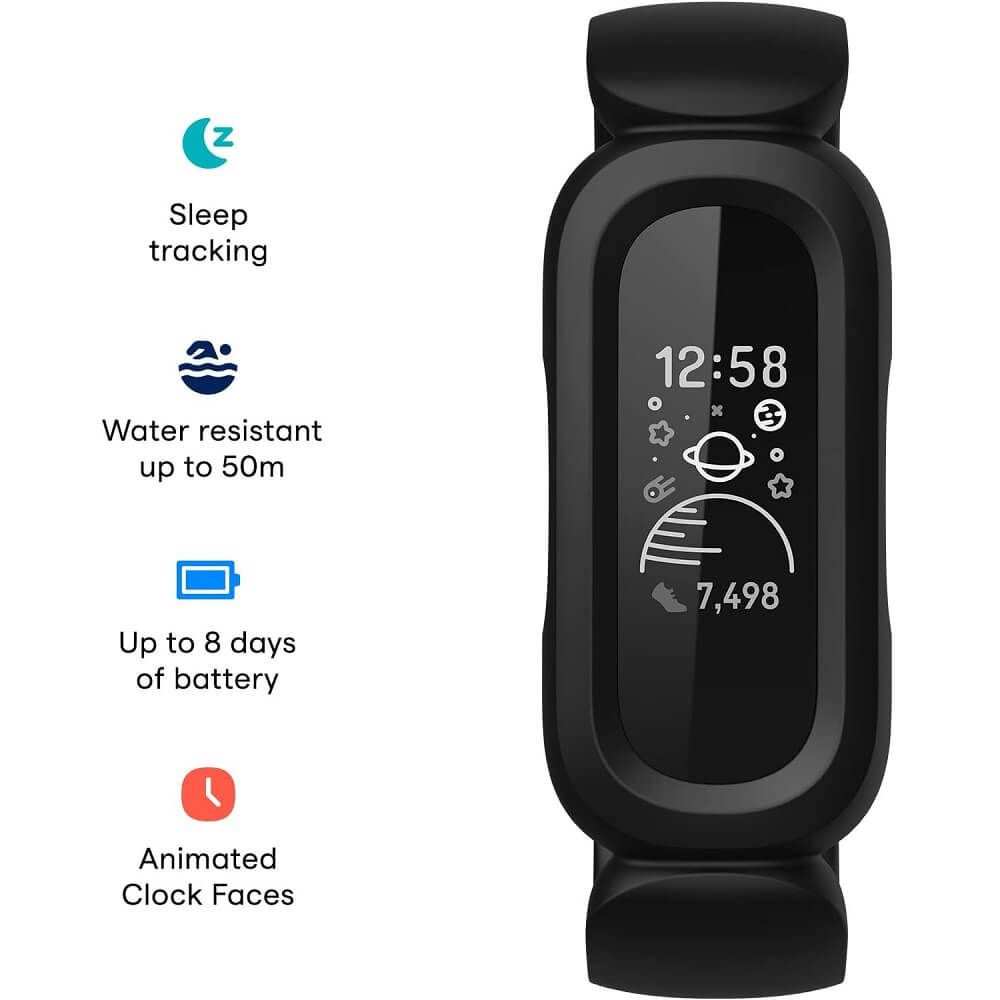
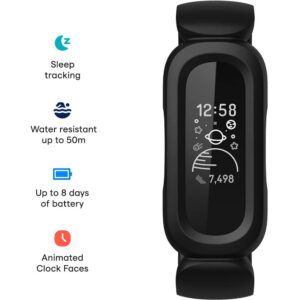
- Genuine 50m water resistance proven for swimming, showers, and ocean use
- 4.7-star rating from 3,500+ Amazon customers validates durability and kid appeal
- Animated clock faces including Minions motivate children through gamified challenges
- Family step competitions create healthy activity habits and parent-child engagement
- Durable bumper-style design withstands 3-4+ years of rough childhood use
- Basic sleep tracking and customizable alarms (up to 8 per day) add practical utility
- Best for: Active families with children ages 6-12 seeking long-term fitness motivation
When my daughter started asking why she couldn’t track her steps like Mom and Dad, one thing became very clear: she needed her own fitness tracker that could keep up with playground battles, pool time, and her boundless energy. After watching cheaper alternatives break within weeks, the Fitbit Ace 3 changed everything about how our family approaches daily activity together.
The Fitbit Ace 3 earns its reputation as the leading kids’ fitness tracker with an exceptional 8-day battery life, genuine 50-meter water resistance, and a kid-proof design that survives real-world abuse. With a 4.7-star rating from over 3,500 Amazon customers, this $79.95 tracker motivates children ages 6 and up to stay active through gamified challenges, animated clock faces featuring Minions, and family step competitions—all while giving parents valuable insights into their child’s sleep patterns and daily activity.
Design & Build Quality
The Fitbit Ace 3 features a dramatically improved design over its predecessor, with a more rounded, comfortable case and a brighter OLED display that’s easily readable in direct sunlight. According to Tech Advisor’s review, the larger display represents a significant upgrade for visibility and ease of use for younger children.
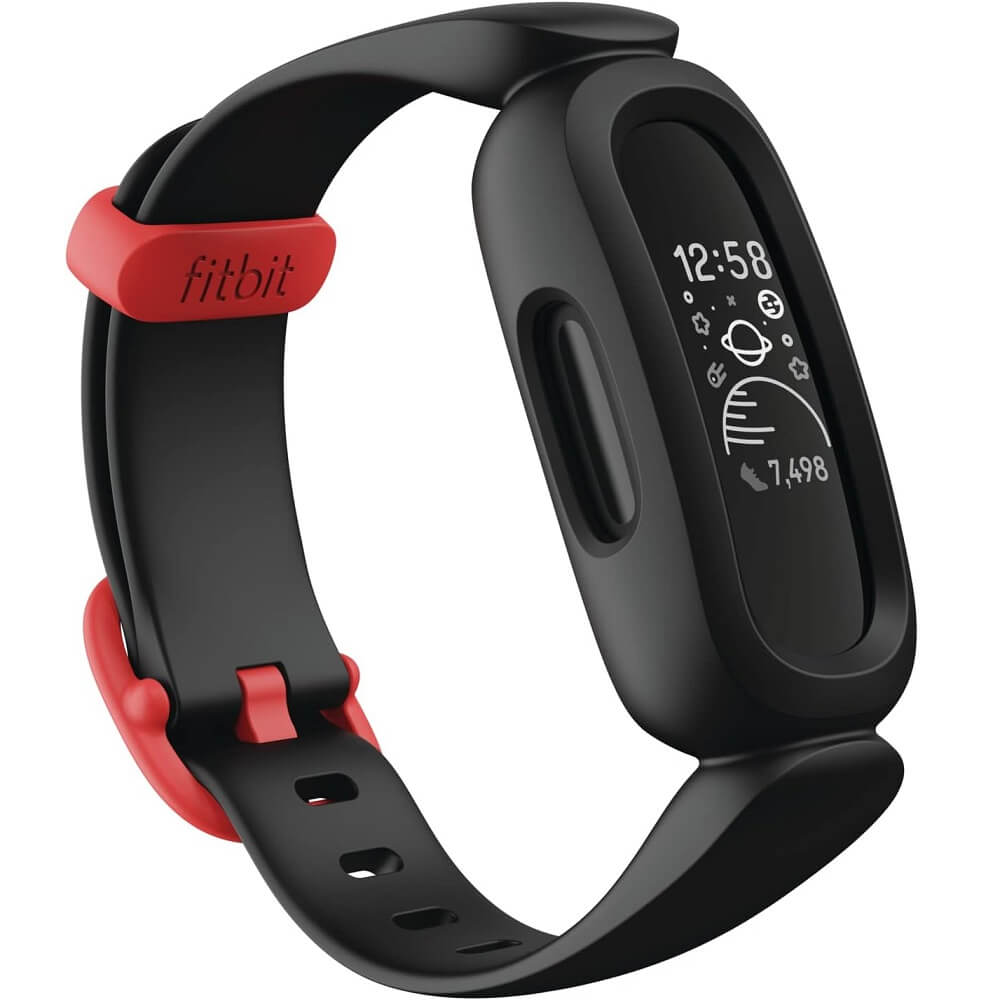
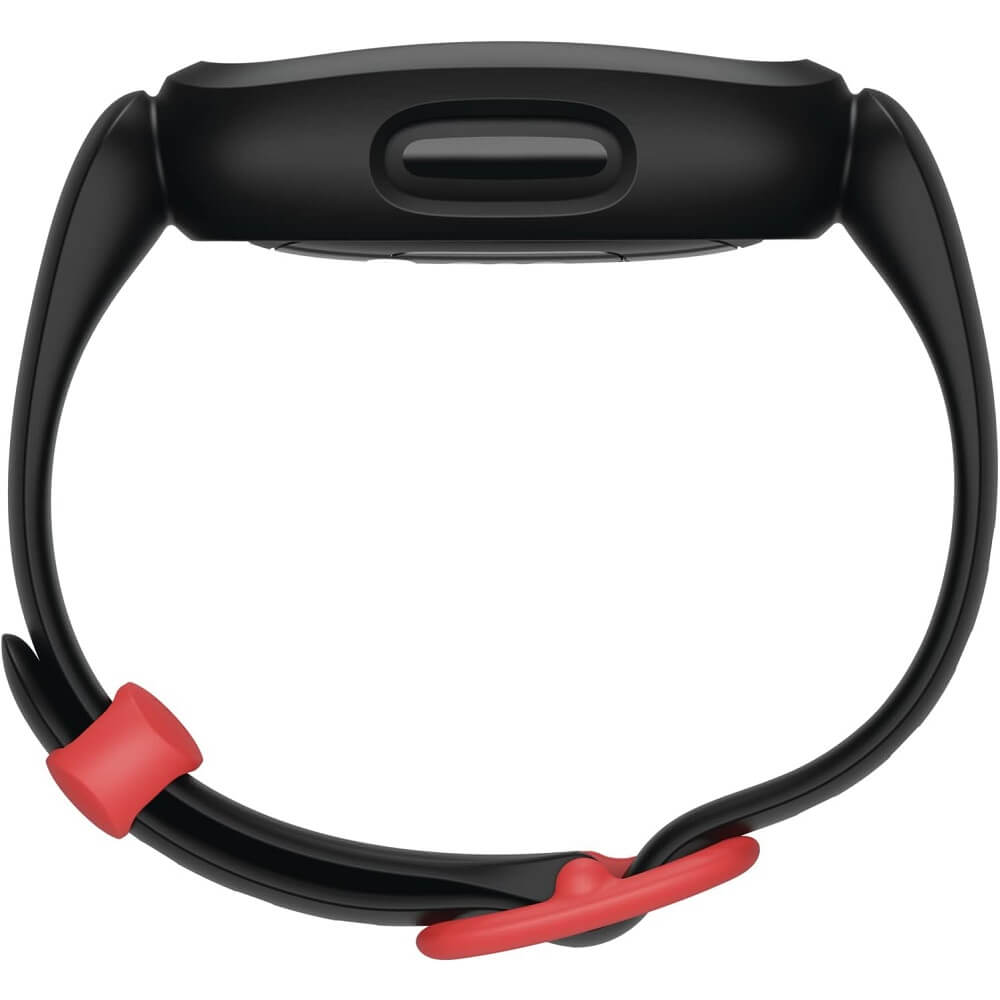
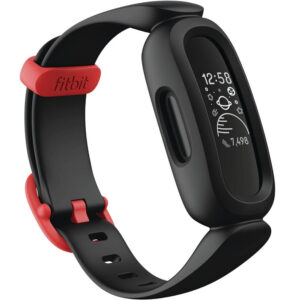
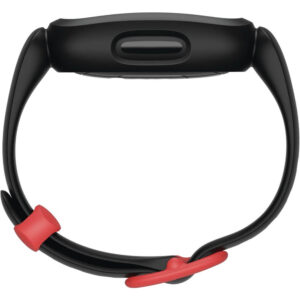
The tracker comes in three colorways: Black/Racer Red, Blue Astro Green (Cosmic Blue/Astro Green), and a special Minions Yellow edition. Each features a protective silicone band that wraps around the device, creating a bumper-style protection system that shields the screen from impacts during sports, playground activities, and the inevitable drops that come with active kids.
One Amazon reviewer whose 8-year-old has used the Ace 3 for four years notes: “It stays on the arm and goes into pools, oceans and showers all the time. The band can be changed out and that is the only thing we do with it.” This durability is backed by genuine 50-meter water resistance (5 ATM), making it suitable for swimming, showering, and water sports without needing removal.
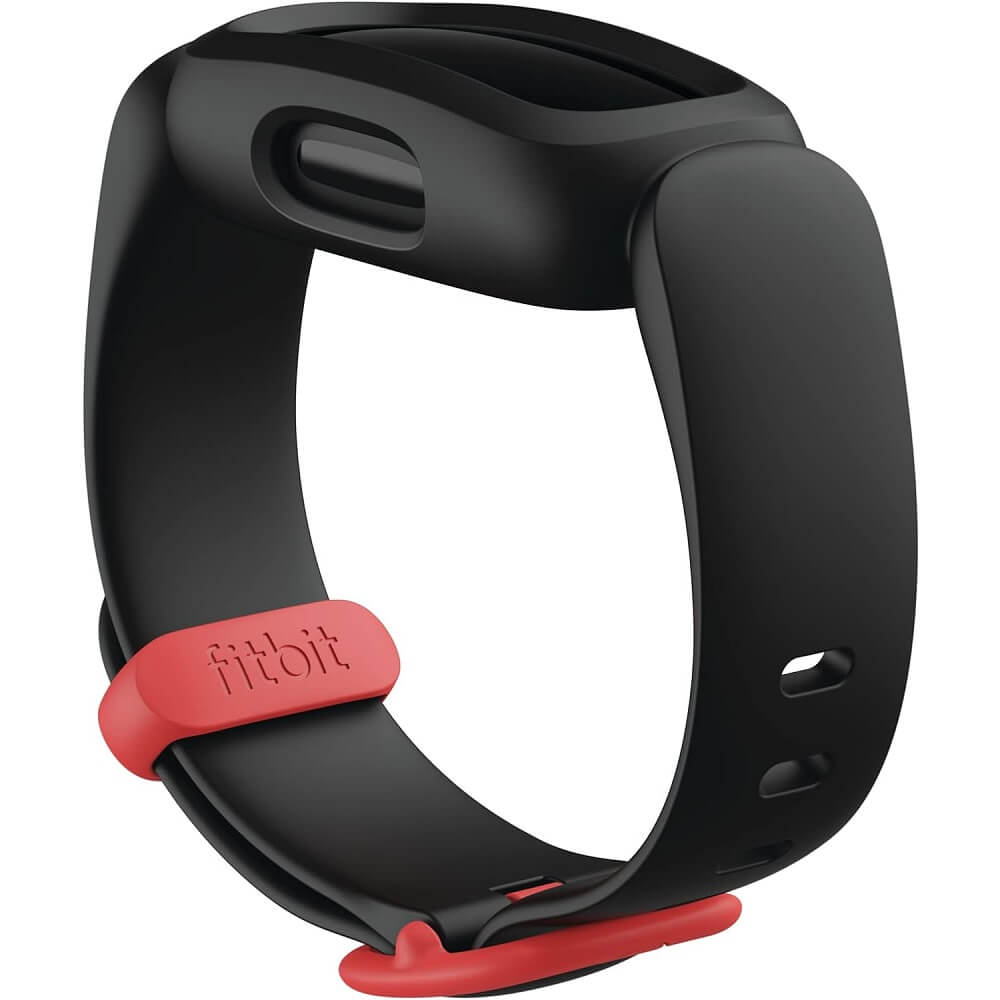
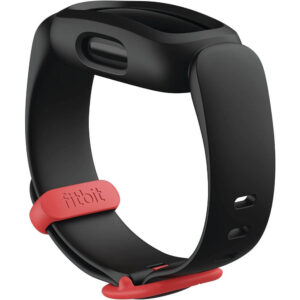
The adjustable silicone band fits small wrists comfortably, with multiple reviewers confirming it works well for children as young as 5-6 years old on the tightest setting, while still offering room to grow. The band features an improved retention system compared to the Ace 2, with a more secure tucking mechanism that prevents the strap from coming loose during vigorous activity.
Build quality improvements over the Ace 2 include touch-sensitive buttons on both sides of the case (replacing the single physical button), allowing for easier navigation and activating the water lock mode with a long press. The charging connector received a crucial upgrade: while still using Fitbit’s proprietary magnetic charger, the Ace 3 adds two clips that hold the charger firmly in place—addressing a major pain point from previous models where chargers would slip off overnight.
Battery Life & Charging
The Fitbit Ace 3’s battery life stands as its most impressive feature, with Fitbit officially rating it at 8 days—a substantial increase from the Ace 2’s 5-day battery life. Real-world performance exceeds even these generous expectations.
Multiple Amazon reviewers report extraordinary battery longevity. One verified purchaser states: “The battery life is just INCREDIBLE. This Ace 3 holds charge for 3-4 weeks easily. Easily. I’m curious to hear other peoples experience as we have a day one device, but I’m just blown away.” Another parent confirms: “After the first days it was still in the 90% range” and notes the battery “lasts a long time” with continuous 24/7 wear including sleep tracking.
A parent whose child wore the tracker to week-long summer camp reported: “It was at 47% when we dropped him off Sunday afternoon, and it was still running when I picked him up Saturday morning”—nearly 6 days of continuous use without charging, starting from less than half battery capacity.
This extended battery life offers practical advantages beyond convenience. Children can wear the tracker continuously for sleep tracking without frequent charging interruptions, and forgetful kids (or parents) won’t face daily dead-battery frustrations. The extended runtime also means less frequent charger connection, reducing wear on the charging contacts over the device’s lifespan.
The improved charging connector, while still proprietary, features two clips that secure the tracker in place—a significant upgrade that addresses the Ace 2’s frustrating tendency for chargers to disconnect overnight. One reviewer notes: “The Ace 2 and Inspire use magnetic chargers made of plastic but they don’t hold well. With the Ace 3, they’ve added two clips that hold the charger in place.”
However, charger durability remains a concern. Multiple reviewers report the original charger failing within months, requiring replacement purchases. This represents an ongoing weak point in Fitbit’s accessory ecosystem, though the improved retention mechanism suggests Fitbit is addressing charging-related complaints.
Activity Tracking & Motivation Features
The Fitbit Ace 3 tracks steps, active minutes, and distance with the accuracy expected from Fitbit’s proven sensor technology. Android Central’s review confirms it “tracks steps, distance, active minutes, and sleep with great precision,” using multiple sensors to capture various activities including jumping, trampolining, and organized sports—not just step counting.
The tracker’s true value lies not in raw data accuracy, but in how it motivates children to embrace physical activity. The gamification approach includes daily step goals, hourly movement reminders, and achievement badges that unlock as kids hit milestones. One parent observes: “My daughter is hyper focused on getting her steps in every day. That makes me smile.”
Animated clock faces provide constant visual feedback and encouragement. The display features characters that grow, dance, and celebrate as children reach their activity goals. The Minions special edition offers licensed characters that sleep when the child sleeps and dance when goals are achieved. One reviewer notes their child “loves the different characters you can put on the face and changes them frequently.”
Family competitions emerge as the Ace 3’s most powerful motivational tool. The Fitbit app allows parents and children to compete in step challenges, creating healthy competition that drives engagement. Multiple reviewers describe daily “step wars” with their children: “She loves to see how many steps she’s taken at the end of each day, and having an alarm feature is an added bonus.” Another parent shares: “My son is obsessed with getting more steps in than his dad or I.”
For children who need behavioral reminders, the Ace 3 supports up to 8 customizable alarms or timers throughout the day, with different schedules possible for different days of the week. These can be set to either audible alerts or silent vibrations. One creative parent uses this feature as a “potty watch” for bathroom reminders at school: “This fitbit – priced at $50 is a bit more expensive than other ‘potty watches’ but you can set up to 8 timers throughout the day… This thing worked OUTSTANDING.”
The tracker includes a stopwatch and timer function that children can operate independently, adding utility beyond fitness tracking. Kids use these features for timing reading sessions, managing screen time limits, and tracking homework intervals—functional tools that increase daily wear time.
Unlike adult Fitbit models, the Ace 3 intentionally omits calorie tracking and weight management features, keeping the focus on movement and healthy habits rather than diet culture or weight loss—a thoughtful design decision for child-appropriate fitness tracking.
Sleep Tracking
The Fitbit Ace 3 provides basic sleep tracking that monitors when children fall asleep, when they wake up, and total sleep duration. Parents can view this data through the Fitbit app, offering insights into whether their child is getting adequate rest.
However, the kids’ version offers simplified sleep data compared to adult Fitbit trackers. As one reviewer notes: “It does not break up the sleep tracking like their other Fitbits. It will only tell you how many hours he or she slept but it will not tell you how much of that was deep sleep, REM sleep or light sleep.” This represents an intentional limitation, as the Ace 3 lacks heart rate monitoring—the sensor required for detailed sleep stage analysis.
Despite this limitation, parents find value in the basic sleep insights. One reviewer shares: “I love to see their sleep and how much they are getting. It shows you from when to when they sleep.” Another parent specifically purchased the tracker to monitor sleep: “The sleep tracking option is a nice bonus” and found it “pretty accurately” reflects actual sleep times.
The extended battery life proves crucial for consistent sleep tracking, as children can wear the device continuously for weeks without charging interruptions disrupting the data collection routine. Several reviewers note their children “never takes it off” and wears it “every day and night,” enabling uninterrupted sleep pattern monitoring.
For children with sleep schedule challenges, parents use the data to establish bedtime routines and demonstrate the impact of consistent sleep times. One reviewer mentions: “My kid had asked for a Fitbit to celebrate summer vacation from school” and appreciates tracking sleep patterns during less structured periods.
Setup & App Experience
Setting up the Fitbit Ace 3 requires creating a family account through the Fitbit app, where parents manage their child’s profile and view activity data. This parental control approach ensures privacy and age-appropriate features for children under 13, in compliance with children’s online privacy regulations.
However, the family account setup process presents frustrations for many users. Multiple reviewers report difficulties, particularly when parents already have existing Fitbit accounts. One detailed reviewer explains: “I had to lie about his age (I had to put it in he was 12 instead of 13 on the app) because the app and watch are set up to only work on a parents account and once the child turns thirteen the app tries to force him to have his own account. The watch will not let it be set up on a private account for a thirteen year old.”
Another parent warns: “If parents already moved their Fitbit account to their Google account, you may not be able to activate this product. Google is apparently ‘working on it.’ I can’t move my Fitbit account to Google because of this.”
Despite these setup challenges, parents who successfully navigate the initial configuration report smooth ongoing operation. One reviewer counters the setup complaints: “I was a little nervous about the purchase after reading reviews about the setup, but I had no issues. I’m also not a fitbit user trying to add my daughter to an existing account, so perhaps that explains it?”
For straightforward new-account setups, the process involves downloading the Fitbit app to a parent’s phone or the child’s tablet, creating a family account, adding the child’s profile with age and basic information, and pairing the Ace 3 via Bluetooth. The tracker syncs automatically when in Bluetooth range, updating step counts, sleep data, and achievement progress.
The parent view in the Fitbit app provides clean data visualization showing daily steps, active minutes, sleep duration, and weekly trends. Parents can set step goals, customize clock faces remotely, manage alarms, and approve friend connections for step challenges with other children.
The tracker requires regular Bluetooth syncing to maintain accurate time, as noted by one reviewer: “The watch only syncs the correct time when it’s regularly connected to Bluetooth.” This means children need periodic proximity to the paired smartphone or tablet, which may be inconvenient for extended camp sessions or overnight stays.
According to Digital Trends, the Fitbit app interface is intuitive enough for children to understand, though parental oversight remains necessary for children under 13 due to account restrictions.
Value & Alternatives
The Fitbit Ace 3 carries a retail price of $79.95, though it frequently appears on sale. As of February 2026, the tracker is available on Amazon ranging from $69.89 to $84.99 depending on color choice and current promotions.
Several reviewers acknowledge the premium pricing compared to generic kids’ activity trackers but consider it worthwhile. One parent explains: “My mother then tried purchasing other step trackers for children. Unfortunately they were not as durable or size friendly. They broke easily or began to malfunction. Finally I bit the bullet and got the Fitbit for her… In hindsight the Fitbit should’ve been the first purchase. I would tell anyone, just spend the extra$ and go with Fitbit.”
Another reviewer who initially sought cheaper alternatives confirms: “I tried a few cheaper versions and they were all crap. I should have stopped being such miser and gotten this one to start.” The durability, battery life, and established Fitbit ecosystem justify the higher price point for families committed to long-term use.
One reviewer who also uses the tracker for a specialized purpose notes: “This fitbit – priced at $50 is a bit more expensive than other ‘potty watches’ but you can set up to 8 timers throughout the day… Every $20-$30 option we could find for a potty watch seemed to fall short in quality or functionality.”
However, age-related limitations present value concerns. One critical reviewer states: “I think it is a bit expensive for what it offers and the hoops you have to jump through if your child is 13 or almost 13 are no fun. I would only recommend if you can find it for sale like 50% off.” This reflects frustration with the forced transition to adult accounts at age 13, despite the Ace 3’s appeal to younger teenagers.
Replacement bands offer customization options, with official Fitbit bands and third-party alternatives available. One reviewer notes: “The kiddo loves changing out the band to go with whatever outfit she wears.” This accessory ecosystem extends the tracker’s appeal and perceived value.
Primary Alternatives:
Garmin vívofit jr. 3 ($79.99): Offers a 1+ year battery life with a replaceable coin cell battery (no charging required), swim-safe design, and app-based chore management and reward systems. However, it features a smaller, lower-resolution display and less sophisticated activity tracking compared to the Ace 3. Best for parents who prioritize maintenance-free battery life over detailed tracking.
Fitbit Inspire 3 ($99.95): Fitbit’s adult entry-level tracker offers all Ace 3 features plus heart rate monitoring, detailed sleep stages, stress tracking, and a more mature design. For children approaching their teenage years who find the Ace 3 too juvenile, the Inspire 3 provides a growth path within the Fitbit ecosystem, though it costs $20 more and includes features not age-appropriate for younger children.
Xiaomi Mi Band 7 (~$50): Offers excellent value with a vibrant AMOLED display, heart rate tracking, and 14-day battery life at nearly half the Ace 3’s price. However, it lacks kid-specific features, parental controls, and the robust family account system that makes Fitbit ideal for younger children. Best for budget-conscious families with older, more responsible children.
Who Should Buy the Fitbit Ace 3
The Fitbit Ace 3 excels for active families who want to instill healthy movement habits in children ages 6-12. It’s particularly well-suited for children who express interest in fitness tracking after seeing parents use similar devices, as the family competition features create genuine engagement and daily interaction around health goals.
Parents who value durability should prioritize the Ace 3. The genuine waterproofing, reinforced band system, and bumper-style protection withstand the abuse that destroys cheaper alternatives within weeks. If your child participates in swimming, plays rough sports, or has a history of breaking electronics, the Ace 3’s proven durability (with many reviewers reporting 2-4 years of trouble-free use) justifies the investment.
The tracker works best for families already in the Fitbit ecosystem or willing to adopt it. If parents use Fitbit devices, adding children creates natural competition and shared health goals. However, families with Android devices and no existing Fitbit investment might find better value in alternatives, especially given the setup complications some users experience.
Children who need behavioral reminders benefit from the customizable alarm system. Parents successfully use the Ace 3 for bathroom reminders, reading time timers, bedtime notifications, and medication schedules—versatility beyond pure fitness tracking.
Consider alternatives if: Your child is 13 or older (forced account migration causes frustration), you want heart rate monitoring or detailed sleep stages (requires adult Fitbit models), you need multi-day GPS tracking for hiking or camping (the Ace 3 lacks GPS), or you’re unwilling to invest in Fitbit’s ecosystem and prefer open-platform alternatives.
Final Verdict
The Fitbit Ace 3 stands as the best kids’ fitness tracker for most families, combining exceptional battery life, genuine waterproofing, and proven durability with motivation features that actually engage children in daily activity. The 8-day official battery life (with many users reporting 2-4 weeks real-world) eliminates charging frustration, while the 50-meter water resistance and protective bumper design survive the rigors of childhood.
The tracker’s greatest strength lies in its motivation ecosystem. Animated clock faces, achievement badges, and family step competitions transform abstract fitness into tangible, fun goals that children understand and pursue independently. Hundreds of reviewers report their children wearing the tracker continuously, checking their steps multiple times daily, and asking to “go on walks to get more steps”—behavioral changes that justify the $79.95 investment.
Setup challenges and age-13 account restrictions represent the Ace 3’s primary weaknesses. Parents migrating from existing Fitbit accounts may encounter frustrating obstacles, and the forced transition to adult accounts at age 13 feels arbitrary for families with younger teenagers. The lack of detailed sleep stage tracking and heart rate monitoring, while age-appropriate design decisions, limit the device’s data richness.
For families seeking a durable, motivating fitness tracker that children will actually wear and engage with, the Fitbit Ace 3 delivers exceptional value. Its longevity (many reviewers report 3-4+ years of use), motivation features, and family integration create lasting impact on children’s health habits—making it a worthwhile investment for active families committed to building lifelong wellness practices.
Rating: 4.5 out of 5 stars
Pros:
- Exceptional battery life (8 days official, 2-4 weeks reported)
- Genuine 50m water resistance proven in pools, oceans, and showers
- Durable bumper-style design withstands years of rough use
- Motivating gamification features drive daily engagement
- Family step competitions create healthy activity habits
- Improved charging connector with secure clips
- Appropriate feature set for children (no calorie/weight focus)
Cons:
- Setup complications for parents with existing Fitbit accounts
- Age-13 forced account migration causes frustration
- Proprietary charger (replacements needed when original fails)
- Basic sleep tracking (no sleep stages or heart rate)
- Requires regular Bluetooth sync for accurate timekeeping
- Premium pricing compared to basic kids’ trackers
Check current pricing and availability: Fitbit Ace 3 on Amazon
Be the first to review “Fitbit Ace 3”
Related products
Fitbit
Fitbit
Fitbit
Fitbit
Reviews
There are no reviews yet.