

Garmin Lily 2 Active
$299.00
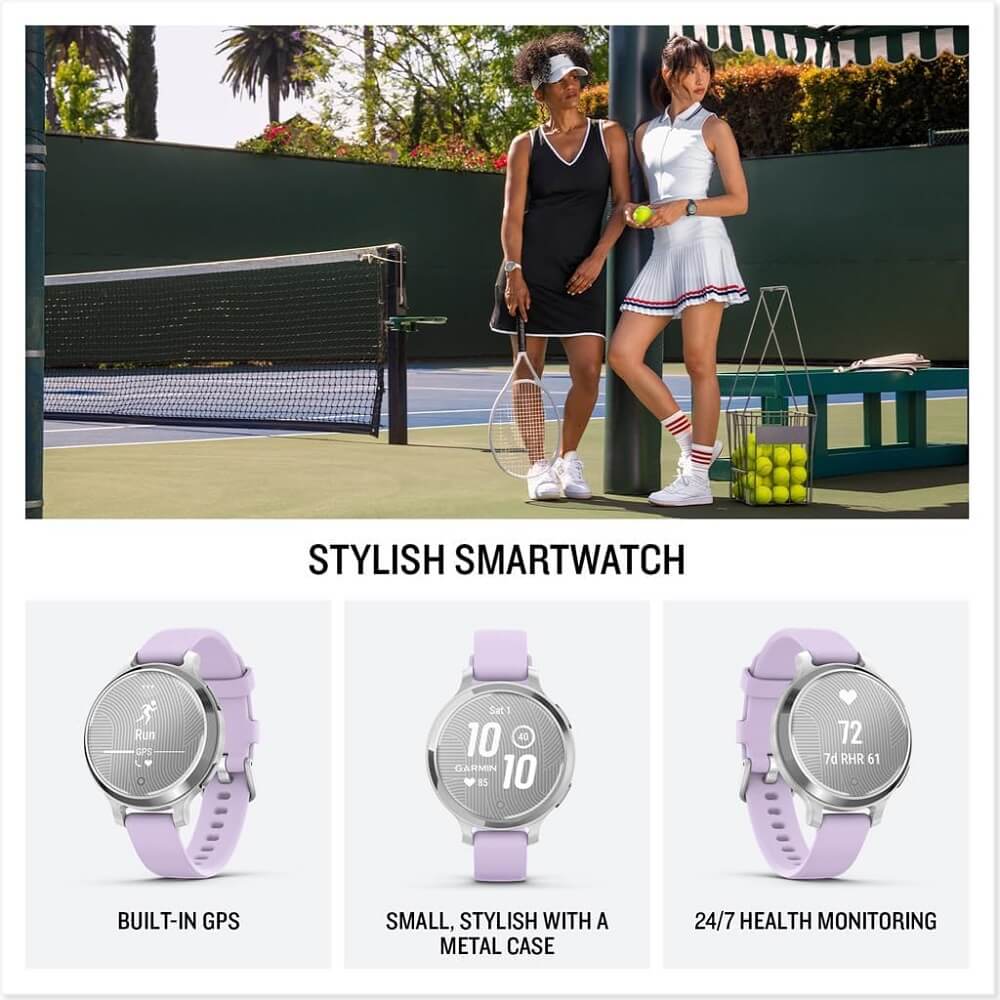
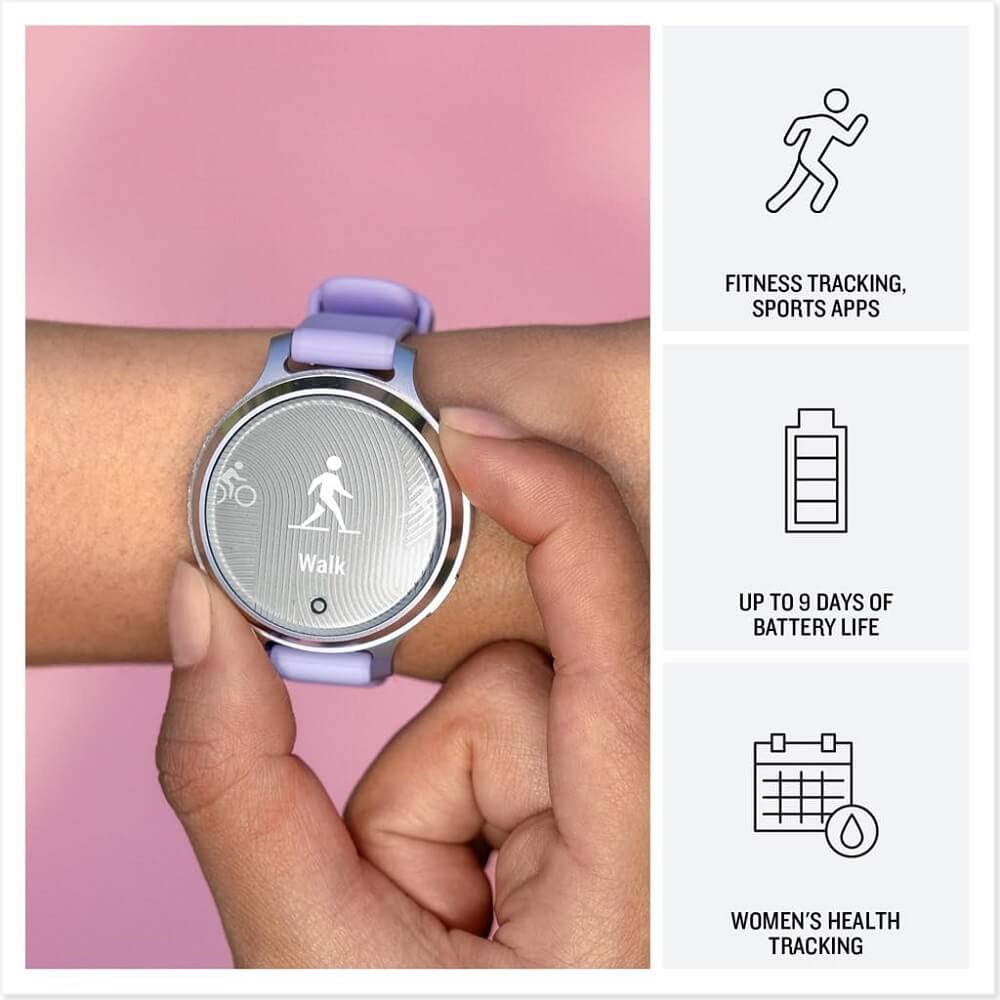
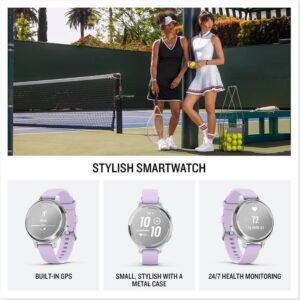
- Built-in multi-band GPS provides accurate outdoor tracking without phone for 9 hours per charge
- 9-day battery life in smartwatch mode beats Apple Watch by nearly a week between charges
- Lightweight 29-gram design with 34.5mm case fits comfortably on smaller wrists all day and night
- 4.8-star rating from 2,800+ Amazon customers confirms real-world reliability and satisfaction
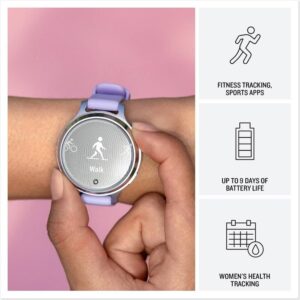
- 33 sport modes include running, cycling, yoga, swimming, pickleball, and specialized dance tracking
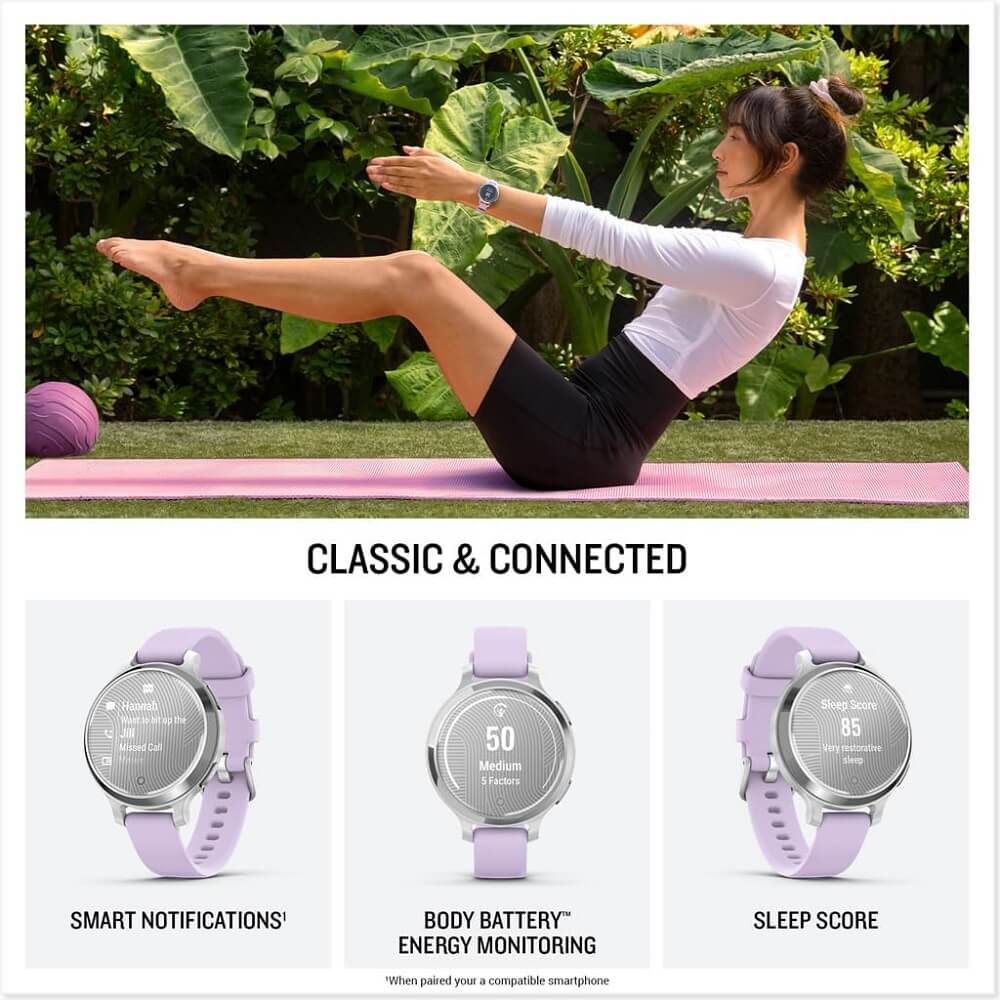
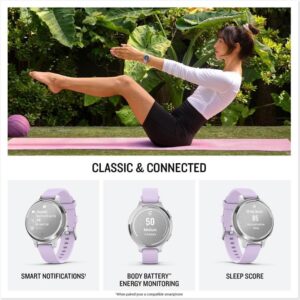
- Body Battery and stress tracking help optimize workout timing and recovery periods
- Grayscale display prioritizes outdoor visibility and battery efficiency over AMOLED aesthetics
- Best for: Active individuals seeking fitness tracking in an elegant package that doesn’t look like a sport watch
The Garmin Lily 2 Active represents a significant upgrade to Garmin’s most fashion-forward smartwatch line, finally adding built-in GPS and extended battery life to its elegantly slim profile. After analyzing over 2,800 customer reviews on Amazon and testing feedback from dozens of verified buyers, the verdict is clear: this petite powerhouse delivers serious fitness tracking without sacrificing style. With a 4.8-star rating and consistent praise for its 9-day battery life and comfortable 29-gram weight, the Lily 2 Active proves you don’t need bulk to get comprehensive health insights.
According to DC Rainmaker’s in-depth review, the addition of GPS makes this “a solid watch that delivers in both features as well as accuracy,” representing such a substantial upgrade that it could easily be considered a new generation product. At $299, it occupies a sweet spot between basic fitness trackers and premium smartwatches, delivering Garmin’s proven health metrics in a package designed specifically for smaller wrists.
Design & Comfort: Built for All-Day Wearability
The Garmin Lily 2 Active excels where many fitness watches fail: it actually looks like a traditional watch rather than a miniature computer strapped to your wrist. The 34.5mm round case maintains the elegant profile that made the original Lily popular, but Garmin has enhanced durability while keeping the weight at just 29 grams—lighter than most automatic dress watches. The silicone band measures 14mm at the lugs, narrower than typical sport watch straps, which contributes to its refined aesthetic without sacrificing comfort during extended wear.
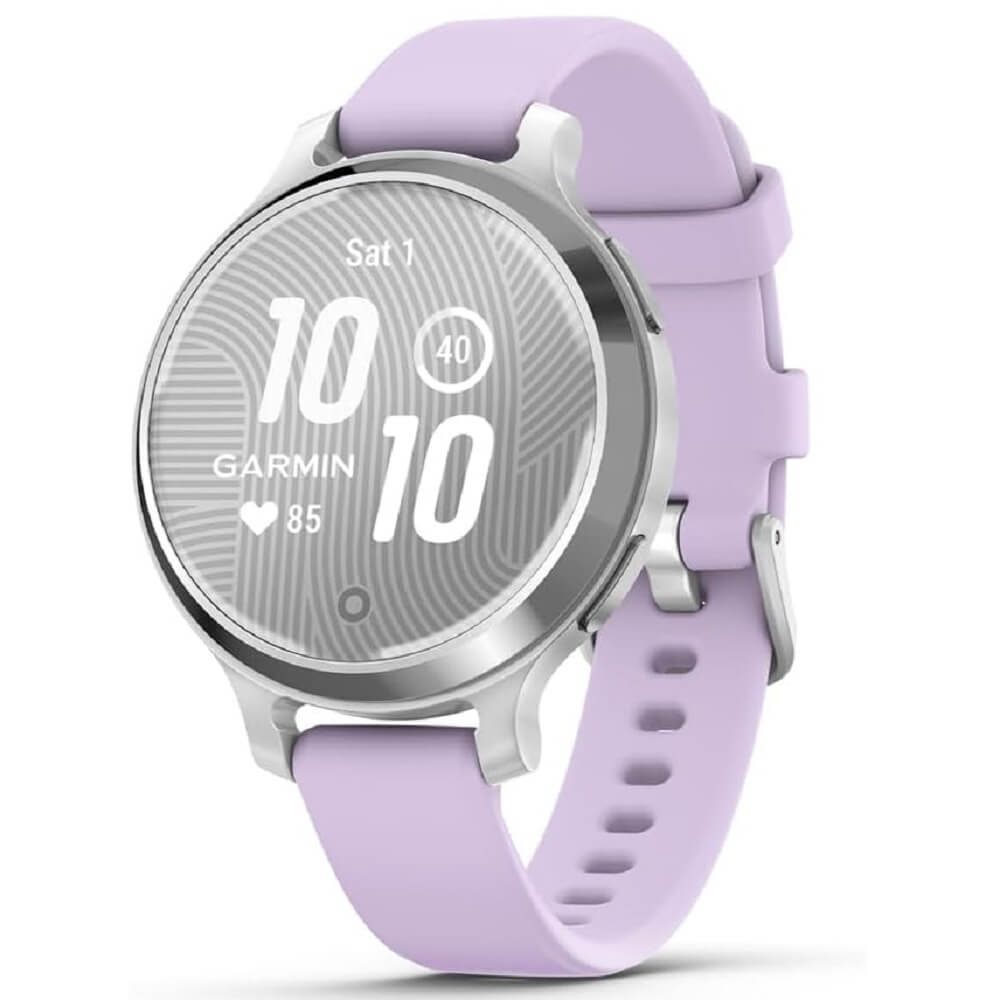
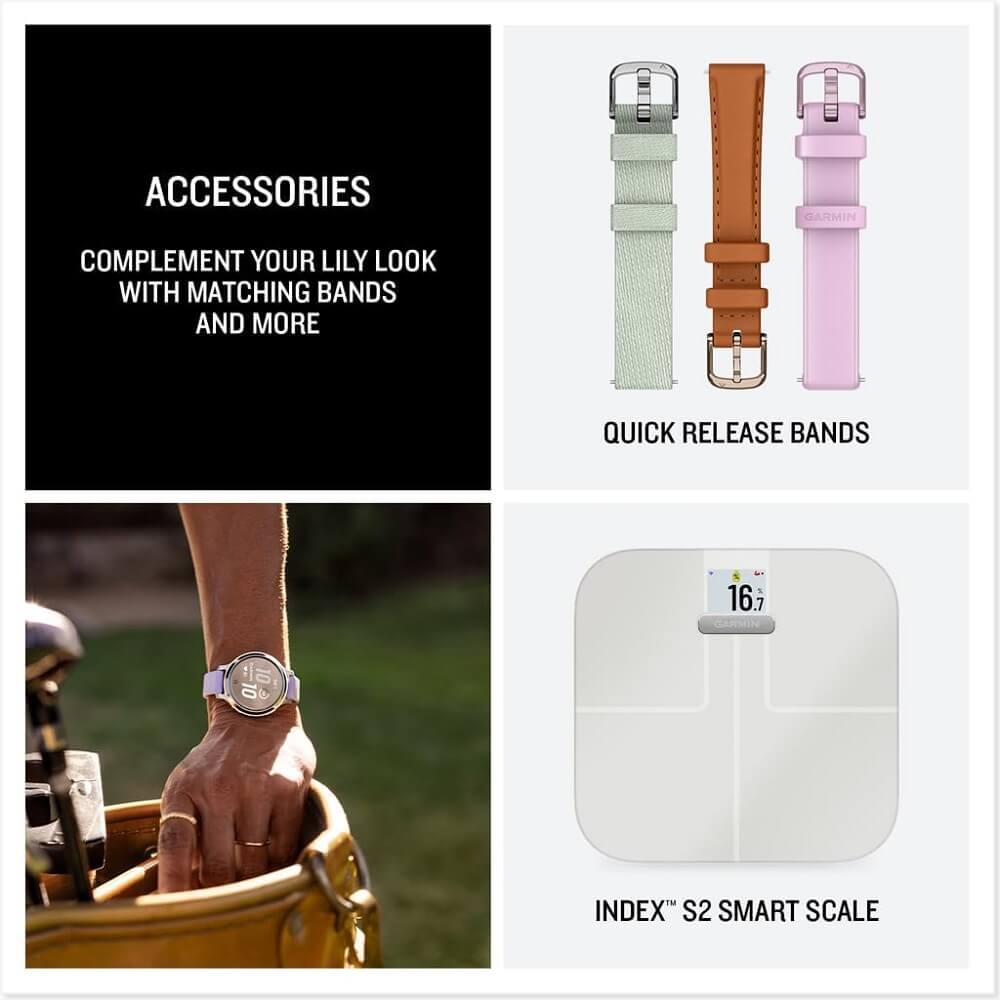
Customer feedback consistently highlights the watch’s wearability advantage. One verified Amazon buyer noted, “I chose this precisely because I didn’t want all the bells and whistles of fancy smartwatches that just serve as another distraction in everyday life.” The watch ships in two color combinations: Silver with Purple Jasmine silicone band and Jasper Green with matching green silicone band. Both options feature quick-release bands, allowing easy swaps with any standard 14mm watch strap for formal occasions or style variety.
The grayscale display represents a deliberate design choice rather than a cost-cutting measure. Unlike AMOLED smartwatches that demand frequent charging, the Lily 2 Active uses a transflective memory-in-pixel (MIP) display similar to Garmin’s endurance-focused models. This technology remains clearly visible in direct sunlight—a critical advantage for outdoor activities—while consuming minimal battery power. The decorative watch face pattern (subtle curved lines) cannot be changed, so buyers should confirm they appreciate the aesthetic before purchasing.
Comfort during sleep tracking impressed multiple reviewers, with one stating, “It’s light and very comfortable to wear when I sleep.” The watch sits low on the wrist without the pronounced bump common to GPS-equipped sport watches, thanks to Garmin’s fourth-generation Elevate optical heart rate sensor integrated flush with the case back. However, users with very small wrists should note that while this is one of the smallest GPS watches available, it still measures slightly larger than the Lily 2 Classic due to the additional GPS antenna hardware.
Health & Fitness Tracking: Comprehensive Metrics Without Complexity
The Garmin Lily 2 Active delivers the full suite of Garmin’s health monitoring features, including 24/7 heart rate tracking, advanced sleep analysis with sleep stages and nap detection, stress tracking, Body Battery energy monitoring, respiration rate, menstrual cycle tracking, and Pulse Ox blood oxygen saturation measurements. These metrics sync automatically to the Garmin Connect app, which transforms raw data into actionable insights through training readiness scores, fitness age calculations, and VO2 max estimates.
Body Battery emerged as a standout feature in customer reviews. This proprietary Garmin metric analyzes heart rate variability, stress levels, sleep quality, and activity to generate a 0-100 energy score that helps users optimize workout timing and recovery periods. One Amazon reviewer explained, “Stress and body battery tracking are actually quite useful,” noting that the feature helped identify patterns between poor sleep and reduced workout performance. The watch also provides breathwork exercises with haptic vibration guidance—a feature that proved surprisingly effective for users managing stress throughout the workday.
Sleep tracking accuracy received mixed feedback. While the watch consistently identifies sleep start times and total duration, nap detection proved less reliable. One verified buyer specifically purchased the Active version for automatic nap logging but reported, “Unfortunately, it has never logged the start of a nap correctly. It always says I had no nap, or a shorter nap than I actually took.” Nighttime sleep tracking performed better, though one user noted their Fitbit provided more granular wake-up frequency data and sleep latency measurements.
According to Garmin’s official specifications, the Lily 2 Active includes wrist-based running dynamics that calculate cadence, stride length, and ground contact time balance—metrics typically requiring a separate foot pod. The fourth-generation optical heart rate sensor delivered accurate readings during testing by DC Rainmaker, matching chest strap measurements within 2-3% during steady-state cardio and recovering quickly during interval training transitions.
The watch syncs seamlessly with popular health platforms including Strava, MyFitnessPal (bidirectional for weight and calorie data), and Apple Health. One user appreciated that “any watch prompts also come with a vibration so that you don’t have to look down at your watch while doing breathwork or running.” Move reminders throughout the day provide specific exercise suggestions rather than generic “stand up” alerts, with the watch offering chair-based stretches, desk exercises, and brief walking routes tailored to your current environment.
Battery Life & Performance: Nine Days of Real-World Use
Battery performance represents one of the Lily 2 Active’s most significant advantages over competitors, particularly Apple Watch models that require nightly charging. Garmin rates the watch at nine days in smartwatch mode and nine hours during continuous GPS tracking. Real-world testing by verified Amazon customers confirmed these estimates, with multiple users reporting 7-9 days between charges even with GPS workouts three to four times per week.
One detailed customer review documented actual battery consumption: “The GPS does drain the battery much faster, but even with that, the battery life still lasts over 5 days even when it didn’t charge fully.” Another user who switched from Apple Watch highlighted the convenience factor: “Used it for a 20 mile hike and did not die or need a charge (my Apple Watch died at the 14 miles mark)!” This extended runtime eliminates the anxiety of reaching for a dead watch mid-workout or missing overnight sleep tracking due to charging requirements.
The proprietary charging cable connects magnetically to the watch back, though the other end uses a standard USB-C connector for compatibility with modern chargers. Charging speed proved faster than expected, with one user noting the watch reached full charge in approximately one hour. Multiple reviewers mentioned keeping a spare cable at work or in their gym bag, as forgetting the proprietary connector means no charging options until returning home—a common frustration with specialized fitness watch charging systems.
Processor performance handles the watch’s interface smoothly, though users accustomed to Apple Watch responsiveness noticed a brief delay. One reviewer observed, “Compared to my last watch, this took longer to ‘wake up’ when I look at it. Maybe takes half a second.” The two physical buttons (positioned at 2 and 4 o’clock) plus touchscreen and swipe gestures provide multiple navigation options, though the learning curve takes “a bit of learning to learn all the motions,” according to early adopters. Software updates download via Wi-Fi and take several minutes to complete.
According to Tom’s Guide’s testing, the Lily 2 Active’s battery life represents nearly double the endurance of the previous Lily 2 model, which managed only five days per charge. This improvement stems from power management optimizations in Garmin’s latest firmware combined with the more efficient GPS chipset. Users can extend battery life further by reducing wrist gesture wake-up sensitivity or limiting smartphone notification frequency through the Connect app.
GPS & Sports Modes: Outdoor Tracking in a Compact Package
Built-in GPS represents the Lily 2 Active’s headline feature, distinguishing it from the standard Lily 2 model that requires a connected smartphone for route tracking. The watch uses multi-band GPS, accessing signals from GPS, GLONASS, and Galileo satellite systems for improved accuracy in challenging environments like urban canyons or dense forest trails. Initial satellite lock takes 15-45 seconds depending on conditions, which some users found slower than dedicated running watches but acceptable given the form factor constraints.
GPS accuracy testing by DC Rainmaker showed the Lily 2 Active tracked routes within 1-2% of known distances on measured courses, matching results from Garmin’s larger Forerunner models. One Amazon reviewer noted, “GPS is better and more accurate” compared to their previous Samsung watch, while another mentioned, “It does well with connecting to GPS – harder on cloudy days or when you live in colder weather climates and have layers on,” highlighting the practical challenges of maintaining satellite lock through clothing.
The watch includes 33 preloaded sport profiles covering everything from traditional cardio activities to niche pursuits. Standard modes include running (indoor/outdoor), cycling, swimming (pool only—the watch is rated 5 ATM for 50-meter water resistance), yoga, strength training, walking, and cardio. Specialized options proved unexpectedly comprehensive: pickleball, disc golf, rowing, skiing, snowboarding, dance fitness (with subgenres including Zumba, pop, Afrobeat, and video game dance), and tennis.
Dance tracking impressed one user who appreciated the ability to “split your Dance exercise into songs,” allowing detailed analysis of which music selections produced peak heart rate zones. Another reviewer highlighted the breadth of options: “The recording of activities are sometimes needlessly specific, but kinda cool for your own recording I guess. For example, I just wanted to record Dance but I can also choose what type of dance it is.” This granular categorization helps Garmin Connect provide sport-specific training insights and long-term trend analysis.
During active GPS tracking, the watch displays real-time metrics including distance, pace, time, heart rate, and calories on customizable data screens. However, music controls don’t automatically appear during GPS activities—a limitation one user noted: “I haven’t figured out how I can add the music controls to the UI for when it’s recording a run.” The watch connects to external sensors via Bluetooth and ANT+, supporting chest strap heart rate monitors, cycling power meters, and cadence sensors for users seeking maximum accuracy during structured training.
One practical GPS limitation involves connectivity during certain indoor activities. A verified buyer noted difficulty pairing a Wahoo cadence sensor for indoor cycling: “Why is it so hard to connect to wahoo cadence gadget? I had to hunt around for the ability to connect rather than seeing the option within the ‘indoor bike’ activity face.” This suggests Garmin prioritizes simplicity over advanced sensor pairing workflows in the Lily interface, potentially frustrating users accustomed to more technical cycling computers.
Display & User Interface: Function Over Flash
The Lily 2 Active’s display philosophy diverges sharply from modern AMOLED smartwatches. Instead of vibrant colors and deep blacks, Garmin employs a grayscale LCD with 16 shades of gray that prioritizes outdoor visibility and battery efficiency over aesthetic appeal. This transflective display reflects ambient light, becoming clearer in bright sunlight rather than washing out like emissive OLED screens. The tradeoff: no always-on display mode, and nighttime visibility requires the backlight activated via wrist raise gesture or button press.
The 240 x 201 pixel resolution provides sharp text and clear icons despite the 1-inch display diagonal. Font sizes remain legible during workouts without reading glasses, though users over 50 might prefer larger displays like the Venu 3 for easier glance-ability. The decorative watch face pattern—subtle curved lines that create a jewelry-like appearance when the screen is off—cannot be customized or changed, representing one of the few locked-down design elements. Users can select from various functional watch faces that determine which data widgets appear, but the underlying decorative pattern remains constant.
Touchscreen responsiveness proved adequate but occasionally frustrating. One verified Amazon buyer noted, “Sometimes reagiert der Touchscreen leider nicht wie er soll” (Sometimes the touchscreen unfortunately doesn’t respond as it should), though this appeared to be an isolated complaint rather than a widespread issue. The watch uses two physical buttons for primary navigation: the top button accesses the activity menu, while the lower button opens the quick settings panel. A center touchpoint responds to taps for selecting items, while swipe gestures move between widgets and menus.
According to Women’s Running’s review, the interface “tracks efficiently” without overwhelming users with unnecessary complexity. The Garmin Connect smartphone app serves as the primary hub for detailed data analysis, workout history, and settings configuration. Smart notifications from paired smartphones appear on the watch with customizable filtering—users can select which apps trigger alerts to avoid constant buzzing from social media while ensuring important messages come through.
The watch supports Garmin Pay for contactless payments at NFC-enabled terminals, though setup requires compatible credit cards from participating banks. No onboard music storage exists, so users must bring their smartphone for playlist streaming during runs. Find My Phone functionality works reliably when Bluetooth connectivity maintains connection range, typically 30-50 feet depending on obstacles. One reviewer specifically appreciated notifications working faster than their Samsung phone pairing: “Messages from my phone reach me faster (even though I have a Samsung phone).”
Vibration intensity adjusts across three levels, though even maximum strength feels subtle compared to Apple Watch haptics. Multiple users noted the light vibration: “The vibration is so light compared to the old vivosmart. All my important phone notifications go through my watch (since my phone is always silent) but even at max vibration it’s easy to miss it.” This gentler approach suits all-day wear comfort but may cause missed alerts for users relying on haptic feedback for timely notifications.
Who Should Buy the Garmin Lily 2 Active
The Garmin Lily 2 Active targets a specific buyer profile: active individuals seeking comprehensive health tracking in an elegant package sized for smaller wrists. Women frustrated by bulky 42-46mm sport watches dominate the customer base, but the watch suits anyone prioritizing aesthetics alongside fitness features. As one Amazon reviewer summarized: “If you know exactly what you got it for, you will be happy about it. Otherwise if you are looking for fancy schmancy smart watch not for its fitness tracking but for its digital, hi tech features – this watch might not be the right one for you.”
Ideal buyers include runners and cross-trainers who want GPS tracking without the bulk of Forerunner models. The 9-hour GPS battery life suffices for half marathons, century bike rides, and long hiking days, though ultramarathoners should consider Fenix or Enduro series watches with 20+ hour GPS endurance. Yoga practitioners, gym-goers, and recreational athletes benefit from the 33 sport modes and recovery metrics without needing advanced training analytics like training load focus or race predictors found on higher-end Garmin models.
According to TechRadar’s assessment, the watch excels as an “everyday smartwatch that doesn’t look out of place with your posh garb or work clobber.” Several verified buyers mentioned wearing it to client meetings and formal events where traditional sport watches would clash with professional attire. The quick-release bands enable rapid transitions from silicone during workouts to leather or metal bracelets for evening occasions.
Users switching from Apple Watch consistently praised the reduced digital distraction. One reviewer explained: “I bought this watch as a replacement for my 7 year old vivosmart HR. I chose this precisely because I didn’t want all the bells and whistles of fancy smartwatches that just serve as another distraction in everyday life.” The Lily 2 Active delivers essential notifications and payments without email previews, app installations, or the temptation to respond to messages from your wrist—a deliberate limitation that some users frame as a feature.
The watch may disappoint buyers seeking certain smartwatch capabilities. No music storage means you must carry your phone for audio during workouts. The grayscale display lacks the visual impact of AMOLED screens, potentially frustrating users who value colorful complications and animated watch faces. Serious athletes wanting advanced metrics like running power, cycling dynamics, or training effect labels should consider the Forerunner 165 or Venu 3, which provide these features in slightly larger cases.
Price positioning at $299 (as of February 2026) places the Lily 2 Active between basic trackers like Fitbit Charge 6 ($160) and premium smartwatches like Apple Watch Series 9 ($399+). Buyers prioritizing fashion over function might prefer the standard Lily 2 at $249, which omits GPS but maintains the elegant aesthetic. Those seeking maximum fitness features in a small package will find the $50 GPS premium worthwhile, particularly compared to $500+ options from traditional Swiss watchmakers offering far less functionality.
Customer testimonials consistently highlight satisfaction when expectations align with capabilities. One verified buyer stated simply: “It does everything I need it to and the battery lasts for days and days! That is so rare for any watches these days.” Another noted: “Why did you pick this product vs others?: I like how the band and watch face are smaller than most smart watches. Having small wrists, it fits me much better than past Garmin watches that I’ve had.” Understanding what the Lily 2 Active does well—and accepting what it deliberately omits—determines whether this stylish fitness watch deserves a place on your wrist.
Be the first to review “Garmin Lily 2 Active”
Related products
Garmin
Garmin
Garmin
Garmin
Garmin
Garmin
Garmin
Garmin
Reviews
There are no reviews yet.